Mine Water Treatment
Treatment solutions for acid mine drainage (AMD) and mine dewatering effluent. Removes heavy metals, suspended solids, and adjusts pH for safe discharge.
PAM for Mine Water Treatment
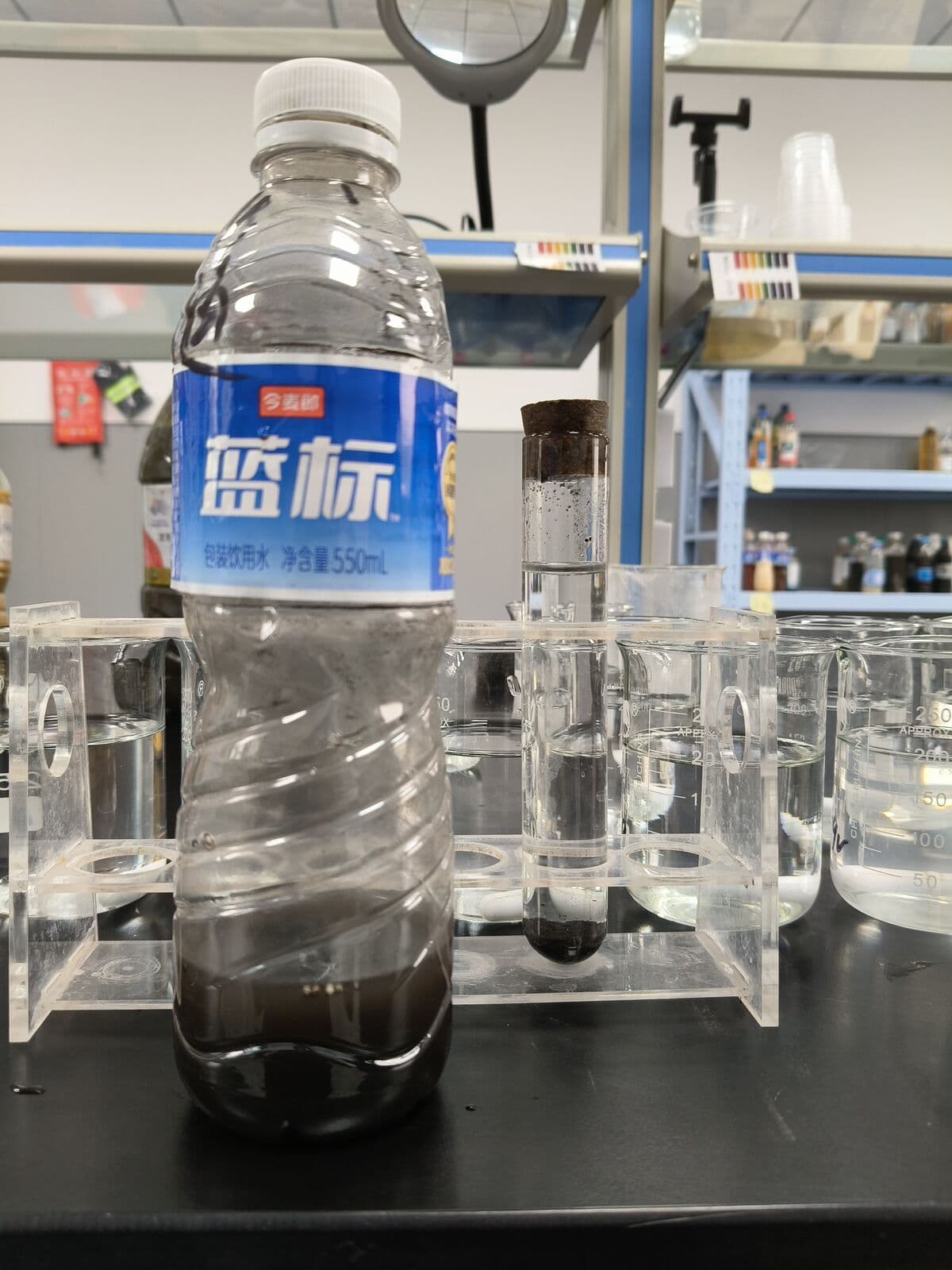
Mine water treatment covers acid mine drainage, pit and underground dewatering, and the recycling of contact water back to the plant. Across all three, polyacrylamide has one job: it settles solids that some other chemistry has already created. Getting that ordering right is the difference between a discharge limit you can hold and a polymer bill that never quite works.
PAM does not remove dissolved metals. Iron, copper, aluminium, manganese and zinc leave the water as hydroxide precipitates when pH is raised — lime, hydrated lime or caustic does that work. Fluoride leaves as calcium fluoride when calcium is available at the right pH; that is also lime, not polymer. Sulphate needs gypsum precipitation or a specialised process. Only after those solids exist does a flocculant have anything to act on. We supply acid-stable APAM grades and dewatering CPAM from our own plant in Xinxiang, Henan, with 100,000 tons/year of PAM capacity, and we would rather correct the sequence than sell polymer into the wrong stage of it.
The Treatment Sequence, and Where Polymer Sits In It
| Stage | Chemistry | What it achieves | Polymer role |
|---|---|---|---|
| 1. Neutralisation | Lime, hydrated lime or caustic to pH 6-9 | Converts dissolved metals to hydroxide solids | None — do not dose here |
| 2. Oxidation | Aeration, or peroxide where time is short | Ferrous to ferric, manganese to insoluble oxide | None |
| 3. Flocculation | APAM 15-20M MW, 25-35 mol% anionic | Aggregates the precipitate into settleable flocs | This is the polymer stage |
| 4. Clarification | Thickener, clarifier or lamella settler | Separates floc from clarified water | Dose adjusted to settling rate, not clarity alone |
| 5. Sludge dewatering | CPAM 8-12M MW, 40-60 mol% cationic | Reduces sludge volume for disposal | Separate grade, separate dose basis |
Dosing polymer at stage 1 or 2 wastes it entirely. Before the metals precipitate there are few particles to bridge, and the polymer that does adsorb is consumed on whatever suspended rock flour is present rather than on the load you care about. If a mine site reports that flocculant "does not work on our AMD", the first thing to check is not the grade — it is whether pH has actually reached the target at the dosing point, and whether it is holding there. Related duty on process water in the concentrator rather than on discharge water is covered under mineral tailings.
Why Anionic PAM Fails in Acid Water
Two separate mechanisms make low pH hostile to anionic polymer, and they are worth separating because they have different remedies.
Chain conformation. An anionic PAM chain is extended because its carboxylate groups repel each other along the backbone. In acid water those groups protonate, the repulsion disappears and the chain coils. A coiled chain cannot bridge between particles, so the same product that performs well at pH 7 does very little at pH 3 — not because it has degraded, but because its working geometry has collapsed. Raise the pH and the behaviour returns. The relationship between charge and chain extension is set out in our charge density explainer.
Hydrolysis. Prolonged exposure to hot acid or hot alkali genuinely alters the polymer, changing anionicity over time. This matters for solution storage rather than for the few seconds of contact in a launder, so it is a make-down tank problem, not a treatment problem.
The practical consequence for grade choice: on genuinely acidic streams that cannot be fully neutralised first, a non-ionic or low-anionicity grade is more robust than a high-anionicity one, because it depends less on charge for its extension. On properly neutralised water, standard medium-anionicity APAM is both cheaper and more effective. Choose the acid-stable grade because your process forces it, not as insurance.
Grade Selection by Duty
| Duty | Grade | Dose | Optimise for |
|---|---|---|---|
| Neutralised AMD, high iron | APAM 15-20M MW, 25-35 mol% anionic | 1-4 g/m³ | Settling rate and overflow clarity |
| Acidic stream, partial neutralisation only | Non-ionic or low-anionicity PAM 8-14M MW | 2-6 g/m³ | Robustness to pH swing |
| Pit and underground dewatering, silt only | APAM 12-18M MW, 20-30 mol% anionic | 1-3 g/m³ | Turbidity at short retention time |
| Contact water recycle to plant | APAM 12-18M MW | 1-3 g/m³ | Residual polymer low enough not to affect flotation |
| AMD sludge dewatering | CPAM 8-12M MW, 40-60 mol% cationic | 6-14 kg/t dry solids | Cake solids and filtrate clarity |
The last row is a different unit basis. Clarification doses are grams per cubic metre of water; dewatering dose is kilograms per tonne of dry solids in the sludge. On a thin AMD sludge the second figure represents vastly more polymer per unit volume than the first, and mixing the two bases is the most common costing error we see on mine water enquiries. The arithmetic for converting between them is in our dosage calculation guide. Full specifications are on the anionic polyacrylamide, non-ionic polyacrylamide and cationic polyacrylamide pages.
The recycle row carries a constraint that discharge duty does not. Residual unreacted polymer returning to a flotation circuit can depress recovery by interfering with bubble-particle attachment, so on recycled contact water the correct dose is the lowest one that meets the clarity target, not the one that gives the best-looking overflow. Where mine water and concentrator water share a thickener, treat the flotation circuit as the binding constraint. Application detail by commodity is in our notes on copper mining and gold mining.
AMD Sludge Is the Hard Part
Lime treatment of acid mine drainage produces a large volume of ferric and aluminium hydroxide sludge, and metal hydroxide floc is among the most difficult material to dewater in industrial practice. The precipitate is amorphous and binds water within its structure rather than merely between particles, so it thickens to a low solids content and resists mechanical pressing. A site can hold its discharge limit comfortably and still have its whole treatment economics dominated by what leaves in trucks.
Three levers change that, and only one of them is polymer. High density sludge recirculation — returning settled sludge to the neutralisation stage so precipitate grows on existing particles rather than forming fresh nuclei — produces a denser, more crystalline solid and is the single largest available improvement. Adequate retention in the reaction tank lets the precipitate mature rather than being carried forward as fresh floc. Then a correctly chosen cationic polymer at the press releases free water from the aggregated structure.
The order matters for how you spend. A site paying for high dewatering doses to compensate for a poorly configured neutralisation stage is buying polymer to fix a process design problem, which is the expensive way round. Ask what your thickener underflow solids actually are before assuming the press chemistry is the constraint.
Worked Example: Ordering Decides Whether the Limit Is Reachable
Modelled from process arithmetic, not a delivered project. Acid mine drainage arrives at pH 2.5 carrying around 2,500 mg/L of iron. At that pH the iron is dissolved, so there is nothing for a flocculant to aggregate and any polymer dosed is spent. Lime addition to roughly pH 6.8 converts it to ferric hydroxide, and only then does anionic PAM at 1-4 g/m³ have a target — aggregating the fresh precipitate into flocs that settle toward single-digit residual iron in the overflow.
The polymer is the settling step, not the removal step. That distinction decides where the money goes: if the overflow is failing its limit, the question is almost always whether pH reached and held the target and whether oxidation was complete, not whether a higher polymer dose would help. Adding polymer to an under-neutralised stream produces a visible improvement in the jar and no improvement in the discharge.
The same arithmetic sets expectations for sludge. Precipitating 2,500 mg/L of iron as hydroxide generates a solids load several times the mass of the metal removed, because hydroxide carries oxygen, hydrogen and bound water. Estimate that tonnage before sizing a thickener or a press, since sludge handling rather than polymer is usually the larger line item on a high-iron site.
Dosing Practice on Mine Water
- Verify pH at the dosing point, not at the lime silo. Neutralisation that reaches target in the reaction tank and drifts back before the flocculant injection point is a common and invisible failure.
- Let oxidation finish. Ferrous iron does not precipitate usefully. If aeration is short, residual ferrous passes the clarifier and oxidises downstream, giving orange water after a clear settling test.
- Jar test at site water chemistry, and re-test seasonally. Mine water composition moves with rainfall and with the working face. A grade selected in the dry season may be wrong in the wet. The procedure is in our jar test procedure.
- Make down at 0.2-0.5% and post-dilute at injection. Use raw or treated water free of residual oxidant; chlorinated or peroxide-bearing make-down water degrades chain length before the polymer ever reaches the stream.
- Optimise on settling rate for thickener duty. Clarity alone will lead you to overdose. Measure interface descent rate, because on a mine water thickener the throughput limit is a settling velocity, not a turbidity reading.
- Hold your supplier to batch consistency. We test every batch for molecular weight to a ±0.5M tolerance and retain samples for 24 months, so when settling behaviour shifts we can compare your drum against the retained sample and establish whether the polymer or the water changed. Why chain length matters is in our molecular weight guide.
Standards and Test Methods We Work To
Mine water compliance is measured against published methods rather than supplier claims. Metals, suspended solids, acidity, alkalinity and sulphate follow the methods in Standard Methods for the Examination of Water and Wastewater, published jointly by the American Public Health Association, the American Water Works Association and the Water Environment Federation. ASTM International publishes the settling and filtration test methods commonly written into thickener and press specifications. The International Network for Acid Prevention and the Global Acid Rock Drainage guidance developed under it are the standard references for AMD characterisation and prediction, and are worth reading before treatment is designed rather than after. Discharge limits themselves are set by your national or state environmental regulator and vary widely, so we work to the limit written in your permit rather than to a generic target.
We do not print method designations here. Numbers get revised, and a stale designation quoted with false precision is worse than a named body you can verify yourself. Send us the specific test in your permit and we will confirm the current designation in writing.
Frequently Asked Questions
Does PAM remove dissolved metals or fluoride from mine water?
No. Metals leave the water as hydroxide precipitates when pH is raised with lime or caustic; fluoride leaves as calcium fluoride when calcium is present at the right pH. Both are precipitation chemistry. PAM aggregates the resulting solids so they settle. Any removal percentage attributed to the polymer alone is describing the precipitation stage and crediting the wrong chemical.
Why does my flocculant stop working on acidic water?
Anionic chains coil when their carboxylate groups protonate at low pH, and a coiled chain cannot bridge particles. The product has not degraded — its working geometry has collapsed, and it recovers when pH rises. If the stream genuinely cannot be neutralised first, use a non-ionic or low-anionicity grade, which depends less on charge for extension.
Where in the circuit should polymer be dosed?
After neutralisation and after oxidation, immediately ahead of the clarifier or thickener feed. Dosing into raw acid drainage wastes the polymer because the metals are still dissolved. Check that pH is at target at the injection point itself, not only in the reaction tank.
Why is my AMD sludge so hard to dewater?
Metal hydroxide floc is amorphous and holds water inside its structure, not just between particles, so it thickens poorly and resists pressing. The largest available improvement is usually high density sludge recirculation to grow denser precipitate, plus adequate reaction retention time. Polymer at the press helps, but it cannot compensate for a neutralisation stage that produces fresh low-density floc.
Will recycled treated water affect my flotation circuit?
It can. Residual unreacted polymer returning to flotation may interfere with bubble-particle attachment and depress recovery. On recycle duty, dose to the lowest level that meets your clarity target rather than to the best-looking overflow, and treat the flotation circuit as the binding constraint where one thickener serves both.
Mine Water Treatment is one of several mining processes we supply polyacrylamide for. For grade selection across the full mining scope — including MOQ, samples, and quality documents — see PAM for Mining.
Related Articles
PolyDADMAC Coagulant: Dose, Uses and PAM Pairing
What polyDADMAC does, why a coagulant is not a flocculant, charge neutralisation and overdose restabilisation, dose ranges by duty, and how it pairs with polyacrylamide.
Oil & GasSlickwater Friction Reducer: How to Spec and Qualify PAM FR
How to specify, friction-loop qualify, and cost a polyacrylamide slickwater friction reducer. Reading FR data sheets, salinity limits, inversion failures, and cost per barrel.
Oil & GasPolyacrylamide in Fracturing Fluid: Friction Reducer, Gel & Fluid Loss
The three roles polyacrylamide plays in fracturing: slickwater friction reducer, gelling agent, and fluid-loss control. Dosage, water-quality effects, emulsion vs powder, and grade selection.
Water TreatmentPolyacrylamide for Water Treatment: The Complete Buyer's Guide (2026)
Complete guide to polyacrylamide (PAM) for water treatment. Covers anionic, cationic, and nonionic PAM selection, dosage ranges, application scenarios, supplier selection, and cost optimization for every major water treatment sector.
Water TreatmentPolyacrylamide for Food Processing Wastewater: Dosage
Select and dose polyacrylamide for slaughterhouse, beverage, starch and dairy wastewater: dosage tables by stream, cost per m3, DAF and clarifier notes.
Water TreatmentBelt Press Polymer Selection: CPAM Grade & Dose Guide
Choose CPAM charge density and molecular weight for belt filter press dewatering: dose by sludge type, cake dryness targets, troubleshooting table.
Ready to Optimize Your Mine Water Treatment Process?
Send us your process parameters — we'll provide a free product recommendation with dosage calculation.