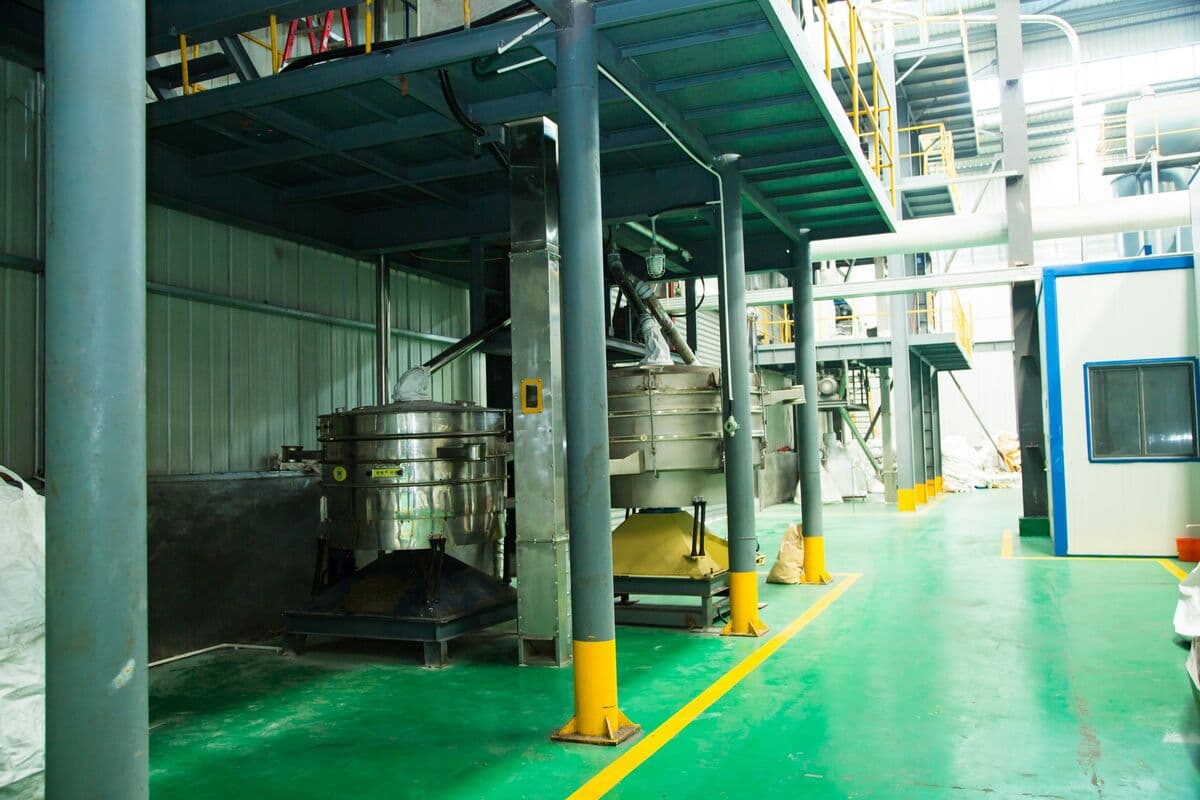
A slickwater friction reducer is the single largest chemical volume on most shale pads, and it is also the one most often bought on price per gallon instead of price per barrel treated. Those are very different numbers. A polyacrylamide friction reducer that costs less per drum but needs twice the loading to hold your pump rate is the expensive option. This is a buyer-and-engineer guide to specifying, qualifying, and costing a slickwater FR: how drag reduction is actually measured, what the numbers on an FR data sheet mean, why the same product behaves differently on recycled water, and what we need from you before quoting. We manufacture these grades at our Xinxiang, Henan factory — 100,000 tons/year documented capacity across dry-powder and emulsion lines, supplying domestic and overseas buyers.
If you are still deciding which role you need polyacrylamide to play on the job — friction reduction, viscosity, or fluid-loss control — start with polyacrylamide in fracturing fluid and come back here once you know it is FR.
What Drag Reduction Actually Is
Pumping water down casing at 60–100 bbl/min puts the flow deep into turbulent regime. Most of the pressure you burn is not moving fluid down the hole, it is spent generating and dissipating turbulent eddies against the pipe wall. High-molecular-weight anionic polyacrylamide, dissolved at a few tens of ppm, stretches into the near-wall region and absorbs the energy that would otherwise go into those eddies. The turbulence is suppressed, and the friction pressure drops.
Two consequences matter on the pad. First, the polymer only works if the chain is fully extended and hydrated — a coiled or degraded chain does nothing. Second, drag reduction saturates: past a certain loading, adding more FR buys almost no extra pressure relief. The curve is steep at the start and flat after. Operators who keep pushing loading to fix a rate problem are usually paying for the flat part of the curve, and the real fault is elsewhere — water chemistry, inversion, or shear.
Drag reduction is reported as a percentage: the friction pressure with polymer versus the friction pressure of untreated water at the same rate and pipe geometry. Percentages only compare if the test conditions match, which is where most spec-sheet confusion starts.
Reading an FR Data Sheet Without Getting Fooled
Friction reducer data sheets are not standardized between suppliers, so a higher headline number does not always mean a better product. These are the fields that decide performance, and what to check on each.
| Spec field | Typical range (emulsion FR) | What to check |
|---|---|---|
| Active polymer content | 28–40% | Normalize price to active polymer, not to gallons of emulsion |
| Max drag reduction | 60–75% (fresh water) | Ask which water, which pipe ID, which flow rate |
| Time to half of max DR | 15–60 seconds | The number that matters for on-the-fly metering |
| Salt tolerance | Grade-dependent | Get DR quoted on your TDS, not on fresh water |
| Charge type / anionicity | Anionic, moderate | Higher anionicity gains fresh-water DR, loses brine tolerance |
| Carrier / inversion surfactant | Hydrocarbon or mineral oil base | Compatibility with your biocide and scale inhibitor |
| Freeze point / cold handling | Varies by carrier | Critical for winter pads; ask before shipping north |
The single most misleading field is max drag reduction quoted without the water. A grade that reaches 70% in tap water and 35% in your produced water is worse for you than one that reaches 62% in both. Per SPE completions literature, mix-water ionic strength dominates FR performance, which is why we quote a grade against a water analysis rather than publishing one headline percentage.
Active content is the second trap. Emulsion FR is sold by the gallon but works by the pound of polymer. A 30% active product at a low unit price and a 38% active product at a higher one can land at the same cost per pound of active — and the higher-active one ships fewer totes for the same job, cutting freight and handling. Normalize before you compare.
Why Your FR Died When You Switched to Recycled Water
This is the most common support call we get on friction reducers, and the diagnosis is nearly always the same. Anionic polyacrylamide holds its extended shape partly through charge repulsion along the chain. Dissolved salts screen that charge; divalent hardness — calcium and magnesium — does it far more aggressively than sodium at the same TDS. The chain collapses into a coil, stops reaching into the near-wall turbulence, and drag reduction falls off a cliff.
The usual reaction is to raise loading. That partially works, badly: you may recover some pressure relief, but you pay two to three times the chemical cost for it and you never get back to the fresh-water curve. The correct fix is a grade change.
| Mix water | TDS | Grade direction | Representative loading |
|---|---|---|---|
| Fresh / low-TDS | < 20,000 mg/L | Standard high-MW anionic | 0.25–0.75 gpt |
| Brackish / blended recycle | 20,000–100,000 mg/L | Salt-tolerant anionic, reduced anionicity | 0.5–1.25 gpt |
| High-TDS produced water | > 100,000 mg/L | High-salinity or dual-charge chain | 0.75–2.0 gpt |
Loadings above are representative ranges from grade qualification work and field feedback, not a substitute for a friction loop test on your water. Where TDS runs very high and hardness is significant, a dual-charge chain often holds drag reduction where a plain anionic collapses — the reasoning is in our amphoteric polyacrylamide guide.
Ask your water team for chlorides, total hardness, iron, and pH alongside TDS. Iron and residual oxidizer matter because they attack the polymer backbone directly: a chain cut into fragments has lost the molecular weight that made it work. Our molecular weight guide covers why chain length, not chemistry alone, sets the ceiling on performance.
How to Qualify a Friction Reducer Before a Pad
The industry standard bench method is a friction loop — a recirculating flow loop with a known pipe ID and a differential pressure transducer over a measured length. Water is circulated, baseline friction pressure is recorded, polymer is injected, and the pressure drop is tracked over time.
Three things to control if you want results that predict the pad:
- Use your actual mix water. Not synthetic brine made to match TDS. Hardness distribution, iron, and residual oxidizer all matter, and synthetic water rarely reproduces them.
- Match the shear history. Polymer that passes through a high-shear pump before the test loop will read lower than polymer injected straight into the loop. Reproduce your blender-to-wellhead path as closely as the rig allows.
- Record the full curve, not just the peak. Time to half of maximum drag reduction tells you whether the FR will be working by the time fluid reaches the perforations. Peak DR alone hides slow inversion.
We ship free samples before bulk confirmation specifically so this test happens on your water, in your loop, before anyone commits to a truckload. If you do not have loop access, a service company or third-party lab can run it; we will supply the sample and the grade documentation either way.
Inversion, Shear, and the Failures That Look Like Bad Product
Emulsion FR is a water-in-oil emulsion that has to invert — flip to oil-in-water and release the polymer into the mix water — before it does anything. Under-inversion is the leading cause of a good product performing badly on site.
| Symptom | Likely cause | Fix |
|---|---|---|
| DR lags at start of stage, recovers later | Slow inversion, insufficient mixing energy | Raise inversion-water rate, check injection point turbulence |
| DR never reaches spec even at high loading | Salinity or hardness beyond grade envelope | Change grade against water analysis, do not raise loading |
| DR good early, degrades through the stage | Chain scission from residual oxidizer or iron | Check oxidizer residual and iron; adjust treatment order |
| Erratic DR between stages, same water | Metering pump calibration or tote stratification | Recalibrate, recirculate totes before use |
| Gelled lumps, plugged screens (powder FR) | Powder fed faster than the eductor can wet it | Meter powder to water; see the dissolving method |
Powder FR has no inversion step but needs real hydration time, which is why it suits batch-mix operations rather than continuous on-the-fly pumping. Dispersion rules are the same as every other polymer powder we ship: into moving water, never into a still tank. The step-by-step is in how to dissolve polyacrylamide, and the form trade-off is laid out in emulsion vs powder.
Per API guidance on stimulation fluid design, additive compatibility should be verified on the actual mix water before the job. Friction reducers sit in a tank with biocide, scale inhibitor, surfactant, and sometimes a breaker. A cationic biocide against an anionic FR is the classic incompatibility: the two associate, drop out, and you lose polymer that never reached the wellbore. Bench the full additive package together, not just the FR alone.
Cost Math That Actually Reflects the Pad
Compare friction reducers on cost per barrel of fluid pumped at the drag reduction you need, not on unit price. The calculation needs four inputs: unit price, active polymer content, the loading required on your water to hit target DR, and freight to your pad or port.
A worked shape of the problem, using representative numbers rather than a specific quote: a lower-priced 30% active grade that needs 1.2 gpt on your recycled water will consume more active polymer per barrel than a higher-priced 38% active salt-tolerant grade that holds the same DR at 0.7 gpt. Once you add the extra totes, the extra freight, and the handling time, the cheaper drum is often the more expensive job. This is exactly the comparison that gets missed when procurement and completions evaluate FR separately.
Two further items belong in the total. First, horsepower: a genuinely better DR percentage at rate reduces surface pressure and pump fuel, which shows up on the service invoice rather than the chemical one. Second, flowback and regain conductivity — polyacrylamide FR at slickwater loadings leaves far less residue than a crosslinked gel system, which is a large part of why slickwater displaced gel on high-volume horizontal completions in the first place. For where our oilfield grades sit against the broader PAM market, see PAM price per ton.
Oilfield grades carry a premium over general industrial PAM because of tighter molecular weight tolerance and additional filterability and drag-reduction testing per batch. Ask for the batch COA rather than a generic product data sheet — a grade specification without batch verification tells you what the product should be, not what arrived.
What We Need Before Quoting
Send these and we will match a starting grade before pricing, rather than quoting one generic FR and hoping it fits:
- Mix-water analysis: TDS, total hardness, chlorides, iron, pH — or at minimum fresh vs blended vs produced
- Target drag reduction and design pump rate
- Casing or tubing ID and measured depth, if you want a friction pressure estimate
- Bottomhole temperature
- Form preference: emulsion for on-the-fly, powder for batch mixing
- Other additives in the package — biocide, scale inhibitor, oxidizer, surfactant
- Volume per stage and per pad, plus destination port
Standard trial MOQ is 500 kg with free samples first, and common-grade lead time runs 7–10 days after order confirmation. Export documentation — TDS, COA, and SDS by confirmed grade and batch — ships with the order for customs and your internal QA. Our quality program runs three-stage testing with solid content ≥92% and residual monomer ≤0.05% on powder grades, under ISO 9001/14001/45001 certification.
For the oilfield product line itself, start at PHPA oilfield-grade polyacrylamide or the APAM high molecular weight grades.
Frequently Asked Questions
How much drag reduction should a slickwater friction reducer deliver?
On fresh or low-TDS water, 60–75% is the working range for a high-MW anionic polyacrylamide FR at typical slickwater loadings. On high-TDS produced water, a standard anionic grade may only reach 35–45%, while a salt-tolerant grade recovers much of the gap. Always ask for the percentage quoted against your water, since a fresh-water number tells you little about a recycled-water job.
Is a slickwater friction reducer just anionic polyacrylamide?
The active polymer is high-molecular-weight anionic polyacrylamide, but not every anionic PAM works as an FR. FR grades are tuned for fast inversion or hydration, a specific anionicity that balances fresh-water performance against brine tolerance, and consistent chain length batch to batch. A flocculant-grade APAM has the wrong balance for pumping duty.
Can I use one friction reducer for both fresh and produced water?
Sometimes, if your water varies within one band and you accept a compromise grade that is not optimal at either end. Where TDS swings from fresh to above 100,000 mg/L across a program, running two grades usually costs less in total polymer than forcing one grade to cover both. We size this against your actual water mix rather than defaulting to a single product.
Why does drag reduction fade partway through a stage?
Progressive loss through a stage points to chain degradation rather than dosing. Residual oxidizer, dissolved iron, and very high shear all cut the polymer backbone, and a shortened chain cannot suppress near-wall turbulence. Check oxidizer residual and iron in the mix water first, then the injection point shear.
What is the MOQ and lead time for FR grades?
Standard trial MOQ is 500 kg, with free samples shipped first for friction loop testing. Common-grade lead time is 7–10 days after order confirmation. Confirm form — emulsion or powder — and the water-matched grade in the quotation, since emulsion and powder ship and store differently.
Talk to the factory
WhatsApp: +86 187-3759-0940 · Email: info@chinapolyacrylamide.com
Send your mix-water analysis, target drag reduction, and pump rate. We will match a friction reducer grade and ship a free sample for friction loop testing before bulk confirmation.
Related Product Pages
- PHPA oilfield-grade polyacrylamide
- APAM high molecular weight grade
- Flocculant & coagulant range overview
Not sure which is right? Try our PAM Selector tool or request a quote.