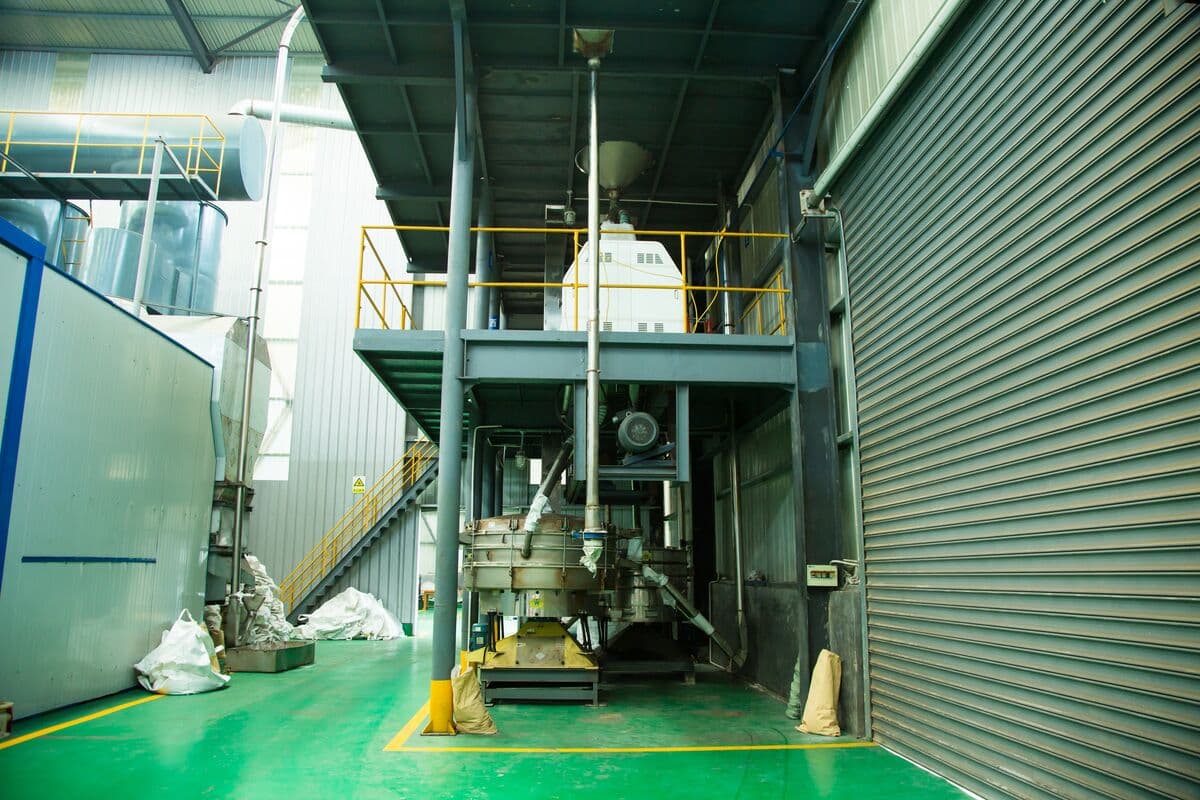
When a completions engineer asks us for "PAM for fracturing," the first thing we do is ask which job it is doing — because polyacrylamide shows up in three completely different roles on a frac. It is the friction reducer that lets a slickwater treatment pump at rate, it is a component in some crosslinked gel systems, and it is a gelling or fluid-loss agent in others. Get the role wrong and you either burn pump horsepower or lose your proppant carry. We ship these grades from our Xinxiang, Henan factory (100,000 tons/year documented PAM capacity), and this guide explains each role, the dosing, and how to spec the right one for your water.
The Three Roles PAM Plays in Fracturing
| Role | PAM type | Form | Dosage |
|---|---|---|---|
| Friction reducer (slickwater) | High-MW anionic PAM | Emulsion / powder | 0.25–2.0 gpt (0.5–2 kg/m³) |
| Viscosifier / gelling agent | High-MW PAM / PHPA | Powder | 1.5–4.0 kg/m³ |
| Fluid-loss control | Medium-MW PAM | Powder | 1.0–2.5 kg/m³ |
1. Friction Reducer — the Slickwater Workhorse
The dominant use of polyacrylamide in modern fracturing is as a friction reducer in slickwater treatments. At very low concentration, high-molecular-weight anionic PAM cuts the turbulent friction pressure of water pumped down casing by 60–75%. That drag reduction is what lets a slickwater job pump 60–100+ bbl/min without exceeding surface pressure limits.
Friction reducers ship most often as inverse emulsions because they invert and hydrate in seconds — critical when you are metering on the fly at the blender. We also supply dry powder grades where on-site logistics favor solids. Both are built on high-MW anionic chains; the difference is speed of hydration and handling, not the underlying chemistry. For the detailed drag-reduction mechanism and rate math, see our dedicated drilling and completions polymer notes.
Two field realities decide which grade works: the mix water and the temperature. High-TDS or high-hardness produced water collapses a standard anionic FR, so on recycled water we move to a salt-tolerant grade. That is the single most common reason a friction reducer "stops working" in the field.
2. Viscosifier and Gelling Agent
Where the job needs proppant carry beyond what slickwater delivers, higher PAM loading builds viscosity. High-MW PAM and partially hydrolyzed polyacrylamide (PHPA) raise apparent viscosity and improve proppant transport in hybrid and linear-gel systems. In some crosslinked designs, PAM-based polymers serve alongside or in place of guar, particularly where a cleaner break and less residue are wanted.
The trade-off is regain conductivity: any gelling polymer that is not fully broken and cleaned up leaves residue in the proppant pack. That is why break design matters as much as the polymer choice. We provide grades matched to your temperature and breaker system rather than a single generic gel powder.
In practice the loading is driven by the proppant you need to place and how far you need to carry it. A tight, near-wellbore job at low proppant concentration may need nothing beyond a slickwater FR. A job placing higher proppant loadings, or one with long perforation clusters where settling is a risk, pushes you up the viscosity ladder toward a gel. The mistake we see is jumping straight to a heavy gel "to be safe" — that over-viscosifies, raises the residue you then have to clean up, and cuts regain conductivity in the very pack you were trying to prop. Size the polymer to the transport you actually need.
3. Fluid-Loss Control
Medium-MW PAM helps control leak-off into the formation, keeping more fluid working in the fracture. This role overlaps with drilling-fluid fluid-loss reduction and uses similar chemistry. It is a supporting function — rarely the reason you buy PAM for a frac, but a useful property of the same polymer family.
A Field Example: Recycled Water Cutover
A common story from our export accounts: an operator running fresh-water slickwater switches to recycled produced water to cut disposal cost, and the friction reducer that gave clean drag reduction suddenly needs almost double the loading to hold pump rate. The instinct is to blame the product batch. Nine times out of ten the cause is the jump in TDS and divalent hardness in the recycled water, which screens the anionic charge and collapses the polymer coil.
The fix is not more of the same FR — it is a salt-tolerant grade designed to keep an extended chain in high-ionic-strength water. When we move an account onto the right grade for their water, the loading typically drops back toward the fresh-water rate and the per-barrel chemical cost comes back in line. This is why we ask for the water analysis before quoting rather than shipping a generic FR and hoping. Recycling more water is usually the right call economically; it just changes which polymer you need.
Water Quality Decides Everything
Per SPE completions practice, friction-reducer performance is dominated by mix-water chemistry. The same product that gives 70% drag reduction in fresh water can give 40% or less in high-TDS produced water. Before we recommend a grade we need the water analysis.
| Mix water | TDS range | FR grade we ship |
|---|---|---|
| Fresh / low-TDS | < 20,000 mg/L | Standard anionic high-MW |
| Brackish / recycled | 20,000–100,000 mg/L | Salt-tolerant anionic |
| High-TDS produced water | > 100,000 mg/L | High-salinity / amphoteric grade |
For very high-salinity produced water, an amphoteric polyacrylamide grade often holds drag reduction where a plain anionic FR collapses. That is one of the clearest cases where paying for the dual-charge chain is justified.
Handling and Make-Up
Emulsion friction reducers are metered directly and invert in the mix water within seconds. Dry powder grades follow the same rule as all our polymers: disperse slowly into moving water, never dump into a still tank, and allow full hydration before the polymer is doing its job. Our standard powder specs hold solid content ≥90% and dissolving time ≤90 min, confirmed by grade and batch COA. See the dissolving method for the step-by-step.
On the pad, the practical failure mode with emulsions is under-inversion: if the FR does not fully invert before it reaches the perforations, you pay for polymer that never opens up and drag reduction lags. Adequate mixing energy and a correct inversion-water rate fix this. With dry powder, the failure mode is fisheyes — gelled lumps with dry cores — caused by feeding powder faster than the eductor can wet it. Meter the powder to the water, not the other way around.
Storage matters on remote pads: keep powder dry and sealed, and rotate stock. Our shelf-life and storage guidance is in polyacrylamide shelf life and storage. Per API guidance on stimulation fluids, every additive in the system — friction reducer, breaker, biocide, scale inhibitor — should be checked for compatibility on the actual mix water before the job, because an FR that performs alone can be knocked down by an incompatible co-additive. We are happy to advise on known interactions with common breaker and biocide chemistries.
Why PAM Dominates Modern Slickwater
Slickwater fracturing scaled up because it is cheap per barrel and easy to clean up, and polyacrylamide friction reducers are what made that economical. A guar-based gel carries proppant well but leaves more residue and costs more to break; slickwater with a PAM friction reducer trades some carry for far lower cost and cleaner regain conductivity, then makes up the carry with pump rate and proppant scheduling. For the high-volume, multi-stage horizontal completions that define shale development, that trade is usually the right one — which is why PAM friction reducers now move in large volumes on almost every slickwater pad.
The consequence for a buyer is that FR is a commodity you consume by the truckload, so small differences in loading and water tolerance compound into real money across a pad. Getting the grade matched to your water is not a technicality; over a full development program it is one of the larger chemical line items you control.
How to Spec a Frac PAM Before You Order
Send us these and we will match a starting grade before pricing:
- Which role — friction reduction, gel/viscosity, or fluid loss
- Mix-water analysis (TDS, hardness, chlorides) or at least fresh vs recycled vs produced
- Bottomhole temperature
- Preferred form — emulsion or dry powder — and blender logistics
- Pump rate and job size, if driving the FR loading
- Quantity and destination port
We ship free samples before bulk confirmation so your lab can bench-test drag reduction on your actual water. Export documentation — TDS, COA, and SDS by confirmed grade and batch — supports customs and internal QA.
Frequently Asked Questions
Is a friction reducer the same as polyacrylamide?
A slickwater friction reducer is a specific use of high-molecular-weight anionic polyacrylamide. So yes, the friction reducer is PAM — but not every PAM grade is a good friction reducer. The grade is tuned for fast inversion and drag reduction in your specific mix water.
Why did my friction reducer stop working on recycled water?
Almost always salinity. High TDS and hardness in produced or recycled water collapse a standard anionic FR chain, cutting drag reduction sharply. The fix is a salt-tolerant or amphoteric grade matched to the water analysis.
Emulsion or dry powder friction reducer — which should I order?
Emulsion inverts in seconds and is easiest to meter on the fly, which is why most slickwater jobs use it. Dry powder has no carrier oil, ships denser, and suits pads where solids handling is preferred. The active chemistry is the same high-MW anionic chain.
What is the MOQ and lead time?
Standard trial MOQ is 500 kg with free samples first. Common-grade lead time is 7–10 days after order confirmation. Confirm form (emulsion vs powder) and the water-matched grade in the quotation.
Talk to the factory
WhatsApp: +86 187-3759-0940 · Email: info@chinapolyacrylamide.com
Send your mix-water analysis and the role you need, and we will match a friction reducer or gelling grade before quoting. Free samples ship before bulk confirmation for bench testing.
Related Product Pages
- PHPA oilfield-grade polyacrylamide
- APAM high molecular weight grade
- Flocculant & coagulant range overview
Not sure which is right? Try our PAM Selector tool or request a quote.