Gold mining operations generate some of the most challenging wastewater in the mineral processing industry. Cyanide-laden tailings, fine slurry suspensions, and high-turbidity process water all require effective flocculants to meet discharge standards and recover water for reuse. Polyacrylamide (PAM) is the commonly used flocculant for gold mining thickening, clarification, and water-recovery circuits. For buyer-side evaluation, the key question is not just whether a supplier can quote PAM, but whether the supplier can explain the grade path, testing method, and document support for your ore and water conditions.
| Application | Recommended PAM Type | Molecular Weight | Typical Dosage |
|---|---|---|---|
| Tailings thickener | Anionic APAM | 18–22 million Da | 15–40 g/t |
| CIL/CIP circuit clarification | Anionic APAM (low charge) | 15–20 million Da | 10–25 g/t |
| Acid mine drainage (AMD) | Nonionic NPAM | 8–12 million Da | 5–15 g/t |
| Heap leach pad drainage | Anionic APAM | 12–18 million Da | 8–20 g/t |
| Process water recovery | Anionic APAM (high MW) | 20–28 million Da | 20–50 g/t |
Why Polyacrylamide Is Essential in Gold Mining
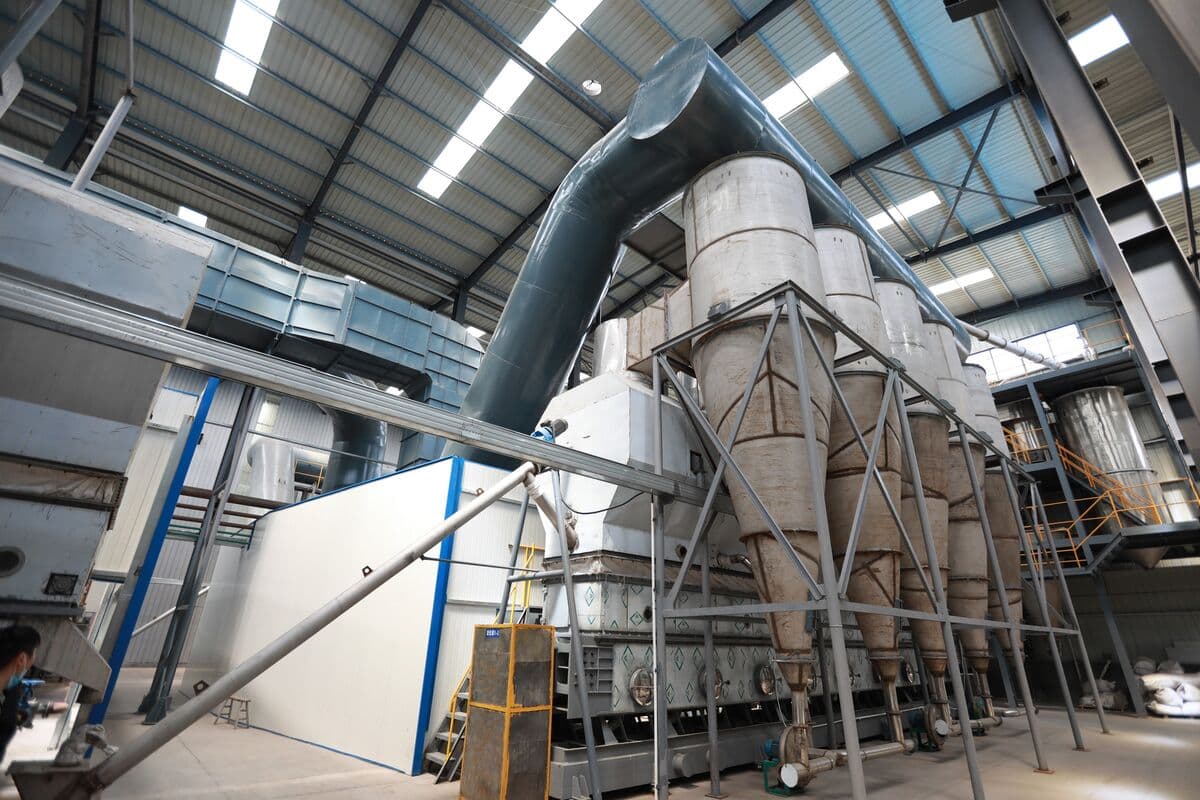
Gold mining processing equipment and tanks
Gold processing plants face a fundamental challenge: fine particles (often <75 microns) that settle extremely slowly without chemical assistance. In practice, buyers use PAM to improve settling speed, overflow clarity, and water recovery while keeping the polymer program stable enough for day-to-day operation.
Beyond settling speed, the right PAM grade can also improve underflow density and reduce overflow carryover. Those operating gains matter because they affect water reuse, thickener stability, and how often the site has to rework dosage after ore or water conditions change.
Our high molecular weight anionic PAM is the most commonly specified grade for gold tailings thickeners, with molecular weights of 18–22 million Da and charge densities of 20–35%.
Which PAM Type for Each Gold Mining Application
Tailings Thickeners and Paste Thickeners
High-rate thickeners and paste thickeners are the primary PAM consumption point in most gold plants. Anionic PAM with 18–22 million Da molecular weight and 25–35% charge density gives the best floc structure for rapid settling and high underflow density. Dosage typically runs 15–40 grams per tonne of dry solids, depending on clay content and particle size distribution.
For plants processing ore with high clay content (smectite, kaolinite), we recommend starting with a jar test using our medium molecular weight APAM at 20–30% charge density before committing to a full-scale trial.
CIL and CIP Circuit Clarification
Carbon-in-leach (CIL) and carbon-in-pulp (CIP) circuits require low-charge anionic PAM to avoid interference with activated carbon adsorption. Charge density above 30% can reduce gold adsorption efficiency in some circuits. For this reason, buyers should ask the supplier to confirm charge density, molecular-weight range, and how the site will verify the grade in a jar test or plant trial before bulk supply.
Acid Mine Drainage (AMD) Treatment
AMD from gold mines is typically pH 2–4, which deactivates most anionic flocculants. Nonionic PAM (NPAM) performs reliably across pH 2–11, making it the correct choice for AMD settling ponds and neutralization circuits. Our nonionic PAM for mineral processing is formulated for acidic conditions with molecular weights of 8–12 million Da.
Dosage and Solution Preparation
Correct PAM preparation is as important as product selection. Underdissolved PAM forms gel lumps that block dosing lines and reduce flocculation efficiency by 30–50%.
- Dissolve PAM powder at 0.1–0.3% concentration (1–3 kg per 1,000 L water)
- Use clean water at 20–40°C — avoid water above 50°C which degrades polymer chains
- Stir gently for 60–90 minutes; high-shear mixing breaks polymer chains
- Age the solution 30–60 minutes before dosing for full hydration
- Dilute to 0.01–0.05% at the dosing point for best dispersion in the thickener feed
- Use within 24 hours; solution viscosity drops after 48 hours
For detailed preparation procedures, see our PAM dissolving method guide.
What to Record in a Gold-Mining PAM Trial
Before you compare suppliers, agree on the trial checklist first. A useful gold-mine PAM trial should record the ore or slurry condition, pH, solids level, target overflow clarity, underflow-density target, dilution method, and the exact product grade tested. Without that baseline, price comparisons are noisy and trial results are hard to repeat.
- Feed condition: ore type, clay content, slurry solids, pH, and water source
- PAM details: ionic type, molecular-weight range, charge density or hydrolysis degree, and dissolution method
- Trial method: jar-test sequence, dosage steps, mixing speed, settling time, and operator notes
- Decision outputs: overflow clarity, settling behavior, underflow density, and dosage stability
- Buyer documents: TDS, COA, SDS, sample record, and commercial terms for scale-up
CIL vs CIP Circuit PAM Requirements
Carbon-in-leach (CIL) and carbon-in-pulp (CIP) circuits both extract gold using activated carbon, but the timing of carbon introduction relative to leaching changes the polymer environment significantly. PAM specs need to match.
| Parameter | CIL Circuit | CIP Circuit |
|---|---|---|
| Process layout | Carbon and cyanide added simultaneously | Leaching first, carbon added after |
| PAM injection point | Pre-leach thickener only | Pre-leach thickener and post-CIP tailings thickener |
| Recommended charge density | 10-20% (low) | 15-25% pre-leach; 25-35% post-CIP tailings |
| Recommended MW | 15-18M Da (lower to avoid carbon interference) | 18-22M Da |
| Typical dose | 10-25 g/MT ore | 15-35 g/MT ore |
| Gold recovery sensitivity | High — wrong PAM grade can drop recovery 3-8% | Lower — pre-leach PAM does not see carbon |
| Why charge density matters | High-charge polymer competes with carbon for gold-cyanide complex adsorption | Less critical at pre-leach; standard mining grades work post-CIP |
The take-away: CIL plants are picky about polymer specs because the carbon and polymer are in the same tank. CIP plants have more flexibility because the polymer-treated thickener overflow is the leach feed, with carbon introduced downstream. We label our CIL-grade APAM specifically (CIL-grade designation on COA) so it does not get confused with general mining grade.
Buyer Proof That Matters More Than Storytelling
For ChinaPAM, the public proof standard should stay practical and document-based. Instead of relying on unnamed case studies or unsupported recovery claims, this page should help buyers ask for the records that reduce procurement risk before a bulk order.
| Buyer Question | What ChinaPAM Should Confirm |
|---|---|
| What grade path should the mine test first? | Recommended ionic type, molecular-weight range, charge-density or hydrolysis range, and dilution method for the stated ore and water conditions |
| What documents should the buyer review? | Grade-specific TDS, batch COA, SDS, and any sample or quotation notes tied to the tested grade |
| What commercial baseline is public? | MOQ 500 kg, free samples, 7-10 day lead time for common grades, T/T and L/C, 25 kg kraft paper bags with plastic liner or 25 kg PE bags, OEM labels supported |
| What should trigger a plant-side recheck? | Ore blend change, water-chemistry change, unstable overflow clarity, abnormal dosage drift, or poor dissolution behavior |
Thickener Underflow Density Targets
Underflow density is the operational measure of polymer effectiveness in a thickener. Higher underflow density means more water recovered, less tailings volume to dispose of, and (in CIL plants) less cyanide-bearing solution carryover.
| Thickener Type | Application | Acceptable U/F Density | Optimized U/F Density | PAM Spec |
|---|---|---|---|---|
| Conventional thickener | Pre-leach | 50-55% | 58-62% | 18-20M MW, 20% hyd. |
| High-rate thickener | Pre-leach or tailings | 55-60% | 62-68% | 19-22M MW, 25-30% hyd. |
| High-density thickener | Tailings dewatering | 60-65% | 68-72% | 19-22M MW, 28-32% hyd. |
| Paste thickener | Dry-stack tailings | 65-70% | 72-78% | 20-22M MW, 30-35% hyd. + rake torque control |
Pushing density beyond the optimized range usually requires a polymer change rather than a dose increase. Dose increases past the optimum cause "pillaring" — flocs become so cohesive they bridge across the thickener cone and resist downward flow, causing rake torque spikes and intermittent underflow.
Additional FAQ: Gold Mining
How do I tell if my thickener overflow has too much fine gold?
Send overflow samples to your assay lab weekly. Anything above 0.05 g/t Au in overflow is significant loss — it should be in your tailings, not your supernatant. If you see persistent gold in overflow, the issue is usually polymer underdose, wrong polymer type, or feed-well shear breaking flocs. Audit the polymer first because it is cheapest to change.
Does cyanide degrade PAM in the leach circuit?
Free cyanide does not significantly degrade properly-formulated mining-grade PAM at typical leach concentrations (200-800 ppm CN). What can degrade polymer is residual oxidant (peroxide, chlorine) used in some pre-treatment circuits, or trace iron and copper that catalyze chain scission. If you have unusual oxidants or transition metals upstream, request our oxidation-stabilized grade.
What polymer change makes the biggest difference for high-clay ores?
Move from 18M to 20-22M MW and reduce hydrolysis from 30% to 20-25%. The higher MW provides stronger bridging across clay particles. The lower hydrolysis prevents charge collapse in calcium-rich circuits common in clay-bearing operations. Expect 25-40% better thickener performance on the same dose.
Is there a polymer that works in carbon column adsorption circuits?
Yes — non-ionic PAM (NPAM) is the safe choice for solution polishing before carbon columns. Anionic and cationic types interact with carbon and reduce its gold-loading capacity. NPAM at 5-10 ppm clarifies leach solution without affecting downstream adsorption. We supply this grade specifically for heap leach pregnant solution clarification.
How do I budget polymer for a 5-year mine plan?
For early-stage budgeting, use $0.45-0.65 per ton ore for polymer cost on a typical CIL operation (covers thickener and tailings polymer combined). High-clay or refractory ores: $0.70-1.00/t ore. These numbers assume the 2026 polymer market and properly-matched grades. Budget reviews annually as ore body characteristics shift through pit life.
How to Structure a Site Trial Before Bulk Supply
A safe trial sequence is simple: confirm the ore and water condition, test a short list of grades in jar testing, select one or two finalists, then verify dosage stability on the plant side before bulk ordering. That process is slower than headline claims, but it is the right way to protect both process performance and procurement decisions.
When the trial moves into quotation stage, keep the page focused on verified buyer facts: MOQ 500 kg, free samples, 7-10 day lead time for common grades, T/T and L/C, standard 25 kg packaging, OEM labels when suitable, and grade-specific TDS, COA, and SDS support.
Selecting a PAM Supplier for Gold Mining
Gold mining operations typically require consistent product quality across multiple shipments. Batch-to-batch variation in molecular weight or charge density forces constant re-optimization of dosage rates — a significant operational cost. When evaluating suppliers, ask for:
- Certificate of Analysis for each batch and grade-specific TDS/SDS support
- The stated molecular-weight range and charge-density or hydrolysis range for the grade being quoted
- Dissolution guidance at your target concentration and water condition
- Sample route, trial MOQ, standard lead time, packaging format, and payment terms
- A clear statement of what the supplier can verify now versus what still needs jar-test confirmation
For grade selection by ore type, see our APAM mining supplier guide and mining tailings treatment guide.
Packaging and Logistics for Mining Sites
The standard public packaging baseline for ChinaPAM is 25 kg kraft paper bags with plastic liner or 25 kg PE bags. If the buyer needs OEM labels, that should be confirmed after the grade, packaging format, and artwork scope are reviewed.
Standard lead time is 7-10 days from order confirmation for common grades. Shipment timing, destination-port planning, and final trade terms should be confirmed in the quotation rather than implied as a fixed promise on a public page.
MOQ is 500 kg for first orders — we understand that mine sites need to trial products before committing to full container quantities.
Before You Compare Gold-Mining PAM Quotes
Ask the supplier to confirm the grade path, trial MOQ, sample support, export packaging, and buyer documents before you compare price per ton. ChinaPAM's public baseline is MOQ 500 kg, free samples, 7-10 day lead time for common grades, 25 kg kraft paper bags with plastic liner or 25 kg PE bags, and grade-specific TDS, COA, and SDS.
Fast links: supplier profile · MOQ and pricing guide · APAM product range
FAQ
Can PAM be used in cyanide leach circuits without affecting gold recovery?
Yes, with the right grade. Use low-charge anionic PAM (10–20% charge density) in CIL/CIP circuits. High-charge PAM can compete with activated carbon for gold-cyanide complexes. We specifically supply a CIL-grade APAM for this application — contact us for the product datasheet.
What PAM dosage should I start with for a new gold tailings thickener?
Start with a jar test at 20–30 g/t dry solids using 18–20M Da APAM at 25–30% charge density. Adjust based on settling rate and overflow clarity. Most gold tailings thickeners operate at 15–40 g/t — if you need more than 50 g/t, the issue is likely ore mineralogy or incorrect PAM selection, not dosage.
How does PAM perform in high-altitude gold mines with cold water?
PAM dissolution slows significantly below 15°C. For high-altitude mines (Andes, Tibetan Plateau), we recommend using warm water (30–40°C) for dissolution and increasing aging time to 90–120 minutes. Our technical team can advise on grade selection for cold-climate operations.
Get PAM for Your Gold Mine
Tell us your thickener feed rate, ore type, and current flocculant performance issues. We'll recommend the right PAM grade and provide a sample for jar testing.
Related Mining Guides
Recommended Product Grades
For the application discussed above, these are the polyacrylamide grades we ship most often:
See the full range of mining and mineral processing applications for equipment context and selection criteria across this industry.
For thickener and tailings dam design context, see our mineral tailings treatment solution and our mine water clarification solution.
Not sure which is right for you? Try our PAM Selector tool or request a quote.
Standards Note
Per Minerals Engineering standard practice, polymer selection for gold tailings thickeners should be confirmed by site-specific jar testing before commissioning, as feed mineralogy and slurry chemistry vary significantly between ore bodies.
According to ICMI Cyanide Code guidelines, polymer dosage in CIL/CIP circuits must be evaluated in the context of total reagent inventory to avoid unintended interactions with cyanide recovery.
For procurement teams replacing a named brand, our Superfloc N-300 equivalent guide covers the nonionic grade comparison for acidic mineral processing circuits.