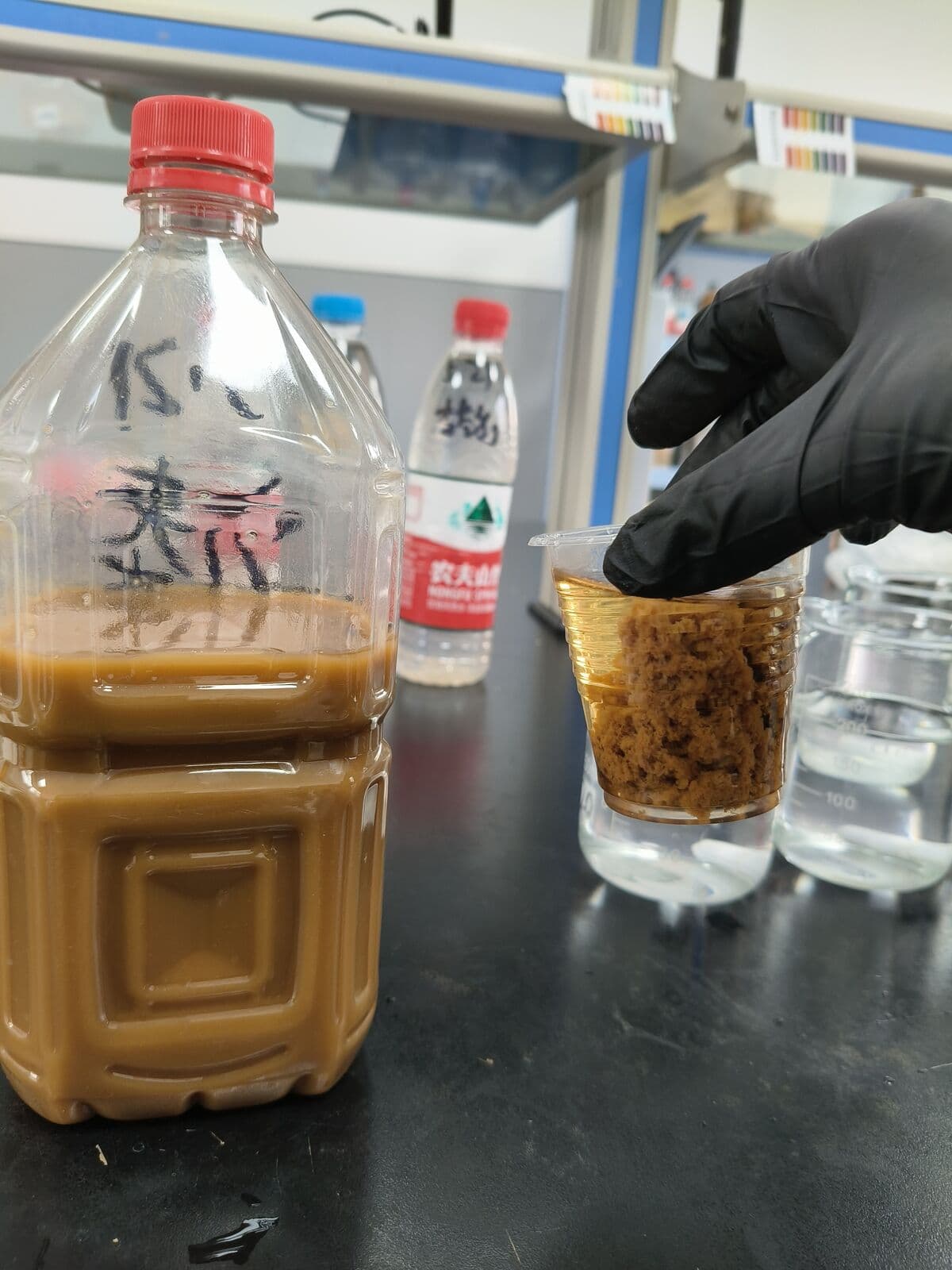
Getting PAM dosage right is the difference between clear water and wasted money. Under-dose and particles stay suspended. Over-dose and you waste chemical — or worse, restabilize the suspension (a phenomenon documented in WEF — Water Environment Federation — technical literature on polymer conditioning). This guide gives you the formulas and real-world examples to calculate the right dosage for your application. For the broader grade-selection picture across clarification, sludge, and effluent, see the complete guide to polyacrylamide for water treatment.
Need dosage guidance tied to product grade and MOQ?
Use this page for the calculation, then move to the APAM product overview, the supplier page, and the MOQ and pricing guide to prepare a grade-specific inquiry.
Dosage Ranges by Application
| Application | Dosage Unit | Typical Range | Key Variable |
|---|---|---|---|
| Water clarification | ppm (mg/L) | 0.5-10 ppm | TSS concentration |
| Sludge dewatering | kg/ton dry solids | 3-12 kg/ton DS | Volatile solids % |
| Mining tailings | g/ton ore processed | 5-40 g/ton | Particle size |
| Paper making (retention) | kg/ton paper | 0.3-2.0 kg/ton | Filler content |
| Oil drilling (EOR) | ppm in injection water | 1000-2500 ppm | Target viscosity |
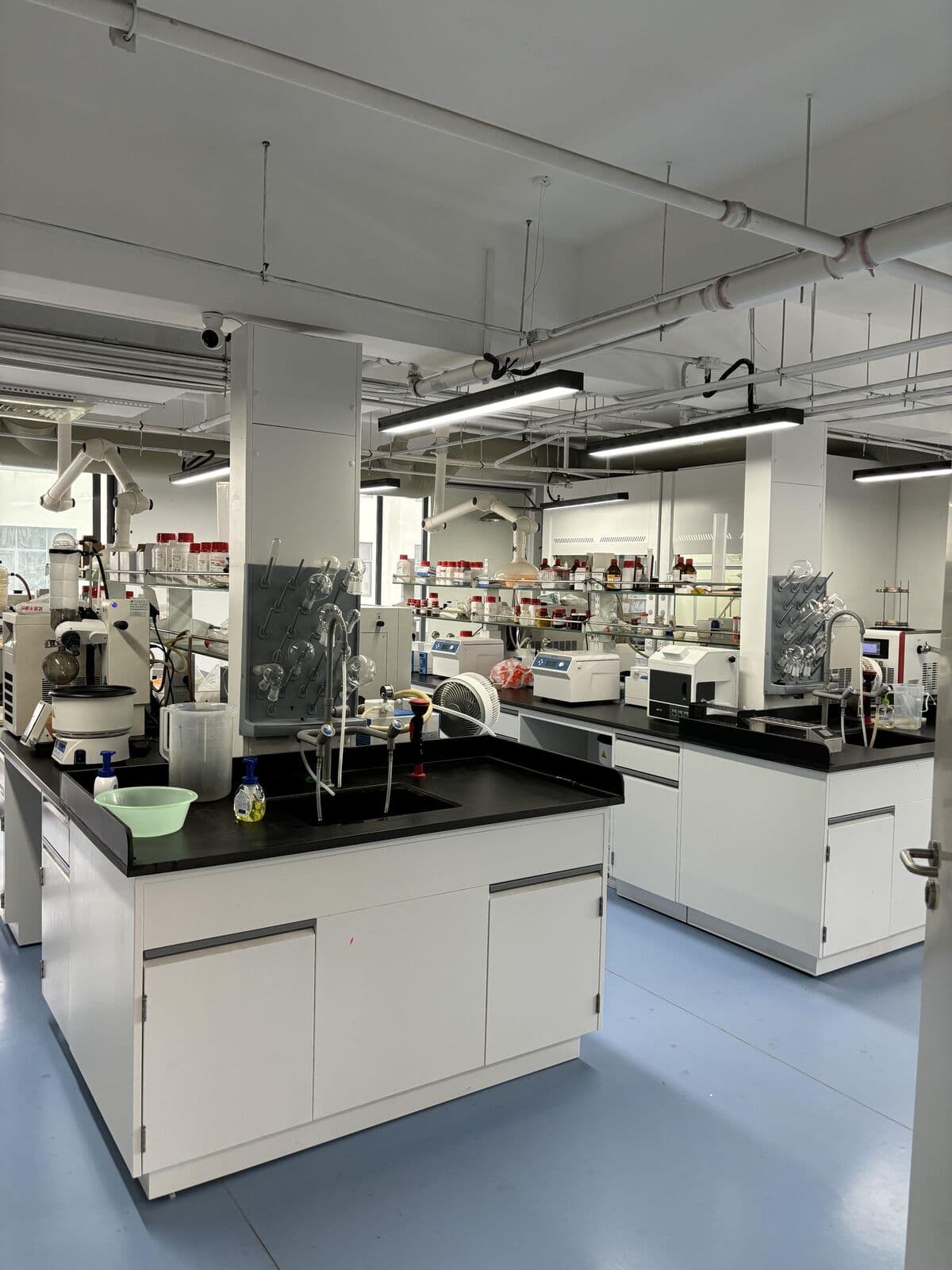
Dose-response testing in our lab: each beaker runs a different PAM concentration so the optimum ppm is read off settled volume and supernatant clarity
Monthly PAM Consumption Quick Lookup
Do not want to calculate? Find your application and plant size below. All figures use mid-range dosage from the table above and assume 30 operating days/month.
| Application | Plant Scale | Dosage Used | Monthly PAM (kg) | Monthly Cost (est.) |
|---|---|---|---|---|
| Water clarification | 1,000 m³/day | 3 ppm | 90 kg | $180 |
| Water clarification | 10,000 m³/day | 3 ppm | 900 kg | $1,800 |
| Water clarification | 50,000 m³/day | 3 ppm | 4,500 kg | $9,000 |
| Sludge dewatering | 100 m³/day sludge @ 3% | 6 kg/ton DS | 540 kg | $1,188 |
| Sludge dewatering | 500 m³/day sludge @ 2.5% | 6 kg/ton DS | 2,250 kg | $4,950 |
| Mining tailings | 10,000 tons ore/day | 15 g/ton | 4,500 kg | $9,000 |
| Mining tailings | 50,000 tons ore/day | 15 g/ton | 22,500 kg | $45,000 |
| Paper making | 500 tons paper/day | 1.0 kg/ton paper | 15,000 kg | $30,000 |
How to read this table: Find the row closest to your plant size. Your actual consumption will vary ±30% depending on water quality, temperature, and PAM grade — use the formulas below to calculate precisely, or send us your specs for a free estimate.
Cost basis: APAM $2,000/ton, CPAM $2,200/ton (FOB China, 2026 pricing). Actual cost depends on grade and volume — see current pricing.
Basic Dosage Formula
For water clarification (the most common application), the formula is straightforward:
PAM consumption (kg/day) = Flow rate (m³/day) × Dosage (ppm) ÷ 1,000,000 × 1,000
Simplified: PAM (kg/day) = Flow (m³/day) × Dosage (mg/L) ÷ 1,000
Example: A plant treating 5,000 m³/day at 3 ppm dosage:
5,000 × 3 ÷ 1,000 = 15 kg/day of PAM powder
At $2,000/ton, that is $30/day or $900/month in chemical cost.
Sludge Dewatering Dosage Formula
For sludge dewatering, dosage is based on dry solids content. Whether using a belt press or centrifuge, the formula is the same:
PAM (kg/day) = Sludge flow (m³/day) × Solids concentration (%) × Dosage (kg/ton DS) ÷ 100
Example: A WWTP dewatering 200 m³/day of sludge at 3% solids, using 6 kg CPAM per ton of dry solids:
200 × 3% × 6 ÷ 100 = 200 × 0.03 × 6 = 36 kg/day of CPAM
Monthly consumption: 36 × 30 = 1,080 kg. At $2,200/ton, that is $2,376/month.
Mining Tailings Dosage Formula
For mining tailings, dosage is based on ore throughput. The same formula applies to coal washing plants and metal ore thickeners:
PAM (kg/day) = Ore processed (tons/day) × Dosage (g/ton) ÷ 1,000
Example: A copper mine processing 50,000 tons/day at 15 g/ton APAM:
50,000 × 15 ÷ 1,000 = 750 kg/day of APAM
Monthly: 22,500 kg (22.5 tons). At $2,000/ton, that is $45,000/month. Compared to the $36 million/year saved in water recycling, this is a 720x ROI.
How to Determine Optimal Dosage: Jar Test Method
Formulas give you a starting range. The exact optimum must be found through jar testing:
- Prepare 0.1% PAM solution — dissolve 1g PAM in 1L clean water, stir gently for 60-90 minutes
- Collect wastewater sample — fresh, representative sample at normal operating conditions
- Set up 6 beakers — 1L each of wastewater
- Add PAM at increasing doses — 0, 1, 2, 5, 8, 12 ppm (adjust range based on application)
- Rapid mix 30 seconds — 200 rpm to distribute polymer
- Slow mix 5 minutes — 40 rpm to build flocs
- Settle 10-30 minutes — observe floc size, settling speed
- Measure supernatant — turbidity, TSS, color
- Plot results — find the dose where quality plateaus (diminishing returns)
The optimal dose is where you get 90%+ of maximum performance. Going beyond this wastes chemical with minimal improvement.
Need PAM for your treatment system?
Free sample + jar test report. WhatsApp: +86 187-3759-0940
Factors That Affect Dosage
- Suspended solids concentration — More solids = more polymer needed. Double the TSS roughly doubles the dose.
- Particle size — Finer particles need higher MW PAM and higher dosage. Coarse particles settle with less polymer.
- pH — Outside the optimal range (6-9 for ionic PAM), effectiveness drops and dosage must increase. At pH below 4, consider switching to nonionic PAM which works through pure bridging regardless of pH.
- Temperature — Cold water (<10°C) slows dissolution and reduces flocculation. Increase dose 20-30% in winter.
- Competing ions — High salinity screens ionic charges. May need to switch to NPAM or increase dose.
- Organic content — Dissolved organics consume cationic polymer. Higher organic load = higher charge density CPAM needed.
- Mixing energy — Too much shear breaks flocs. Too little prevents distribution. Optimize mixing speed.
The Over-Dosing Problem
More is not always better. Over-dosing PAM causes:
- Charge reversal (CPAM) — excess positive charge restabilizes particles, making water turbid again
- Steric stabilization — excess polymer coats all particle surfaces, preventing bridging
- Increased sludge volume — excess polymer adds to sludge mass
- Higher costs — obvious but often overlooked when operators add extra "just in case"
If your water gets worse when you add more polymer, you have passed the optimum. Reduce dose until performance peaks.
Solution Preparation for Accurate Dosing
PAM must be dissolved before use. Dosing dry powder directly into wastewater gives terrible results — it clumps and never fully dissolves. See our dissolving method guide for the full procedure.
- Standard concentration: 0.1-0.3% (1-3 g/L)
- Dissolution time: 60-90 minutes for powder, <5 minutes for emulsion
- Water temperature: 15-40°C
- Mixing: gentle, low-shear (50-100 rpm paddle mixer)
- Shelf life: use within 24 hours (solution degrades)
For continuous dosing, use a metering pump calibrated to deliver the target ppm based on flow rate. Automatic systems with flow-proportional dosing give the most consistent results.
Cost Calculation Example
A municipal WWTP treating 20,000 m³/day wants to estimate annual PAM cost:
- Application: sludge dewatering (centrifuge)
- Sludge flow: 500 m³/day at 2.5% solids
- Dosage: 5 kg CPAM per ton dry solids
- Daily consumption: 500 × 0.025 × 5 = 62.5 kg/day
- Annual consumption: 62.5 × 365 = 22,812 kg (22.8 tons)
- Cost at $2,200/ton: $50,187/year
Compare this to sludge disposal savings: reducing cake moisture from 80% to 75% cuts sludge volume by 20%, saving $100,000-200,000/year in hauling and landfill fees. PAM pays for itself 2-4x over.
Common Dosage Mistakes and How to Fix Them
We see the same five mistakes at plants across multiple export markets. Each one wastes money or makes treatment worse:
- Adding dry powder directly to wastewater. The powder clumps on contact — you lose 60-80% of the polymer to undissolved fish-eyes. Always pre-dissolve to 0.1-0.3% solution first, stir 60-90 minutes, then dose the solution. If you get fisheyes even in a proper make-up tank, our guide on why polyacrylamide lumps walks through the feed rate, vortex, and temperature settings that stop it.
- Solution concentration too high (>0.5%). Thick solutions are hard to pump, mix poorly into the water stream, and give uneven dosing. Keep it at 0.1-0.3% for gravity dosing, 0.3-0.5% maximum for metering pumps.
- Not adjusting for seasons. Cold water (<10°C) slows floc formation. Increase dose 20-30% in winter. Hot water (>35°C) accelerates dissolution but can degrade the solution faster — use within 12 hours instead of 24.
- Using expired solution. PAM solution degrades within 24-48 hours at room temperature (bacterial attack + hydrolysis). A 48-hour-old solution gives 30-50% less performance than fresh. Mix only what you need for one shift.
- Mixing energy too high. High-speed mixers (>300 rpm) break polymer chains after flocs form. Use 200+ rpm for initial dispersion (30 seconds), then drop to 40-80 rpm for floc building (5 minutes). Never recirculate flocculated water through a centrifugal pump.
When to Automate Dosing
Manual dosing works for plants under 5,000 m³/day with stable influent. Above that, or when influent quality swings (storm events, batch discharges), automated systems pay for themselves within 6-12 months through chemical savings alone. According to AWWA (American Water Works Association) operational data, automated dosing reduces polymer consumption by 15-25% compared to manual operation.
Three levels of automation:
- Flow-proportional dosing ($5,000-15,000): Metering pump linked to a flow meter. Dose tracks flow rate automatically. Simplest upgrade — eliminates over-dosing during low-flow periods.
- Turbidity feedback ($15,000-30,000): Online turbidity sensor in the effluent triggers dose adjustment. If turbidity rises above setpoint, dose increases automatically. Handles influent quality swings without operator intervention.
- Full PLC control ($30,000-50,000): Multiple sensors (flow, turbidity, pH, TSS) feed a PLC that optimizes dose in real time. Best for large plants (>50,000 m³/day) or mining operations where influent changes hourly.
We supply PAM to plants running all three levels. Our technical team can recommend dosing equipment suppliers in your region — we have worked with ProMinent, Grundfos, and Milton Roy systems across 30+ installations.
Frequently Asked Questions
Why does my water get worse when I add more PAM?
You have passed the optimum dose. With cationic PAM, excess positive charge reverses the surface charge on particles — they repel each other again and stay suspended. With anionic PAM, excess polymer coats all particle surfaces and prevents bridging. Reduce dose by 30-50% and work back up in small increments. Run a fresh jar test to find the new optimum.
How often should I re-run jar tests to recalibrate dosage?
At minimum: when seasons change, when influent quality shifts noticeably (color, odor, TSS), when you switch to a new PAM batch, and whenever treatment efficiency drops more than 15% from baseline. For mining operations with variable ore feed, monthly jar tests are standard practice. For stable municipal plants, quarterly is usually sufficient.
Can I mix two different PAM grades to get better results?
Sometimes, but it is rarely necessary and adds complexity. The most common valid combination is using a coagulant (alum or ferric chloride) followed by PAM — the coagulant handles charge neutralization, PAM handles bridging. Mixing two PAM grades (e.g., APAM + CPAM) can cause them to complex with each other and reduce effectiveness. If you think you need a blend, contact us — we can formulate a single grade that meets your requirements.
Need Help with Dosage Optimization?
Send us your water analysis and current treatment setup. Our technical team will calculate the recommended dosage and provide free samples for jar testing. We respond within 24 hours. Related: jar test procedure, proper dissolving methods, and water treatment chemicals supplier.
Ready to turn dosage data into a supplier inquiry?
After you confirm the dosage range, move directly into the buyer pages that support a usable quote: compare the APAM product overview, review the MOQ and pricing guide, and check the ChinaPAM supplier page.
Confirmed public baseline: MOQ 500 kg, free samples, standard lead time 7-10 days, T/T and L/C, and 25 kg kraft paper bags with plastic liner or 25 kg PE bags.
WhatsApp: +86 187-3759-0940 | Request a quote
Get a Quote
Our factory in Xinxiang produces confirmed grade availability across core APAM, CPAM, NPAM, and PHPA products. MOQ 500kg, delivery 7-10 days standard. Contact us for pricing and free sample:
- WhatsApp: +86 187-3759-0940
- Email: info@chinapolyacrylamide.com
Recommended Product Grades
For the application discussed above, these are the polyacrylamide grades we ship most often:
Not sure which is right for you? Try our PAM Selector tool or request a quote.