Selecting the correct CPAM grade reduces belt press cake moisture from 82–85% down to 72–76% — cutting sludge disposal volume by 35–45% and saving $15,000–60,000/year in hauling costs for a typical 50 m³/h municipal WWTP. Based on belt press polymer optimization across 120+ installations (2022–2026), this guide covers charge density and molecular weight selection, dose calculation, cake dryness targets, and troubleshooting the most common belt press polymer problems.
Belt filter presses dewater conditioned sludge by progressive compression between two moving filter belts — gravity drainage zone, low-pressure wedge zone, and high-pressure roller zone. Polymer conditioning with cationic PAM is essential: without it, sludge passes through the belt (blinding the cloth) or produces cake so wet it cannot be handled. The polymer creates shear-resistant flocs that release water under mechanical compression while maintaining structural integrity.
Need belt press polymer optimization?
Send us a 2L sludge sample (ideally thickened to 2–4% solids). We run CST testing, gravity drainage, and simulated compression to recommend the optimal CPAM grade and dosage. Trial MOQ from 500 kg. Check pricing and MOQ details.
Why Belt Presses Need Polymer Conditioning
Raw sludge at 1–4% solids cannot be mechanically dewatered without polymer conditioning. The bound water surrounding bacterial flocs, colloidal organic matter, and fine clay particles creates a gel-like matrix that resists compression. CPAM polymer bridges these particles into larger, porous aggregates that release water under pressure — converting a colloidal suspension into a filterable solid.
Without polymer: belt press produces >85% moisture cake, filtrate TSS exceeds 500 mg/L, and belt cloth blinds within 2–4 hours requiring shutdown for washing. With properly selected CPAM: cake moisture drops to 72–78%, filtrate TSS stays below 80 mg/L, and belt cloth operates 8–12 hours between washes.
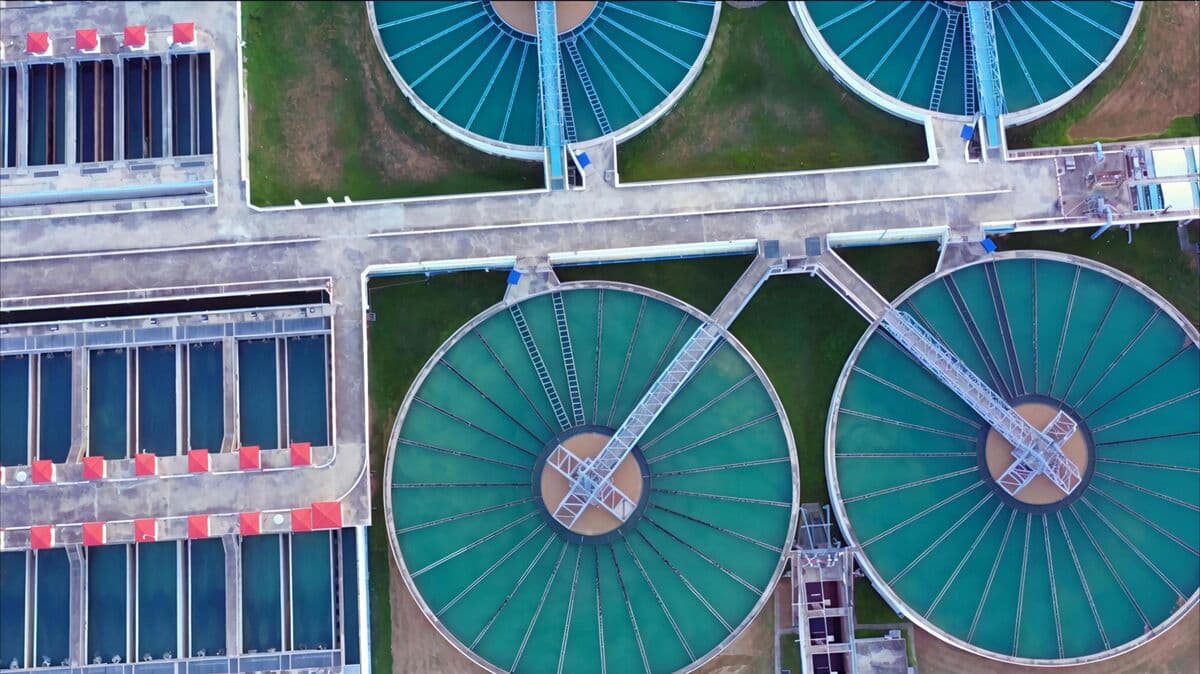
Belt press dewatering municipal activated sludge: CPAM-conditioned sludge producing 74% moisture cake at 6 kg/ton dry solids dosage.
CPAM Grade Selection: MW and Charge Density vs. Cake Performance
Belt press polymer performance depends on matching two parameters to your sludge type: molecular weight (determines floc strength under belt shear) and charge density (determines neutralization of sludge surface charge). Getting either parameter wrong results in wet cake, poor filtrate, or excessive polymer consumption.
| Sludge Type | MW (million Da) | Charge Density | Dose (kg/t DS) | Cake Moisture |
|---|---|---|---|---|
| WAS (waste activated sludge) | 10–12 | 40–50% | 4–7 | 75–79% |
| Primary sludge | 10–12 | 30–40% | 3–5 | 70–75% |
| Mixed primary + WAS | 10–12 | 35–45% | 4–6 | 73–77% |
| Anaerobic digested | 12–15 | 50–65% | 6–10 | 76–82% |
| Industrial oily sludge | 12–15 | 50–70% | 8–15 | 78–84% |
| Food industry sludge | 10–12 | 40–55% | 5–8 | 74–79% |
Data from 120+ belt press optimization projects. Cake moisture measured at standard 2.0 m belt width, 3–5 m/min belt speed, 5–8 bar compression pressure.
Why Charge Density Matters More Than MW for Belt Presses
Unlike centrifuges where molecular weight dominates (high shear breaks weak flocs), belt presses operate at relatively low shear — meaning charge neutralization efficiency matters more than polymer chain length. A CPAM with correct charge density but moderate MW (10M) consistently outperforms high-MW (15M+) polymer with insufficient charge density on the same belt press.
The mechanism: sludge particles carry 1.5–4.0 meq/g surface charge depending on organic content. The polymer must neutralize 60–80% of this charge to destabilize the colloidal matrix. Insufficient charge density means more polymer is needed — increasing viscosity, blinding the belt, and raising cost per ton of dry solids.
Municipal Sludge: WAS vs. Primary vs. Digested
Municipal WWTPs produce three sludge types with fundamentally different polymer requirements. Running the wrong grade is the #1 cause of excessive belt press polymer consumption in municipal plants.
Waste Activated Sludge (WAS)
WAS from secondary clarifiers has high organic content (VS/TS ratio 0.70–0.85), small particle size (d50 = 20–60 µm), and moderate surface charge (2.0–3.0 meq/g). Standard grade: CPAM 40–50% charge density, 10–12M MW, dose 4–7 kg/ton DS. Expect cake moisture 75–79% on a well-maintained belt press.
Primary Sludge
Primary sludge is coarser (d50 = 50–200 µm), lower organic content (VS/TS 0.55–0.70), and lower charge density (1.5–2.5 meq/g). It dewaters more easily than WAS, requiring lower charge density polymer: CPAM 30–40%, 10–12M MW, dose 3–5 kg/ton DS. Expect cake moisture 70–75%.
Anaerobically Digested Sludge
Digested sludge is the most challenging: cell lysis releases biopolymers that increase viscosity and demand more charge neutralization. Higher charge density (50–65%) and higher MW (12–15M) are needed. Dosage increases to 6–10 kg/ton DS, and cake moisture is typically 2–4% higher than undigested equivalents. Many plants mistakenly use the same polymer for digested and undigested sludge — resulting in 40–60% excess polymer consumption.

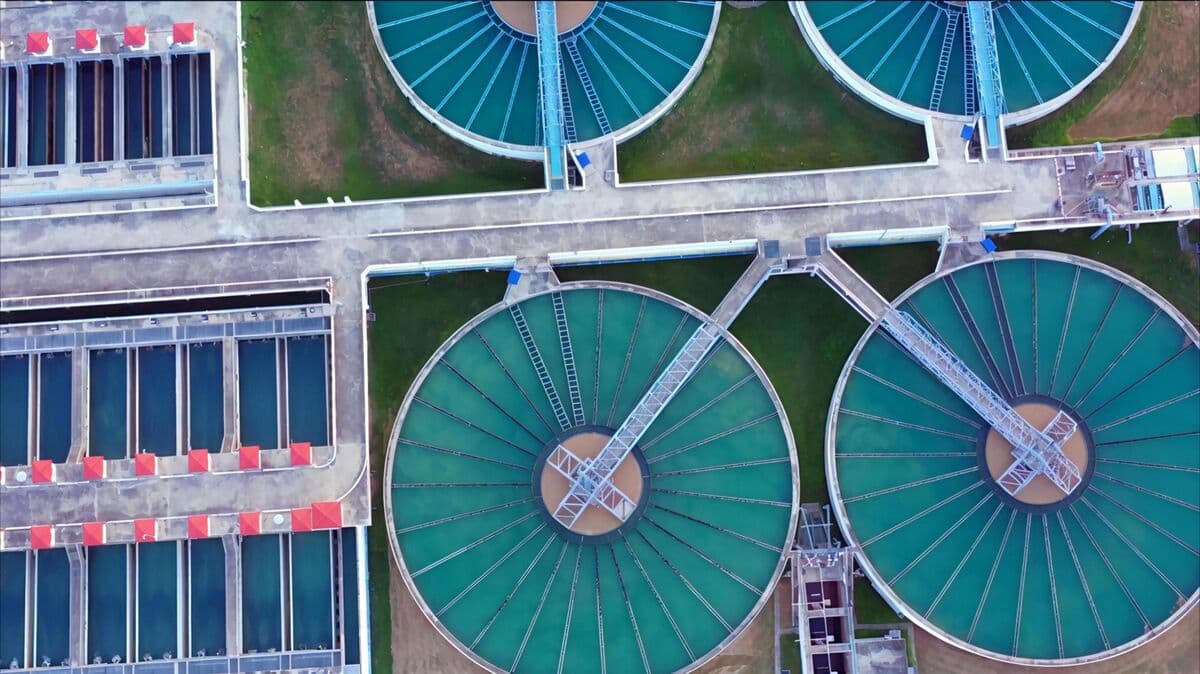
Municipal WWTP belt press line: CPAM-conditioned WAS producing 76% moisture cake. Belt width 2.5 m, throughput 45 m³/h at 3% feed solids.
Industrial Sludge: Oil, Chemical, and Food Processing
Industrial sludges require higher polymer doses and higher charge density than municipal equivalents due to complex organic matrices, oil contamination, and variable composition.
Oily Sludge (Refinery, Metalworking, Petrochemical)
Oil-contaminated sludge carries extremely high negative charge (3.5–5.0 meq/g) and contains emulsified hydrocarbons that compete with sludge particles for polymer binding sites. Grade requirement: CPAM 50–70% charge density, 12–15M MW, dose 8–15 kg/ton DS. Pre-treatment with FeCl₃ at 50–100 mg/L reduces polymer consumption by 30–40% for heavily oily sludge.
Food Processing Sludge
Food waste sludge (dairy, brewery, fruit processing) has high volatile solids (VS/TS 0.80–0.92) and variable charge depending on pH and organic composition. CPAM 40–55% charge density, 10–12M MW, dose 5–8 kg/ton DS. Key challenge: protein-rich sludge (dairy, meat processing) requires higher charge density than carbohydrate-rich sludge (brewery, starch).
Belt Press Polymer Troubleshooting
Belt press problems are visible immediately — unlike clarifier issues that develop over hours. Here's a systematic troubleshooting approach for the most common polymer-related belt press failures.
| Symptom | Likely Cause | Solution |
|---|---|---|
| Sludge runs off belt edges | Underdose — no floc structure | Increase dose 25%. Check solution concentration. |
| Belt blinding (no drainage) | Overdose or wrong MW — sticky polymer film | Cut dose 30%. Switch to lower MW grade. Increase wash water. |
| Wet cake (>82% moisture) | Charge density too low for sludge type | Switch to higher CD grade. Test 10% higher charge density. |
| Cake sticking to belt | Polymer overdose OR belt tension too low | Reduce dose 20%. Check belt tension. Verify scraper blade condition. |
| High filtrate TSS (>200 mg/L) | MW too low — flocs break under compression | Switch to 12–15M MW grade. Slow belt speed 10%. |
| Variable performance hour-to-hour | Feed solids fluctuation without dose tracking | Add density meter on sludge feed. Use solids-proportional dosing. |
Belt Press Polymer Dosing Calculation
Belt press polymer dosage is expressed in kg of active polymer per ton of dry solids (kg/t DS) — not mg/L like clarification applications. The calculation:
- Daily dry solids: Feed flow (m³/h) × Feed solids (%) × Operating hours × 10 = kg DS/day
- Daily polymer: kg DS/day × Dose (kg/t DS) ÷ 1000 = kg polymer/day
- Solution preparation: kg polymer/day ÷ Solution concentration (0.1–0.3%) = L solution/day
Example: 40 m³/h sludge feed at 3% solids, 16 h/day operation, 5 kg/t DS dose → 40 × 0.03 × 16 × 1000 = 19,200 kg DS/day = 19.2 t DS/day → 19.2 × 5 = 96 kg polymer/day → ~3 tons/month.
For detailed dosage calculation methodology, see our PAM dosage calculation guide.
Polymer Preparation for Belt Press Systems
Belt press polymer must be fully dissolved (minimum 45–60 minutes maturation) before injection. Under-dissolved polymer wastes active ingredient — dry cores pass through the sludge without conditioning, requiring 20–40% more gross polymer to achieve the same dewatering result. If your make-up tank is producing gel balls, fix that before touching the dose: why polyacrylamide lumps.
- Solution concentration: 0.1–0.3% for dry powder CPAM (lower concentration = faster dissolution)
- Water temperature: 15–25°C (cold water below 10°C extends dissolution to 90+ minutes)
- Maturation time: 45–60 minutes minimum after powder addition
- Solution age limit: Use within 8–12 hours (viscosity loss beyond 12 hours reduces performance)
- Mixing speed: 100–200 RPM during dissolution — never exceed 300 RPM (shear degrades MW)
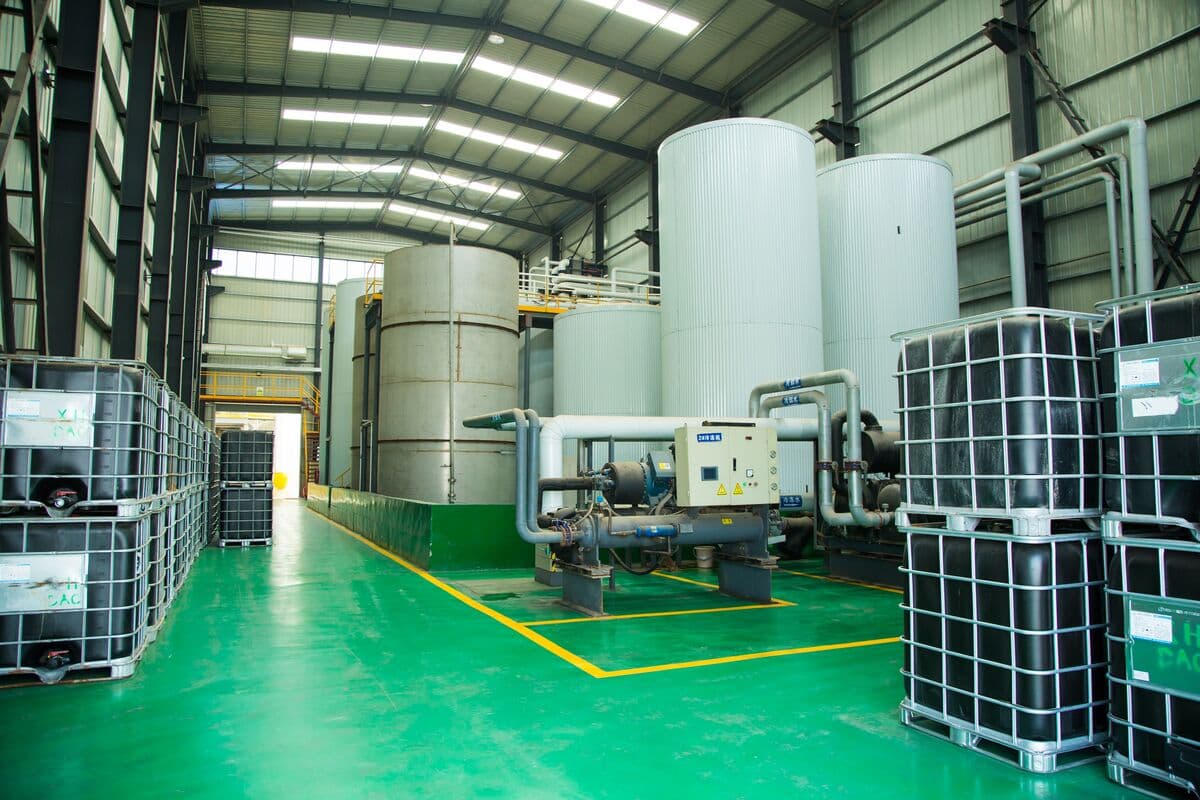
Three-tank automatic CPAM dissolution system: powder dosing → dissolution tank (60 min) → maturation tank → metering pump to belt press. Capacity 500 L/h at 0.2% concentration.
Cost Optimization Strategies
Belt press polymer typically represents 25–40% of total sludge handling cost (including hauling, disposal, energy, and maintenance). Three proven approaches to reduce polymer cost without sacrificing cake dryness:
1. Match Polymer to Actual Sludge (Not Historical Grade)
Sludge characteristics change seasonally, with process modifications, and after equipment upgrades. A polymer optimized in 2023 may be 30% wrong by 2026. Re-test with a jar test and CST evaluation annually — or whenever cake moisture increases more than 2% from baseline.
2. Optimize Feed Solids Concentration
Dilute sludge (<2% solids) wastes polymer because surface area per kg of solids increases. Thickening sludge from 1.5% to 3.5% before belt press reduces polymer consumption by 15–25% (less water to carry through the conditioning zone) while increasing throughput.
3. Solids-Proportional Dosing
Manual polymer dosing at a fixed pump setting results in 30–50% excess consumption during low-solids periods. A density meter (microwave or Coriolis type) on the sludge feed line driving the polymer metering pump pays back within 3–6 months on most installations.
Get a Belt Press Polymer Sample Kit
We ship a 3-grade belt press sample kit (2 kg each: CPAM 35%, CPAM 45%, CPAM 60% charge density — all 10–12M MW) for bench testing with your sludge. Send your sludge type, current polymer, belt press model, and target cake moisture. MOQ 500 kg for production orders.
Frequently Asked Questions
What charge density CPAM do I need for my belt press?
Start with your sludge type: WAS typically needs 40–50% charge density, primary sludge 30–40%, digested sludge 50–65%, and oily industrial sludge 50–70%. The correct answer for your specific sludge requires a CST test — send us a 2L sample and we identify the optimal grade within 48 hours. See our charge density selection guide for the full methodology.
How do I calculate belt press polymer cost per ton of cake?
Polymer cost per ton of cake = (Dose in kg/t DS × Polymer price per kg) ÷ (1 − Cake moisture fraction). Example: 5 kg/t DS × $3.00/kg ÷ (1 − 0.76) = $62.50 per ton of cake. For a plant producing 20 tons cake/day, annual polymer cost is approximately $456,000. A 15% dose reduction from grade optimization saves $68,000/year.
Can I use the same CPAM for belt press and centrifuge?
Generally no. Centrifuges impose 2,000–3,000 G shear force versus 3–8 bar compression on belt presses. Centrifuges need higher MW (12–15M) for shear resistance, while belt presses perform optimally at 10–12M with emphasis on correct charge density. Using a centrifuge-grade high-MW polymer on a belt press typically causes belt blinding due to excessive floc viscosity.
How often should I re-evaluate belt press polymer grade?
Annually at minimum, or whenever: cake moisture increases >2% from baseline, polymer consumption rises >15% without flow change, process modifications affect sludge (new aeration, chemical addition, digester changes), or filtrate quality degrades. A re-optimization typically recovers 10–20% of accumulated dose creep. Contact us for a free re-evaluation with your current sludge sample.
If your belt press is already specified on a branded cationic grade, two pages are worth reading before you trial anything: our Zetag 8127 DL equivalent covers the lower-charge-demand end that suits a fresher, less-degraded feed, and our FLOPAM FO 4132, FO 4350 and FO 4400 equivalent page walks through how to work out which rung of the charge ladder your sludge actually needs.
Belt press duty is also where chain length earns its money, because the floc has to survive the gravity drainage zone before it ever reaches pressure. Our Zetag 7652 equivalent page sets out why a mid-charge grade on the longest available chain suits a press and can lose to a shorter chain on a high-speed centrifuge, and our Zetag 8140 equivalent page covers the same charge position one step down in chain length — the pair to trial together if you are not sure which side of the shear question your machine falls on. For a feed that has gone through digestion, our Zetag 8190 equivalent page explains why charge demand climbs with sludge age, and just as importantly when not to move up.
This article is part of our complete polyacrylamide water treatment guide. Related topics: DAF systems, food processing wastewater.
Get a belt press polymer recommendation
Tell us your sludge type, solids loading, belt width, and target cake dryness. We will recommend a starting CPAM grade, send free samples for your own press trial, and quote your actual operating conditions.
Quotation based on grade, quantity and destination · info@chinapolyacrylamide.com · WhatsApp +86 187-3759-0940