Coal Washing & Preparation
Specialized PAM for coal preparation plants. Handles high-ash coal slurry, improves solid-liquid separation in thickeners and filter presses.
PAM for Coal Washing — Water Recycling Economics
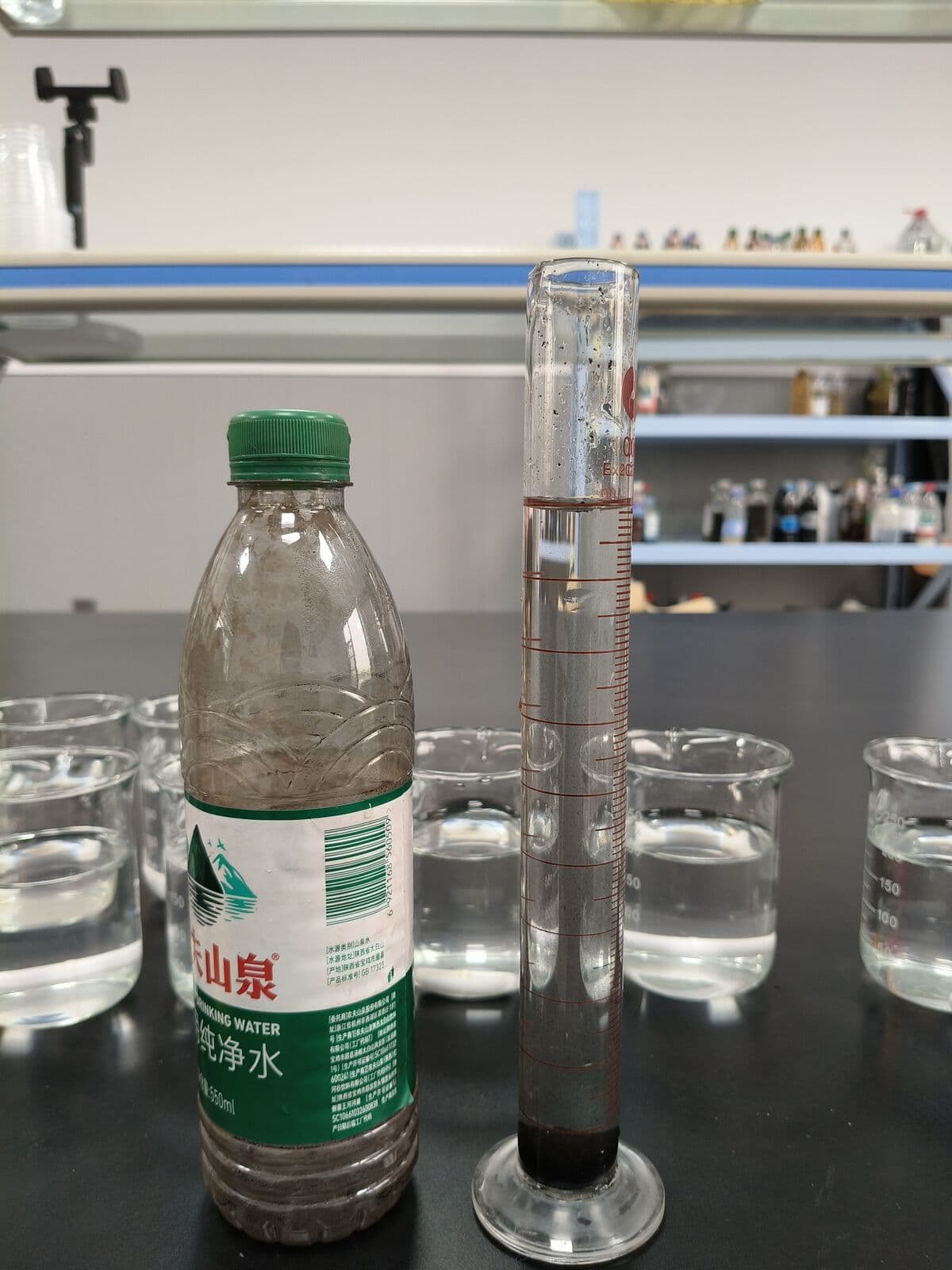
Coal preparation plants running an open water circuit face two costs at once: fresh make-up water, and discharge that sits above the turbidity limit. Raw coal washing effluent commonly runs 400–800 NTU against discharge limits around 50 NTU. Correctly specified anionic PAM closes the circuit — the parametric economics of that are worked through below.
We supply coal-grade APAM to preparation plants in Australia, Indonesia, Vietnam, India, South Africa, and Mongolia. Coal washing is one of our core markets — we have dedicated grades for it, not repurposed general-purpose PAM.
PAM Selection by Coal Type
| Coal Type | Particle Size | APAM Grade | Dosage | Settling Time |
|---|---|---|---|---|
| Thermal (bituminous) | 50-500 µm | 12-18M MW | 3-8 ppm | 30-60 min |
| Coking (anthracite) | 20-200 µm | 15-25M MW | 5-15 ppm | 1-3 hours |
| Lignite (brown coal) | 100-1000 µm | 10-15M MW | 2-5 ppm | 20-40 min |
The key variable is clay content. High-clay coal (kaolinite >15%) needs higher MW and higher dosage. We ask every new client to send a water sample before recommending a grade — clay content varies by mine and by seam within the same mine.
Why Anionic PAM — Not Cationic
Coal particles are negatively charged, so cationic PAM seems logical. In practice, APAM outperforms CPAM every time for coal washing. Coal particles have enormous surface area — bridging (long APAM chains connecting multiple particles) is far more effective than charge neutralization. APAM also costs 30-40% less.
Water Recycling System Design
- Collection sump — 500-1,000 m³, collects all wash water
- PAM dosing — 0.1% solution at sump outlet, 3-15 ppm
- Gentle mixing — 2-5 minutes, low shear (high shear breaks flocs)
- Settling pond or thickener — 1-3 hours residence time
- Overflow pump — clarified water back to washing plant
- Sludge removal — weekly or monthly by excavator
For plants with limited land, a high-rate thickener replaces the settling pond — same clarification in 20% of the footprint.
Worked Example 1: Thermal Coal, 2,000 ton/day
The figures below are a worked example for a 2,000 ton/day thermal coal circuit at $1/m³ water cost, not results recorded at a specific plant. Use them to size the opportunity, then confirm on your own slurry with a jar test.
| Metric | Open circuit | Modelled, APAM 15M at 6 ppm |
|---|---|---|
| Water recycling rate | 0% | 82% |
| Fresh water consumption | 3,000 m³/day | 540 m³/day |
| Discharge turbidity | 600 NTU | 22 NTU (compliant) |
| PAM cost | — | $120/day |
| Water savings | — | $2,460/day |
| Annual net savings | — | $854,000 |
Worked Example 2: High-Clay Coking Coal, 1,500 ton/day
High-kaolinite coals (15–20% clay) are the common failure case for a standard 15M APAM: the fines stay in suspension and settling stalls. The usual fix is a higher molecular weight grade — 20–22M Da — which bridges the fine clay fraction. On this class of slurry, moving from an under-specified grade to a correctly matched one typically cuts settling time from several hours to under two.
We can adjust monomer ratios to match your clay content rather than shipping a catalog grade and hoping it fits. Send us a slurry sample with your clay assay and we will specify against it.
Water Recycling Economics
| Plant Size | Water Saved | PAM Cost/Year | Water Savings/Year | ROI |
|---|---|---|---|---|
| 500 ton/day | 1,200 m³/day | $22,000 | $438,000 | 20x |
| 1,000 ton/day | 2,400 m³/day | $44,000 | $876,000 | 20x |
| 3,000 ton/day | 7,200 m³/day | $132,000 | $2,628,000 | 20x |
At $1/m³ water cost and 80% recycling rate, PAM ROI is consistently 15-20x regardless of plant size. In Australia where water costs $1.50-3.00/m³, ROI is even higher.
The Batch Consistency Problem
The most common complaint from coal plants: "First batch worked great, second batch was useless." This happens when you buy from trading companies who source from whoever is cheapest that month.
We are the factory. Every batch is produced on our own lines in Xinxiang. Every batch tested for MW (±0.5M tolerance), solid content (≥90%), dissolution time (≤90 min). We retain 200-500g samples from every batch for 24 months. If you have a performance issue, we pull the retained sample and compare.
Pricing (2026, FOB China)
- APAM 10-15M MW (lignite): $1,200-1,500/MT
- APAM 15-20M MW (thermal coal): $1,400-1,700/MT
- APAM 20-25M MW (coking coal): $1,600-1,900/MT
- Custom grades (22M+, high clay): quote on request
MOQ: 500kg first order. Delivery: 7-10 days standard, 3-5 days urgent.
Frequently Asked Questions
How do I know which MW grade I need?
Send us 5-10 liters of your coal washing water. We test 4-5 grades at multiple dosages and send you a settling curve showing which grade gives the best turbidity at the lowest cost. Free of charge — takes 3-5 days.
Can I use the same PAM for coal washing and tailings thickening?
Usually yes — both applications use APAM in the same MW range. But dosage differs. Washing water (3-15 ppm) is much more dilute than thickener feed (15-40 g/ton solids). If you have both applications, we recommend the same grade at different dosages.
What about seasonal variation?
Rainy season increases clay content in wash water, requiring 20-30% higher dosage. Some mines switch to a higher MW grade in wet season. We can supply both grades and advise on when to switch based on your turbidity monitoring.
Coal Washing & Preparation is one of several mining processes we supply polyacrylamide for. For grade selection across the full mining scope — including MOQ, samples, and quality documents — see PAM for Mining.
Recommended Products
Related Articles
PAM for Sand Washing: Dosage, Settling, and Water Recycling
How to use anionic PAM for sand washing wastewater treatment. Dosage vs turbidity data, grade selection, water recycling system design, and cost analysis from 130+ sand plant samples.
MiningPAM for Gold Mining | Tailings, CIL/CIP & Grade Selection
Buyer guide to APAM and NPAM for gold tailings, CIL/CIP clarification, and acidic mine water. Covers grade selection, dosage starting points, MOQ 500 kg, and free samples.
Buyer GuidePAM Supplier Brazil: Mining & Municipal
PAM supply to Brazil for iron ore tailings, municipal WWTP, phosphate mining, and oil & gas. Logistics, compliance, and technical support.
MiningAnionic PAM for Mining: Supplier & Dosage
How mining operations use anionic PAM for tailings clarification, thickener optimization, and water recovery. Includes dosage and performance data.
MiningPAM for Mining Tailings: Water Recovery
How mining operations use PAM for tailings clarification, thickener optimization, and water recycling. Includes dosage by ore type and ROI analysis.
Buyer GuidePAM Supplier Indonesia: Palm Oil & Mining
PAM supply to Indonesia for POME treatment, nickel mining, and coal washing. Covers heat-stable CPAM for palm oil mills and shipping logistics.
Ready to Optimize Your Coal Washing & Preparation Process?
Send us your process parameters — we'll provide a free product recommendation with dosage calculation.