Mineral Tailings Settlement
High molecular weight anionic PAM for rapid tailings settlement in thickeners. Achieves clear overflow water for recycling and dense underflow for safe disposal.
PAM for Mining Tailings — Water Recovery That Pays for Itself 20x
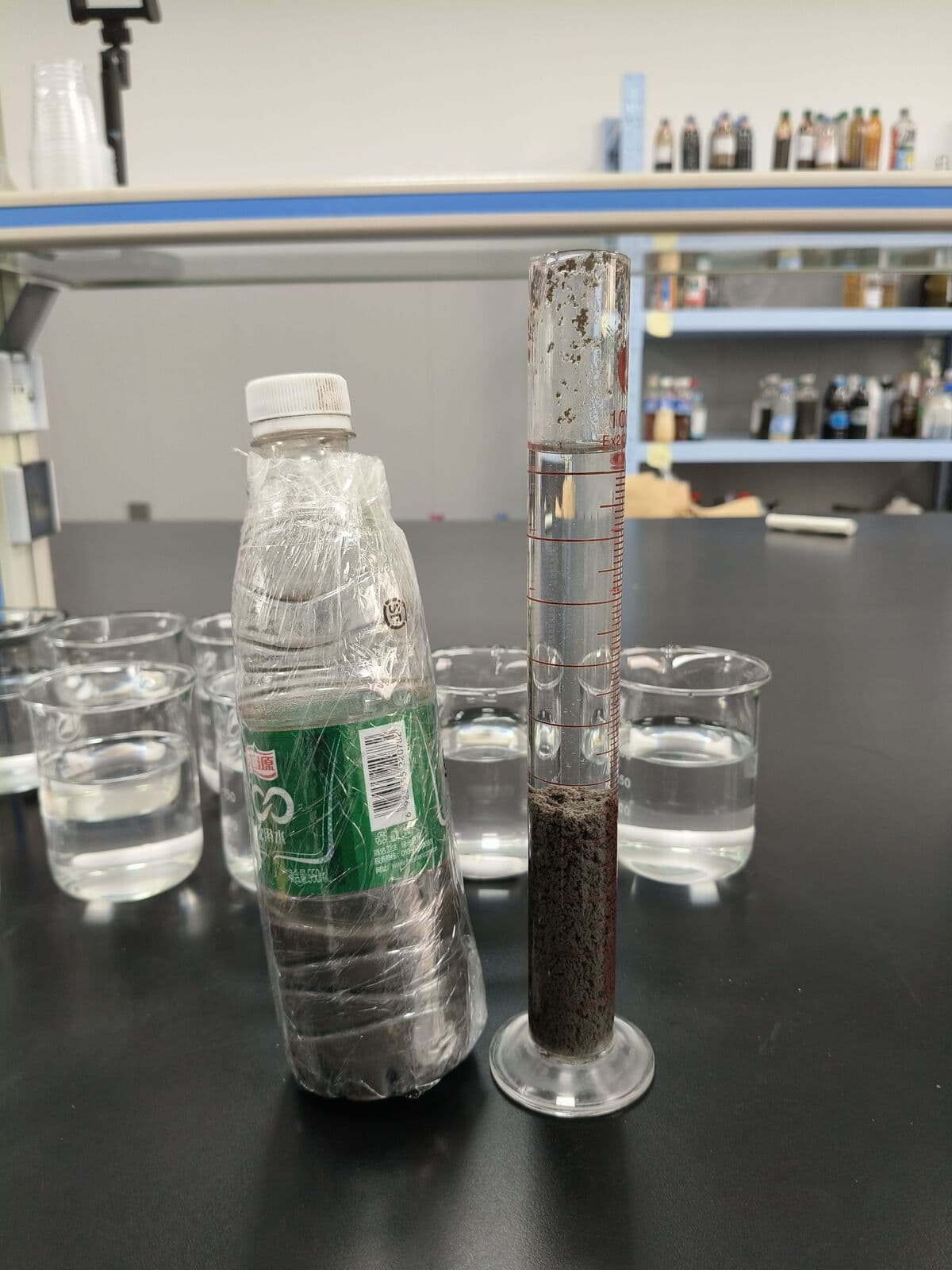
A gold mine running five settling ponds and still overflowing in the rainy season is a flocculant problem, not a pond problem. At 7-10 day settling times and 200+ NTU recycled water, the polymer is under-specified for the fines. Move to a 26M MW APAM at around 25 g/ton ore and settling drops to hours rather than days, turbidity to the mid-teens NTU, and water recycling from roughly 45% to 65% — which is what lets a site run three ponds instead of five and free the land. The figures below work that through.
We supply mining-grade APAM to copper, gold, iron ore, and phosphate operations across South America, Africa, Australia, and Southeast Asia. Our factory ships 5,000+ tons annually to the mining sector alone.
PAM Selection by Ore Type
| Ore Type | Particle Size | APAM Grade | Dosage | Key Challenge |
|---|---|---|---|---|
| Gold / Silver | 5-50 µm (fine) | 20-28M MW | 15-40 g/ton | Ultra-fine particles, cyanide circuit |
| Copper (porphyry) | 10-100 µm | 15-25M MW | 10-30 g/ton | Sulfide oxidation, flotation reagents |
| Iron ore (hematite) | 20-200 µm | 12-20M MW | 5-15 g/ton | High throughput, paste thickening |
| Phosphate | 10-50 µm | 18-25M MW | 8-25 g/ton | High clay (20-40%), AMD |
| Coal | 50-500 µm | 10-15M MW | 3-10 g/ton | Coarser particles, lower dosage |
Thickener Operation
The thickener is the heart of tailings management. Without PAM, iron ore thickeners operate at 30-50% of design capacity because fine particles settle too slowly. With our APAM, settling rate improves 10-50x.
- Conventional thickener: APAM 15-20M MW, 15-30 g/ton ore
- High-rate thickener: APAM 20-25M MW, 20-40 g/ton ore
- Paste thickener (dry stacking): APAM 22-28M MW, 30-60 g/ton ore
Paste thickening produces 65-72% solids underflow — no tailings dam needed. This eliminates $100M-500M in dam construction costs. It requires ultra-high MW PAM (25-28M). We produce APAM up to 28M MW, among the highest available commercially.
Worked Example: Gold Tailings, 30,000 ton/day
Modelled, not a delivered project. The comparison below is what the MW step change does on fine gold tailings — the numbers are engineering estimates for a 30,000 ton/day circuit, not measurements from a named site.
| Parameter | Before (12M MW generic) | After (26M MW, 30% hydrolysis) |
|---|---|---|
| Settling time | 7-10 days | 3-4 hours |
| Recycled water turbidity | 200 NTU | 15 NTU |
| Water recycling rate | 45% | 65% |
| Tailings ponds needed | 5 | 3 |
| Freshwater cost savings | — | $25,000/month |
The failure mode is a generic 12M MW grade sold into a duty that needs more reach. Fine gold tailings (5-50 µm) need ultra-high MW for effective bridging, and moving to 26M MW is a change you can make without touching dosage or hardware — which is why it is worth ruling out before anyone proposes a second thickener.
Water Recovery Economics
Mining consumes 1-3 tons of water per ton of ore. In water-scarce regions (Atacama, Pilbara, Rajasthan), water costs $1.50-3.00/m³ due to desalination or long-distance pumping.
| Operation Size | Water Saved | PAM Cost/Year | Water Savings/Year | ROI |
|---|---|---|---|---|
| 5 Mtpa copper | 3M m³/year | $325,000 | $4.5-9M | 14-28x |
| 10 Mtpa iron ore | 6M m³/year | $650,000 | $9-18M | 14-28x |
| 30 Mtpa iron ore (Pilbara) | 18M m³/year | $1.95M | $27-54M | 14-28x |
Batch Consistency for Mining
A single bad PAM batch can shut down a thickener for hours — costing $50,000-200,000 in lost production. Our quality system addresses this:
- MW tolerance: ±0.5M (tighter than industry standard ±1.0M)
- Solid content: ≥90%
- Dissolution time: ≤90 minutes
- Residual monomer: ≤0.05%
- Retained samples: 200-500g per batch, kept 24 months
We export orders to multiple export markets. Mining is our largest sector. We have dedicated mining grades — not repurposed water treatment PAM.
Frequently Asked Questions
Why does my thickener overflow turbidity spike after changing PAM batches?
Almost always a batch consistency issue. A 1M MW difference shifts optimal dosage by 10-20%. Our ±0.5M tolerance minimizes this. If you experience turbidity spikes after a batch change, run a quick jar test to recalibrate — takes 30 minutes. We can also compare your batch against our retained sample to confirm if it is within spec.
How do I handle high-clay laterite tailings?
Clay minerals consume PAM through surface adsorption without contributing to floc formation. Two approaches: (1) Use higher hydrolysis APAM (30-35%) — extra charge overcomes clay interference. (2) Pre-treat with coagulant (alum or ferric chloride, 50-100 g/ton) to neutralize clay charge before adding PAM. Approach 2 typically reduces PAM consumption by 30-40%.
What is the difference between conventional and paste thickening?
Conventional thickeners produce 55-65% solids underflow — flows like liquid, needs a tailings dam. Paste thickeners produce 65-72% solids — behaves like toothpaste, can be stacked without a dam. Paste thickening requires ultra-high MW PAM (25-28M) at higher dosages, but eliminates the cost and liability of a tailings dam entirely.
Mineral Tailings Settlement is one of several mining processes we supply polyacrylamide for. For grade selection across the full mining scope — including MOQ, samples, and quality documents — see PAM for Mining.
Recommended Products
Related Articles
PAM for Gold Mining | Tailings, CIL/CIP & Grade Selection
Buyer guide to APAM and NPAM for gold tailings, CIL/CIP clarification, and acidic mine water. Covers grade selection, dosage starting points, MOQ 500 kg, and free samples.
Buyer GuidePAM Supplier Brazil: Mining & Municipal
PAM supply to Brazil for iron ore tailings, municipal WWTP, phosphate mining, and oil & gas. Logistics, compliance, and technical support.
MiningAnionic PAM for Mining: Supplier & Dosage
How mining operations use anionic PAM for tailings clarification, thickener optimization, and water recovery. Includes dosage and performance data.
MiningPAM for Mining Tailings: Water Recovery
How mining operations use PAM for tailings clarification, thickener optimization, and water recycling. Includes dosage by ore type and ROI analysis.
Buyer GuidePAM Supplier Indonesia: Palm Oil & Mining
PAM supply to Indonesia for POME treatment, nickel mining, and coal washing. Covers heat-stable CPAM for palm oil mills and shipping logistics.
Buyer GuidePAM Supplier South Africa: Mining Guide
PAM supply to South Africa for gold/platinum tailings, coal washing, and municipal water. Covers AMD-resistant grades, document review, and pricing.
Ready to Optimize Your Mineral Tailings Settlement Process?
Send us your process parameters — we'll provide a free product recommendation with dosage calculation.