
Excavation Pit Dewatering
Treatment of groundwater and surface runoff from construction excavation pits. Removes suspended solids and turbidity for compliant discharge to storm drains.
PAM for Excavation Pit Dewatering
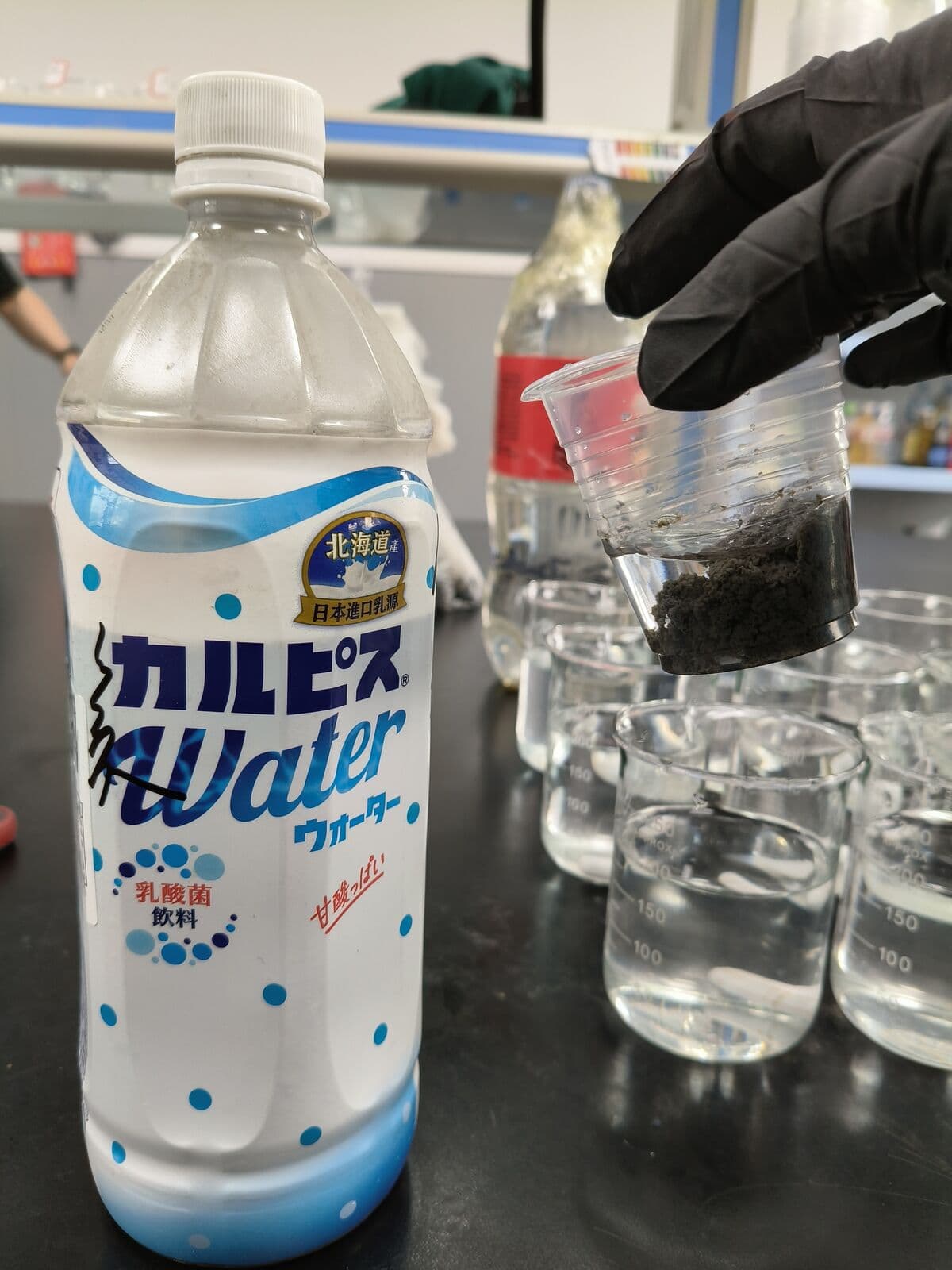
Groundwater pumped from an excavation pit arrives turbid with silt, clay and fine sand that natural settling alone will not clear in any reasonable time. On a tight urban site without space for a settling pond, or where the discharge consent has a turbidity or suspended-solids limit, PAM is the fastest way to drop the fine fraction out of suspension.
The chemistry here is simpler than most construction applications: the solids are mostly inorganic, the feed composition is relatively stable, and there are no competing surfactants or polymers in the water. A medium-to-high molecular weight anionic grade dosed correctly will settle what gravity alone cannot. We supply the relevant grades from our own plant in Xinxiang, Henan, with 100,000 tons/year of PAM capacity, and batch documentation for every consignment.
What Is in Excavation Dewatering Water
Feed composition changes as the excavation advances, and getting that wrong is the main reason trials on one level fail on the next. Four solids types behave differently enough to need separate treatment thinking:
| Solids type | Settling behaviour | Treatment response |
|---|---|---|
| Sand and coarse silt | Settles quickly under gravity, usually within 15-30 minutes | Screen or pre-settle first; PAM dose goes further when the coarse fraction is already out |
| Fine silt and clay in sandy ground | Settles in hours at low turbidity; resists at high load | Standard anionic PAM at 2-6 g/m³; most straightforward case |
| Dispersed clay from soft cohesive ground | Resists settling almost indefinitely; Stokes settling time in weeks | Coagulant first (lime, PAC, polyDADMAC) then anionic PAM; skip coagulant and polymer alone disappoints |
| Organic or contaminated groundwater | Variable; surfactants and organics interfere with flocculation | Jar test essential before dosing; non-ionic grade less affected by variable charge |
The practical implication is that a dose established in sandy gravels often overdoses or underdoses once the bore reaches a clay layer, and re-testing takes 30 minutes while a bad dose wastes polymer or pushes turbidity over the consent limit. Keeping a jar test kit on site is not premium practice on this application — it is the minimum to avoid both.
Discharge Consents and What Gets You Caught
Storm drain and surface water discharge consents on construction sites typically cap suspended solids and sometimes turbidity, pH and specific metals. The limits and the enforcement mechanism vary by country and authority, so the only reliable approach is to read your actual consent before designing the treatment, not after. Three specific traps are worth naming because they are the ones that generate notices:
pH. If you are adding lime or polyaluminium chloride as a coagulant, recovered water can reach pH 10-11, well outside the typical 6-9 consent range. Lime-dosed water needs carbon dioxide or acid correction before discharge — not optionally, and not just when someone is watching.
First flush after rain. Excavation turbidity spikes sharply when a rain event mobilises surface fines that have accumulated around the pit. The water arriving at the pump at that point is not the same as normal groundwater, and a dose set on steady-state conditions will be wrong. Have a higher dose ready for event conditions, or accept that the first outflow after rain needs to be held until turbidity drops.
Residual polymer. Over-dosing puts unreacted polymer in the discharge. At dewatering doses this is not an acute hazard, but free polymer is measurable and some consents address it directly, and in any case it is a signal that you are spending money on polymer that is not doing any work. Monitor filtrate and back off if turbidity is already under control.
Grade and Dose Selection
| Ground condition | Grade | Typical dose | Target |
|---|---|---|---|
| Sandy or silty ground, groundwater only | Anionic, 12-18M MW, 25-30% hydrolysis | 1-4 g/m³ | Under 50 NTU settled; under 20 NTU for direct reuse |
| Mixed ground, moderate clay content | Anionic, 15-22M MW, 25-30% hydrolysis | 3-8 g/m³ | After coagulant; under 50 NTU for discharge |
| Soft clay, alluvium, weathered rock | Coagulant then anionic or non-ionic, 12-18M MW | 2-6 g/m³ (after coagulant) | Pre-settling + chemistry essential; gravity alone will not achieve consent |
| Sludge from settlement tank — press or bag | Cationic, 8-12M MW, 30-50% charge | 2-5 kg/t dry solids | Separate dewatering duty; cationic on the sludge, anionic on the clarifier overflow |
Grade data is on our anionic polyacrylamide and cationic polyacrylamide pages. The molecular weight trade-off is covered in our molecular weight guide, and dose calculation across the two bases (g/m³ versus kg/t DS) is in our dosage calculation guide.
Site Setup Without a Settling Pond
A traditional settling pond needs space a tight urban basement job does not have. Three alternatives work in practice, and the right one depends on flow rate and site footprint.
Stacked settlement tanks. Two or three 10,000-litre tanks in series, dosed before the first tank, give residence time in 15-20 minutes per stage. The dosing point needs to be upstream of a gentle inline mixer, not a pump, and the tank overflow should be as far from the inlet as the tank geometry allows. This works up to around 30-50 m³ per hour.
Lamella or tube settlers. Inclined plate or tube inserts increase effective settling area by a factor of five to ten in the same tank footprint, which either cuts residence time or handles higher flow. They need pre-flocculation to be effective — dosed water that has not had time to aggregate produces small flocs that pass between the plates. A 3-5 minute upstream flocculation contact time is the minimum.
Dewatering bags and geotextile tubes. For flows up to 10-15 m³ per hour and when solid cake is the preferred output rather than recovered water, dewatering bags work and take up minimal space. The constraint is head — water has to be pumped in, not gravity-fed, because the bag holds positive pressure during filling, and the pad under the bag has to tolerate saturated ground around a working excavation.
All three benefit from a coarse screen or sump strainer upstream to protect pumps and remove the fraction that does not need chemistry. There is no value in paying to flocculate sand that would settle in a bucket.
Worked Example: Tight Urban Basement
Modelled from typical site parameters rather than a delivered project. Take a three-level basement excavation in silty sand, pumping 20-30 m³ per hour, with a storm drain discharge consent at 50 mg/L suspended solids and pH 6-9.
Raw water arrives at 300-600 NTU. Through two settlement tanks in series with anionic PAM dosed at 3-5 g/m³ ahead of the first tank, settled turbidity reaches 20-35 NTU — reliably within the consent, with headroom for the turbidity spike that arrives after a rain event. The sludge accumulated in the tanks over a week is roughly 80-120 kg of dry solids per day at these flow rates — dewatered with cationic CPAM at 3-4 kg/t DS in a geotextile bag, it produces a stackable cake that hauls as solid waste rather than as liquid.
The savings are in what does not move. A fully liquid treatment stream at this flow rate is between 15,000 and 20,000 litres per day of turbid water hauled off site. Recovering 90% as dischargeable clarified water reduces that to the wet cake volume alone. Substitute your own disposal tariff to get the site-specific arithmetic — the chemistry cost is small against the haulage saving on any job lasting more than a few weeks.
Dosing Practice on Site
- Jar test at the start of each new ground layer. Sand, silt and clay dose differently, and the water changes as the excavation advances. A 30-minute jar test costs nothing and prevents a week of wrong doses.
- Dose upstream of a gentle inline static mixer, not a pump. Pumps break up flocs before they grow. A static inline mixer gives the mixing energy needed without the shear.
- Make down at 0.1-0.3% and allow 30-60 minutes to hydrate. Under-matured solution looks clear in the drum and under-performs at the dosing point. On site the instinct is to increase dose, which compounds the problem.
- Leave residence time before the first tank overflow. Even a good floc needs 10-15 minutes to reach settleable size. A tank overflowing turbid water when the incoming water was dosed correctly usually means the tank is too small for the flow or the dosing point is too close to the outlet.
- Re-test after every rain event. Surface runoff mobilises fine material that has been accumulating around the pit, and the first flush is always the worst. Have a higher dose ready and apply it for the first 30-60 minutes post-rain, then step back down.
- Correct pH before discharge if you are using lime. We test every batch for molecular weight to a ±0.5M tolerance and retain samples for 24 months, so if performance unexpectedly changes we can separate a product change from a ground change.
Make-down technique is covered in our PAM dissolving guide and the full jar test procedure is in our jar test guide.
Standards and Reference Bodies
- APHA, AWWA and WEF — Standard Methods for the Examination of Water and Wastewater, the source for turbidity and suspended solids analysis used to check consent compliance.
- ASTM International — test methods for turbidity measurement (ASTM D1889), and construction runoff management practices.
- US EPA Construction General Permit — the federal framework for stormwater discharges from construction activity in the United States; state permits typically add local limits above the federal floor.
- Your local environmental regulator — the binding constraint. Read the actual consent limit before designing the treatment, including pH, suspended solids, and any site-specific metals limits.
Frequently Asked Questions
What turbidity can I achieve with PAM on excavation water?
In sandy or silty groundwater at typical construction flows, two stages of settlement with anionic PAM routinely produce under 30 NTU and often under 15 NTU. Soft dispersed clay is harder — expect under 50 NTU with a coagulant plus polymer sequence, which usually satisfies storm drain consents. The target is set by your consent, not by what the chemistry can theoretically achieve, so confirm your limit before choosing a treatment configuration.
Do I need a coagulant as well as PAM?
For sandy and silty groundwater, usually not — anionic PAM alone is enough. For soft cohesive clay or weathered rock fines, almost always yes. Dispersed clay particles carry a strong negative surface charge that resists anionic bridging. A lime, polyaluminium chloride, or polyDADMAC stage collapses that repulsion, and the subsequent polymer dose typically drops while performance improves.
What happens if I overdose PAM?
Past the optimum, excess polymer coats particles and restabilises the suspension — turbidity in the settled water rises again, which looks like the product has stopped working. The counterintuitive response is to reduce dose. Beyond restabilisation, free polymer goes to the discharge, which some consents flag. Jar test across a dose range before committing to a site setting, and note that the optimum is a range not a point.
Can I use the same PAM for both the clarifier and the sludge press?
Not well. Clarification needs anionic polymer at 1-8 g/m³. Sludge dewatering in a press or bag needs cationic polymer at 2-5 kg per tonne of dry solids — orders of magnitude higher, and the opposite charge. Using one product for both is a compromise that under-performs on at least one duty and usually both.
The previous pump discharge was fine. Why is this one failing consent?
Almost certainly a ground change. Groundwater chemistry, fines content and clay mineralogy change as an excavation advances, and a dose set on one layer can be wrong by a factor of two or three on the next. Re-jar test when the pumped water looks visibly different, when ground conditions change on the site plan, or when the dose that was working stops working — any of these is a signal the feed has shifted.
Excavation Pit Dewatering is one of several construction processes we supply polyacrylamide for. For grade selection across the full construction scope — including MOQ, samples, and quality documents — see PAM for Construction.
Related Articles
Belt Press Polymer Selection: CPAM Grade & Dose Guide
Choose CPAM charge density and molecular weight for belt filter press dewatering: dose by sludge type, cake dryness targets, troubleshooting table.
Water TreatmentPAM for Livestock Wastewater: Pig Farm, Poultry & Dairy
Cationic PAM selection and dosing for livestock wastewater from pig farms, poultry operations, and dairy facilities. Jar test data, system design, sludge dewatering, and cost analysis.
Paper IndustryPAM for Paper Mill Wastewater: Treatment Guide
How paper mills use PAM for primary/secondary clarification and sludge dewatering. Fiber recovery, fines removal, and water recycling case studies.
Product GuideBuy Cationic PAM (CPAM) Bulk: Wholesale
Complete guide to cationic PAM for sludge dewatering and wastewater treatment. Covers charge density selection, bulk pricing, and application methods.
Water TreatmentPolyacrylamide for Municipal Sludge Dewatering: CPAM Dose
CPAM dosage for municipal WWTP sludge dewatering by sludge type and equipment, with cake dryness benchmarks. Factory-direct supply, free jar test, MOQ 500 kg.
Water TreatmentCationic Polyacrylamide for Sludge Dewatering: Charge Guide
Select cationic polyacrylamide charge density for sludge dewatering: match to belt press, centrifuge or screw press, dose ranges, cake dryness gains.
Ready to Optimize Your Excavation Pit Dewatering Process?
Send us your process parameters — we'll provide a free product recommendation with dosage calculation.