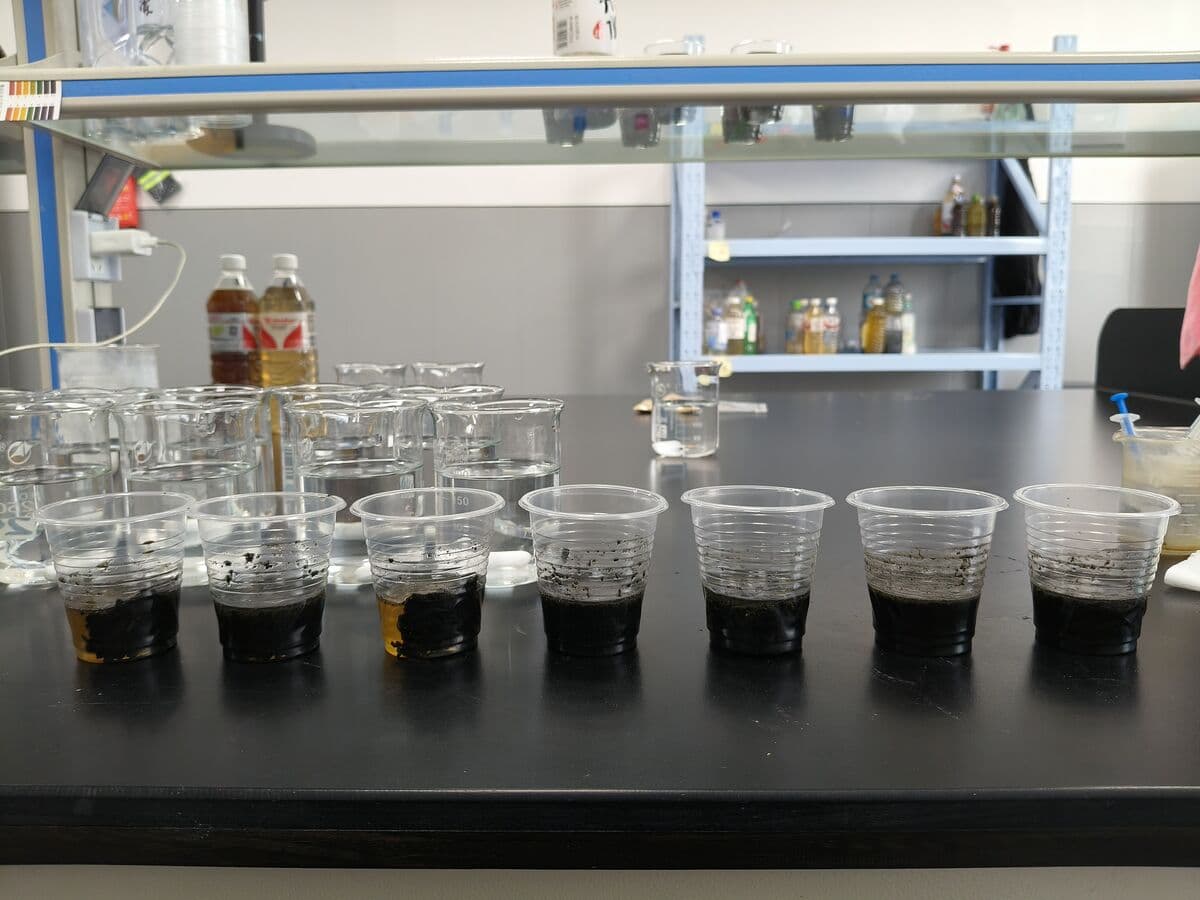
Cationic polyacrylamide at 3–8 mg/L reduces livestock wastewater COD by 45–65% and TSS by 85–95% in the primary clarification stage — cutting downstream biological treatment load by half and producing dewaterable sludge at 18–25% solids. Based on 90+ farm wastewater samples tested in our applications laboratory, this guide covers PAM selection, dosing, and system design for pig farms, poultry operations, and dairy facilities.
Livestock operations generate the most challenging organic wastewater in agriculture: COD 5,000–30,000 mg/L, ammonia 500–3,000 mg/L, TSS 3,000–15,000 mg/L, and complex colloidal organic matter that resists gravity settling. Regulatory discharge limits (COD < 400 mg/L for China Class II, < 100 mg/L for EU) require multi-stage treatment — and PAM-based solid-liquid separation is the critical first step that determines the efficiency of everything downstream.
Need PAM for livestock wastewater?
Send us a 5L sample of your farm effluent. We run a free jar test and recommend the optimal cationic PAM grade, charge density, and dosage for your specific waste stream. Trial MOQ from 500 kg. Check pricing and logistics.
Why Livestock Wastewater Needs Specialized PAM
Livestock wastewater differs fundamentally from industrial or sand washing effluent: the suspended solids are primarily organic (manure fibers, feed residue, bacteria), carrying strong negative surface charge from dissolved organic acids and proteins. This requires cationic PAM (CPAM) rather than anionic — the positive charge on CPAM neutralizes and bridges organic colloids that anionic PAM cannot touch.
The three main livestock waste streams each present distinct treatment challenges:
| Parameter | Pig Farm | Poultry | Dairy |
|---|---|---|---|
| COD (mg/L) | 8,000–25,000 | 5,000–15,000 | 3,000–8,000 |
| TSS (mg/L) | 5,000–15,000 | 3,000–10,000 | 2,000–6,000 |
| NH₃-N (mg/L) | 800–3,000 | 500–1,500 | 200–800 |
| pH | 6.5–7.8 | 6.8–8.2 | 6.5–7.5 |
| Recommended CPAM charge | 40–60% cationic | 30–50% cationic | 20–40% cationic |
| Typical PAM dose | 5–8 mg/L | 3–6 mg/L | 2–5 mg/L |
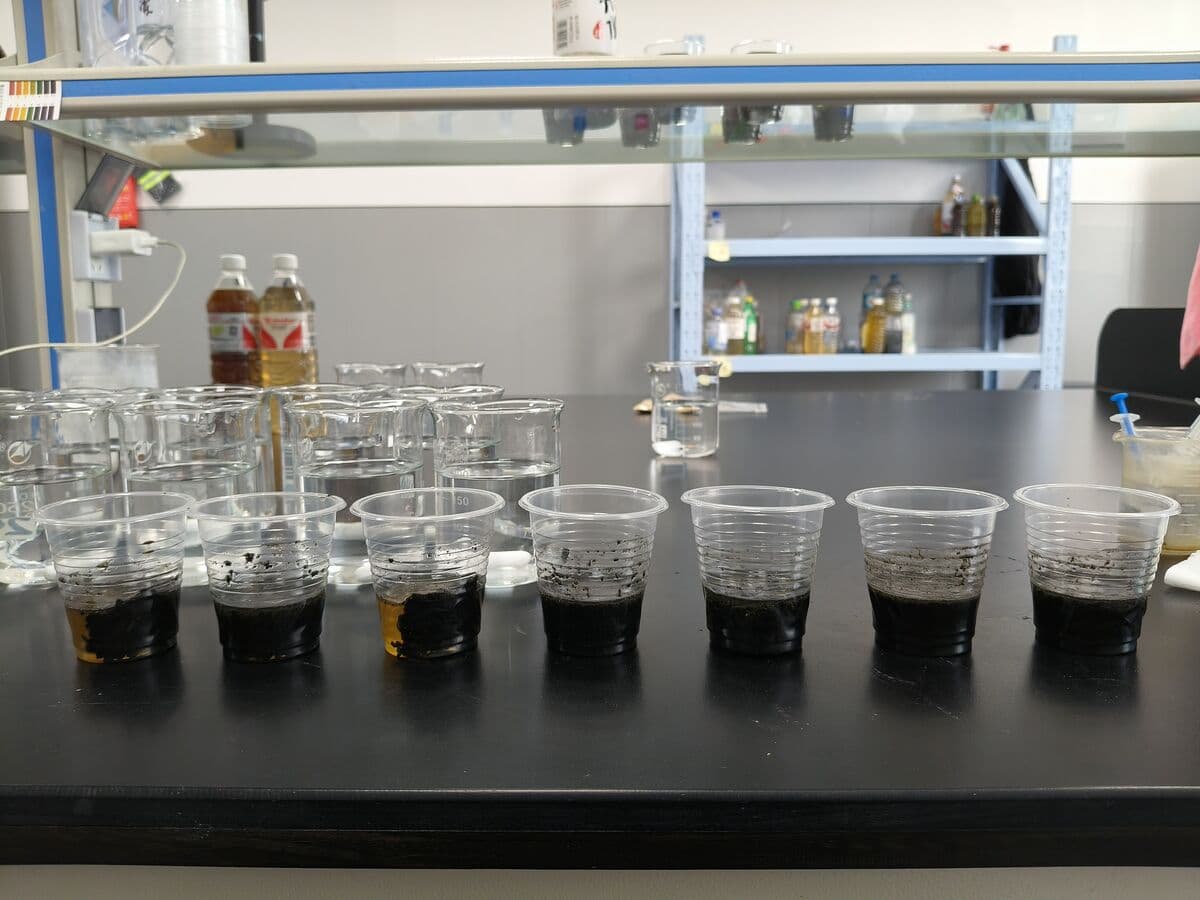
Pig farm wastewater jar test: raw effluent COD 18,000 mg/L (left) vs. after CPAM treatment at 6 mg/L with PAC coagulant (right). Clear separation achieved in 8 minutes.
Pig Farm Wastewater Treatment with PAM
Pig farm wastewater is the most concentrated and difficult livestock effluent to treat. A 10,000-head pig farm generates 200–400 m³/day of mixed flush water with COD typically 12,000–20,000 mg/L and TSS 8,000–15,000 mg/L. The high organic load, combined with fats, oils, and dissolved hydrogen sulfide, requires aggressive pretreatment before biological systems can function.
The standard treatment sequence for pig farm wastewater:
- Solid-liquid separation — Screw press or vibrating screen removes particles > 1 mm
- Coagulation-flocculation — PAC (50–100 mg/L) + CPAM (5–8 mg/L) for colloidal removal
- DAF or sedimentation — Dissolved air flotation preferred for fat-rich waste
- Anaerobic digestion — UASB or anaerobic lagoon for COD reduction + biogas
- Aerobic polishing — SBR or oxidation ditch for final COD/NH₃ removal
CPAM with 50–60% charge density and molecular weight 8–12 million is our standard recommendation for pig farm primary clarification. The high charge density is essential because pig manure contains high concentrations of dissolved organic acids (VFAs) that compete with colloidal particles for the cationic charge sites on the polymer.
Pig Farm Dosage Optimization Data
| CPAM Dose (mg/L) | COD Removal | TSS Removal | Sludge Volume | Assessment |
|---|---|---|---|---|
| 3 | 35% | 72% | 8% | Underdosed |
| 5 | 52% | 88% | 12% | Near optimal |
| 6 | 58% | 92% | 14% | Optimal |
| 8 | 62% | 95% | 18% | Marginal improvement |
| 12 | 63% | 95% | 22% | Overdosed — waste |
Test conditions: 10,000-head pig farm, flush water COD 15,800 mg/L, TSS 9,200 mg/L, pH 7.1. CPAM grade: C1250 (MW 12M, charge 50%). PAC co-dosing: 80 mg/L.
Poultry Wastewater Treatment
Poultry operations (broiler farms, layer houses, and processing plants) generate wastewater with lower COD than pig farms but significantly higher fat and protein content — up to 2,000 mg/L FOG (fats, oils, grease). This creates persistent emulsions that standard gravity settlers cannot break without proper chemical conditioning.
CPAM at 30–50% charge density with molecular weight 8–10 million performs optimally for poultry wastewater. The moderate charge density is sufficient because poultry waste has lower VFA concentration than pig waste, meaning less charge demand competition. Combined with 30–60 mg/L PAC as coagulant, typical results show:
- COD reduction: 45–55% in primary clarification
- TSS removal: 85–92%
- FOG removal: 70–85% (when combined with DAF)
- Settling time: 8–12 minutes to clear supernatant
For poultry processing plants (slaughterhouse wastewater), the blood and feather protein content creates extremely stable emulsions. These require higher CPAM charge density (50–60%) or pre-treatment with ferric chloride before PAM addition. We have found that a dual-polymer system (low-MW CPAM for charge neutralization + high-MW APAM for bridging) sometimes outperforms single CPAM in processing plant effluent.
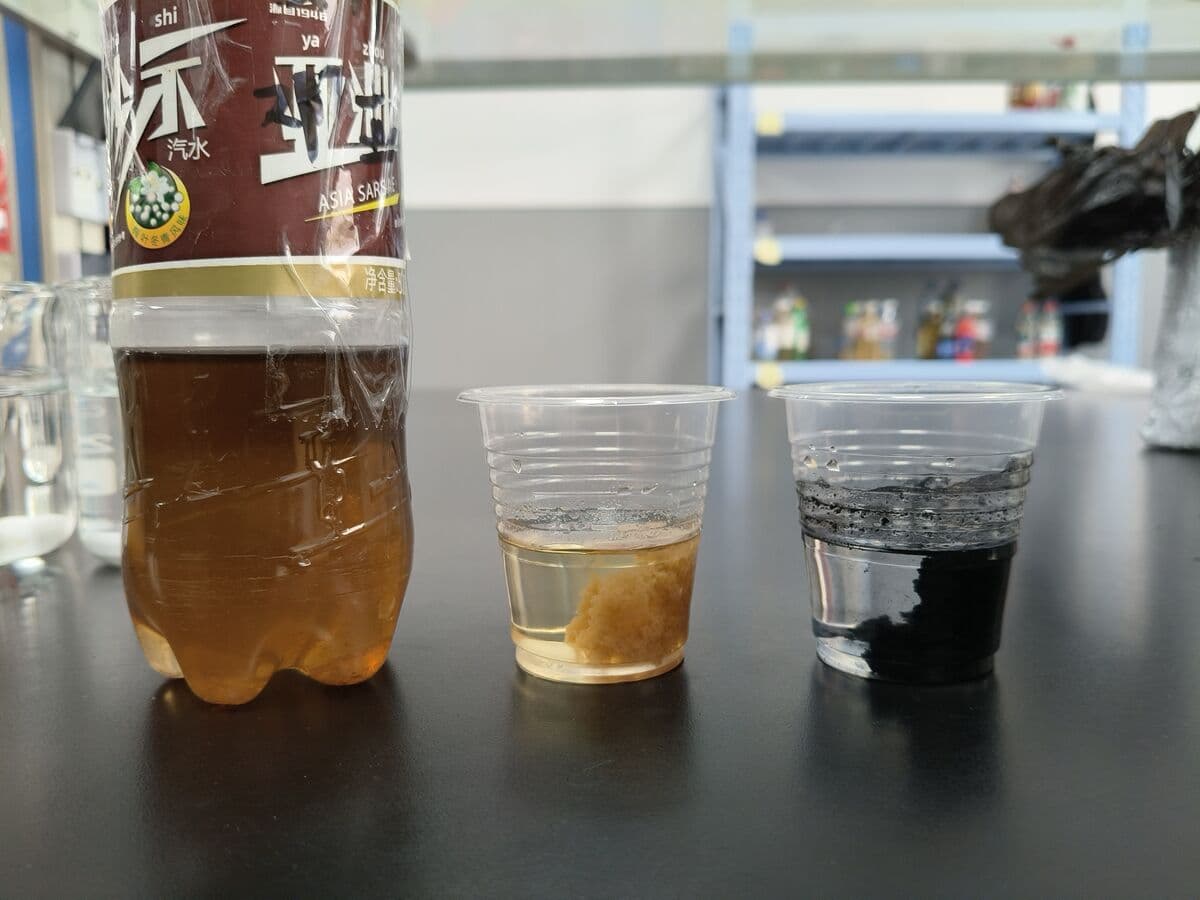
Livestock wastewater comparative test: optimizing CPAM charge density for poultry processing effluent. 40% charge (center) shows best balance of clarification and sludge density.
Dairy Farm Wastewater Treatment
Dairy farm wastewater has the lowest organic load among livestock operations (COD 3,000–8,000 mg/L) but presents unique challenges from high calcium content and casein protein. Calcium ions at 200–500 mg/L can interfere with anionic PAM but actually enhance cationic PAM performance by providing additional charge neutralization capacity.
CPAM at 20–40% charge density and MW 10–12 million works optimally for dairy waste. The lower charge requirement reflects the lower dissolved organic acid content compared to pig or poultry waste. Key considerations for dairy operations:
- Parlor washdown: Low COD (2,000–4,000 mg/L), high volume — CPAM 2–3 mg/L sufficient
- Manure slurry: High COD (6,000–12,000 mg/L), requires CPAM 4–6 mg/L + higher PAC
- Cheese/yogurt processing: Whey and casein require 50%+ charge density CPAM
Dairy operations benefit significantly from solid-liquid separation before PAM treatment. A screw press or rotating drum separator removes 40–60% of solids as a stackable product (useful as bedding or compost), reducing PAM consumption by 30–50% compared to treating unseparated waste.
Sludge Dewatering: The Second PAM Application Point
After primary clarification, livestock operations generate 5–15% of treated volume as waste sludge containing 2–5% solids. This sludge must be dewatered to 18–25% solids for economical disposal or composting. Cationic PAM is used again at this stage — but at much higher molecular weight (15–18 million) to create large, shear-resistant flocs that release water under mechanical pressure.
Sludge conditioning dosage is measured differently from clarification: 3–8 kg of dry PAM per ton of dry solids in the sludge (vs. mg/L for water treatment). The choice between belt press and screw press affects PAM selection:
| Dewatering Equipment | CPAM MW (million) | Charge Density | Dose (kg/t DS) | Cake Solids % |
|---|---|---|---|---|
| Belt filter press | 12–15 | 40–50% | 4–6 | 18–22% |
| Screw press | 10–12 | 30–40% | 3–5 | 15–20% |
| Centrifuge | 15–18 | 50–60% | 5–8 | 22–28% |
Complete Treatment System Design
A 5,000-head pig farm producing 150 m³/day of wastewater requires the following PAM-integrated treatment system. Total chemical cost runs approximately $0.80–1.50/m³ depending on influent concentration and discharge requirements.
- Stage 1 — Screening: 1 mm rotary drum screen, removes 15–25% gross solids
- Stage 2 — Equalization: 12-hour HRT tank with aeration for mixing and odor control
- Stage 3 — Coagulation: PAC at 60–100 mg/L, rapid mix 60 sec at 200 rpm
- Stage 4 — Flocculation: CPAM at 5–8 mg/L, slow mix 5 min at 40 rpm
- Stage 5 — DAF: Dissolved air flotation, 5–8 m³/m²/h loading rate
- Stage 6 — Anaerobic: UASB reactor, 8–12 hour HRT, COD removal 70–85%
- Stage 7 — Aerobic: SBR, 12–18 hour cycle, NH₃-N removal 90%+
- Stage 8 — Sludge dewatering: CPAM conditioning + belt press
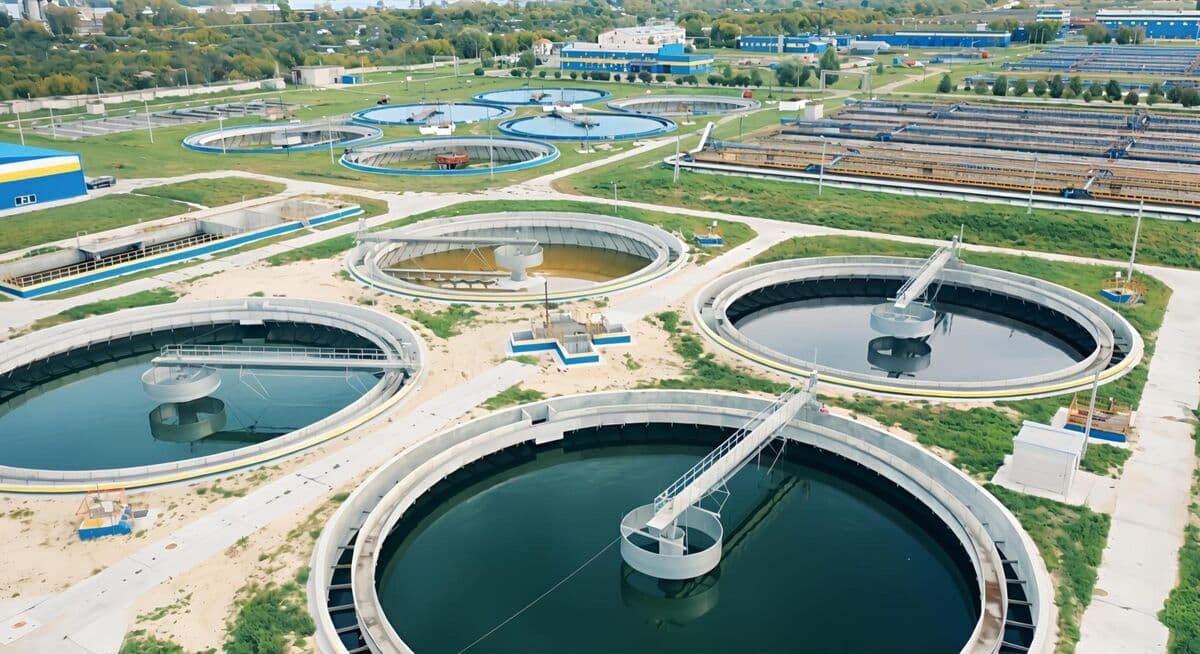
Integrated livestock wastewater treatment: coagulation-flocculation with PAM followed by DAF and biological treatment. System treats 200 m³/day pig farm effluent to discharge standard.
Cost and ROI Analysis
PAM chemical cost for livestock wastewater treatment runs $0.30–0.80/m³ for the primary clarification stage alone. The total chemical cost (PAC + CPAM + sludge conditioning) is $0.80–1.50/m³. While this is higher than sand washing ($0.15–0.25/m³), the regulatory penalties for non-compliance ($5,000–50,000 per violation in most jurisdictions) make proper treatment non-negotiable.
For a 10,000-head pig farm generating 300 m³/day:
- Annual PAM cost (clarification + sludge dewatering): $45,000–65,000
- Annual PAC cost: $25,000–35,000
- Total chemical cost: $70,000–100,000/year
- Avoided regulatory fines: $50,000–200,000/year
- Biogas revenue (from anaerobic treatment): $30,000–50,000/year
- Compost/fertilizer sales from dewatered sludge: $10,000–20,000/year
Common Mistakes in Livestock PAM Treatment
From our technical support across 85+ livestock installations, these are the most frequent errors that increase chemical cost or reduce treatment efficiency:
Mistake 1: Using APAM instead of CPAM
Some operators purchase anionic PAM based on lower unit cost ($1,200–1,500/ton vs. $1,800–2,500/ton for CPAM). However, APAM performs 60–80% worse on organic livestock waste because it cannot neutralize the negative charge on organic colloids. The actual cost per m³ treated ends up 2–3× higher with the wrong polymer type.
Mistake 2: Insufficient pre-separation
Skipping mechanical pre-separation (screening/screw press) forces the chemical system to handle coarse solids that should be removed physically. This wastes 30–50% of PAM capacity on particles that do not need chemical treatment.
Mistake 3: Incorrect dosing sequence
PAM must be added after the coagulant (PAC/FeCl₃) — never before or simultaneously. The coagulant destabilizes colloidal particles first; PAM then bridges the destabilized particles into settleable flocs. Reversing the sequence wastes 40–60% of the polymer.
Mistake 4: PAM concentration too high
Working solution concentration above 0.2% dramatically reduces mixing efficiency and creates uneven dosing. For livestock applications, 0.1% (1 g/L) working solution is optimal, dosed via metering pump into the flocculation zone.
Get Started: Free Jar Test for Your Farm
Recommended Products for Livestock Wastewater
- CPAM High Charge Density (50–60% CD) — primary choice for pig farm and dairy wastewater
- CPAM Medium Charge (30–45% CD) — poultry processing and dilute manure streams
Standards reference: US EPA 40 CFR Part 412 (CAFO effluent guidelines); EU Nitrates Directive 91/676/EEC; China GB 18596-2001 Livestock and Poultry Farming Pollutant Discharge Standard; GB/T 36195-2018 compost safety.
Free jar test for livestock wastewater
Send us a 5L sample of your farm effluent (pig, poultry, or dairy). We test across multiple CPAM grades, charge densities, and dosages — then provide a complete recommendation including chemical cost projection and treatment system advice.
- ✓ Trial order MOQ: 500 kg
- ✓ Free jar test with photo/video report
- ✓ Technical support for system optimization
- ✓ Common livestock grades in stock — ships in 7–10 days
Frequently Asked Questions
Which PAM type is best for pig farm wastewater?
Cationic PAM (CPAM) with 50–60% charge density and molecular weight 8–12 million Dalton is the standard choice for pig farm wastewater. The high charge density is needed because pig manure creates strong dissolved organic acid competition for the cationic sites. Anionic PAM does not work for this application. Always confirm with a jar test using your actual waste.
How much does PAM treatment cost per pig?
At typical water usage of 30 L/pig/day and CPAM dosage of 6 mg/L, the PAM cost is approximately $0.02–0.04/pig/day or $7–15/pig/year for chemical treatment. This includes both primary clarification and sludge dewatering PAM. Total treatment cost (all chemicals + energy) runs $15–25/pig/year.
Can PAM replace biological treatment for livestock waste?
No. PAM removes suspended solids and colloidal organic matter (45–65% COD reduction) but cannot remove dissolved organic compounds or ammonia. Biological treatment (anaerobic + aerobic) is still required to meet discharge limits. PAM reduces the load on biological systems by 50%+, making them smaller, more stable, and cheaper to operate.
Is PAM-treated sludge safe for composting or land application?
Yes. Polyacrylamide is non-toxic and biodegrades in soil within 2–5 years. The acrylamide monomer content in commercial PAM is below 0.05% (500 ppm) — well within agricultural safety standards in EU, US, and China. PAM-conditioned sludge from livestock waste is widely used as compost feedstock and approved for land application under GB/T 36195-2018 and US EPA 40 CFR Part 503.
This article is part of our complete polyacrylamide water treatment guide. Related topics: food processing wastewater, sand washing.