TBM / Shield Tunneling Slurry
Slurry separation and recycling for tunnel boring machines (TBM) and slurry shield tunneling. Maintains slurry properties while removing excavated solids.
PAM for TBM Slurry Treatment
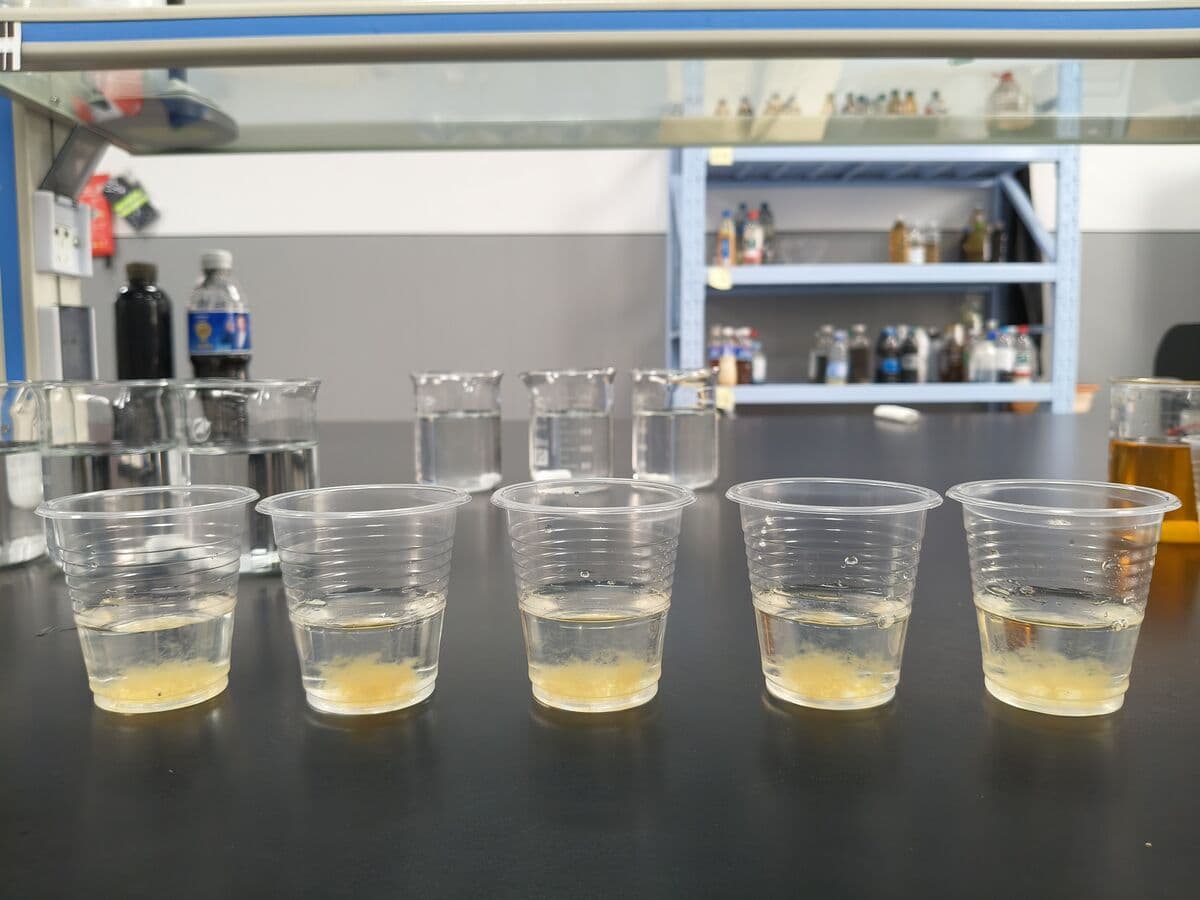
Slurry shield and mixshield TBMs generate spoil water loaded with clay and silt that no screen or cyclone can remove. Everything coarser than roughly 20 microns comes out on the separation plant. What stays behind is a colloidal fines fraction that will not settle in any tank you have room for on a jobsite. That is the fraction polyacrylamide handles, and it is the fraction that decides whether you recycle your process water or truck it away.
We supply APAM and CPAM to tunnelling contractors and separation plant operators, mostly for metro and utility drives in Southeast Asia, the Gulf, Turkey and South America. This page covers where PAM belongs in the slurry circuit, where it must never be dosed, and how to set dosage from your own particle size distribution rather than a catalogue number.
Where PAM Belongs in the Slurry Circuit
A slurry TBM separation plant is a sequence of size cuts, and PAM only makes sense at the end of it. Understanding the order matters, because the most expensive mistake on a TBM job is dosing polymer in the wrong place.
| Stage | Equipment | Particle cut | PAM used? |
|---|---|---|---|
| Pre-screening | Vibrating / trommel screen | > 5-7 mm | No |
| Desanding | Primary cyclones | 60-200 µm | No |
| Desilting | Secondary cyclones | 20-60 µm | No |
| Fines separation | Clarifier / thickener | < 20 µm | Yes — APAM |
| Cake production | Filter press / centrifuge | Thickened sludge | Yes — CPAM |
The Rule That Costs Money to Break
Never dose PAM into the circulating support slurry. On a slurry shield the bentonite suspension in the feed line is a working fluid with a job to do: it holds face pressure and forms a filter cake on the tunnel face. PAM flocculates bentonite exactly as readily as it flocculates spoil clay. Dose polymer upstream and you destroy the rheology you paid for, the slurry stops holding face support, and you replace bentonite you could have reused.
PAM goes on the discard stream only — after the cyclones have taken their cut and the separation plant has decided what is going back to the face and what is going to the clarifier. If your plant returns cyclone overflow to the feed tank, dose downstream of that split point, not before it. On jobs where the same tank serves both duties, install a dedicated dosing point on the clarifier feed line and lock out any bypass to the feed side.
Grade Selection
Two different duties, two different polymers. Contractors who try to run one grade through both stages either overdose the clarifier or underperform on the press.
| Duty | Grade | MW (million Da) | Charge | Dosage |
|---|---|---|---|---|
| Clarifier — clay/silt fines | APAM, ultra-high MW | 18-24 | 25-30% anionic | 1.5-4 g/m³ |
| Clarifier — high-plasticity clay | APAM, ultra-high MW | 22-28 | 20-25% anionic | 3-8 g/m³ |
| Filter press feed | CPAM, medium charge | 8-12 | 40-55% cationic | 2-6 kg/t DS |
| Decanter centrifuge | CPAM, high charge | 6-10 | 55-70% cationic | 3-8 kg/t DS |
Note the units. Clarifier dosage is grams per cubic metre of water treated. Dewatering dosage is kilograms per tonne of dry solids. Mixing the two up is the single most common error we see in enquiries, and it produces numbers that are wrong by a factor of a thousand. See our dosage calculation walkthrough if you need to convert between the two on your own figures.
For the anionic grades on this table, full specifications are on our anionic polyacrylamide page; the dewatering grades are on the cationic polyacrylamide page.
Setting Dosage From Ground Conditions
TBM slurry dosage tracks the clay fraction, not the total solids. Two drives at the same slurry density can need dosages three times apart if one is in sand with a little silt and the other is in plastic clay. Get your particle size distribution and plasticity index from the geotechnical report before you buy polymer.
| Ground | Fines < 20 µm | APAM dosage | What to expect |
|---|---|---|---|
| Sand, minor silt | < 10% | 1-2 g/m³ | Fast, clean settling; cyclones do most of the work |
| Silty sand | 10-25% | 2-4 g/m³ | Standard case; stable clarifier operation |
| Clayey silt | 25-45% | 4-6 g/m³ | Watch overflow turbidity; expect higher sludge volume |
| Plastic clay (PI > 25) | > 45% | 6-10 g/m³ | Hardest case; consider coagulant ahead of PAM |
| Mixed face / weathered rock | Variable | Re-test weekly | Dosage moves with the face; do not set and forget |
In high-plasticity clay a PAC or aluminium-based coagulant ahead of the polymer usually costs less than pushing APAM dosage to the top of that range. The coagulant collapses the clay double layer and the polymer then only has to bridge. On a mixed-face drive, re-run a jar test whenever the geology changes — our jar test procedure takes about thirty minutes and is the only way to set dosage honestly.
Water Recycling and Disposal Economics
The reason PAM is on a TBM job at all is disposal cost. Urban tunnelling sites rarely have space for settling ponds and often have no discharge consent, so spoil water either gets recycled or gets tankered. Recycling rate is the number that moves the budget.
| Metric | Without polymer | With APAM dosing |
|---|---|---|
| Process water recycled | 40-55% | 75-88% |
| Clarifier overflow turbidity | 400-1200 NTU | 20-80 NTU |
| Settling time to clear | 8-24 h | 1.5-4 h |
| Cake dry solids off press | 45-55% | 62-72% |
Cake dryness matters as much as water recovery. Spoil is usually hauled by weight, and moving cake from 50% to 68% dry solids removes roughly a quarter of the tonnage leaving site. On drives where the spoil is classified and tipping fees are high, that is often a larger saving than the water itself.
Worked Example
Modelled from process arithmetic, not a delivered project. Take a 5 km metro drive at 6.5 m diameter, advancing 12 m/day, with a separation plant sized at roughly 2.5 times the excavation rate. In silty sand with about 20% fines, holding recycling near 80% instead of around 50% avoids tankering on the order of 150-200 m³ of spoil water per working day.
Whether that is worth six figures over the drive depends entirely on your local disposal tariff, which varies by more than an order of magnitude between jurisdictions — a city with a nearby licensed tip and one requiring classified-waste haulage are not the same project. Run the arithmetic on your own tariff and your own fines fraction before treating any of these figures as a target. We will do that calculation with you against a sample of your actual spoil if you send one.
Dosing Practice on a Tunnelling Site
Tunnelling sites are harder on polymer systems than fixed plants. The drive runs continuously, the geology changes under you, and the make-up water is whatever the site has.
- Make up at 0.1-0.3% and let it hydrate. Ultra-high MW APAM needs 30-60 minutes of ageing before the chains are fully extended. Dosing green solution wastes polymer and looks like underdosing, which tempts operators into raising the rate.
- Use in-line static mixing, not a high-shear pump. Centrifugal pumps and long turbulent runs snap 20 million Da chains. Once the backbone is cut, molecular weight is gone and no dosage increase brings it back.
- Check make-up water hardness. Recycled process water carries dissolved calcium that suppresses anionic polymer performance. If you make up polymer in recycled water instead of fresh, expect to need more of it — or make up in fresh water only.
- Watch for overdosing at the clarifier. Excess APAM restabilises the fines and overflow turbidity climbs while dosage climbs. If turbidity rises after you increase dosage, come back down rather than pushing further.
- Re-test when the face changes. Dosage set in sand will not hold in clay. A short jar test at each geology change costs less than a shift of bad separation.
- Keep a retained sample of each batch. We test every production batch for molecular weight and charge density and retain samples for 24 months, so if performance shifts mid-drive we can check the polymer against the batch you accepted rather than guess.
Related reading: our water treatment dosage guide covers make-up and mixing in more detail, and CPAM charge density selection explains how to match the dewatering grade to your press or centrifuge.
Standards and Reference Practice
Slurry TBM separation practice is documented by the International Tunnelling and Underground Space Association (ITA) and its ITAtech activity group, and by the British Tunnelling Society for UK practice. Slurry face support and bentonite suspension requirements are addressed in DIN 4126 and in EFNARC guidance on mechanised tunnelling with slurry shields. Discharge limits for any water you do release are set by your local environmental regulator, not by any of the above — check the consent for the site before assuming a turbidity target.
We supply polymer against these duties from our own plant in Xinxiang, Henan, with 100,000 tons/year of documented PAM capacity and batch documentation for every consignment. We are the manufacturer, not a trading company, so the grade you qualify on a trial is the grade that ships for the rest of the drive.
Frequently Asked Questions
Can I dose PAM into the bentonite slurry to improve face support?
No. PAM flocculates bentonite, which destroys the suspension rheology holding face pressure and ruins the filter cake at the tunnel face. Polymer belongs on the discard stream only, downstream of the point where the separation plant splits return slurry from spoil water. If you need to modify the support slurry itself, that is a bentonite and additive question, not a flocculant question.
What APAM dosage should I budget for a metro drive?
Between 1 and 10 g per m³ of water treated, set by your fines fraction rather than by anything about the machine. Under 10% fines below 20 µm, budget 1-2 g/m³. Plastic clay above 45% fines can need 6-10 g/m³ and usually wants a coagulant ahead of the polymer. Take the particle size distribution from your geotechnical report and jar test against actual spoil before committing to a supply volume.
Why did my clarifier get worse after I increased dosage?
You have gone past the optimum and restabilised the fines. Excess anionic polymer leaves particles carrying enough like charge to repel each other again, so flocs redisperse and overflow turbidity rises. Reduce dosage in steps until turbidity bottoms out. This is also the usual explanation when performance drops after an operator change with no geology change.
Do I need different polymer for the filter press than for the clarifier?
Yes, and it is not a small difference. The clarifier needs ultra-high MW anionic polymer at grams per cubic metre to bridge dilute fines. The press needs medium-to-high charge cationic polymer at kilograms per tonne of dry solids to condition a thick sludge for pressing. Running one grade through both duties means overdosing one stage or underperforming the other.
Does recycled process water affect polymer performance?
It affects make-up more than dosing. Recycled water accumulates dissolved calcium and magnesium, and that hardness suppresses anionic polymer activity, so solution made up in recycled water needs a higher dose for the same result. Make up in fresh water where you can. Dosing into recycled process water in the clarifier itself is normal and expected.
TBM / Shield Tunneling Slurry is one of several construction processes we supply polyacrylamide for. For grade selection across the full construction scope — including MOQ, samples, and quality documents — see PAM for Construction.
Recommended Products
Other Construction Solutions
Ready to Optimize Your TBM / Shield Tunneling Slurry Process?
Send us your process parameters — we'll provide a free product recommendation with dosage calculation.