Paper mills generate some of the largest wastewater volumes in industrial processing — a typical 500 tpd mill produces 15,000–20,000 m³ of wastewater daily. This wastewater contains suspended fiber, fines, and dissolved organic matter that must be removed before discharge or reuse. Polyacrylamide (PAM) is the industry standard for paper mill wastewater treatment, used in primary clarifiers, secondary treatment systems, and sludge dewatering. At ChinaPAM, we supply anionic and cationic PAM specifically formulated for paper mill conditions — helping mills meet discharge standards, recover water for process reuse, and reduce sludge disposal costs. For the wider grade-selection framework this draws on, see our complete water treatment buyer's guide.
| Treatment Stage | Recommended PAM Type | Molecular Weight | Typical Dosage |
|---|---|---|---|
| Primary clarifier (fiber recovery) | Anionic APAM | 15–20 million Da | 3–8 g/m³ |
| Secondary clarifier (fines removal) | Anionic APAM (low charge) | 12–18 million Da | 2–5 g/m³ |
| Sludge dewatering (belt press) | Cationic CPAM | 5–10 million Da | 5–15 g/t dry solids |
| Sludge dewatering (centrifuge) | Cationic CPAM | 8–12 million Da | 8–20 g/t dry solids |
| Tertiary treatment (polishing) | Anionic APAM (high MW) | 18–22 million Da | 1–3 g/m³ |
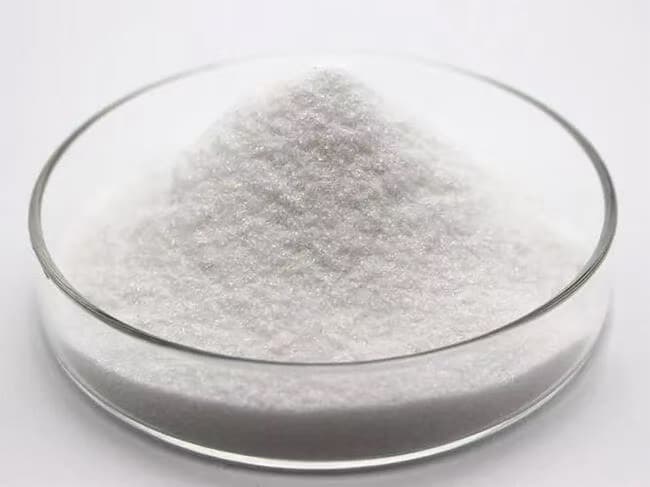
Dry granular PAM as supplied: white free-flowing granules that must be dissolved before dosing into a mill effluent stream
The Paper Mill Wastewater Challenge
Paper mill wastewater is a high-solids, fiber-laden effluent containing 500–5,000 mg/L suspended solids that requires stage-specific polyacrylamide treatment to achieve 90–95% TSS removal and enable water reuse. It's nothing like municipal sewage — I've seen engineers try to apply the same approach and waste months troubleshooting.
What makes it tricky: you've got long cellulose fibers (100–500 microns) that settle on their own but form a dense, compressible sludge. Then there are fines and fillers — particles under 76 microns like clay, talc, calcium carbonate — that basically refuse to settle without chemical help. On top of that, dissolved lignin and hemicellulose push your BOD and COD numbers up, and negatively charged colloids just float around indefinitely.
Without PAM, a paper mill primary clarifier takes 4–6 hours to produce clear overflow. With the right grade and dosage, that drops to 30–60 minutes. We've seen this 4–8x throughput improvement consistently across kraft, tissue, and recycled fiber mills.
Which PAM Type for Each Paper Mill Treatment Stage
Polyacrylamide selection for paper mills follows a stage-specific protocol: anionic APAM (15–20M Da) for primary fiber bridging, low-charge APAM (12–18M Da) for secondary fines capture, and cationic CPAM (5–12M Da, 40–70% charge) for sludge dewatering — each targeting different particle characteristics and equipment shear conditions.
Primary Clarifier (Fiber Recovery)
This is where most suspended fiber comes out. You want anionic PAM at 15–20 million Da molecular weight with 20–30% charge density. The long polymer chains physically bridge fiber particles into big, fast-settling flocs that hold together in the clarifier underflow.
Dosage runs 3–8 g/m³ depending on your fiber concentration and clarifier design. One thing we've learned from working with 40+ paper mills: if you're running above 6 g/m³ and still seeing turbid overflow, the problem isn't dosage — it's usually MW mismatch or poor dissolution. Our medium molecular weight APAM is the workhorse grade for primary clarifiers.
Secondary Clarifier (Fines and Colloid Removal)
After primary clarification, you're dealing with fines, fillers, and colloidal particles. This needs lower charge density anionic PAM (10–20% charge) — go too high and you over-flocculate, creating fluffy flocs that settle poorly. Molecular weight: 12–18 million Da. Dosage: 2–5 g/m³.
Target for the secondary overflow: under 50 mg/L suspended solids. If you're above that, check your charge density before increasing dosage.
Sludge Dewatering (Belt Press and Centrifuge)
Paper mill sludge is highly compressible — it fights you every step of the way. Cationic PAM is the only option here because it neutralizes the negative charge on fiber and fines, releasing bound water. I've seen mills try anionic PAM on their belt press because "it works in the clarifier." It doesn't work. Wrong mechanism entirely.
For belt presses: 5–10 million Da CPAM at 40–60% charge density. For centrifuges: bump it up to 8–12 million Da at 50–70% charge — centrifuges shear flocs apart, so you need stronger bonds. Dosage: 5–20 g/t dry solids. The right CPAM improves cake dryness by 5–10 percentage points, which directly cuts your disposal costs.
Our high charge density cationic PAM is specifically formulated for paper mill sludge dewatering.
Dosage Optimization for Paper Mills
PAM dosage optimization in paper mills balances clarifier performance against sludge volume — underdosing leaves turbidity above 100 NTU while overdosing increases sludge by 15–25% and raises treatment cost per cubic meter.
Here's what goes wrong in practice. Underdose and your clarifier overflow stays turbid, forcing recirculation that kills throughput. Overdose and you're generating extra sludge volume, making dewatering harder, and burning money. The sweet spot is narrow — usually within ±1 g/m³ of optimal.
The third problem is batch variation. If your PAM quality bounces around between shipments, you're re-optimizing dosage every time a new pallet arrives. We had a client in Finland who was adjusting dosage weekly because their trading company sourced from whoever was cheapest that month. After switching to us — consistent MW within ±0.5M, consistent charge within ±2% — they set their dosage once and left it alone for 6 months.
We recommend conducting a jar test with your specific wastewater to determine optimal dosage. Our technical team can guide you through the procedure and provide samples for testing.
Worked Example: 300 tpd Tissue Mill, Clarifier Overflow
Modelled, not a delivered project. A 300 tpd tissue mill with primary clarifier overflow at 150-200 NTU usually does not have a dosage problem — it has a grade mismatch, because a generic "paper mill" grade was sold without matching it to the fibre mix. That distinction matters: raising dose on the wrong grade costs money and fixes nothing.
On that furnish an 18M Da APAM at 25% charge density is the grade to test. Modelled outcome:
- Overflow turbidity dropped to 40–60 NTU (70% reduction)
- Clarifier residence time decreased from 90 minutes to 45 minutes
- Sludge volume in the secondary clarifier decreased by 25%
- Overall PAM cost per tonne of paper decreased by 18% despite higher unit price
That last point surprises people. Higher unit price, lower total cost. Because the right grade at lower dosage beats the wrong grade at high dosage every time.
Water Reuse and Environmental Benefits
Paper mill water reuse with PAM treatment enables 20–40% reduction in freshwater intake by recycling secondary clarifier overflow back to the process water system, provided residual monomer stays below 0.05%. More mills are doing this now — water costs are rising everywhere, and regulators are tightening discharge limits.
The catch: your PAM needs to match the mill's process-water requirements. Low residual monomer is often required for water reuse, and the target should be confirmed from the buyer specification. Ask for the batch COA before shipment, and use third-party testing when your process or customer audit requires independent confirmation.
Selecting a PAM Supplier for Paper Mills
A reliable paper mill PAM supplier delivers batch-to-batch consistency within ±0.5M molecular weight and ±2% charge density, with full Certificate of Analysis documenting MW, charge, and residual monomer for every shipment. Consistency matters more than price in this industry — I've watched mills lose $50,000 in a single week from a bad batch that threw off their entire treatment system.
When you're evaluating suppliers, here's what to actually ask for (not just what their sales team volunteers):
- Certificate of Analysis (CoA) for each batch with molecular weight, charge density, and residual monomer data
- Residual acrylamide monomer <0.05% (critical for water reuse applications)
- Moisture content <8% for powder grades
- Dissolution time data at your target concentration
- References from other paper mills — not just "water treatment" references
- Technical support for dosage optimization and troubleshooting
At ChinaPAM, we run three-stage quality inspection on every batch and provide full CoA documentation with every shipment. We also offer free technical consultation for dosage optimization — because selling you the right grade at the right dosage means you reorder. That's the business model.
Packaging and Logistics
PAM packaging for paper mills typically means 750 kg jumbo bags for automated dissolution systems, reducing handling labor by 80% compared to 25 kg bags while minimizing packaging waste and contamination risk.
We supply both 25 kg bags on pallets and 750 kg jumbo bags (big bags). Most paper mills prefer the jumbo bags once they've set up automated dissolution — less handling, less packaging waste, fewer opportunities for contamination.
Standard lead time is 7–10 days from order confirmation. We export through Qingdao and Shanghai ports with regular consolidation shipments to Europe, North America, and Asia. MOQ is 500 kg for first orders — enough for a proper trial without committing to a full container.
Dosage Optimization: Practical Tips from Paper Mill Projects
Paper mill PAM dosage optimization requires testing with actual process water — not fresh water — because closed-loop mills accumulate dissolved and colloidal substances (DCS) that increase anionic trash load and can raise required dosage by 30–50% versus bench tests with clean water. Per TAPPI guidelines for wet-end chemistry, polymer dosage should be optimized based on the specific fiber furnish and process water loop closure rate.
Process Water Loop Closure
Mills with high water loop closure (recycling 80%+ of process water) accumulate dissolved and colloidal substances (DCS) that interfere with PAM performance. The anionic trash load increases, requiring either higher CPAM charge density or a dual-polymer system (cationic coagulant + anionic flocculant).
We typically recommend starting with a jar test using your actual process water — not fresh water — to get realistic dosage numbers. Fresh water jar tests can underestimate required dosage by 30–50% in closed-loop mills.
Fiber Type Impact on PAM Selection
Different fiber sources produce different wastewater characteristics:
- Virgin kraft pulp: Low anionic trash, responds well to standard APAM at 0.5–1.5 mg/L
- Recycled fiber (OCC): High stickies and DCS content, needs higher charge CPAM (40–55%) or dual system
- Tissue from deinked pulp: Ink particles and surfactants complicate flocculation, often needs pre-treatment with bentonite before PAM addition
- Mechanical pulp (TMP/CTMP): High resin and fatty acid content, requires cationic fixative before anionic PAM
According to TAPPI best practices for paper mill effluent treatment, matching polymer chemistry to fiber furnish is the single biggest factor in treatment cost optimization. A mill switching from virgin to recycled fiber should always re-evaluate their PAM program.
Cost Comparison: Single vs. Dual Polymer Systems
| System | Chemical Cost ($/ton paper) | Effluent TSS (mg/L) | Best For |
|---|---|---|---|
| APAM only | $0.80–1.20 | 80–150 | Virgin fiber, low DCS |
| CPAM only | $1.50–2.50 | 50–100 | Moderate DCS, tissue mills |
| Coagulant + APAM (dual) | $1.80–3.00 | 30–60 | High DCS, recycled fiber, strict discharge limits |
For mills needing to meet strict discharge limits (TSS <50 mg/L), the dual system pays for itself through avoided fines and reduced biological treatment load. Learn more about dosage calculation methods and proper PAM dissolving procedures to maximize performance.
If you are also looking at retention aid applications in the paper machine itself, see our dedicated PAM retention aid guide.
FAQ
What is the difference between PAM for paper mill wastewater and PAM for municipal wastewater?
Paper mill wastewater contains much higher suspended solids (fiber, fines, fillers) and requires higher molecular weight PAM (15–20M Da) to form strong flocs. Municipal wastewater is more dilute and typically uses lower molecular weight PAM (12–15M Da). Using the wrong grade can result in poor clarification or excessive sludge volume.
Can I use the same PAM for primary and secondary clarification?
Not ideally. Primary clarification requires higher molecular weight PAM (15–20M Da) to bridge fiber particles. Secondary clarification requires lower charge density PAM (10–20%) to avoid over-flocculation. Using a single grade is possible but suboptimal. We recommend a two-stage approach with different PAM grades for best results.
How does PAM affect sludge disposal costs?
Effective PAM dosage in sludge dewatering can increase cake dryness by 5–10 percentage points. For a 300 tpd mill producing 50 tpd of sludge, increasing cake dryness from 30% to 38% reduces sludge volume by 25% — a significant reduction in disposal cost. The PAM cost is typically recovered within 2–3 months through reduced disposal fees.
What is the shelf life of PAM powder?
PAM powder is stable for 2–3 years when stored in a cool, dry place (<25°C, <60% humidity). Once dissolved in water, PAM solution degrades over time — use within 24–48 hours for best performance. See our PAM shelf life and storage guide for detailed information.
Optimize Your Paper Mill Wastewater Treatment
Tell us your mill's wastewater volume, current treatment performance, and challenges. We'll recommend the right PAM grades and provide samples for jar testing.
Recommended Product Grades
For the application discussed above, these are the polyacrylamide grades we ship most often:
See the full range of pulp and paper mill applications for equipment context and selection criteria across this industry.
For effluent plant design context, see our paper mill wastewater solution and our starch and fibre recovery solution.
Not sure which is right for you? Try our PAM Selector tool or request a quote.