FLOBEADS AB Series — Anionic PAM Powder Route for Bead-Form AB 305, AB 705 and AB 995 Grades
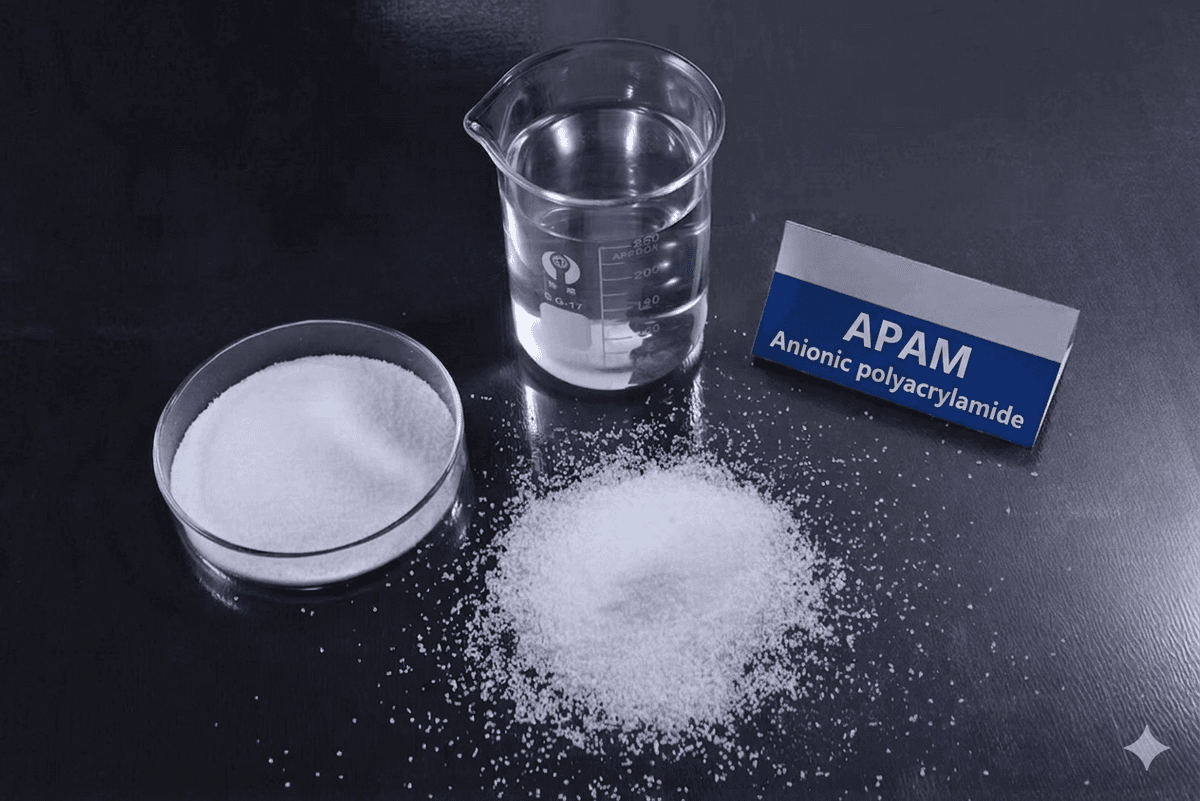
ChinaPAM quotes an anionic polyacrylamide powder route for FLOBEADS AB requirements. This is a form change: FLOBEADS are sold as beads, and ChinaPAM offers powder, not beads. Send the exact AB grade, your dosing and make-up equipment and the quantity, and we will check whether your handling system can take powder, name a screening lane and quote current pricing with a trial plan.
Supply Route Comparison
Published reference data and the ChinaPAM route for SNF FLOBEADS AB bead-form grades
Competitor figures are from SNF, FLOBEADS AB table in the FLOPAM Catalogue 2007 (PDF page 47). SNF states these data are given for information only and do not constitute a specification. They are historical indicative figures under SNF test conditions, not ChinaPAM specifications and not evidence of current SNF availability.
| Parameter | ChinaPAM Supply Route | SNF FLOBEADS AB bead-form grades |
|---|---|---|
| Physical form | Anionic polyacrylamide powder — a form change from beads | Anionic polyacrylamide in bead form (SNF table heading) |
| Particle size | Per the TDS of the selected powder grade | 100% below 10 mesh |
| Bulk density | Per the TDS of the selected powder grade | 0.8 – 0.9 (approximate) |
| Grades covered | Two charge-led powder lanes | AB 305 VLM, AB 305 MPM, AB 705 BPM, AB 995 BPM, AB 995 V |
| Charge / MW position | ChinaPAM grade scale; SNF Very Low MW has no ChinaPAM counterpart | Medium or Very High charge; Medium or Very Low MW |
| Dissolution reference | Measured on the quoted powder at your working concentration | 30 min at 5 g/L, deionised water, 25°C (all five) |
| Recommended / maximum make-up | Per the TDS of the selected grade | AB 995 BPM 8 / 15 g/L; other four 10 / 20 g/L |
| Documents | TDS with the selected grade; COA tied to the confirmed shipment | Catalogue data, stated not to be a specification |
Specifications
| ChinaPAM Product Form | Anionic polyacrylamide powder (not bead form) |
| Grades Covered | AB 305 VLM, AB 305 MPM, AB 705 BPM, AB 995 BPM, AB 995 V |
| AB 305 VLM / MPM Lane | CNfloc 1062, K42 |
| AB 705 BPM / AB 995 BPM / AB 995 V Lane | 1090-FG, 1001-ZJ |
| Form-Change Check | Feeder, wetting unit and maturation time reviewed before trial |
| Documents | TDS for the selected grade; COA per confirmed shipment |
| Packaging / Lead Time | Confirmed in the quotation |
Key Features
- Form change from bead to powder stated before quotation
- Handling-system check before any sample is dosed
- Two charge-led anionic powder lanes for five exact AB grades
- Dissolution and viscosity measured on the ChinaPAM grade, not assumed from bead data
- Quote, trial plan and documents through one enquiry
Applications
- FLOBEADS AB supplier-change assessment
- Checking whether a bead dosing line can take powder
- Make-up and maturation re-check after a form change
- Same-feed jar-test screening for grade selection
Get a Quote for SNF FLOBEADS AB bead-form grades Alternative Supply
Tell us your exact FLOBEADS AB grade, your feeder and make-up equipment, quantity and destination. We will check the powder route, name a ChinaPAM lane and quote current pricing.
Related Articles
Bead to Powder: What Changes Before Any Chemistry Is Compared
FLOBEADS are sold in bead form, 100% below 10 mesh with an approximate bulk density of 0.8 to 0.9, and SNF lists 30 minutes dissolution for all five. ChinaPAM does not offer beads. Its route is anionic powder, so particle size, flow, dust, wetting and dissolution time must be taken from the ChinaPAM TDS and measured on site, not carried over from the bead data.
That makes the equipment check the first step. A volumetric feeder calibrated for beads, a wetting cone sized for fast-dissolving particles or a maturation tank sized around 30 minutes may need adjustment for powder. We ask for those details before a sample is dosed.
Five Exact AB Grades and the ChinaPAM Powder Lane
The lanes are directional screening starts by charge position. SNF’s Very Low molecular-weight tier has no counterpart on the ChinaPAM grade scale, so each lane is confirmed by viscosity at your working concentration and a same-feed jar test. The viscosity column mixes concentrations because SNF does; values at different concentrations are not comparable with each other.
| Exact SNF grade | SNF charge / MW | Brookfield cps (concentration as listed) | SNF rec. / max. g/L | ChinaPAM powder lane |
|---|---|---|---|---|
| AB 305 VLM | Medium / Very Low | 850 at 10 g/L | 10 / 20 | CNfloc 1062, K42 |
| AB 305 MPM | Medium / Medium | 930 at 10 g/L | 10 / 20 | CNfloc 1062, K42 |
| AB 705 BPM | Very High / Very Low | 300 at 10 g/L | 10 / 20 | 1090-FG, 1001-ZJ |
| AB 995 BPM | Very High / Very Low | 350 / 170 / 80 at 5 / 2.5 / 1 g/L | 8 / 15 | 1090-FG, 1001-ZJ |
| AB 995 V | Very High / Very Low | 90 at 10 g/L | 10 / 20 | 1090-FG, 1001-ZJ |
Three FLOBEADS Facts Buyers Can Trace
First, form: SNF 2007 p.47 identifies all five AB products as anionic polyacrylamide in bead form.
Second, spread: the table runs across Medium and Very High charge labels and Medium or Very Low molecular-weight labels, and each grade has its own indicative viscosity value.
Third, preparation: all five columns list 30 minutes dissolution at 5 g/L in deionised water at 25°C. The recommended concentration is 8 g/L for AB 995 BPM and 10 g/L for the other four.
Two Failure Modes Worth Checking Before a Trial
The first is physical and shows up in the make-up room; the second shows up in the process.
| Failure mode | Trigger | Symptom | Check |
|---|---|---|---|
| Bead and powder treated as the same physical form | Powder is fed through a line set up for beads without review | Feeder drift, lumps or fish-eyes at wetting, or solution not fully dissolved at the bead maturation time | Review feeder, wetting unit and maturation time with the ChinaPAM TDS, then measure dissolution on site before dosing |
| Selection from the AB number or charge label only | AB 705 BPM, AB 995 BPM and AB 995 V are treated as one because all are Very High charge | Unexpected viscosity, dose demand or process response after changeover | Confirm the full grade and run an equipment-compatible trial on the same feed |
Equipment Check and Same-Feed Trial Plan
Step one is on paper: send the feeder type and rate, the wetting device, the make-up concentration and the maturation time. We confirm whether the ChinaPAM powder can be handled on that line or what has to change.
Step two is on the bench: prepare the incumbent AB grade and the shortlisted ChinaPAM powder at the same working concentration, record dissolution time and viscosity, then compare stepped doses on one representative feed sample. The grade that reaches your target at the lowest stable dose, on equipment you can actually run, is the one we quote for supply.
What to Send for a Quotation
The exact AB grade, quantity and your dosing equipment are enough to start. These details sharpen the plan:
| Input | Why it matters |
|---|---|
| Full AB grade, or a bag-label photo | Separates VLM, MPM, BPM and V grades |
| Feeder type and wetting unit | Decides whether powder can replace beads on the same line |
| Make-up concentration and maturation time | Sets the dissolution and viscosity check conditions |
| Application, current dose and target result | Baseline and pass mark for the trial |
| Expected volume and destination | Pricing, packaging and lead time in the quotation |
Documents and Delivery
The applicable TDS is confirmed together with the selected ChinaPAM powder grade, and a batch COA is tied to the confirmed shipment. Packaging and lead time are confirmed in the quotation for your volume and destination.
Dosage Guide
Use the current FLOBEADS AB active dose as the reference. After the equipment check, prepare the ChinaPAM powder at the same working concentration, allow full hydration, and compare stepped doses on the same feed.
Frequently Asked Questions — FLOBEADS AB Series — Anionic PAM Powder Route for Bead-Form AB 305, AB 705 and AB 995 Grades
Does ChinaPAM supply FLOBEADS-type beads?
No. ChinaPAM offers anionic polyacrylamide powder. For a FLOBEADS AB enquiry we quote a powder route and first check whether your feeder, wetting and make-up system can handle powder instead of beads.
Can my bead dosing line take powder?
Sometimes, but it has to be checked. Beads and powder can behave differently in handling, wetting, feeding and dissolution. Send the feeder type, wetting unit and maturation tank size, and we will say what needs to be verified before a trial.
Are AB 305 VLM and AB 305 MPM the same grade?
No. Both are Medium charge, but SNF lists Very Low MW for VLM and Medium MW for MPM, with 850 and 930 cps at 10 g/L. The full grade decides the lane.
AB 705 BPM, AB 995 BPM and AB 995 V are all Very High charge. Which is which?
All three are Very Low MW on SNF’s scale, but AB 995 BPM is measured at 5 / 2.5 / 1 g/L (350 / 170 / 80 cps) and has an 8 / 15 g/L make-up window, while AB 705 BPM and AB 995 V are given at 10 g/L (300 and 90 cps) with 10 / 20 g/L. Quote and test the exact grade.
Which documents come with the supply?
The TDS for the selected ChinaPAM powder grade is confirmed with the grade, and a batch COA is tied to the confirmed shipment. Packaging and lead time are set in the quotation.
Trademark notice. SNF FLOBEADS AB bead-form grades and all other third-party product and brand names on this page are trademarks or registered trademarks of their respective owners. Henan Jinghua New Material Technology Co., Ltd. is not affiliated with, endorsed by, sponsored by or authorised by those owners, and no such relationship is implied. Those names are used here for the sole purpose of identifying the products our grades are compared against, which is necessary to describe what we supply. Our products are separately branded ChinaPAM grades and are not licensed copies. Grade descriptors quoted for third-party products are taken from each manufacturer’s own published literature and follow that manufacturer’s own scale; we do not publish figures those manufacturers do not publish. Performance on your process should be confirmed by jar test or CST test before any change of supply.