Municipal Wastewater
High-performance flocculants for municipal sewage treatment plants. Our anionic and cationic PAM products achieve >95% turbidity removal and efficient sludge dewatering, reducing disposal costs by 30-50%.
Why Polyacrylamide Is Essential for Municipal Wastewater Treatment
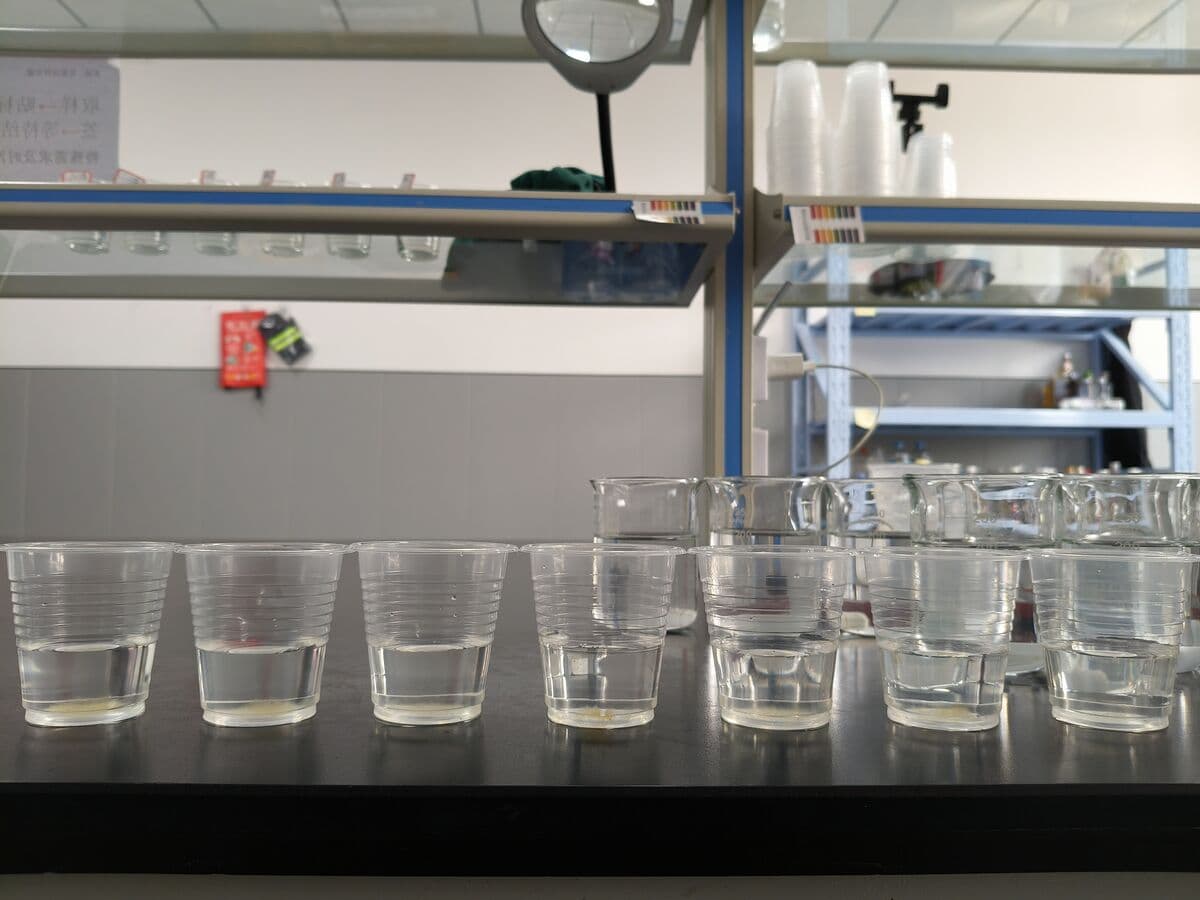
Municipal wastewater treatment plants (WWTPs) process millions of cubic meters of sewage daily. The core challenge: removing suspended solids, reducing biochemical oxygen demand (BOD), and producing dewatered sludge cake that's economical to transport and dispose. Polyacrylamide (PAM) is the most widely used organic flocculant in this process — handling both clarification and sludge conditioning in a single chemical family.
At ChinaPAM, we supply over 200 municipal WWTPs across Southeast Asia, the Middle East, and Africa. Our anionic PAM (APAM) handles primary and secondary clarification, while our cationic PAM (CPAM) conditions sludge for mechanical dewatering. The result: 95%+ turbidity removal, 60-80% sludge volume reduction, and 30-50% lower disposal costs compared to inorganic coagulants alone.
How PAM Works in the Municipal Wastewater Process
Primary Clarification (APAM)
After screening and grit removal, raw sewage enters the primary settling tank with 200-500 mg/L suspended solids (SS). Adding 1-3 ppm of high molecular weight APAM (18-22 million Daltons) bridges fine particles into large, dense flocs that settle 3-5x faster than without polymer. This reduces SS by 85-95% and cuts BOD by 30-40% before biological treatment.
Key parameters for primary clarification:
- Molecular weight: 15-22 million Da (higher MW = stronger bridging)
- Hydrolysis degree: 25-30% (optimal charge for sewage particles)
- Dosage: 1-3 ppm (0.5-1.5 kg per 1000 m³ of influent)
- Solution concentration: 0.1-0.2% (too concentrated = poor dispersion)
- Aging time: 45-60 minutes after dissolution
Sludge Dewatering (CPAM)
The biggest cost in municipal wastewater treatment isn't the water — it's the sludge. A typical 100,000 m³/day plant generates 50-80 tons of wet sludge daily. Without proper conditioning, this sludge is 97-99% water and costs $80-150/ton to transport and landfill.
Cationic PAM (CPAM) with 40-60% charge density neutralizes the negative surface charge of sludge particles, releasing bound water. After CPAM conditioning, belt press or centrifuge dewatering produces cake at 75-82% moisture — reducing volume by 60-80% and cutting disposal costs proportionally.
Key parameters for sludge dewatering:
- Charge density: 40-60% (match to sludge zeta potential)
- Molecular weight: 8-12 million Da
- Dosage: 3-8 kg per ton of dry solids (varies by sludge age)
- Solution concentration: 0.2-0.3%
- Mixing intensity: gentle (G-value 30-50 s⁻¹) to avoid floc breakage
Worked Example: 200,000 m³/Day WWTP
This is a modelled scenario, not a delivered project — we are not claiming an installed reference here. It is the starting condition we see described most often in enquiries at this scale:
- Effluent SS consistently above 30 mg/L (discharge limit: 20 mg/L)
- Sludge cake moisture at 85% (target: <80%)
- Monthly chemical cost of $45,000 using imported European polymer
Specifying APAM-1800 (18M MW, 28% hydrolysis) for clarification and CPAM-5060 (50% charge, 10M MW) for dewatering, the figures below are what that plant should expect to model. Treat them as targets to verify on your own sludge, not as measured results:
| Parameter | Before | After | Improvement |
|---|---|---|---|
| Effluent SS | 32 mg/L | 12 mg/L | -63% |
| Sludge cake moisture | 85% | 78% | -7 points |
| Sludge volume (daily) | 75 tons | 32 tons | -57% |
| Monthly chemical cost | $45,000 | $28,000 | -38% |
| Annual disposal savings | — | $180,000 | — |
Product Selection Guide
Choosing the right PAM grade depends on your specific sludge characteristics. Here's our recommendation matrix:
| Application | Sludge Type | Recommended Grade | Dosage Range |
|---|---|---|---|
| Primary clarification | Raw sewage | APAM-1800 / APAM-2200 | 1-3 ppm |
| Secondary clarification | Activated sludge overflow | APAM-1500 | 0.5-1.5 ppm |
| Belt press dewatering | Mixed primary + WAS | CPAM-5060 | 4-6 kg/t DS |
| Centrifuge dewatering | WAS (high organic) | CPAM-6080 | 5-8 kg/t DS |
| DAF thickening | Excess activated sludge | CPAM-4040 | 2-4 kg/t DS |
Dosing & Operation Tips
- Always prepare fresh solution daily. PAM solution degrades after 24-48 hours. Prepare 0.1-0.2% concentration in clean water (no chlorine residual).
- Slow mixing during dissolution. High-speed mixing breaks polymer chains. Use 200-300 RPM for 45-60 minutes until fully hydrated (no fish-eyes).
- Inject at the right point. For clarification: inject into the feed pipe 2-3 meters before the settling tank. For dewatering: inject into the sludge pipe 1-2 meters before the press.
- Adjust for seasonal changes. Cold water (<10°C) requires 20-30% higher dosage and longer dissolution time (60-90 min). Summer flows may need lower concentration to avoid over-flocculation.
- Monitor sludge age. Older sludge (SRT >20 days) has more bound water and needs higher CPAM charge density (50-60%). Fresh sludge (SRT 8-12 days) works well with 40% charge.
Frequently Asked Questions
Can I use APAM for sludge dewatering instead of CPAM?
No. Municipal sludge particles carry negative surface charge. APAM (also negative) won't neutralize this charge — it will actually disperse the sludge further. You need CPAM (positive charge) to neutralize and bridge sludge particles. Using the wrong type wastes chemical and produces wet, unmanageable cake.
How do I determine the optimal CPAM charge density for my sludge?
Run a jar test series with 3-4 CPAM grades (30%, 40%, 50%, 60% charge). The optimal grade produces the clearest filtrate and driest cake at the lowest dosage. As a rule of thumb: biological sludge (WAS) needs 40-50% charge; mixed primary + WAS needs 50-60%; chemically conditioned sludge needs 30-40%.
What's the shelf life of PAM powder?
Properly stored (sealed bags, dry warehouse, below 35°C, away from sunlight), PAM powder lasts 2-3 years without significant performance loss. Once opened, use within 6 months. Emulsion PAM has shorter shelf life: 6-12 months sealed, 3 months after opening.
How much can I save by switching from European/Japanese PAM to Chinese PAM?
Typically 30-50% on chemical cost alone. Chinese PAM manufacturers (including us) use the same production technology and raw materials. The price difference comes from lower labor costs and shorter supply chains. We provide free jar testing to prove equivalent or better performance before you commit to switching.
Municipal Wastewater is one of several water treatment processes we supply polyacrylamide for. For grade selection across the full water treatment scope — including MOQ, samples, and quality documents — see PAM for Water Treatment.
Recommended Products
Other Water Treatment Solutions
Related Articles
PolyDADMAC Coagulant: Dose, Uses and PAM Pairing
What polyDADMAC does, why a coagulant is not a flocculant, charge neutralisation and overdose restabilisation, dose ranges by duty, and how it pairs with polyacrylamide.
Water TreatmentPolyacrylamide for Water Treatment: The Complete Buyer's Guide (2026)
Complete guide to polyacrylamide (PAM) for water treatment. Covers anionic, cationic, and nonionic PAM selection, dosage ranges, application scenarios, supplier selection, and cost optimization for every major water treatment sector.
Water TreatmentPolyacrylamide for Food Processing Wastewater: Dosage
Select and dose polyacrylamide for slaughterhouse, beverage, starch and dairy wastewater: dosage tables by stream, cost per m3, DAF and clarifier notes.
Water TreatmentPAM for Sand Washing: Dosage, Settling, and Water Recycling
How to use anionic PAM for sand washing wastewater treatment. Dosage vs turbidity data, grade selection, water recycling system design, and cost analysis from 130+ sand plant samples.
Water TreatmentPAM for Livestock Wastewater: Pig Farm, Poultry & Dairy
Cationic PAM selection and dosing for livestock wastewater from pig farms, poultry operations, and dairy facilities. Jar test data, system design, sludge dewatering, and cost analysis.
Technical GuidePAM Overdosing: 7 Signs You Are Wasting Polymer (and How to Fix It)
How to detect polyacrylamide overdosing in your water treatment plant. 7 field indicators, cost analysis, stepdown protocol, and prevention checklist from 200+ lab tests.
Ready to Optimize Your Municipal Wastewater Process?
Send us your process parameters — we'll provide a free product recommendation with dosage calculation.