Paper Mill Wastewater
Combined coagulation-flocculation treatment for paper mill effluent. Removes fiber fines, fillers, ink particles, and reduces COD/BOD for discharge compliance.
Paper Mill Wastewater Treatment with Polyacrylamide (PAM)
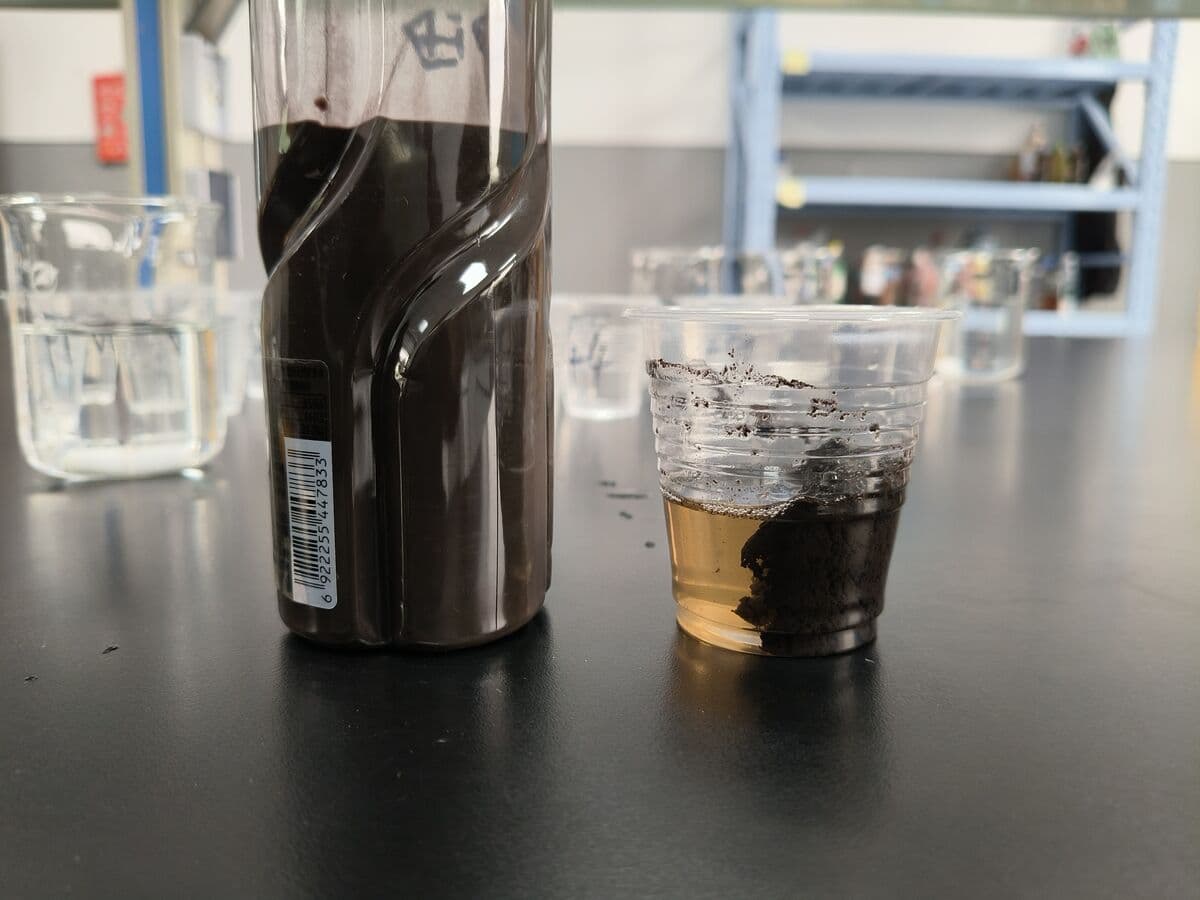
Paper mill effluent carries a heavy load of fiber fines, fillers (clay and calcium carbonate), deinking ink particles, and dissolved pulping organics that push COD and BOD well above discharge limits. Polyacrylamide is the core flocculant for clarifying this water and dewatering the large sludge volumes a mill produces. The right result depends on matching PAM charge and molecular weight to the specific mill process — recycled-fiber and deinking lines behave very differently from virgin-pulp lines.
We supply APAM, CPAM, and retention-grade PAM to pulp and paper mills, tissue plants, and recycled board mills. Send a wastewater sample and we return a jar-test settling curve with a grade recommendation — free, in 3-5 days.
How PAM Treats Paper Mill Effluent
Step 1 — Coagulation
A coagulant (PAC or alum) destabilizes fine fibers, fillers, and colloidal ink, and adjusts pH into the working window. This neutralizes surface charge so the polymer can bridge effectively.
Step 2 — Flocculation (APAM)
Anionic PAM at 2-6 ppm bridges the destabilized fines and fillers into large, fast-settling flocs for a clarifier or dissolved air flotation (DAF) unit. Medium-to-high MW APAM is the standard choice for mill clarification.
- Molecular weight: 12-18 million Da
- Hydrolysis degree: 20-30%
- Dosage: 2-6 ppm after coagulant
- Target: clear filtrate, turbidity under 30 NTU for reuse
Step 3 — Sludge dewatering (CPAM)
Paper sludge is bulky and holds water. Cationic PAM (8-12M MW, medium-to-high charge) conditions it before a belt press or screw press, raising cake dryness and cutting the volume — and cost — of sludge disposal, which is one of a mill's biggest recurring expenses.
PAM Selection by Mill Process
| Mill Process | Main Challenge | Recommended PAM | Dosage |
|---|---|---|---|
| Recycled fiber / OCC | Fiber fines, high fillers | APAM 15-18M MW | 3-6 ppm |
| Deinking (DIP) | Ink particles, brightness | CPAM + APAM combo | 3-8 ppm |
| Virgin pulp / kraft | High COD, lignin color | APAM after coagulant | 2-5 ppm |
| Tissue / fine paper | Fine fillers, clarity | APAM medium MW | 2-4 ppm |
| Sludge dewatering (all) | Cake dryness | CPAM 8-12M, med-high charge | 5-12 kg/t DS |
The main variable is charge demand, which rises with dissolved organics and anionic trash in the white water. Deinking lines usually need cationic help; clarification of recycled-fiber water usually runs on anionic. We ask for a sample because two mills running the same furnish can still differ.
Typical Results (jar-test benchmarks)
Representative ranges from bench and pilot jar tests on paper mill effluent, not a single client account. Your figures depend on furnish, upstream coagulation, and clarifier type.
| Parameter | Before | After coagulant + PAM |
|---|---|---|
| Suspended solids (TSS) | 400-800 mg/L | 20-50 mg/L |
| Turbidity | 300-700 NTU | 10-30 NTU |
| COD removal (with coagulation) | — | +30-50 percentage points |
| Sludge cake dryness | 12-18% | 22-30% |
Cost of Treatment
For a mill treating 1,000-3,000 m³/day, PAM is a small share of total treatment cost, and it pays back mainly through lower sludge volume and higher water reuse. At 3-6 ppm the polymer spend is modest against the disposal and fresh-water savings a drier, smaller sludge cake delivers.
Why Buy from the Factory
The complaint we hear most from mills: "The first batch worked, the next one didn't." That is a supplier-consistency problem. Trading companies re-source from the cheapest producer each month, so molecular weight and charge density drift and your dosing stops matching.
We produce every batch on our own lines and test each for molecular weight (±0.5M tolerance), solid content, and dissolution time. We retain samples for 24 months, so if performance shifts we compare your batch against the retained reference instead of guessing.
Frequently Asked Questions
Which PAM removes ink and color from deinking effluent?
Color and ink are best knocked down with a coagulant plus a cationic polymer to capture the fine ink particles, followed by APAM to build settleable flocs. Dissolved dye color may also need oxidation or adsorption — PAM handles the particulate fraction, not truly dissolved color.
Can PAM reduce my sludge disposal cost?
Yes — that is usually where the biggest saving is. Correct CPAM conditioning before a belt or screw press raises cake dryness by several points, which directly cuts the tonnage and haulage you pay for.
APAM or CPAM for paper mill clarification?
Clarification of recycled-fiber and general mill water usually runs on APAM after a coagulant. Deinking and high-organic streams often need a cationic polymer. Many mills run APAM for clarification and CPAM for dewatering — two grades, two jobs.
How do I pick the right grade without wasting product?
Send 5-10 liters of your mill effluent. We run several APAM and CPAM grades at multiple dosages and return a settling curve showing the best turbidity at the lowest cost — free, in 3-5 days.
Paper Mill Wastewater is one of several paper making processes we supply polyacrylamide for. For grade selection across the full paper making scope — including MOQ, samples, and quality documents — see PAM for Paper Making.
Related Articles
Polyacrylamide for Water Treatment: The Complete Buyer's Guide (2026)
Complete guide to polyacrylamide (PAM) for water treatment. Covers anionic, cationic, and nonionic PAM selection, dosage ranges, application scenarios, supplier selection, and cost optimization for every major water treatment sector.
Water TreatmentPolyacrylamide for Food Processing Wastewater: Dosage
Select and dose polyacrylamide for slaughterhouse, beverage, starch and dairy wastewater: dosage tables by stream, cost per m3, DAF and clarifier notes.
Water TreatmentPAM for Sand Washing: Dosage, Settling, and Water Recycling
How to use anionic PAM for sand washing wastewater treatment. Dosage vs turbidity data, grade selection, water recycling system design, and cost analysis from 130+ sand plant samples.
Water TreatmentPAM for Livestock Wastewater: Pig Farm, Poultry & Dairy
Cationic PAM selection and dosing for livestock wastewater from pig farms, poultry operations, and dairy facilities. Jar test data, system design, sludge dewatering, and cost analysis.
Paper IndustryPAM for Paper Mill Wastewater: Treatment Guide
How paper mills use PAM for primary/secondary clarification and sludge dewatering. Fiber recovery, fines removal, and water recycling case studies.
Product GuideBuy Cationic PAM (CPAM) Bulk: Wholesale
Complete guide to cationic PAM for sludge dewatering and wastewater treatment. Covers charge density selection, bulk pricing, and application methods.
Ready to Optimize Your Paper Mill Wastewater Process?
Send us your process parameters — we'll provide a free product recommendation with dosage calculation.