Magnafloc 10 Equivalent — Anionic PAM for Mineral Processing
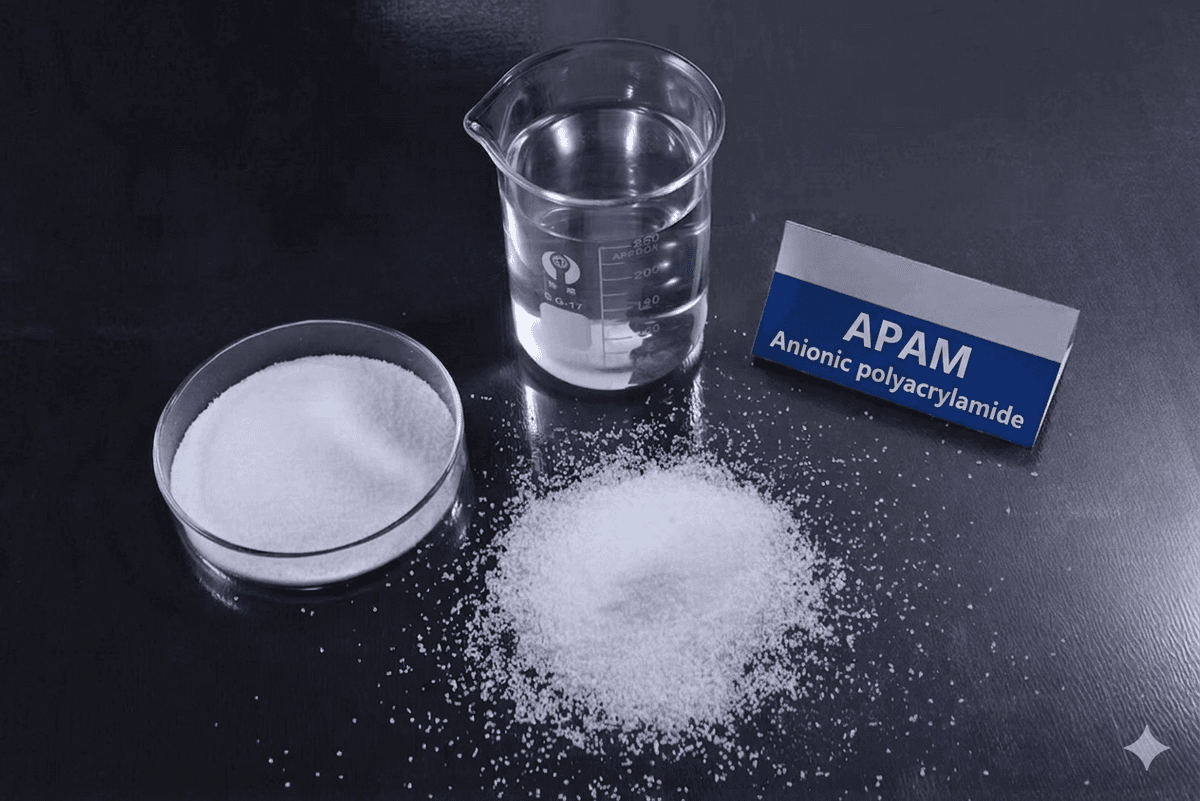
ChinaPAM supplies low charge, very-high-MW anionic polyacrylamide powder for mineral processing, positioned against BASF Magnafloc 10. Granular powder, MOQ 500 kg. Trial sample on request.
Supply Route Comparison
Published reference data and the ChinaPAM route for BASF Magnafloc 10
| Parameter | ChinaPAM Supply Route | BASF Magnafloc 10 |
|---|---|---|
| Type | Anionic PAM granular powder | Anionic PAM powder (BASF chart: polvo) |
| Charge Density | Low (our own scale — CNfloc 1082 band) | Low anionic (BASF chart: aniónico bajo) |
| Molecular Weight | Very High (our own scale — CNfloc 1082 band) | Not stated in the held BASF application chart |
| Form | Granular powder | Powder (BASF chart: polvo) |
| Oilfield / 1011 Duty | Not this page — see PHPA line | Magnafloc 1011 is a separate grade (Medium anionic) in its own BASF chart row |
| MOQ | 500 kg | Set by regional distributor |
| Lead Time | 7–10 days ex-works | Set by regional distributor |
| Trial Sample | On request with process details | Via distributor request |
Specifications
| Primary Route | Very High MW / Low charge anionic powder — CNfloc 1082 band |
| Positioned Against | BASF Magnafloc 10 |
| Type | Anionic (partially hydrolysed polyacrylamide) |
| BASF Published Charge | Low anionic (BASF applications chart: aniónico bajo) |
| BASF Published Form | Powder (BASF applications chart: polvo) |
| BASF Published MW | Not stated in the held application chart |
| Form | Granular powder (not emulsion) |
| Make-up Concentration | 1–3 g/L, max 5 g/L |
| Dissolution Time | ≤60 min with adequate agitation |
| Packaging | 25 kg PP woven bags + PE liner |
Key Features
- Positioned against Magnafloc 10 mineral processing duty based on the BASF undated applications chart identifying row 10 as low anionic powder (aniónico bajo)
- Starting-point supply grade 1082: Very High MW / Low charge anionic powder on our own scale — charge and form alignment with BASF descriptor, not a numerical MW match
- Eight BASF suggested-application columns checked for row 10: acid uranium leaching, potash tailings, zinc leaching (acid and neutral electrolytic), coal tailings, acid Cu/Ni/Co leaching, alkaline Ni/Co leaching, clays and sands
- Powder form matching Magnafloc 10 BASF chart descriptor (polvo) — not an emulsion; our supply is granular powder
- Magnafloc 1011 is a separate grade listed as Medium anionic in its own BASF chart row — the two grades have different charge descriptors and row assignments; applicability to a specific duty requires label and site testing
- Trial sample on request; grade-level TDS and MSDS on request — contact us to confirm applicable documentation; relevant batch COA with each shipment
- MOQ 500 kg, direct from factory
Applications
- Mineral processing duty where a low anionic powder starting point is indicated, including circuits aligned with the BASF suggested application columns
- Acid and neutral electrolytic zinc leaching circuits
- Potash and coal tailings settling
- Acid copper, nickel, cobalt leaching
- Alkaline nickel and cobalt leaching
- Clays and sands processing
- Acid uranium leaching
Get a Quote for BASF Magnafloc 10 Alternative Supply
Start with the grade name, a bag-label photo or your purchasing requirement. We can discuss current pricing and sample options now; process details can follow.
Related Articles
Magnafloc 10 in Mineral Processing — What the BASF Source Actually States
The BASF applications chart (Aplicaciones sugeridas de los Floculantes Magnafloc, grado minero) identifies Magnafloc 10 in its own row as aniónico bajo (low anionic charge) in powder form (polvo). Eight suggested-application columns are checked for row 10: acid uranium leaching, potash tailings, acid electrolytic zinc leaching, neutral electrolytic zinc leaching, coal tailings, acid copper/nickel/cobalt leaching, alkaline nickel/cobalt leaching, and clays and sands. The chart carries a footer noting Internal and no printed publication year. These are suggested applications, not exclusive duties, process limits, or performance guarantees.
The chart does not state a molecular weight band, preparation concentration, dissolution time, dose range, or other operating parameters for Magnafloc 10. Any such parameters should be obtained from BASF or its regional distributor.
The distinction between Magnafloc 10 and Magnafloc 1011 in this chart is the charge descriptor and the row: row 10 is aniónico bajo (low anionic) and row 1011 is medium anionic, each with its own set of suggested-application checkmarks. A different descriptor and row do not establish that the products can never serve a common process, but they are distinct grades and should be treated as such.
| Application (Spanish column label) | English | Checked for Magnafloc 10 |
|---|---|---|
| Lixiviación ácida de uranio | Acid uranium leaching | Yes |
| Relaves de potasa | Potash tailings | Yes |
| Lixiviación ácida electrolítica de zinc | Acid electrolytic zinc leaching | Yes |
| Lixiviación neutra electrolítica de zinc | Neutral electrolytic zinc leaching | Yes |
| Relaves de carbón | Coal tailings | Yes |
| Lixiviación ácida de Cu, Ni, Co | Acid Cu/Ni/Co leaching | Yes |
| Lixiviación alcalina de Ni, Co | Alkaline Ni/Co leaching | Yes |
| Arcillas y arenas | Clays and sands | Yes |
Dissolution and Dose-Response: The Two Most Common Failure Modes
Two failure modes account for most of the poor results seen when trialling a new anionic flocculant on mineral slurry, and both are procedural rather than chemical.
Under-dissolution is the first. When anionic PAM powder is added to water faster than the surface can wet, the outer granule surface hydrates and gels into a skin before water reaches the dry core. The result is a gel lump with a partially dry interior — visible as a cloudy or lumpy solution. These lumps block dosing lines and deliver inconsistent polymer concentration to the slurry, producing erratic settling results that look like grade mismatch but are actually dissolution failure. The fix: slow the powder addition rate, increase agitation, make up at 1–3 g/L (maximum 5 g/L), and allow the full dissolution time before using the solution.
Over-dosing is the second. Anionic polyacrylamide has a dose-response curve with a distinct peak: above the optimum, excess polymer wraps individual particles and blocks bridging sites rather than building flocs. The correct approach is to bracket from low dose upward and map the full curve rather than setting a high rate and assuming more is better.
Contact us with your process details — circuit type, feed slurry, process water chemistry — and we will propose a validation approach suited to your application.
Dosage Guide
Mineral processing duty: establish optimum by jar test using a dose-response curve from low upward. Make up at 1–3 g/L, allow full dissolution ≤60 min before use. BASF does not publish preparation parameters in the held application chart; contact us with your circuit details for a proposed validation approach.
Frequently Asked Questions — Magnafloc 10 Equivalent — Anionic PAM for Mineral Processing
Is Magnafloc 10 the same as Magnafloc 1011?
No — they are different grades listed in separate rows of the BASF applications chart with different charge descriptors. Magnafloc 10 is identified as low anionic powder (aniónico bajo). Magnafloc 1011 is listed as medium anionic powder in its own row with its own set of suggested applications. A different row and charge descriptor do not establish that the two products can never serve a common process, but they are distinct grades and should not be treated as interchangeable without confirming the duty and testing.
What applications does BASF suggest for Magnafloc 10?
The BASF undated suggested applications chart marks eight columns for row 10: acid uranium leaching, potash tailings, acid electrolytic zinc leaching, neutral electrolytic zinc leaching, coal tailings, acid copper/nickel/cobalt leaching, alkaline nickel/cobalt leaching, and clays and sands. These are indicated as suggested applications, not exclusive duties or performance guarantees. Contact us with your specific circuit details.
What molecular weight is Magnafloc 10?
The BASF applications chart held in this package does not state a molecular weight band for Magnafloc 10. Our starting-point supply grade 1082 is at Very High MW and Low charge on our own scale; this reflects charge and form alignment with the BASF chart descriptor, not a derived MW match. Contact BASF or its regional distributor for current Magnafloc 10 specification data.
Why is the dose-response curve important for mineral tailings?
Over-dosing on mineral slurry does not just waste polymer — it restabilises fine particles. Excess polymer wraps individual particles and prevents bridging, producing worsening clarity as dose climbs above the optimum. The curve has a distinct peak and you must find it by bracketing from low dose upward rather than setting a high dose and assuming more is better.
My powder is forming gel lumps in the make-up tank. What is happening?
This is under-dissolution caused by adding powder too fast to the make-up tank. Dry cores form when the outer surface of a powder granule hydrates and gels before water reaches the centre, producing lumps that block dosing lines and give false low-performance results. The fix is to slow the powder feed rate, increase agitation in the make-up tank, and allow the full dissolution time before use. Make up at 1–3 g/L and do not exceed 5 g/L.
Related Products
Trademark notice. BASF Magnafloc 10 and all other third-party product and brand names on this page are trademarks or registered trademarks of their respective owners. Henan Jinghua New Material Technology Co., Ltd. is not affiliated with, endorsed by, sponsored by or authorised by those owners, and no such relationship is implied. Those names are used here for the sole purpose of identifying the products our grades are compared against, which is necessary to describe what we supply. Our products are independently manufactured and are not licensed copies. Grade descriptors quoted for third-party products are taken from each manufacturer’s own published literature and follow that manufacturer’s own scale; we do not publish figures those manufacturers do not publish. Performance on your process should be confirmed by jar test or CST test before any change of supply.