Industrial Effluent
Tailored PAM solutions for complex industrial wastewater including chemical, pharmaceutical, and food processing effluents. Handles high COD, heavy metals, and emulsified oils.
Industrial Wastewater Treatment with Polyacrylamide (PAM)
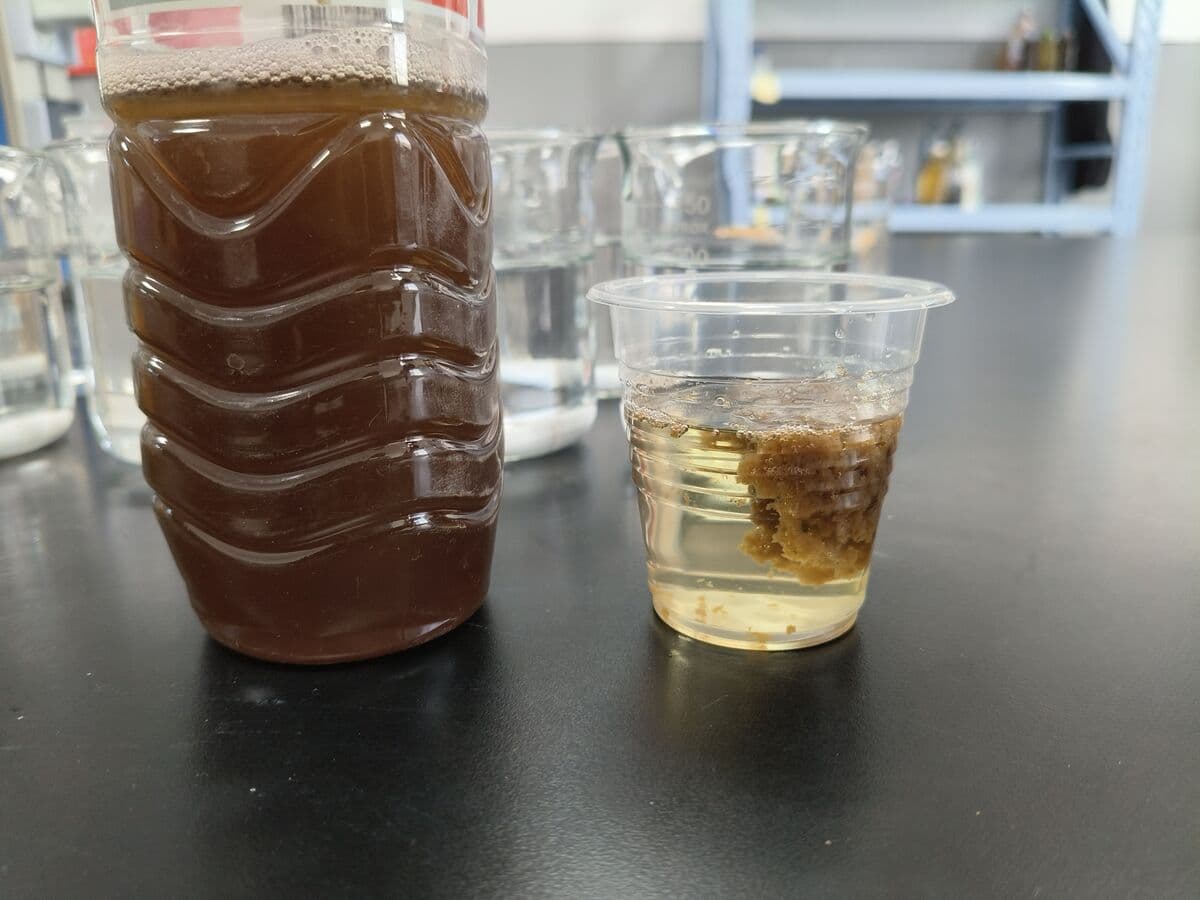
Industrial effluent is the hardest wastewater to flocculate. Unlike municipal sewage, a single industrial stream can carry high COD, swinging pH, emulsified oil, dissolved heavy metals, and fine colloidal solids all at once. No single polyacrylamide grade handles all of it — the right result comes from matching PAM type, molecular weight, and charge density to your specific effluent. As a factory, we tune those parameters to your water rather than selling one general-purpose grade.
We supply APAM, CPAM, and NPAM flocculants for chemical, pharmaceutical, textile, food-processing, and general manufacturing wastewater. Send us a water sample and we recommend a grade backed by a jar-test settling curve — free, in 3-5 days.
How PAM Treats Industrial Effluent
Step 1 — Coagulation (charge neutralization)
Most industrial effluents need an inorganic coagulant first (PAC, ferric, or alum) to destabilize the fine colloids and adjust pH into the 6-9 window. This is where charge is neutralized; PAM does not replace this step, it follows it.
Step 2 — Flocculation (bridging with APAM)
Anionic PAM at 2-5 ppm bridges the destabilized particles into large, fast-settling flocs. For most industrial effluents, APAM 12-18M MW at 25-30% hydrolysis is the workhorse grade.
- Molecular weight: 12-18 million Da
- Hydrolysis degree: 25-30%
- Dosage: 2-5 ppm after coagulant
- Target: TSS below discharge limit, turbidity under 30 NTU
Step 3 — Sludge dewatering (CPAM)
The captured sludge is conditioned with cationic PAM (8-12M MW, 40-60% charge density) before a belt press, centrifuge, or filter press. Correct CPAM selection lifts cake dryness and cuts disposal volume — often the single largest operating cost in an industrial plant.
PAM Selection by Effluent Type
| Effluent Source | Main Challenge | Recommended PAM | Dosage |
|---|---|---|---|
| Chemical / petrochemical | High COD, emulsified oil | APAM 15-18M MW | 3-6 ppm |
| Pharmaceutical | Variable pH, fine colloids | APAM 12-16M MW + CPAM | 2-5 ppm |
| Food & beverage | High organic load, grease | CPAM medium charge | 3-8 ppm |
| Metal finishing | Heavy metals, low pH | APAM after coagulant | 2-4 ppm |
| Sludge dewatering (all) | Cake dryness | CPAM 8-12M, 40-60% | 5-12 kg/t DS |
The key variable is charge. Effluent with more dissolved organics and lower pH usually needs a cationic polymer or a higher-charge CPAM. We ask for a water sample precisely because industrial streams vary so much between plants — even two factories in the same sector rarely dose the same.
Typical Results (jar-test benchmarks)
These are representative ranges from bench and pilot jar tests on industrial effluent, not a single client account. Your numbers depend on incoming load and upstream coagulation.
| Parameter | Before | After coagulant + APAM |
|---|---|---|
| Suspended solids (TSS) | 250-350 mg/L | 15-30 mg/L |
| Turbidity | 300-600 NTU | 10-30 NTU |
| COD removal (with coagulation) | — | +30-45 percentage points |
| Settling time | hours (natural) | 10-30 minutes |
Cost of Treatment
For a mid-sized industrial plant treating 500-1,000 m³/day, PAM typically adds only a small fraction of total treatment cost while sharply reducing sludge volume and disposal fees. At a dosage of 3-5 ppm, PAM cost usually lands around a few hundred dollars per month at this flow — modest against the water recycling and reduced sludge-hauling savings it enables.
Why Buy from the Factory
The most common complaint we hear: "The first batch worked, the second one didn't." That is a supplier-consistency problem. Trading companies buy from whoever is cheapest that month, so molecular weight and charge density drift between shipments — and your dosing stops matching.
We produce every batch on our own lines and test each one for molecular weight (±0.5M tolerance), solid content, and dissolution time. We retain samples for 24 months, so if performance shifts, we compare your batch against the retained reference instead of guessing.
Frequently Asked Questions
My effluent has high COD and color — will PAM alone fix it?
No. PAM is a flocculant, not an oxidant. It removes suspended and colloidal solids after coagulation, which typically also drops a meaningful share of COD tied to those solids. Dissolved COD and true color need coagulation, and sometimes activated carbon or oxidation, in addition to PAM.
Which PAM for emulsified oil in the stream?
Break the emulsion first with a coagulant or demulsifier, then use APAM (or a low-charge CPAM) to flocculate the freed oil droplets and solids. Adding PAM to a stable emulsion without breaking it first wastes polymer.
Can one grade cover both clarification and sludge dewatering?
Not optimally. Clarification wants APAM at low dosage; dewatering wants CPAM at much higher dosage. Using one grade for both means you either over-dose or under-perform. Most plants run two grades.
How do I pick the right grade without wasting product?
Send 5-10 liters of your effluent. We run APAM and CPAM at several dosages and return a settling curve showing the grade that hits your target turbidity at the lowest cost — free, in 3-5 days.
Industrial Effluent is one of several water treatment processes we supply polyacrylamide for. For grade selection across the full water treatment scope — including MOQ, samples, and quality documents — see PAM for Water Treatment.
Recommended Products
APAM High Molecular Weight
Anionic PAM with 18-28 million MW for municipal and industrial wastewater clarification.
APAM Medium Molecular Weight
Versatile anionic PAM (3-18M MW) for coal washing, mineral processing, and general wastewater.
CPAM High Charge Density
Cationic PAM with 25-70% charge density for municipal and industrial sludge dewatering, MOQ 500 kg, with TDS, COA, and SDS by grade.
Other Water Treatment Solutions
Related Articles
PolyDADMAC Coagulant: Dose, Uses and PAM Pairing
What polyDADMAC does, why a coagulant is not a flocculant, charge neutralisation and overdose restabilisation, dose ranges by duty, and how it pairs with polyacrylamide.
Water TreatmentPolyacrylamide for Water Treatment: The Complete Buyer's Guide (2026)
Complete guide to polyacrylamide (PAM) for water treatment. Covers anionic, cationic, and nonionic PAM selection, dosage ranges, application scenarios, supplier selection, and cost optimization for every major water treatment sector.
Water TreatmentPolyacrylamide for Food Processing Wastewater: Dosage
Select and dose polyacrylamide for slaughterhouse, beverage, starch and dairy wastewater: dosage tables by stream, cost per m3, DAF and clarifier notes.
Water TreatmentPAM for Sand Washing: Dosage, Settling, and Water Recycling
How to use anionic PAM for sand washing wastewater treatment. Dosage vs turbidity data, grade selection, water recycling system design, and cost analysis from 130+ sand plant samples.
Water TreatmentPAM for Livestock Wastewater: Pig Farm, Poultry & Dairy
Cationic PAM selection and dosing for livestock wastewater from pig farms, poultry operations, and dairy facilities. Jar test data, system design, sludge dewatering, and cost analysis.
Technical GuidePAM Overdosing: 7 Signs You Are Wasting Polymer (and How to Fix It)
How to detect polyacrylamide overdosing in your water treatment plant. 7 field indicators, cost analysis, stepdown protocol, and prevention checklist from 200+ lab tests.
Ready to Optimize Your Industrial Effluent Process?
Send us your process parameters — we'll provide a free product recommendation with dosage calculation.