FLOPAM AN 934 SH Equivalent — Anionic PAM (CNfloc 1054)
ChinaPAM supplies CNfloc 1054, our high molecular weight anionic polyacrylamide positioned against SNF FLOPAM AN 934 SH for mineral processing thickeners and tailings. Free trial samples, batch COA included.
Supply Route Comparison
Published reference data and the ChinaPAM route for SNF FLOPAM AN 934 SH
| Parameter | ChinaPAM Supply Route | SNF FLOPAM AN 934 SH |
|---|---|---|
| Type | Anionic PAM powder | Anionic PAM powder |
| Molecular Weight | High (our scale) | Very high (SNF published scale, SH suffix) |
| Charge Density | High (our scale) | Medium (SNF published scale) |
| Suffix Variants | CNfloc 1054 / 1054V selected to match | AN 934 BPM / MPM / standard / HD / SH / VHM |
| MOQ | 500 kg | Set by regional distributor |
| Lead Time | 7–10 days ex-works | Set by regional distributor |
| Trial Sample | Free 5 kg with test protocol | Via distributor request |
Specifications
| Our Grade | CNfloc 1054 |
| Positioned Against | SNF FLOPAM AN 934 SH |
| Type | Anionic (partially hydrolysed polyacrylamide) |
| Molecular Weight | High |
| Charge Density | High |
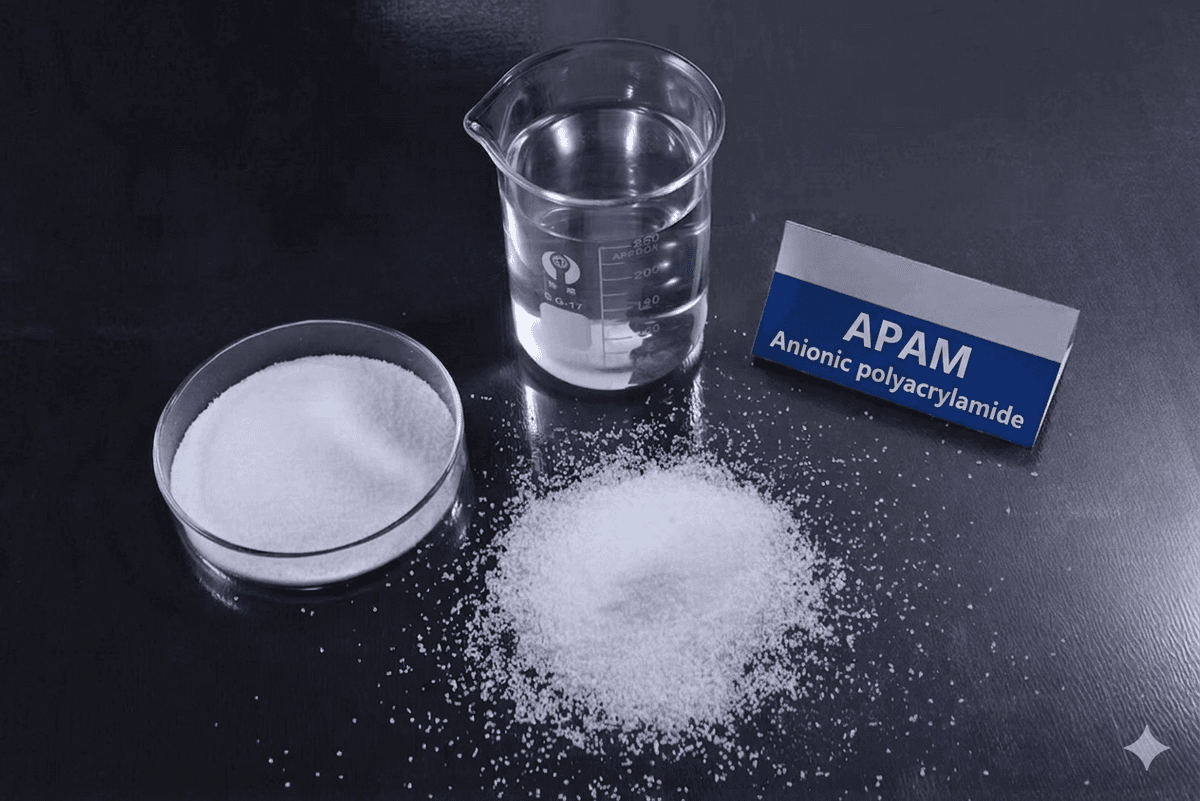
| Appearance | White granular powder |
| Packaging | 25 kg PP woven bags + PE liner |
Key Features
- Selected against the SNF published AN 934 SH grade profile
- Suffix-aware matching across the AN 934 molecular weight ladder
- Higher molecular weight option (CNfloc 1054V) for VHM duty
- Free trial sample with jar or settling test protocol
- Batch-specific TDS, COA and MSDS with every shipment
Applications
- Mineral processing thickener feed and overflow clarity
- Mining tailings settling and dewatering
- Coal washing plant water recovery
- Iron ore and copper concentrator thickeners
- Oilfield water treatment — frac flowback flocculation and dewatering
Get a Quote for SNF FLOPAM AN 934 SH Alternative Supply
Start with the grade name, a bag-label photo or your purchasing requirement. We can discuss current pricing and sample options now; process details can follow.
Related Articles
AN 934 Is a Family, Not a Grade: Reading the Suffix Ladder
AN 934 is probably the best known number in the FLOPAM anionic range, and that popularity causes a specific procurement problem. AN 934 is published across the full molecular weight ladder, from BPM and MPM at the lower end through standard, HD, SH and up to VHM. Every one of those variants carries broadly the same medium charge density. What changes across the ladder is molecular weight, and in mineral processing molecular weight is the property that determines settling rate.
The practical consequence is that two plants can both say they run AN 934 and be running materially different polymers. When a buyer asks us to match AN 934 without a suffix, we cannot answer responsibly, because the honest answer spans several of our grades. We ask for the full grade string from the bag or the purchase order every time, and we would rather delay a quote by a day than ship a molecular weight tier that will not settle your slurry.
CNfloc 1054 is our high molecular weight, high charge density anionic grade positioned against the published AN 934 SH profile. For VHM duty, CNfloc 1054V is normally the closer match. The suffix on your current bags is the single most useful piece of information you can send us.
| Grade on your bags | Molecular weight tier | Our starting recommendation | Typical duty |
|---|---|---|---|
| AN 934 BPM / MPM | Lower tiers | Contact us with duty details | Specialised, lower-MW applications |
| AN 934 (standard) | Standard | CNfloc 1054 (confirm by settling test) | General clarification, effluent settling |
| AN 934 HD / SH | High | CNfloc 1054 | Thickener feed, tailings settling |
| AN 934 VHM | Very high | CNfloc 1054V | High-rate thickeners, coarse tailings |
Why Molecular Weight Drives Settling Rate: Bridging Flocculation
Anionic polyacrylamide works on mineral slurries mainly by bridging rather than by charge neutralisation. A single very long polymer chain adsorbs onto multiple particles at separate points along its length and physically ties them into an aggregate. Larger aggregates settle faster, which is why molecular weight and settling rate are so tightly linked, and why the suffix matters more than the number.
Charge density plays a supporting but real role. Most mineral surfaces carry a negative charge in process water, so an anionic polymer is not primarily neutralising them. Instead the anionic groups keep the chain extended in solution, exposing more adsorption sites along its length. Too little charge and the chain coils up, reducing its bridging reach. Too much charge, particularly in low-ionic-strength water, and electrostatic repulsion from the mineral surface can begin to hinder adsorption.
Water chemistry therefore changes the answer. Divalent cations such as calcium and magnesium screen charge, compress the polymer coil, and generally shift the optimum toward higher molecular weight. Plants recycling process water often see hardness and dissolved solids climb over a season, and the polymer that performed well in a commissioning trial on fresh water can underperform on recycled water twelve months later. If your settling performance has drifted without a change in ore, test your process water before changing polymer. Our guides to polyacrylamide molecular weight and to charge density cover the underlying behaviour.
Thickener Duty: Feedwell, Flocculant Addition Point and Shear
In a thickener, where you add the polymer matters as much as how much you add. Very high molecular weight floc is fragile, and once an aggregate has been broken by shear it does not reform to its original size. That makes the feedwell the critical piece of equipment: its job is to dilute the incoming slurry, distribute polymer evenly, and then deliver the flocculated feed into the settling zone with as little further shear as possible.
Two failure modes recur. The first is adding polymer too early, upstream of a pump or a long pipe run, so that the floc is sheared to fragments before it ever reaches the settling zone. The second is adding polymer too late or at a single point, so distribution is poor and part of the feed is effectively untreated while another part is overdosed. Multiple addition points, or a dilution ring in the feedwell, usually outperform a single concentrated injection at the same total dose.
Feed solids dilution inside the feedwell is genuinely beneficial rather than merely tolerated. Flocculation works better at lower solids concentration because collisions between growing aggregates are less disruptive, and many high-rate thickener designs deliberately entrain supernatant to achieve this. If you are commissioning a thickener and cannot hit design underflow density, examine feedwell dilution and polymer addition geometry before increasing dose.
Judge performance on more than one number. Overflow clarity, settling rate, underflow density and rake torque respond differently to dose, and pushing dose for underflow density can cost you clarity or raise torque toward a trip. The dose that produces the fastest settling rate on a bench cylinder is not automatically the dose that runs the machine best.
Bench Testing for Mineral Duty: Cylinder Settling Tests
For thickener and tailings duty the cylinder settling test is the workhorse, not the CST test used for sludge dewatering. Fill matched graduated cylinders with slurry taken from the actual feed, dose each with polymer at working solution strength, invert or plunge a fixed number of times to distribute the polymer consistently, then record the mud line height against time.
From those curves you read the initial settling rate, usually in metres per hour, and the supernatant clarity after a fixed interval. Plot settling rate against dose and you will find the point beyond which additional polymer buys little extra rate. That knee is your practical operating dose, and dosing past it wastes polymer and can degrade clarity. Comparing candidate polymers means comparing their curves on the same slurry sample on the same day, because ore and process water variability will otherwise swamp the difference between grades.
Consistency of mixing is the largest source of scatter in this test. Use the same number of inversions, the same plunger stroke, and the same polymer solution age for every cylinder, and prepare working solution fresh. Anionic stock at 0.1 to 0.3 percent, aged 30 to 60 minutes with gentle agitation and diluted before injection, is a reasonable starting protocol, and we supply a written procedure with trial quantities.
We ship 5 kg free for this purpose. Duty-specific worked examples are set out in our guides for iron ore, copper concentrators and coal washing plants, and there is a general dosage calculation walkthrough if you need to convert between solution strength, flow rate and kilograms per tonne.
| Measurement | Why you record it | Failure it exposes |
|---|---|---|
| Initial settling rate | Primary sizing and comparison metric | Molecular weight tier too low |
| Supernatant clarity | Overflow quality at the chosen dose | Overdosing, or charge mismatch |
| Settled bed height | Indicates achievable underflow density | Floc too open and water-retaining |
| Dose at the curve knee | Sets the practical operating dose | Wasted polymer beyond the knee |
Coal Washing and Water Recovery
Coal preparation plants use anionic polyacrylamide mainly to recover process water from tailings so it can be returned to the circuit, and the economics are usually driven by water recovery and thickener throughput rather than by polymer price per tonne. Fine clay in the tailings stream is the usual difficulty: clays have high surface area, hold water tenaciously, and can consume polymer without producing the settling rate the plant needs.
Where clay content is high, a coagulant ahead of the flocculant often does more than raising flocculant dose. The coagulant neutralises surface charge and forms small dense aggregates, and the high molecular weight anionic polymer then bridges those aggregates into fast-settling floc. Plants that fight clay with flocculant alone tend to end up dosing well past the point of diminishing return.
Seasonal variation deserves attention. Wet-season ore often carries more clay and more dissolved solids in recycled water, and both push the optimum toward higher molecular weight. Carrying a second grade for part of the year is frequently cheaper than overdosing a single grade all year. Our coal washing plant guide and the mining tailings guide cover the circuit in more detail, and we also supply nonionic grades where the duty calls for them.
Frac Flowback and Produced Water
The same high molecular weight anionic chemistry that settles mineral tailings also flocculates solids in frac flowback and produced water, and we are asked to cover both duties from one grade line reasonably often. The complication in oilfield water is salinity. High total dissolved solids screen the polymer charge, collapse the chain, and reduce bridging reach, which is why a grade that performs well on fresh-water mineral slurry can disappoint on high-salinity flowback.
Where salinity is high, expect to move up the molecular weight ladder, and expect polymer demand to be set by the solids and the water chemistry together rather than by solids alone. Residual oil is the second factor: free and emulsified hydrocarbon interferes with adsorption, so the sequence of oil removal and flocculation in your treatment train changes the polymer you need.
Send us the salinity, the approximate suspended solids, the residual oil content and the equipment you are treating into, and we will select against that rather than assuming mineral-duty conditions. For polymer flooding and drilling duties rather than water treatment, our PHPA oilfield grade line is the relevant product family.
Dosage Guide
Anionic polymer demand for thickener and tailings duty is established by settling or jar test on the target slurry. Use your current AN 934 dose rate as the starting reference.
Frequently Asked Questions — FLOPAM AN 934 SH Equivalent — Anionic PAM (CNfloc 1054)
Why does the AN 934 suffix matter so much?
Because molecular weight lives in the suffix, not the number. SNF lists AN 934 in BPM, MPM, standard, HD, SH and VHM versions, and all of them carry the same medium charge density while molecular weight spans from low to ultra high. Two bags both marked AN 934 can behave very differently, so we always ask for the full grade name.
I use AN 934 VHM. Is CNfloc 1054 the right match?
Probably not. VHM is a higher molecular weight tier and CNfloc 1054V is usually the closer grade. Send us the exact grade name and duty and we will select against it rather than defaulting to one answer.
Is CNfloc 1054 a licensed copy of AN 934 SH?
No. It is an independently manufactured anionic polyacrylamide positioned against the published AN 934 SH profile. Grade descriptors follow different in-house scales, so confirm with a settling or jar test on your slurry.
Can this grade be used for oilfield water rather than mining?
Yes. Frac flowback and produced water flocculation and dewatering are water treatment duties, and our oilfield-oriented anionic grades cover them. Tell us the stream chemistry and solids loading and we will point to the right grade in that line.
What testing do you support before an order?
We ship a free 5 kg trial quantity with a settling or jar test protocol so you can compare settling rate and overflow clarity against your current polymer on your own slurry.
Related Products
Trademark notice. SNF FLOPAM AN 934 SH and all other third-party product and brand names on this page are trademarks or registered trademarks of their respective owners. Henan Jinghua New Material Technology Co., Ltd. is not affiliated with, endorsed by, sponsored by or authorised by those owners, and no such relationship is implied. Those names are used here for the sole purpose of identifying the products our grades are compared against, which is necessary to describe what we supply. Our products are independently manufactured and are not licensed copies. Grade descriptors quoted for third-party products are taken from each manufacturer’s own published literature and follow that manufacturer’s own scale; we do not publish figures those manufacturers do not publish. Performance on your process should be confirmed by jar test or CST test before any change of supply.