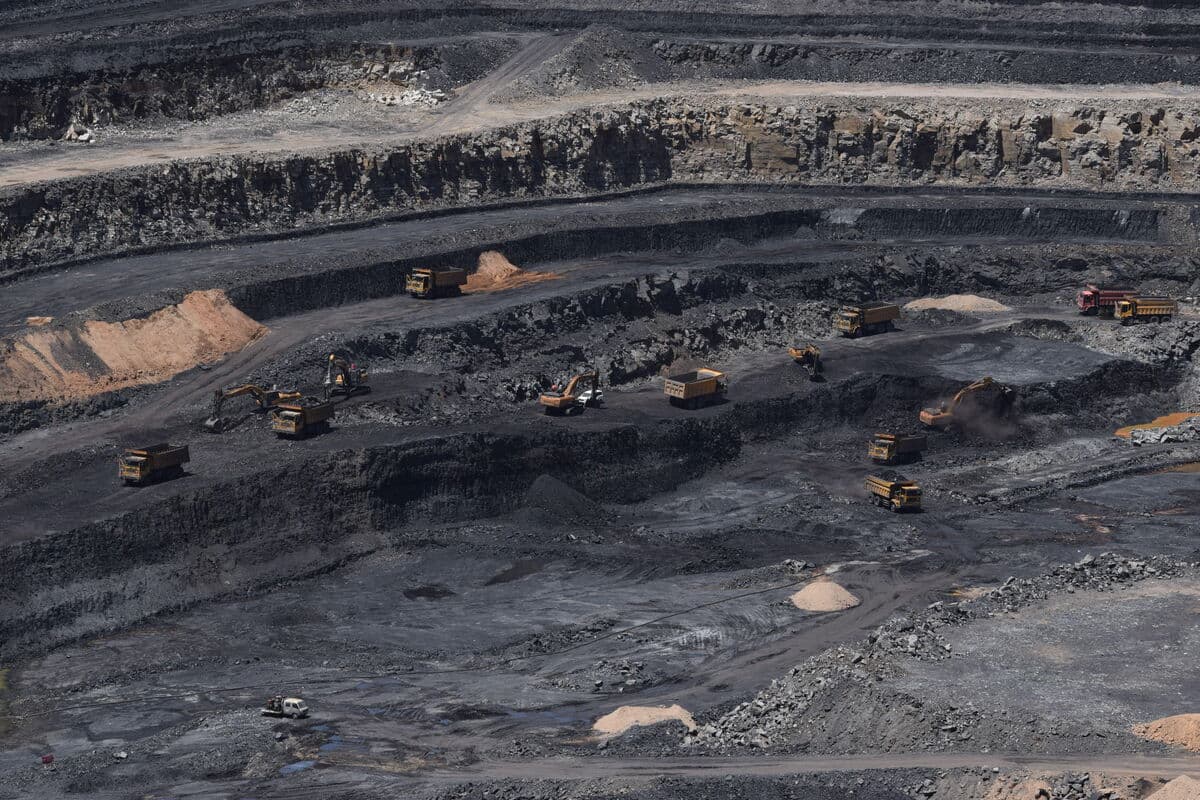
Coal washing plants in Australia, Indonesia, and South Africa have one thing in common: they all waste money on water. A 1,000 ton/day plant consumes 3,000 m³ of water daily. Without PAM-based recycling, that water gets discharged (regulatory violation) or replaced with fresh water ($3,000/day). At typical water tariffs, closing that circuit is a six-figure annual line item — the arithmetic is worked through below. Here is how to specify the PAM that does it.
PAM Selection by Coal Type
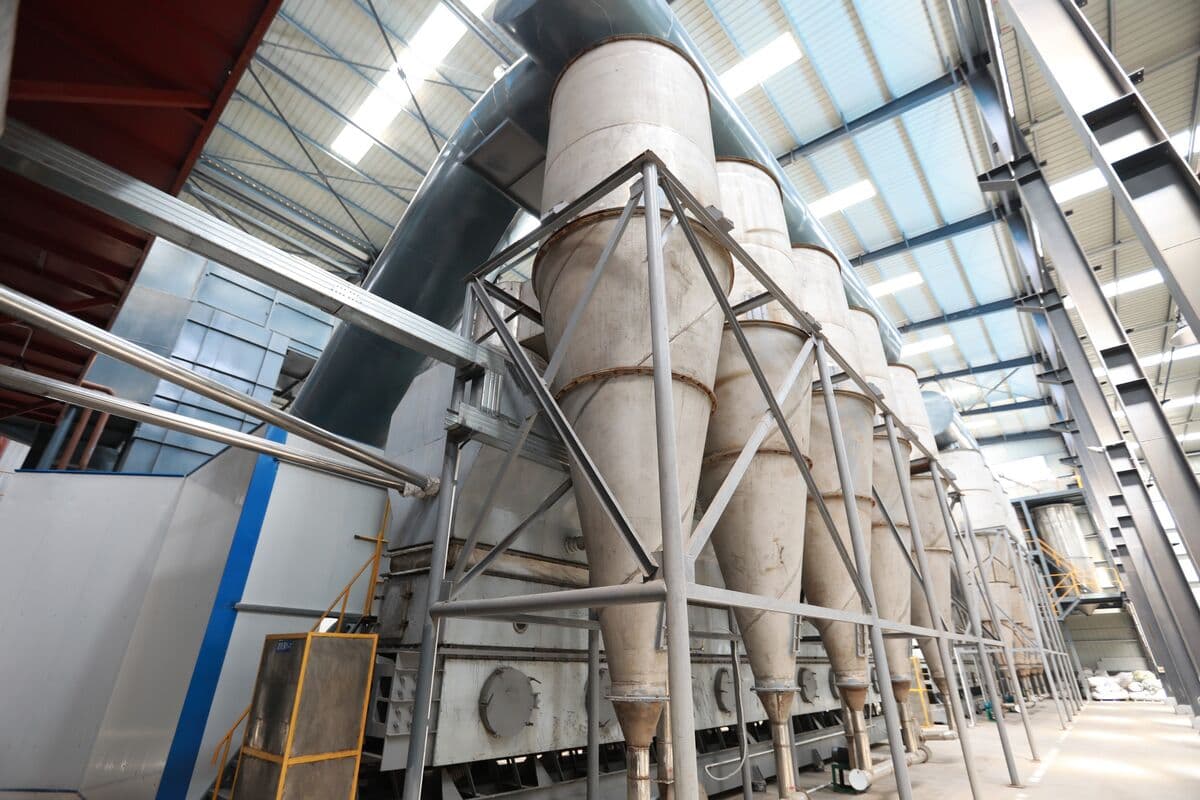
Coal washing plant with thickener equipment
| Coal Type | Particle Size | APAM Grade | Dosage | Settling Time |
|---|---|---|---|---|
| Thermal (bituminous) | 50-500 µm | 12-18M MW | 3-8 ppm | 30-60 min |
| Coking (anthracite) | 20-200 µm | 15-25M MW | 5-15 ppm | 1-3 hours |
| Lignite (brown coal) | 100-1000 µm | 10-15M MW | 2-5 ppm | 20-40 min |
Why Anionic PAM — Not Cationic
Coal particles are negatively charged. Cationic PAM should work better in theory. In practice, APAM outperforms CPAM in coal washing every time. Here is why.
Coal particles have enormous surface area. Bridging — where long polymer chains physically connect multiple particles — is far more effective than charge neutralization at this scale. APAM chains (12-25M MW) are long enough to bridge 5-10 particles simultaneously. CPAM chains are shorter and stiffer.
APAM also produces larger, more open flocs that settle faster and drain better on the sludge pond floor. And it costs 30-40% less than CPAM. For coal washing, APAM is the right choice every time. For a deeper application breakdown, see our coal washing solution page.
What You Are Actually Treating
Coal washing wastewater is not just dirty water. It contains coal fines (50-500 µm), kaolinite and illite clay minerals, silica, and organic matter from coal decomposition. All of these carry negative surface charge and repel each other. Without PAM, they stay suspended for 7-14 days.
Typical incoming wastewater: 500-2,000 mg/L TSS, 200-1,000 NTU turbidity, pH 6.5-8.0. Target for recycling: <100 NTU (thermal coal) or <50 NTU (coking coal). Target for discharge: <50 NTU in most jurisdictions.
The clay content is the variable that matters most. High-clay coal (kaolinite >15%) needs higher MW and higher dosage. We ask every new client to send us a water sample before recommending a grade — clay content varies by mine and by seam within the same mine.
Dosage Optimization
Do not guess dosage. Run a jar test first. Here is the protocol we send to every new client — see also our full jar test procedure:
- Prepare 0.1% PAM solution (1g PAM in 1L water, stir 60 min until fully dissolved)
- Fill 6 × 1L cylinders with your coal washing water
- Add PAM at 2, 4, 6, 8, 10, 15 ppm to each cylinder
- Invert each cylinder 3 times gently — do not shake
- Measure turbidity at 30 min and 60 min
- The lowest dosage that hits your target turbidity is your starting point
Field dosage is typically 20-30% higher than jar test dosage because real systems have more turbulence. Start at jar test result + 25%, then fine-tune.
Water Recycling System Design
A basic PAM recycling system for a 1,000 ton/day plant:
- Collection sump — 500-1,000 m³ capacity, collects all wash water
- PAM dosing — 0.1% solution dosed at sump outlet, 3-15 ppm depending on coal type
- Gentle mixing — 2-5 minutes, low shear (high shear breaks flocs)
- Settling pond or thickener — 1-3 hours residence time
- Overflow pump — clarified water back to washing plant
- Sludge removal — settled coal fines removed weekly or monthly
For plants with limited land, a high-rate thickener replaces the settling pond. Same clarification in 20% of the footprint. We can help size the thickener based on your throughput and target turbidity.
Closed-Loop Water Recycling: Design Details That Matter
A closed-loop coal water circuit is more than a sump and a thickener. The plants that hit 85-90% recycling and stay there long-term get four design details right. We have walked through commissioning of plants in Queensland, Inner Mongolia, and South Kalimantan and these are the points operators wish they had pinned down at the design stage.
- Surge buffer sized for 2-3 hours of feed — coal washing flow is not constant. Crusher trips, screen blockages, and shift changes cause flow spikes of 150-200% of nominal. A small sump (under 30 minutes residence) starves the thickener feed pumps and pushes solids to the overflow.
- Two PAM dosing points, not one — primary dose into the feed launder, secondary trim point at the thickener feedwell. Single-point dosing means any flow change instantly throws the dose ratio off; two points let you trim 10-20% on the fly without cycling the make-up plant.
- Recycle water cooler or aerator — recycled water heats up by 2-5°C every loop in summer and accumulates dissolved organics. Above 35°C, APAM hydrolysis accelerates and effective dosage rises 15-25%. A cooling tower or an open aeration basin pays for itself in PAM savings within 18 months.
- Bleed line back to raw water make-up — never zero blowdown. Plan for 5-10% continuous blowdown of recycle water (replaced with fresh) to control conductivity. Per Australian Coal Industry's Research Program (ACARP) field experience, conductivity above 3,500 µS/cm is the breakpoint where APAM performance falls off a cliff.
Thickener vs Settling Pond: How to Choose
Both work — the choice comes down to land cost, throughput, and how dry you need the underflow. Here is how we steer customers:
| Factor | Settling Pond | Conventional Thickener | High-Rate Thickener |
|---|---|---|---|
| Footprint per 1,000 m³/day | 2,500-4,000 m² | 300-500 m² | 80-150 m² |
| CAPEX (rough) | $200-400k | $800k-1.5M | $1.2-2.5M |
| Underflow solids | 25-35% | 45-55% | 50-60% |
| PAM consumption | Lower (3-6 ppm) | Medium (5-10 ppm) | Higher (8-15 ppm) |
| Best for | Cheap land, low throughput | Mid-size plants, stable feed | Limited footprint, dry sludge |
Rule of thumb: under 500 ton/day plants on cheap land — settling pond. 500-3,000 ton/day — conventional thickener. Above 3,000 ton/day or where land is constrained — high-rate thickener with paste underflow if you plan dry stacking.
Operating Cost Breakdown
For a 1,000 ton/day thermal coal plant running closed-loop with PAM, typical monthly OPEX (USD):
- PAM consumption: $3,000-4,500 (5-7 ppm × 3,000 m³/day × 30 days)
- Make-up water: $2,000-3,500 (15-20% of nominal water demand)
- Sludge disposal/dewatering: $4,000-7,000 (filter press operation, sludge transport)
- Thickener power + rake torque: $1,500-2,500
- Operator labor (1 dedicated FTE shared): $1,200-2,000
Total monthly OPEX: $11,700-19,500. Compare to no-recycling baseline of $90,000+/month in fresh water alone. Typical payback for a $1.2M thickener-based recycling system: 14-18 months. We have customers in Indonesia who paid back the full installation in 11 months because local water tariffs jumped during commissioning.
Common Questions from Plant Operators
When can I bypass the PAM system safely?
Almost never on a long-term basis. Short bypass (1-4 hours) for thickener maintenance is fine if you have buffer storage to hold raw wash water. Anything beyond a shift means turbid water builds up in the circuit and once you restart, the next 24-48 hours will run at 2-3x normal PAM dose to recover clarity. Plan maintenance for production downtime, never run wet bypass through the main loop.
What is a realistic commissioning timeline for a new recycling system?
From thickener wet test to stable closed-loop operation: 4-8 weeks. Week 1-2: open-loop with fresh water, check mechanical and dosing. Week 3-4: introduce raw coal water, tune PAM dose with daily jar tests. Week 5-6: gradually close the loop (50% → 75% → 90% recycle). Week 7-8: hold at target, fix the conductivity creep that always shows up. Per ACARP commissioning guidance, the conductivity stabilization phase is the most underestimated step — budget 2 full weeks for it.
How does the system behave in sub-zero winter operation?
Below 5°C, APAM dissolution time triples and effective dose drops 30-40%. Plants in northern China, Mongolia, and Russia run heated make-up tanks (15-25°C) and insulated dosing lines. Outdoor settling ponds freeze on the surface and lose effective volume. We supply a winter-grade APAM with faster dissolution kinetics for these markets — same MW range, modified surfactant package. Tell us your minimum ambient and we will spec accordingly.
Worked Example: 2,000 ton/day Thermal Coal Circuit
Modelled scenario — 2,000 ton/day plant on an open water circuit
Starting point
Take a plant discharging turbid wastewater at 600 NTU against a 50 NTU limit, with fresh water costing $3,000/day. This is a common enough starting condition on thermal coal to be worth costing out.
How we would specify it
Send us a water sample. For bituminous coal with moderate clay at pH 7.2, the grade that fits is APAM 15M MW at roughly 6 ppm. We confirm against your sample before quoting, and support system setup by video call.
Modelled outcome at 82% recycling
Worked Example: High-Clay Coking Coal, 1,500 ton/day
Modelled scenario — 1,500 ton/day, fine particles, high clay
Note: figures above are a modelled scenario for this duty class, not results measured at a named plant. The 22M MW grade is not a standard catalog item — we produce to your clay content rather than shipping a catalog grade, which is what separates a manufacturer from a trading company.
The Batch Consistency Problem
The most common complaint we hear from coal plants: "First batch worked great, second batch was useless." This happens when you buy from trading companies who source from whoever is cheapest that month.
We are the factory. Every batch is produced on our own lines in Xinxiang. Every batch is tested for MW (±0.5M tolerance), solid content (≥90%), dissolution time (≤90 min), and residual monomer (≤0.05%). We retain 200-500g samples from every batch for 24 months. If you have a performance issue, we can pull the retained sample and compare.
We supply export orders to multiple export markets. Coal washing is one of our core markets — we have dedicated APAM grades for it, not repurposed general-purpose grades.
Pricing (2026, FOB China)
- APAM 10-15M MW (lignite): $1,200-1,500/MT
- APAM 15-20M MW (thermal coal): $1,400-1,700/MT
- APAM 20-25M MW (coking coal): $1,600-1,900/MT
- Custom grades (22M+, high clay): Quote on request
MOQ: 500kg first order. FCL (20MT+): 10-12% discount. Delivery: 7-10 days standard, 3-5 days urgent.
Send us your coal washing water sample
We analyze it free and recommend the right grade. If you are in a hurry (regulatory deadline), tell us — we have shipped urgent orders in 3 days.
WhatsApp: +86 187-3759-0940 · Email: info@chinapolyacrylamide.com
Related
Recommended Product Grades
For the application discussed above, these are the polyacrylamide grades we ship most often:
- APAM Medium Molecular Weight grade
- nonionic PAM (NPAM) for mineral processing
- Magnafloc 351 equivalent — nonionic, for washery water that swings acidic or carries high dissolved salt
- Magnafloc 355 equivalent — anionic, available in coarse granulation where hopper dusting is a problem
- Zetag 7645 and 8110 equivalent — low-charge cationic on a very long chain, for coal fines behind an established coagulation stage
- Zetag 7650 equivalent — one step up the charge axis for washery water that is only partly coagulated
See the full range of mining and mineral processing applications for equipment context and selection criteria across this industry.
Not sure which is right for you? Try our PAM Selector tool or request a quote.
For a complementary view, see our PAM in coal washing applications.