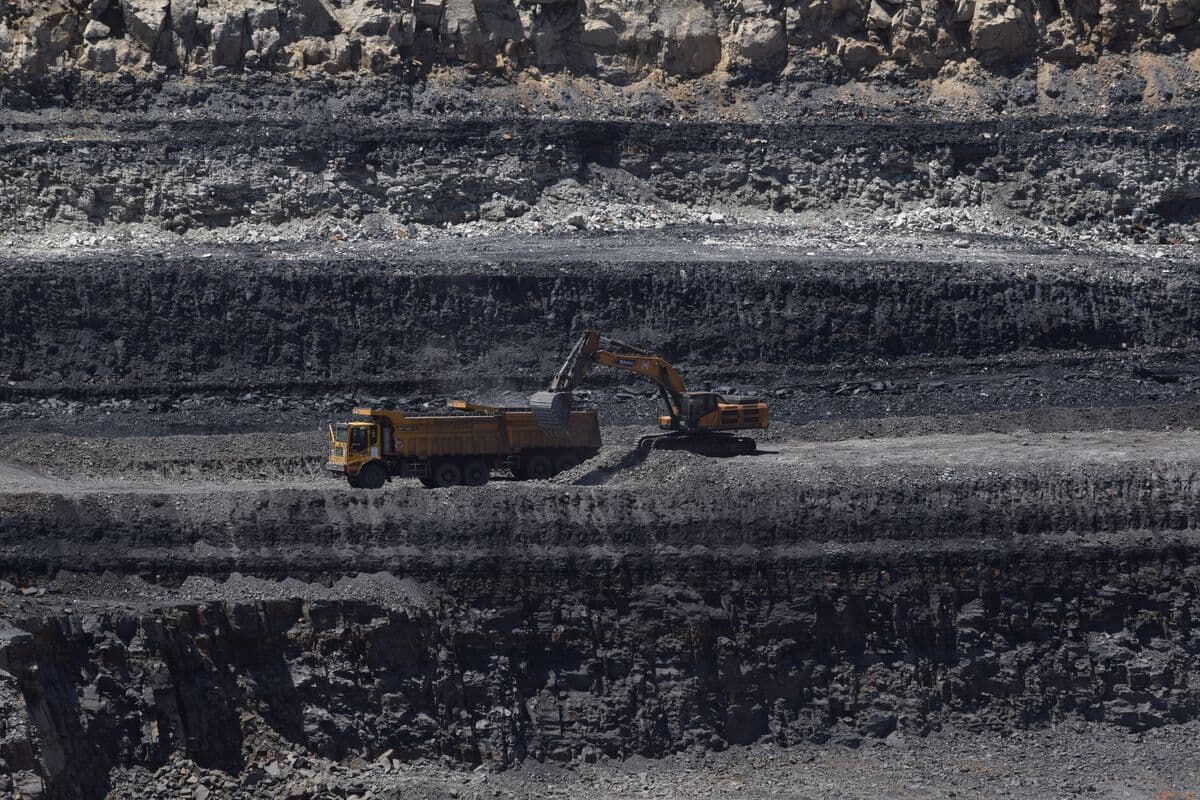
Iron ore processing generates massive tailings volumes — every ton of iron ore produces 0.5-1.5 tons of tailings slurry containing fine hematite, goethite, and silica particles. High-MW anionic PAM is essential for thickener operation, tailings consolidation, and water recovery. We supply mining-grade APAM to iron ore operations across Australia, Brazil, India, and Africa — our factory ships 5,000+ tons annually to the mining sector alone.
The iron ore industry is under increasing pressure to reduce water consumption and eliminate conventional tailings dams. The Brumadinho disaster in Brazil (2019) killed 270 people and triggered global regulatory changes. Paste thickening and dry stacking — both of which depend on ultra-high-MW PAM — are now the preferred tailings management approach for new projects. We produce the 25-28M MW grades that paste thickeners require, and we supply them with the batch consistency that mining operations demand.
Iron Ore Tailings Characteristics
Iron ore tailings composition varies dramatically by ore type: hematite operations (Pilbara, Carajás) produce relatively coarse tailings at 30-45% solids with moderate clay, magnetite concentrate tailings are ultra-fine (90% below 45 microns) and extremely difficult to settle, while laterite operations (India, Africa) produce high-clay tailings that consume 2-3× more PAM due to kaolinite and montmorillonite surface adsorption competing with floc formation.
| Ore Type | Tailings Particle Size | Solids Content | pH | Key Minerals |
|---|---|---|---|---|
| Hematite (Pilbara, Carajás) | 80% <75 microns | 30-45% w/w | 7.0-8.5 | Hematite, goethite, kaolinite |
| Magnetite (concentrate) | 90% <45 microns | 25-40% w/w | 7.5-9.0 | Magnetite, quartz, feldspar |
| Itabirite (Brazil) | 70% <100 microns | 35-50% w/w | 6.5-8.0 | Hematite, quartz, iron hydroxides |
| Laterite (India, Africa) | 60% <50 microns | 20-35% w/w | 5.5-7.5 | Goethite, limonite, clay |
PAM Applications in Iron Ore Processing
Anionic polyacrylamide (APAM) for iron ore tailings works by bridging fine hematite and goethite particles into settleable flocs, improving thickener throughput by 10-50× compared to untreated slurry, with optimal dosage of 15-40 g/ton ore for conventional thickening and 30-60 g/ton for paste thickening that enables dam-free dry stacking at 65-72% solids.
1. Thickener Feed Flocculation
The thickener is the heart of tailings management. Without PAM, iron ore thickeners run at 30-50% of design capacity because fine particles just won't settle fast enough. I've seen operations running their thickener at half-speed for years before someone finally optimized the flocculant program.
- Grade: APAM 18-25M MW, 25-30% hydrolysis degree
- Dosage: 15-40 g/ton ore (varies by clay content — laterite needs 30-50 g/ton)
- Target overflow: <50 NTU (suitable for process water recycling)
- Target underflow: 55-65% solids (pumpable to tailings storage)
- Settling rate improvement: 10-50× faster than without PAM
The key to thickener performance is PAM addition point and mixing energy. Add PAM to the thickener feedwell with 5-10 seconds of gentle mixing. Enough to disperse the polymer, not enough to break forming flocs. Over-mixing is the #1 cause of poor thickener performance — I've fixed more thickeners by reducing mixing energy than by changing PAM grade. Our tailings thickener troubleshooting guide covers how to isolate feedwell mixing, bed level, and dosing faults before you touch the polymer program.
2. Tailings Storage Facility (TSF) Management
PAM accelerates consolidation in tailings dams, reducing water inventory and improving dam stability. This is increasingly important as regulators worldwide tighten tailings dam safety requirements post-Brumadinho.
- Grade: APAM 15-20M MW, 20-25% hydrolysis
- Dosage: 5-15 ppm (applied at spigot discharge)
- Benefit: Reduces beach angle, improves consolidation rate by 30-50%, reduces supernatant pond size by 40-60%
3. Paste Thickening (Dry Stacking)
Modern iron ore operations increasingly use paste thickeners to produce 65-72% solids underflow for dry stacking — eliminating conventional tailings dams entirely. This is the future of tailings management, and it requires ultra-high-MW PAM.
- Grade: APAM 22-28M MW (ultra-high MW for maximum bridging)
- Dosage: 30-60 g/ton ore (higher than conventional thickening)
- Target underflow: 65-72% solids (non-segregating paste)
- Water recovery: 85-95% (vs 60-70% with conventional thickening)
We produce APAM up to 28M MW — among the highest molecular weights available commercially. This ultra-high MW is critical for paste thickening because the longer polymer chains create stronger bridges between particles, enabling the dense underflow that paste thickeners require.
Grade Selection Guide
PAM grade selection for iron ore processing depends on thickener type and target underflow density: conventional thickeners use APAM 18-22M MW at 15-30 g/ton, high-rate thickeners need 22-25M MW at 20-40 g/ton, and paste thickeners require ultra-high 25-28M MW at 30-60 g/ton — with laterite ores needing a higher-hydrolysis variant (30-35%) to overcome clay mineral interference.
| Application | Our Grade | MW (million) | Hydrolysis % | Dosage |
|---|---|---|---|---|
| Conventional thickener | APAM-20 | 18-22 | 25-30% | 15-30 g/ton |
| High-rate thickener | APAM-25 | 22-25 | 25-30% | 20-40 g/ton |
| Paste thickener | APAM-28 | 25-28 | 28-32% | 30-60 g/ton |
| TSF spigot dosing | APAM-18 | 15-18 | 20-25% | 5-15 ppm |
| Laterite (high clay) | APAM-22HC | 20-22 | 30-35% | 25-50 g/ton |
Water Recovery Economics
PAM-optimized water recovery in iron ore processing improves thickener overflow from 200-500 NTU (not recyclable) to below 50 NTU (fully recyclable), increasing water recovery from 50-60% to 80-95% — saving 4.5 million m³/year of freshwater for a 10 Mtpa operation at a PAM cost of $325,000/year against water savings of $2.25-9.0M/year (7-28× ROI). Iron ore processing uses 0.5-2.0 m³ of water per ton of ore. In the Pilbara, Rajasthan, or the Sahel, water isn't just expensive — it's the constraint that determines whether your project can operate at all.
- Without PAM: Thickener overflow 200-500 NTU (not recyclable), water recovery 50-60%
- With PAM: Thickener overflow <50 NTU (recyclable to process), water recovery 80-95%
- Savings: For a 10 Mtpa operation using 1.5 m³/ton, improving recovery from 60% to 90% saves 4.5 million m³/year of freshwater
- PAM cost: 25 g/ton × 10M tons = 250 tons PAM/year × $1,300/ton = $325,000/year
- Water value: 4.5M m³ × $0.50-2.00/m³ = $2.25-9.0M/year savings
- ROI: 7-28× return on PAM investment
In the Pilbara (Western Australia), water costs $1.50-3.00/m³ due to desalination. A 30 Mtpa iron ore operation there spends $15-25M/year on water. Improving recovery from 70% to 90% with PAM saves $6-10M/year. One of our customers there told me the PAM program paid for itself in the first 6 weeks. It's one of the highest-ROI investments in the entire processing plant.
Need PAM for iron ore tailings?
Free sample + jar test report. WhatsApp: +86 187-3759-0940
Quality Guarantee for Mining Operations
Mining-grade PAM quality control requires batch tolerance of ±0.5M molecular weight and ±2% hydrolysis degree (tighter than industry standard ±1.0M), because a single inconsistent batch can shut down a thickener for hours at a cost of $50,000-200,000 in lost production — making batch-to-batch consistency the single most important supplier selection criterion for mining operations.
Mining operations cannot tolerate batch variation. A bad batch doesn't just waste chemical — it shuts down the thickener, backs up the plant, and costs real production. Our quality system addresses this:
- Batch tolerance: ±0.5M MW, ±2% hydrolysis degree — tighter than industry standard (±1.0M)
- Three-tier QC: In-process monitoring → batch testing → pre-shipment inspection
- Retention samples: 200-500g kept for 12 months per batch for comparison
- Solid content: ≥90% (higher than many competitors at 88-90%)
- Dissolving time: ≤90 minutes (critical for continuous dosing systems)
- Residual monomer: ≤0.05% (important for environmental compliance)
Our factory in Xinxiang operates confirmed production partners with confirmed grade availability. We support mining buyers in multiple export markets with samples, technical documents, and grade selection.
Related Mining Applications
Per ICMM (International Council on Mining and Metals) sustainability guidelines, responsible tailings management requires optimized flocculant programs to minimize water consumption and reduce TSF footprint. PAM is the standard flocculant across all mineral processing operations.
If you also process other ores at your site, the PAM grade selection differs significantly by ore type. According to ICOLD (International Commission on Large Dams) tailings dam safety standards, proper dewatering with optimized polymer dosage directly reduces dam failure risk by lowering the phreatic surface in TSF embankments.
Related guides for other mining applications:
- PAM for gold mining — cyanide-compatible grades and CIL/CIP circuit optimization
- PAM for copper mining — high-clay ore challenges and acid-stable formulations
- General mining tailings guide — covers all ore types and thickener configurations
- APAM mining supplier selection — how to evaluate and compare PAM suppliers for mining
Frequently Asked Questions
Why does my thickener overflow turbidity spike after changing PAM batches?
This is almost always a batch consistency issue. If your new batch has different MW or hydrolysis than the previous one, the optimal dosage changes. A 1M MW difference can shift optimal dosage by 10-20%. Our ±0.5M MW tolerance minimizes this problem. If you experience turbidity spikes after a batch change, run a quick jar test to recalibrate dosage — it usually takes only 30 minutes.
How do I handle high-clay laterite tailings?
Laterite tailings are the most challenging iron ore application because clay minerals (kaolinite, montmorillonite) consume PAM through surface adsorption without contributing to floc formation. Two approaches: (1) Use our APAM-22HC grade with higher hydrolysis (30-35%) — the extra charge helps overcome clay interference. (2) Pre-treat with a low dose of coagulant (alum or ferric chloride, 50-100 g/ton) to neutralize clay charge before adding PAM. Approach 2 typically reduces PAM consumption by 30-40%.
What is the difference between conventional and paste thickening?
Conventional thickeners produce 55-65% solids underflow that flows like a liquid and requires a tailings dam for storage. Paste thickeners produce 65-72% solids underflow that behaves like toothpaste — it can be stacked on a dry surface without a dam. Paste thickening requires ultra-high-MW PAM (25-28M) at higher dosages (30-60 g/ton vs 15-30 g/ton), but eliminates the $100M-500M cost of building and maintaining a tailings dam.
Can I use the same PAM for thickener and TSF spigot dosing?
You can, but it is not optimal. Thickener feed needs high-MW PAM (18-25M) for fast settling and clear overflow. TSF spigot dosing needs lower-MW PAM (15-18M) for consolidation without creating large flocs that trap water. Using thickener-grade PAM at the spigot often gives poor consolidation because the large flocs hold water rather than releasing it.
Get Iron Ore Mining PAM Pricing
We supply mining-grade APAM from our Henan factory, backed by 100,000 tons/year documented PAM capacity. Common mining grades can be checked against China factory stock before urgent quotes. Contact us for bulk pricing and free settling tests with your tailings:
Request Mining PAM Pricing
Tell us your ore type, processing rate (Mtpa), thickener type, and current PAM specifications. We respond with pricing and grade recommendations within 24 hours.
Recommended Product Grades
For the application discussed above, these are the polyacrylamide grades we ship most often:
See the full range of mining and mineral processing applications for equipment context and selection criteria across this industry.
For thickener sizing and tailings handling context, see our mineral tailings treatment solution.
Not sure which is right for you? Try our PAM Selector tool or request a quote.