FLOPAM FO 4650 Equivalent — Cationic PAM (CNfloc C8005)
ChinaPAM supplies CNfloc C8005, our high charge density cationic polyacrylamide positioned against SNF FLOPAM FO 4650 for municipal and industrial sludge dewatering. Free trial samples, batch COA included.
Supply Route Comparison
Published reference data and the ChinaPAM route for SNF FLOPAM FO 4650
| Parameter | ChinaPAM Supply Route | SNF FLOPAM FO 4650 |
|---|---|---|
| Type | Cationic PAM powder | Cationic PAM powder |
| Molecular Weight | High (our scale) | Standard (SNF published scale) |
| Charge Density | High (our scale) | High (SNF published scale) |
| Suffix Variants | Grade selected to match your suffix | FO 4650, FO 4650 SH, FO 4650 VHM |
| MOQ | 500 kg | Set by regional distributor |
| Lead Time | 7–10 days ex-works | Set by regional distributor |
| Trial Sample | Free 5 kg with test protocol | Via distributor request |
Specifications
| Our Grade | CNfloc C8005 |
| Positioned Against | SNF FLOPAM FO 4650 |
| Type | Cationic (acrylamide–quaternary copolymer) |
| Molecular Weight | High |
| Charge Density | High |
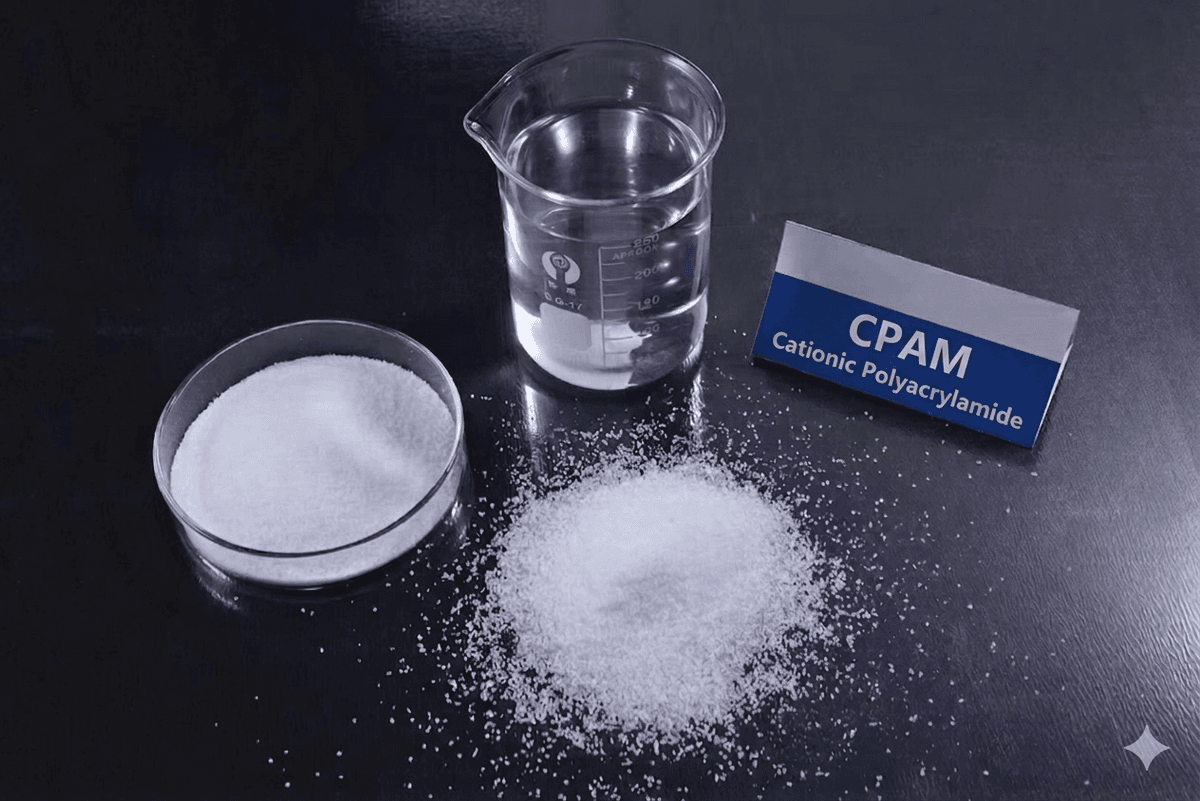
| Appearance | White granular powder |
| Packaging | 25 kg PP woven bags + PE liner |
Key Features
- Selected against the SNF published FO 4650 grade profile
- Suffix-aware grade matching (FO 4650 vs FO 4650 SH vs FO 4650 VHM)
- Free trial sample with CST or jar test protocol
- Batch-specific TDS, COA and MSDS with every shipment
- MOQ 500 kg, direct from factory
Applications
- Municipal WWTP sludge dewatering (belt press and centrifuge)
- Waste activated sludge thickening
- Industrial sludge — food, beverage, textile
- Dissolved air flotation (DAF) sludge
- Palm oil mill effluent sludge conditioning
Get a Quote for SNF FLOPAM FO 4650 Alternative Supply
Start with the grade name, a bag-label photo or your purchasing requirement. We can discuss current pricing and sample options now; process details can follow.
Related Articles
How the FO 4650 Number Encodes Charge, and Why the Suffix Matters More
Buyers switching away from FLOPAM FO 4650 usually quote the four-digit number and stop there. That number tells you the series and the approximate cationic charge band, but it does not tell you the molecular weight, and molecular weight is what decides whether a polymer works on your centrifuge. In the FLOPAM cationic range the molecular weight is carried in the suffix, so plain FO 4650, FO 4650 SH and FO 4650 VHM are three different products that share one number.
This is the single most common source of failed grade matches we see. A plant running FO 4650 VHM on a decanter centrifuge that receives plain-molecular-weight replacement polymer will see the floc shear apart in the bowl, cake solids drop two or three points, and centrate turbidity climb. Nothing was wrong with the polymer chemistry. The molecular weight tier was wrong. Before we quote, we ask for a photograph of the bag label or the full grade string from your purchase order.
CNfloc C8005 is our high molecular weight, high charge density cationic grade positioned against the standard-molecular-weight FO 4650 profile. If your bags carry an SH or VHM suffix, CNfloc C8055 is normally the closer starting point. We would rather send the right grade for a free trial than win an order and lose the account on performance.
| Grade on your bags | Molecular weight tier | Our starting recommendation | Typical duty |
|---|---|---|---|
| FO 4650 | Standard | CNfloc C8005 | Belt press, gravity thickening |
| FO 4650 SH | High | CNfloc C8055 | Centrifuge, screw press |
| FO 4650 VHM | Very high | CNfloc C8055 (confirm by CST) | High-shear decanter centrifuge |
Matching Charge Density to Your Sludge, Not to a Catalogue Number
FO 4650 sits in the high charge band, which is where most municipal waste activated sludge lands. The reason is straightforward: the more biological and colloidal the solids, the more negative surface charge there is to neutralise, and the higher the cationic demand. Digested sludge, which has already had much of its readily degradable organic fraction removed, generally needs less charge than fresh waste activated sludge from the same works.
Sludge that has sat in storage shifts too. As it septifies, dissolved organic material and fine colloids increase, charge demand rises, and a polymer that was optimal in the morning can underperform on the same stream in the afternoon. If your feed varies seasonally, or if you blend primary and secondary sludge at a ratio that changes with flow, expect to carry two charge grades rather than force one polymer to cover both.
Our practical guidance is to establish charge fit first with a Capillary Suction Time test, then adjust molecular weight for the dewatering equipment. Charge that is too low leaves pin floc and cloudy filtrate. Charge that is too high restabilises the solids and you see the floc break down again as dose increases past the optimum, which is a distinctive and easily recognised curve once you have seen it. Our guide to cationic polyacrylamide charge density explains how to read that curve.
Solution Preparation: Where Most Cationic Polymer Performance Is Lost
High molecular weight cationic powder is unforgiving during make-up. The failure mode is fisheyes, partly hydrated gel lumps that never dissolve, pass through the system, and consume polymer budget without contributing flocculation. They form when dry powder meets water faster than it can disperse, so the wetting stage matters more than the mixing stage.
Feed powder through an eductor or vibrating tray into a moving water stream rather than dumping it into a static tank. Make up the stock solution in the 0.1 to 0.3 percent range by weight for high molecular weight cationic powder. Stronger solutions become too viscous to mix or pump reliably. Allow roughly 30 to 60 minutes of gentle ageing before use so the polymer chains can fully extend, and use a slow impeller rather than a high-shear mixer, because the same shear that mixes quickly also fractures the long chains you paid for.
Dilute the aged stock to somewhere near 0.05 to 0.1 percent at the point of injection. Post-dilution is not optional refinement, it materially improves floc formation by letting the polymer disperse through the sludge before it adsorbs. Prepare with clean water where possible: high hardness, high iron or residual chlorine in make-up water all degrade cationic polymer, and chlorine attacks the polymer backbone directly.
Stock solution has a working life measured in days rather than weeks. Make up what you will use within about 24 hours for cationic grades, and keep dry powder sealed against humidity, since the powder is hygroscopic and caked material dissolves poorly. Our note on cationic polyacrylamide for sludge dewatering covers handling in more detail.
| Parameter | Working range | Why it matters |
|---|---|---|
| Stock concentration | 0.1–0.3 % w/w | Higher becomes unpumpable and mixes poorly |
| Ageing time | 30–60 min, gentle agitation | Chains need time to extend before use |
| Injection concentration | 0.05–0.1 % w/w | Post-dilution improves dispersion before adsorption |
| Stock working life | Use within ~24 h | Cationic solutions lose activity faster than anionic |
| Make-up water | Low hardness, chlorine-free | Chlorine attacks the polymer backbone |
Dosing by Equipment Type: Belt Press, Centrifuge and Screw Press
The same sludge and the same polymer will need different dose rates and different molecular weight tiers depending on the machine. Polymer demand for dewatering is normally expressed as kilograms of active polymer per tonne of dry solids, which lets you compare across machines and across feed solids concentrations.
A belt filter press works at comparatively low shear and rewards large, open, free-draining floc. Molecular weight in the standard to high range is usually sufficient, and overdosing shows up as blinding of the belt and polymer carry-over in the filtrate. A decanter centrifuge is the opposite case: floc must survive high shear in the bowl, so higher molecular weight grades and a slightly higher dose are typical, and the trade-off you are managing is cake dryness against centrate clarity. Screw presses sit between the two, run at low speed, and generally tolerate a wide polymer window.
Whichever machine you run, change one variable at a time. The common mistake during a polymer switch is adjusting dose, dilution and machine settings together, which makes the result impossible to attribute. Fix your make-up and dilution first, hold machine settings at the values you used with your previous polymer, then move dose alone until you find the optimum. Our belt press polymer selection guide and the municipal sludge dewatering walkthrough set out the sequence.
Two field notes worth stating plainly. First, polymer demand tracks the solids you are actually treating, so if feed solids concentration drifts, your dose in kilograms per tonne can look stable while your consumption per hour changes considerably. Second, if the optimum dose you find on site is far from your previous FO 4650 rate, suspect the make-up system before you suspect the polymer.
Testing Before You Commit: CST and Jar Testing
We ship a free 5 kg trial quantity precisely so that grade selection is settled by measurement rather than by correspondence. Capillary Suction Time is the standard bench test for dewaterability and it is fast enough to screen several candidate doses in an afternoon. Prepare stock at working strength, dose a fixed sludge volume across a range, mix at a consistent and gentle energy, and record CST against dose. The curve will show a clear minimum, and that minimum is your optimum charge and dose combination.
Follow the bench screen with a plant trial on one machine before converting the works. Log cake solids, filtrate or centrate quality, and polymer consumption per tonne of dry solids for both the incumbent and the candidate over the same feed conditions. Anything less than a same-feed comparison invites a false conclusion, because sludge variability alone can move cake solids by more than the polymer difference you are trying to measure.
Guidance on sludge conditioning and dewatering practice is published by the Water Environment Federation, and the American Water Works Association publishes standards covering polyacrylamide used in drinking water treatment. Where your polymer touches potable water, verify the certification your jurisdiction requires before switching, since that requirement sits with the product and the market, not with the grade descriptor.
Regional Duty Notes: Palm Oil Mill Effluent and Industrial Sludge
A large share of our cationic volume goes into Southeast Asia and Africa, and palm oil mill effluent is one of the duties we are asked about most. POME is hot, acidic, very high in organic load, and rich in oil and grease, which makes it a demanding conditioning problem rather than a standard municipal one. Cationic polymer works there, but expect a higher dose than a municipal waste activated sludge on the same equipment, and expect temperature to matter: warm streams accelerate polymer degradation in the make-up tank, so keep stock solution fresh.
Food and beverage sludge behaves similarly in that fats and oils interfere with floc formation, and dissolved air flotation sludge from those plants is usually thin, which means polymer demand per cubic metre looks low while demand per tonne of dry solids stays high. Textile sludge brings the additional complication of residual dye and surfactant, both of which consume charge before your polymer reaches the solids you are trying to capture.
In each of these cases the correct answer is a trial on your own stream. Tell us the source, the approximate solids concentration, the temperature and the machine, and we will select a grade against it rather than defaulting to the standard municipal recommendation. For sludge outside our cationic range we also supply anionic grades for mineral and mining duties.
Dosage Guide
Cationic polymer demand is set by CST or jar test on the specific sludge stream. Use your current FO 4650 dose rate as the starting reference.
Frequently Asked Questions — FLOPAM FO 4650 Equivalent — Cationic PAM (CNfloc C8005)
What does the FO 4650 model number actually mean?
In the FLOPAM naming system the leading digit identifies the series and the middle digits track cationic charge, so 4650 sits in the high charge band. Molecular weight is carried by the suffix, not the number: FO 4650 is the standard molecular weight version, FO 4650 SH is higher, and FO 4650 VHM is higher still. This matters when matching grades.
I use FO 4650 SH, not plain FO 4650. Is CNfloc C8005 still right?
Not necessarily. FO 4650 SH is a higher molecular weight grade, and CNfloc C8055 is usually the better match there. Tell us the exact suffix on your current bags and we will select against it.
Is CNfloc C8005 a licensed copy of FO 4650?
No. It is an independently manufactured cationic polyacrylamide positioned against the published FO 4650 grade profile. Grade descriptors follow different in-house scales, so verify on your sludge with a CST or jar test.
Which applications do you supply this grade into most?
Municipal sludge dewatering on belt presses and centrifuges, waste activated sludge thickening, DAF sludge, and food and beverage industrial sludge. Palm oil mill effluent is a common duty in our Southeast Asian accounts.
Can I get a sample before ordering?
Yes. We ship a free 5 kg trial quantity with a test protocol so you can compare cake solids and filtrate quality against your current polymer.
Related Products
Trademark notice. SNF FLOPAM FO 4650 and all other third-party product and brand names on this page are trademarks or registered trademarks of their respective owners. Henan Jinghua New Material Technology Co., Ltd. is not affiliated with, endorsed by, sponsored by or authorised by those owners, and no such relationship is implied. Those names are used here for the sole purpose of identifying the products our grades are compared against, which is necessary to describe what we supply. Our products are independently manufactured and are not licensed copies. Grade descriptors quoted for third-party products are taken from each manufacturer’s own published literature and follow that manufacturer’s own scale; we do not publish figures those manufacturers do not publish. Performance on your process should be confirmed by jar test or CST test before any change of supply.