FLOPAM FO 4107 SSH Equivalent: Ultra-Low-Charge Very-High-MW Cationic PAM Supply Route
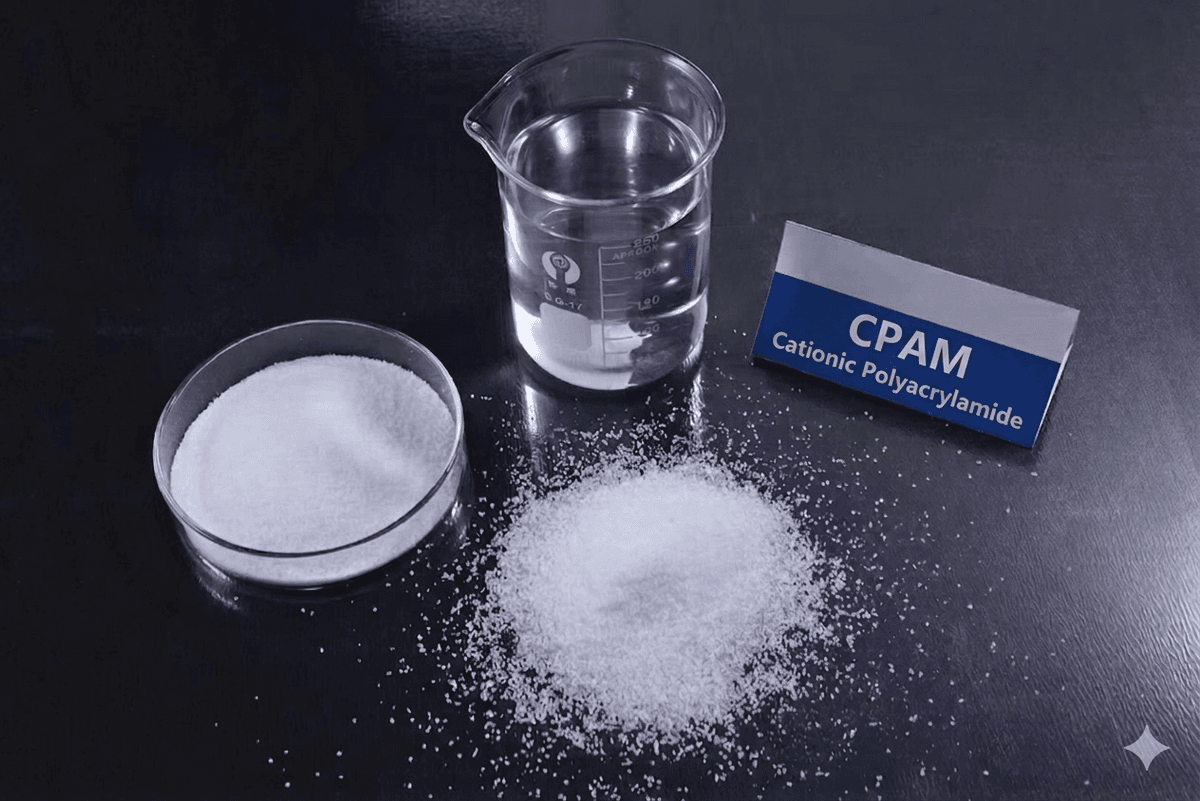
ChinaPAM supplies cationic PAM powder and handles FO 4107 SSH enquiries now. C8008 (Low charge / Medium MW) is the charge-nearest starting point and C8055 / C8006 (Very High charge / Very High MW) are the MW-nearest bracket. Screening checks both directions on your sludge — send the suffix and sludge type to receive pricing and a trial plan.
Supply Route Comparison
Published reference data and the ChinaPAM route for SNF FLOPAM FO 4107 SSH
Reference facts for FO 4107 SSH are from page 5 of the SNF FLOPAM powder catalogue 2007. The catalogue lists cationic grade, charge descriptor, molecular-weight descriptor and approximate Brookfield viscosities and preparation parameters under SNF test conditions. These are historical indicative values; they are not the current SNF product specification and they say nothing about current SNF product availability. ChinaPAM values in this page — preparation window, dissolution time — are our own independent parameters and are not derived from the SNF catalogue. FLOPAM is a trademark of its respective rights holder; ChinaPAM supplies its own cationic PAM powder grades and this page implies no affiliation with or endorsement by the trademark owner. No exact, identical, drop-in or guaranteed equivalence is claimed.
| Parameter | ChinaPAM Supply Route | SNF FLOPAM FO 4107 SSH |
|---|---|---|
| Type | Cationic PAM powder | Cationic PAM powder — SNF 2007 catalogue p.5 |
| Charge band | C8008: Low charge (ChinaPAM scale); C8055 / C8006: Very High charge (ChinaPAM scale) | Ultra Low — SNF 2007 catalogue p.5 |
| Molecular-weight band | C8008: Medium MW (ChinaPAM scale); C8055 / C8006: Very High MW (ChinaPAM scale) | Very High — SNF 2007 catalogue p.5 |
| Trial route | Two-direction: C8008 (charge-nearest), then C8055 / C8006 (MW-nearest); sludge result decides | Not applicable — reference product |
| Historical preparation (catalogue conditions) | Our window: 1–3 g/L recommended, max 5 g/L; ≤60 min dissolution | Approx 5 g/L recommended, max 10 g/L, 150 min dissolution — SNF 2007 catalogue conditions; not current SNF specification |
| Historical viscosity (catalogue conditions) | Not applicable — ChinaPAM parameters are on our applicable documents | Approx 120 / 40 / 20 cps at 5.0 / 2.5 / 1.0 g/L — SNF 2007 catalogue conditions; not current SNF specification |
| Suffix | SSH treated as grade-defining — Ultra Low charge / Very High MW, the complete suffix is retained | SSH — historical SNF suffix; preserved as selection criterion |
Specifications
| Our Product | Cationic polyacrylamide powder |
| Positioned Against | SNF FLOPAM FO 4107 SSH |
| Commercial State | SELECTION_SERVICE — no single ChinaPAM row covers Ultra Low charge and Very High MW simultaneously; two-direction trial identifies the operating optimum |
| Their FO 4107 SSH (2007 catalogue) | Cationic powder, Ultra Low charge, Very High MW — SNF 2007 powder catalogue p.5 |
| Historical viscosity (catalogue conditions) | Approx 120 / 40 / 20 cps at 5.0 / 2.5 / 1.0 g/L — historical indicative values only; not the current SNF specification |
| Historical preparation (catalogue conditions) | Recommended 5 g/L, maximum 10 g/L, dissolution 150 min — historical indicative values only |
| Suffix importance | SSH is grade-defining — the complete suffix places this grade at the very-high-MW end of the FO 4107 family and must be retained when sourcing an alternative |
| Charge-nearest route | C8008 — Low charge / Medium molecular weight (ChinaPAM scale) |
| MW-nearest bracket | C8055 and C8006 — Very High charge / Very High molecular weight (ChinaPAM scale) |
| Our Preparation | 1–3 g/L recommended; max 5 g/L; ≤60 min at working concentration |
| Source | SNF FLOPAM powder catalogue 2007, page 5 |
Key Features
- Cationic powder supply route open now: quotation, applicable documents and sample discussion against a confirmed FO 4107 SSH label
- SSH suffix preserved — the grade is treated as Ultra Low charge / Very High MW, not as the bare FO 4107 family default
- Charge-nearest route named explicitly: C8008 at Low charge and Medium MW on the ChinaPAM scale
- MW-nearest bracket named explicitly: C8055 and C8006 at Very High charge and Very High MW
- Two-direction trial design disclosed: charge route and MW route tested separately, sludge response decides
- Historical catalogue values stated once as competitor reference; they are not current SNF specifications and not ChinaPAM parameters
Applications
- Procurement screening where a buyer-specified FO 4107 SSH needs an alternative manufacturer route and current ChinaPAM pricing
- Qualification trials for plants currently running FO 4107 SSH and seeking an alternative cationic powder at the same Ultra Low charge / Very High MW position
Get a Quote for SNF FLOPAM FO 4107 SSH Alternative Supply
Send the full grade label (FO 4107 SSH), your buyer's actual feed type, process equipment and current dose in kg polymer per tonne dry solids. Pricing and sample options can be discussed now.
Related Articles
What the 2007 Catalogue Records and What It Does Not
The SNF FLOPAM powder catalogue 2007, page 5, records FO 4107 SSH as a cationic powder at Ultra Low charge and Very High molecular weight. It gives approximate Brookfield viscosities of 120 cps at 5.0 g/L, 40 cps at 2.5 g/L and 20 cps at 1.0 g/L, a recommended preparation of 5 g/L with a maximum of 10 g/L, and a dissolution time of 150 minutes, all under SNF catalogue test conditions. Those conditions are not described further in the catalogue excerpt and they are not the same as ChinaPAM's preparation window.
What the catalogue does not record is any process performance result, any dosing guideline for an actual sludge, or any claim that the values are still current. The catalogue is a historical document and its values appear here once, as competitor reference facts, to anchor the buyer's understanding of what grade they have been running. They do not appear in the comparison table as current SNF parameters, and they are not reproduced elsewhere on this page.
The Two-Direction Screening Route
C8008 is the charge-nearest route. At Low charge and Medium MW on the ChinaPAM scale, it is the grade on our table that sits closest to Ultra Low charge without being a non-ionic grade. The MW gap is substantial — Medium versus Very High — which means the two routes are testing a different hypothesis: for C8008, the question is whether the lower charge at a higher dose achieves equivalent sludge conditioning; for C8055 or C8006, the question is whether the longer chain at a lower dose compensates for a much higher charge density than the incumbent.
Running both directions in the same bench session is more informative than committing to one. If the C8008 result is adequate at a dose that is commercially reasonable, the charge route is the answer. If C8008 requires a very high dose to close the gap, the MW route may be more cost-effective even at a higher charge density. The sludge decides — not the catalogue descriptor and not the grade label.
Two Failure Modes This Route Is Designed Around
The first is dropping the SSH suffix. Treating an FO 4107 SSH enquiry as a bare FO 4107 enquiry routes the screening toward a lower-MW position on the SNF scale, which is precisely what SSH was specified to avoid. Preserving the suffix means the trial accounts for the very-high-MW behaviour that the plant originally selected.
The second is matching only one descriptor. Selecting purely on charge gives C8008 but ignores the MW gap; selecting purely on MW gives C8055 or C8006 but ignores the charge gap. Neither single-descriptor approach is wrong as a starting hypothesis, but both need to be tested alongside each other so the dose-response curves can be compared before a volume grade is committed.
From Enquiry to Confirmed Order
To open the enquiry, send the full grade string including the SSH suffix — a bag-label photograph is ideal — along with the sludge type and origin, the dewatering machine, feed dry-solids percentage, sludge pH and conductivity if available, and the current dose in kilograms of polymer per tonne of dry solids. Also tell us the make-up concentration and mixing time your unit runs at; our preparation window is 1–3 g/L and 60 minutes, which differs from the historical catalogue conditions.
What comes back is a quotation for both routes, the applicable product documents, sample quantities for CST and jar work, and a written test plan naming the two routes, the dose points and the metrics. We review the results with you and confirm the commercial grade, dose, packaging and delivery terms. The commercial side — price, sample, documents — does not wait on the process data.
Dosage Guide
The SNF catalogue preparation conditions (5 g/L / 150 minutes) are historical indicative values from a competitor reference; they are not used as the basis for our preparation. Our window for C8008, C8055 and C8006 is 1–3 g/L recommended, maximum 5 g/L, with dissolution within 60 minutes at working concentration. Run the two-direction trial at your current dose first, then bracket upward and downward: the charge route (C8008) may need a higher dose than the incumbent to deliver equivalent sludge conditioning at the lower charge, while the MW route (C8055 / C8006) may deliver adequate conditioning at a lower dose if the long chain compensates for the charge gap. Record CST, centrate or filtrate clarity and cake solids at each dose point; the combination that meets your dewatering target at the lowest polymer cost is the commercial grade.
Frequently Asked Questions — FLOPAM FO 4107 SSH Equivalent: Ultra-Low-Charge Very-High-MW Cationic PAM Supply Route
Can you supply and quote a cationic powder for FO 4107 SSH duty?
Yes. ChinaPAM supplies cationic PAM powder and can quote, issue applicable product documents and arrange a sample against a confirmed FO 4107 SSH requirement. The two-direction screening routes are C8008 (charge-nearest: Low charge / Medium MW) and C8055 or C8006 (MW-nearest: Very High charge / Very High MW). Send the sludge type, machine and current dose and we will price the enquiry and write the trial plan.
Why does this page say two directions instead of naming one grade?
Because on the current 26-grade ChinaPAM table, Ultra Low charge and Very High MW appear in different parts of the range — not in the same grade. No single row covers both simultaneously. Pretending one route is an obvious match when it is not would set up a trial that fails at the first dose check. Two routes with disclosed descriptor gaps gives you a better chance of finding the operating optimum on your specific sludge.
What does the SSH suffix actually mean?
In the historical SNF catalogue, SSH places this grade at the very-high-molecular-weight end of the FO 4107 family. Dropping the suffix and treating the enquiry as a bare FO 4107 would route it toward a different molecular-weight position on the SNF scale and would likely miss the chain-length behaviour that led the plant to specify SSH in the first place. We keep the suffix as the defining selection criterion.
Are the catalogue viscosity and preparation values the current SNF specification?
No. The values on this page — approximately 120 / 40 / 20 cps at 5.0 / 2.5 / 1.0 g/L, 5 g/L recommended, 150 minutes dissolution — come from the SNF 2007 powder catalogue. They are historical indicative values from a competitor reference document and they say nothing about what SNF publishes today. They appear here as factual context for a buyer who wants to understand what the original specification looked like; they are not ChinaPAM parameters.
Could a higher dose of C8008 match the incumbent performance despite the charge gap?
Possibly, for some sludge types. Ultra Low charge grades are often specified where high-charge polymers have historically caused restabilisation at the operating dose; if that is the case here, C8008 at a moderate dose may be the more workable route. For sludge types where the MW drives floc structure, C8055 or C8006 at a lower dose may be the better answer. The trial identifies which factor matters more for your feed — dose compensation for charge difference, or chain-length compensation for the MW gap.
Related Products
Trademark notice. SNF FLOPAM FO 4107 SSH and all other third-party product and brand names on this page are trademarks or registered trademarks of their respective owners. Henan Jinghua New Material Technology Co., Ltd. is not affiliated with, endorsed by, sponsored by or authorised by those owners, and no such relationship is implied. Those names are used here for the sole purpose of identifying the products our grades are compared against, which is necessary to describe what we supply. Our products are independently manufactured and are not licensed copies. Grade descriptors quoted for third-party products are taken from each manufacturer’s own published literature and follow that manufacturer’s own scale; we do not publish figures those manufacturers do not publish. Performance on your process should be confirmed by jar test or CST test before any change of supply.