Praestol 853 BC Equivalent — Cationic PAM Powder for Sludge Dewatering Screening
ChinaPAM can quote a cationic powder screening route for a Praestol 853 BC duty and arrange trials on your own sludge. Send the full label with the BC suffix exactly as printed, plus the quantity and destination, and the enquiry opens. C8008 is the first screening candidate on the charge side and C8055 on the molecular-weight side — each matches one historical dimension and differs on the other, so both stay trial candidates rather than equivalents.
Supply Route Comparison
Published reference data and the ChinaPAM route for Praestol 853 BC
PRAESTOL is a trademark of its respective owner. ChinaPAM is an independent manufacturer and is not affiliated with, endorsed by, licensed by or a distributor for the brand owner. The grade name and the BC suffix are used only to identify the product a buyer is comparing. The documents cited on this page are a Stockhausen product sheet captured in 2012, the patent US 6,514,418 B1 and a 2021 third-party scientific study — none is a ChinaPAM document, and none is a current brand-owner specification. Our products are separately branded ChinaPAM grades and are not licensed copies.
| Parameter | ChinaPAM Supply Route | Praestol 853 BC |
|---|---|---|
| Product form | Cationic polyacrylamide powder — C8008 or C8055 selected by trial on your sludge | White granular material — Stockhausen product sheet captured 2012 (historical) |
| Charge position | C8008 is the low-charge anchor and aligns with the historical slightly-cationic description; C8055 sits away from it on this axis | Slightly cationic — historical 2012 sheet, corroborated by a 2021 study. No numeric charge density published. |
| Molecular-weight position | C8055 is the very-high-molecular-weight anchor and aligns with the historical very-high-molecular description; C8008 sits away from it on this axis | Very high molecular — historical 2012 sheet, corroborated by a 2021 study. No numeric figure published. |
| Dewatering equipment | Candidate behaviour confirmed on your actual machine after the jar-stage screen narrows the field to two | Centrifuges, belt presses and chamber filter presses, with noted high-shear suitability — historical 2012 supplier guidance, not a universal performance promise |
| Solution basis | Made up per the applicable current ChinaPAM TDS for the candidate grade; preparation concentration is not process dosage | 0.1 wt% aqueous solution in bounded municipal digested-sludge chamber-filter examples — US 6,514,418 B1 (historical process examples) |
| Formulation | Separately branded ChinaPAM grade | Acrylamide-derived cationic polyelectrolyte per the historical sheet. No identical-formula claim in either direction. |
| Current availability | Confirmed in the quotation against grade, destination and order conditions | Unknown in the held sources; the exact competitor records are historical and current availability is not established |
| Documents | Current price, stock status, lead time, applicable TDS and sample arrangements are confirmed in the quotation. Batch-specific COA terms are confirmed with the shipment. | A Stockhausen product sheet captured in 2012, the patent US 6,514,418 B1 and a 2021 scientific study — not ChinaPAM documents, and all three are historical rather than current specifications |
Specifications
| Incumbent Model | Praestol 853 BC (the BC suffix is mandatory; 853 BS, 853-AP and 853 DL documents are not identity substitutes) |
| Ionic Type | Slightly cationic acrylamide-derived polyelectrolyte — Stockhausen product sheet captured 2012 (historical); corroborated by a 2021 scientific study |
| Charge Band (Source) | Slightly cationic — historical 2012 sheet wording; no numeric charge density is published |
| MW Band (Source) | Very high molecular — historical 2012 sheet wording, corroborated by the 2021 study; no numeric figure is published |
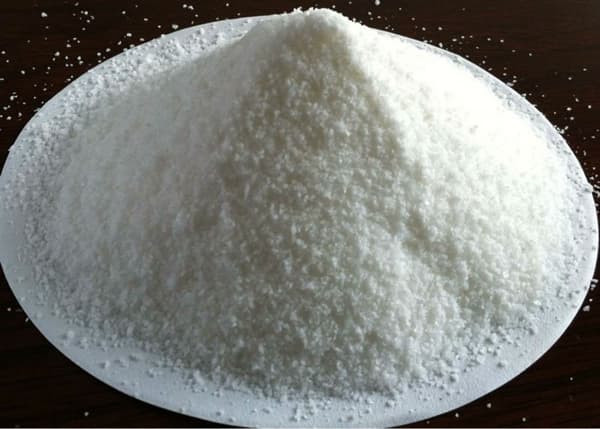
| Physical Form (Incumbent) | White granular material — Stockhausen product sheet captured 2012 (historical) |
| Historical Duties | Wastewater purification; municipal and industrial sludge thickening and dewatering, including centrifuges, belt presses and chamber filter presses; noted as suitable under high shear — historical 2012 supplier guidance |
| Historical Solution Basis | 0.1 wt% aqueous solution in bounded municipal digested-sludge chamber-filter examples — US 6,514,418 B1 (historical process examples) |
| Historical Preparation Reference | Uniform stirring, approximately 60 minutes dissolution at at least 15 °C — historical 2012 sheet conditions; source-bounded reference, not a ChinaPAM instruction |
| ChinaPAM Route | C8008 as the low-charge anchor; C8055 as the very-high-molecular-weight anchor. Unranked screening candidates for trials on the buyer's own sludge. |
| Route Boundary | Each candidate matches one historical dimension and differs on the other — controlled screening only, not identical formulation and not guaranteed performance |
| Current Availability (Either Side) | Unknown in the held sources; confirmed only in a quotation |
Key Features
- Slightly cationic and very-high-molecular identity established twice from independent records — the 2012 Stockhausen product sheet capture and a 2021 scientific study
- All exact competitor specification and application statements carried explicitly as historical and dated, never as current brand-owner specifications
- The BC suffix is carried through unchanged; 853 BS, 853-AP and 853 DL documents are never used to fill a BC identity gap
- Two named screening candidates with their roles stated plainly — C8008 on the charge dimension, C8055 on the molecular-weight dimension — and deliberately left unranked
- Machine-specific dewatering duties named from the historical sheet (centrifuges, belt presses, chamber filter presses) rather than generalised to all equipment
- Storage and dispersion treated as a first-order variable, because the historical sheet warns that moisture can cause localised lump formation and requires dry closed storage
- Historical dose guidance explicitly withheld as a site target, because the same sheet says variable sludge properties require laboratory tests and industrial trials
- Four source-established facts and two evidence-based failure modes, each with a verification step that catches it before bulk commitment
Applications
- Cationic powder screening for a confirmed Praestol 853 BC sludge-dewatering requirement, trialled on the buyer's own sludge
- Municipal and industrial sludge thickening and dewatering duties — the historical 2012 sheet places the incumbent here, and the screen confirms candidate behaviour on the actual sludge
- Centrifuge, belt press and chamber filter press dewatering, where floc survival under shear is a decision metric alongside cake dry solids
- Sewage-sludge conditioning enquiries, screened on representative normal and difficult sludge rather than from the historical records
Get a Quote for Praestol 853 BC Alternative Supply
Start with the exact label including the BC suffix, the quantity and the destination. Your sludge origin, dry solids, pH, conductivity, incumbent active dose, machine type and clarity, cake and throughput targets shape the trial plan.
Related Articles
The supply answer first: two named candidates, trialled on your own sludge
ChinaPAM can quote a cationic powder screening route for a Praestol 853 BC duty and arrange trials on your own sludge. That is the commercial answer. The exact competitor facts behind this page are historical, and nothing here is branded stock or a drop-in claim.
We reviewed our full cationic powder range against this duty and it narrowed to two. C8008 is used first as the low-charge anchor, matching the historical slightly-cationic description. C8055 is the very-high-molecular-weight anchor, matching the historical very-high-molecular description. Each matches one historical dimension and differs on the other, which is exactly why both remain trial candidates and neither is ranked above the other on this page. The trial on your sludge does the ranking.
A low-friction enquiry is enough to start: the grade, the quantity and the destination. Before an order or a changeover, the selected ChinaPAM grade, the current applicable TDS, safety data sheet and COA terms, the packaging and logistics, and the customer-approved trial record are all bound in writing. Price, stock and lead time belong to the quotation and are not stated from these historical documents.
Identity lock: BC only — BS, AP and DL are not identity substitutes
Send the full incumbent label as printed: Praestol 853 BC. The BC suffix is preserved in the URL, the title, the schema and the enquiry, because it is part of the grade identity rather than a formatting detail.
Documents for Praestol 853 BS, 853-AP or 853 DL cannot stand in for BC evidence. They share the 853 sequence number and nothing else is thereby established: a sibling suffix tells you about that suffix. Where a BC fact is missing, this page says it is missing rather than borrowing from a neighbour, and no gap in the BC record is filled from a BS, AP or DL sheet.
Everything this page states about the exact grade is historical and dated: a Stockhausen product sheet captured in 2012, the patent US 6,514,418 B1, and a 2021 scientific study. Current availability and current formulation are unknown in the held sources. If you hold a current TDS or safety data sheet for your incumbent, send it with the label — it is more informative than anything cited here.
Four facts the sources actually establish
Each fact below is tied to a specific document and locator. All of them are historical, and none is a current brand-owner specification.
| Fact | Source | What it does not establish |
|---|---|---|
| The exact grade is described as a very-high-molecular, slightly cationic acrylamide-derived polyelectrolyte supplied as a white granular material. | Stockhausen product sheet, web capture dated 2012, lines 2–19. | A historical 2012 sheet. Current availability and current formulation are unknown. No numeric charge density or molecular-weight figure is published, so no cross-vendor numeric conversion follows from it. |
| The same sheet places 853 BC in wastewater purification and in municipal and industrial sludge thickening and dewatering — including centrifuges, belt presses and chamber filter presses — and notes high-shear suitability. | Stockhausen product sheet, web capture dated 2012, lines 20–34. | Historical supplier guidance, not a universal performance promise. It does not establish that the grade performs on your sludge, your machine or your targets. |
| US 6,514,418 B1 identifies the exact grade as a cationic flocculation aid used as a 0.1 wt% aqueous solution in bounded municipal digested-sludge chamber-filter examples. | Patent US 6,514,418 B1, PDF page 5, Comparative Example 1 and the following example. | Historical process examples only. The 0.1 wt% figure is that patent's solution basis, not a recommended make-down concentration for your plant, and the examples are bounded to municipal digested sludge in a chamber filter. |
| A 2021 scientific study independently identifies Praestol 853 BC as very-high-molecular and slightly cationic, and uses it for sewage-sludge conditioning. | Third-party scientific study, 2021, extracted text lines 209–245. | A single experimental context. It corroborates the historical identity description independently of the supplier, but it does not establish a current specification or transfer its results to other sludges. |
Two failure modes and the check that catches each one
Both come out of the held evidence for this specific grade, not from general advice.
| Trigger | Consequence | Verification step |
|---|---|---|
| Granular product is contacted by moisture during storage, or is dumped into water without controlled dispersion. The historical 2012 sheet says moisture can cause localised lump formation and requires dry closed storage, and it specifies uniform stirring with roughly 60 minutes dissolution at at least 15 °C as its own preparation conditions. | Fish-eyes and lumps, incomplete activation, and a trial that looks weak or inconsistent for reasons that have nothing to do with grade selection. | Inspect storage, the feeder and the wetting arrangement. Document water temperature, stock concentration, dispersion and maturation before any dosing begins. |
| The historical 2–6 kg/t or few-g/m³ guidance is copied across as a guaranteed site dose. The historical sheet itself says variable sludge properties require laboratory tests and industrial trials, and the patent and scientific sources are condition-bounded. | Overdose or underdose, poor filtrate clarity, weak floc under shear, lower throughput or avoidable polymer cost. | Run a controlled dose ladder on representative sludge and compare floc strength, capillary suction time or drainage, filtrate clarity, capture, cake solids and throughput on the actual equipment. |
Route boundary: why two candidates and not one
The historical records give two identity dimensions — slightly cationic, and very high molecular — without a numeric figure for either. C8008 aligns with the charge dimension; C8055 aligns with the molecular-weight dimension. Neither aligns with both, which is the honest reason this page nominates a pair instead of a single answer. Any nominated route is a controlled screening candidate on your material, not a claim of identical formulation or guaranteed performance.
No ChinaPAM code is mapped numerically onto the incumbent anywhere on this page. ChinaPAM does not manufacture the Praestol grade and makes no claim of identical formulation or drop-in substitution. Historical competitor values and approvals are not ChinaPAM specifications and are not compliance claims on our side.
Intake, preparation, trial design and acceptance metrics
Start with the exact label, the quantity and the destination. Then add the sludge or feed origin, the dry solids or solids content, pH and conductivity, the incumbent active dose stated as active polymer, the machine type, the shear and mixing arrangement, the stock concentration and standing time, and the clarity, cake and throughput targets the duty is judged by.
ChinaPAM powder preparation runs at a 1–3 g/L recommended window, 5 g/L maximum, and no longer than 60 minutes at working concentration. Preparation concentration is not process dosage. Control and record powder wetting, uniform dispersion, stock concentration, water temperature, maturation, solution age and transfer shear for every run. The historical 60-minute dissolution at at least 15 °C is a source-bounded reference that helps you read the incumbent's behaviour — it is not a universal ChinaPAM instruction and it is not transferred into our make-down procedure.
Prepare the incumbent, C8008 and C8055 consistently in the same water. Run blinded repeated dose ladders on representative normal sludge and on difficult sludge, then take the best two forward onto the actual dewatering machine. Jar results that are never confirmed on the machine are not a basis for a changeover, particularly where floc survival under shear is part of the duty.
Record floc size and survival after shear, capillary suction time or drainage, filtrate turbidity, solids capture, cake dry solids, machine throughput, polymer active dose and the downstream return-water impact.
If the low-charge anchor forms weak floc, evaluate the molecular-weight-side anchor. If the higher-charge candidate harms drainage or clarity, or overdoses, step back in charge. Recheck the make-down before changing chemistry at all — an under-dispersed solution produces the same symptoms as a wrong grade. Advance to a quotation when the exact identity is locked and one tested route meets the pre-agreed targets on representative material. Current price, stock status, lead time, applicable TDS and sample arrangements are confirmed in the quotation. Batch-specific COA terms are confirmed with the shipment.
Brand Equivalents & Replacements
ChinaPAM accepts a confirmed Praestol 853 BC enquiry and screens two named cationic powder candidates against the duty: C8008 on the charge side and C8055 on the molecular-weight side. They are deliberately unranked — each aligns with one historical dimension of the incumbent and differs on the other, so the trial on your own sludge decides. Nothing on this page is a tested replacement or an equivalent-performance statement, and the exact competitor facts behind it are historical rather than current.
| Brand | Grade | Notes |
|---|---|---|
| Solenis Praestol (historically Stockhausen / Ashland) | Praestol 853 BC | A Stockhausen product sheet captured in 2012 describes 853 BC as a very-high-molecular, slightly cationic acrylamide-derived polyelectrolyte in white granular form, used in wastewater purification and in municipal and industrial sludge thickening and dewatering including centrifuges, belt presses and chamber filter presses, with noted high-shear suitability. US 6,514,418 B1 identifies the exact grade as a cationic flocculation aid used as a 0.1 wt% aqueous solution in bounded municipal digested-sludge chamber-filter examples, and a 2021 scientific study independently identifies it as very-high-molecular and slightly cationic. All three are historical records. ChinaPAM screens C8008 and C8055 as unranked candidates. Screening only. |
Need a replacement for a different grade? Contact us with your current product specs.
Dosage Guide
ChinaPAM powder preparation runs at a 1–3 g/L recommended window, 5 g/L maximum, and no longer than 60 minutes at working concentration. Preparation concentration is not process dosage.
Frequently Asked Questions — Praestol 853 BC Equivalent — Cationic PAM Powder for Sludge Dewatering Screening
Can ChinaPAM supply for a Praestol 853 BC requirement?
Yes — ChinaPAM can quote a cationic powder screening route for an 853 BC duty and arrange trials on your own sludge. The grade, the quantity and the destination are enough to open the enquiry. C8008 and C8055 are the two screening candidates, and ChinaPAM will confirm the route and discuss sample arrangements in the quotation. No branded stock claim and no drop-in claim is made.
Why are two grades named instead of one?
Because the historical records establish two identity dimensions without a number for either: slightly cationic, and very high molecular. C8008 aligns with the charge dimension and C8055 with the molecular-weight dimension, and neither aligns with both. Naming one and calling it the answer would mean picking a dimension arbitrarily. The pair is deliberately unranked and the trial on your sludge decides which side of the duty actually governs.
My bags read Praestol 853 BS. Can I use this page?
No — send the label you actually have and it is handled as a separate enquiry. The 853 sequence number is shared, but 853 BS, 853-AP and 853 DL are distinct grades and their documents are not identity substitutes for BC. This page is built on BC-specific records only, and borrowing a sibling suffix to fill a gap is how a quotation ends up built on the wrong product.
The historical sheet gives a dose range. Can I use it as my starting dose?
Treat it as context, not a target. The historical sheet itself says variable sludge properties require laboratory tests and industrial trials, and the patent and scientific sources are bounded to their own conditions. Copying a published range across as a site dose risks overdose or underdose, poor filtrate clarity, weak floc under shear, lower throughput or avoidable polymer cost. Run a controlled dose ladder on your representative sludge and read the result on your actual equipment.
The patent used a 0.1 wt% solution. Is that the make-down concentration I should use?
No. That is the solution basis inside bounded municipal digested-sludge chamber-filter examples in US 6,514,418 B1, not a recommendation for your plant. ChinaPAM powder preparation runs at a 1–3 g/L recommended window with a 5 g/L maximum, per the applicable current TDS for the grade being trialled, and preparation concentration is not process dosage in either case.
How current are the facts on this page?
They are historical, and the page says so throughout. The specification and application descriptions come from a Stockhausen product sheet captured in 2012; the process examples come from US 6,514,418 B1; the independent identity corroboration comes from a 2021 scientific study. Current availability and current formulation are unknown in the held sources. If you hold a current TDS or safety data sheet for your incumbent, send it — it carries more weight than anything cited here.
My first trial gave weak floc on the belt press. Should I switch grade?
Recheck the make-down first. The historical sheet warns that moisture during storage can cause localised lump formation and requires dry closed storage, and it calls for uniform stirring with a full dissolution period — so lumps, under-dispersion or a short maturation produce weak floc that looks exactly like a wrong grade. Once preparation and active dose are confirmed sound, then move across the bracket: if the low-charge anchor is forming weak floc, evaluate the molecular-weight-side anchor.
What is confirmed in the quotation, and what is not stated here?
Current price, stock status, lead time, applicable TDS and sample arrangements are confirmed in the quotation. Batch-specific COA terms are confirmed with the shipment.
Trademark notice. Praestol 853 BC and all other third-party product and brand names on this page are trademarks or registered trademarks of their respective owners. Henan Jinghua New Material Technology Co., Ltd. is not affiliated with, endorsed by, sponsored by or authorised by those owners, and no such relationship is implied. Those names are used here for the sole purpose of identifying the products our grades are compared against, which is necessary to describe what we supply. Our products are separately branded ChinaPAM grades and are not licensed copies. Third-party facts on this page are attributed separately to a Stockhausen product sheet captured in 2012, to the patent US 6,514,418 B1 and to a 2021 scientific study, with each issuer, document role and date preserved; all three are historical records rather than current brand-owner specifications. Performance on your process should be confirmed by jar test or CST test before any change of supply.