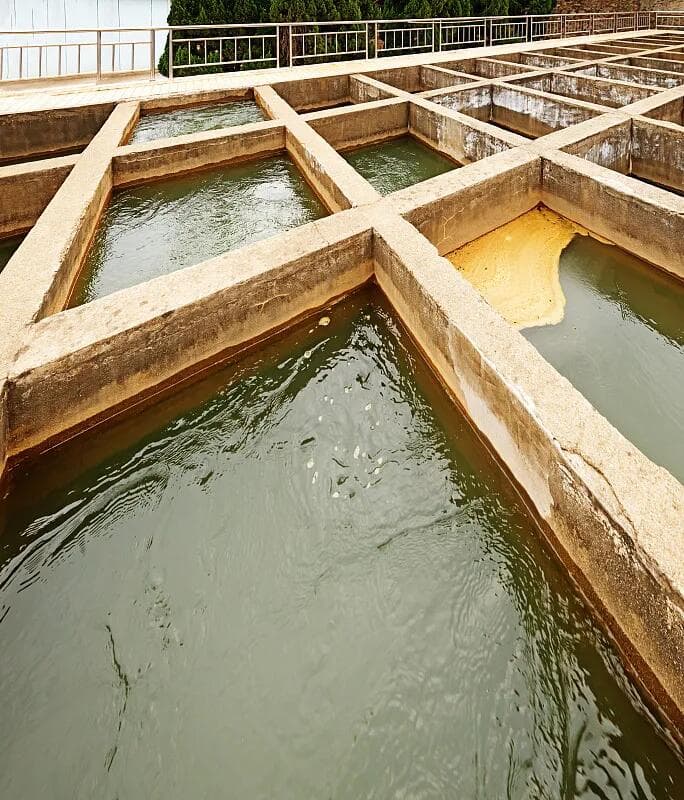
The correct polyacrylamide dosage for water treatment is 0.5–2 mg/L for surface water clarification (anionic PAM) and 2–8 mg/L for wastewater and sludge dewatering (cationic PAM). The exact dosage depends on turbidity, pH, suspended solids, and organic content — always confirmed by jar testing before full-scale application.
Polyacrylamide (PAM) is one of the most effective and cost-efficient flocculants for municipal and industrial water treatment. This guide covers dosage calculation, application methods, and how to optimize PAM performance for your specific water quality. Based on our experience supplying PAM for water treatment since 2009. For grade selection and application coverage beyond dosage, see our complete water treatment buyer's guide.
Why PAM for Water Treatment?
Polyacrylamide achieves turbidity reduction from 500+ NTU to below 1 NTU at dosages of 0.5-2 mg/L — 10-50× lower than inorganic coagulants like alum (20-50 mg/L) — while producing 60-80% less sludge volume, which is why over 70% of new municipal water treatment plant designs globally now incorporate PAM-based flocculation per Water Environment Federation standards.
Water treatment plants worldwide rely on PAM because it:
- Reduces turbidity dramatically — From 500+ NTU to <1 NTU in minutes
- Costs 70–80% less than alum or ferric sulfate — Effective at 1–10 mg/L vs 20–50 mg/L for inorganic coagulants
- Produces less sludge — Lower chemical dosage = less waste to dispose
- Works across pH ranges — Anionic PAM works from pH 6–9; cationic PAM from pH 4–8
- Improves water quality — Removes bacteria, viruses, and organic contaminants
For a comparison of PAM types and when to use each, see our anionic vs cationic PAM guide.
PAM Types for Water Treatment
Three PAM types serve distinct water treatment roles — anionic PAM (APAM) at 0.5-2 mg/L and $0.01-0.03/m³ for surface water clarification, cationic PAM (CPAM) at 2-8 mg/L and $0.03-0.08/m³ for wastewater and sludge dewatering, and nonionic PAM (NPAM) at 1-3 mg/L for neutral-pH applications — with type selection determined by particle surface charge and organic content rather than turbidity level alone.
| PAM Type | Best For | Typical Dosage | Cost/m³ |
|---|---|---|---|
| Anionic PAM (APAM) | Surface water, river water, low-turbidity sources | 0.5–2 mg/L | $0.01–0.03 |
| Cationic PAM (CPAM) | Wastewater, high-organic water, sludge dewatering | 2–8 mg/L | $0.03–0.08 |
| Nonionic PAM (NPAM) | Neutral pH water, soil conditioning | 1–3 mg/L | $0.02–0.05 |
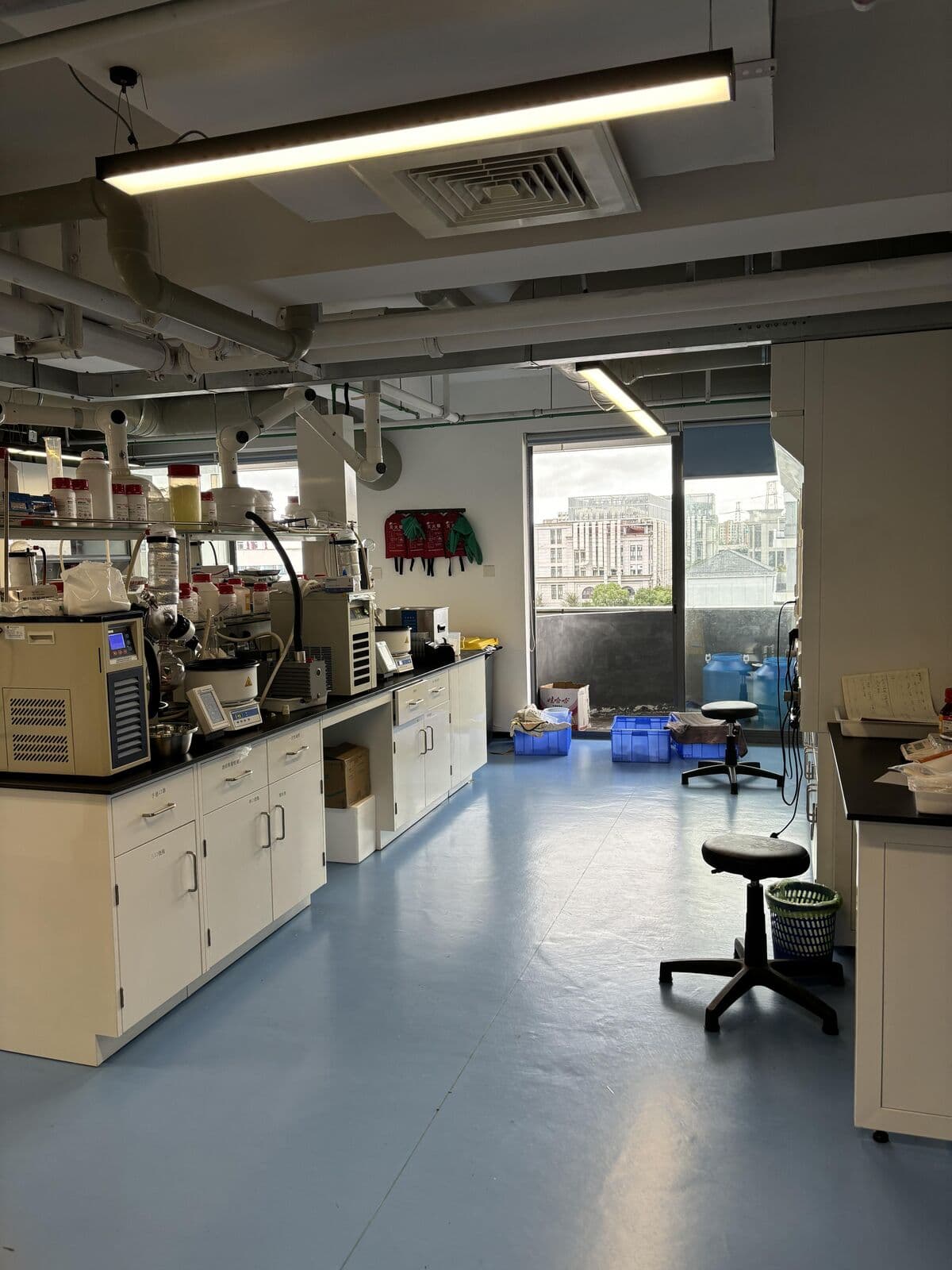
Our application lab, where dose curves are run on customer water samples before a grade and ppm range is recommended
How to Calculate Dosage
PAM dosage calculation follows the formula: Chemical Feed Rate (kg/day) = Dosage (mg/L) × Flow Rate (m³/day) ÷ 1,000 — with optimal dosage determined by jar testing at 0.5-10 mg/L increments on actual water samples, because turbidity, pH, suspended solids concentration, and organic content each shift the optimum by 2-5× between different source waters.
Step 1: Determine Water Quality Parameters
Collect water samples and measure:
- Turbidity (NTU) — Use a turbidimeter
- pH — Use a pH meter
- Suspended solids (mg/L) — Gravimetric or TSS test
- Organic content (COD/BOD) — For wastewater
Step 2: Run Jar Tests
Jar testing is the most reliable way to determine optimal PAM dosage:
- Fill 6 beakers with 1 liter of your water sample each
- Add PAM at different concentrations: 0.5, 1, 2, 3, 5, 10 mg/L
- Stir rapidly for 1 minute (coagulation), then slowly for 5 minutes (flocculation)
- Let settle for 10 minutes
- Measure turbidity of supernatant in each beaker
- Select the lowest dosage that achieves your target turbidity
Step 3: Calculate Full-Scale Dosage
Once you know the optimal dosage from jar testing, calculate the chemical feed rate:
Chemical Feed Rate (kg/day) = Dosage (mg/L) × Flow Rate (m³/day) ÷ 1,000
Example: 2 mg/L × 10,000 m³/day ÷ 1,000 = 20 kg PAM/day
Application Methods
PAM can be dosed as dissolved powder solution (0.1-0.5% stock concentration, 40-60 minute preparation), pre-made emulsion (30-50% active, instant use), or via automated peristaltic/diaphragm pump systems with turbidity-feedback control — the choice depends on plant scale, with powder systems saving 15-25% on chemical cost above 500 kg/month consumption while emulsion systems eliminate aging tank infrastructure.
Method 1: Dry Powder Dosing
Dissolve PAM powder in water to create a stock solution (0.1–0.5%), then inject into the water stream. Advantages: simple, low cost. Disadvantage: requires good mixing.
Method 2: Emulsion Dosing
Use pre-made PAM emulsion (30–50% active polymer). Advantages: faster dissolution, better distribution. Disadvantage: higher cost per kg active polymer.
Method 3: Automated Dosing Systems
Peristaltic pumps or diaphragm pumps automatically inject PAM solution based on turbidity feedback. Advantages: precise control, minimal operator intervention. Disadvantage: higher capital cost.
Need PAM for water treatment?
Free sample + jar test report. WhatsApp: +86 187-3759-0940
Real-World Performance Data
Field performance data from a 50,000 m³/day municipal plant demonstrates PAM cost-effectiveness — 1.5 mg/L APAM (18M MW) reduces source water turbidity from 150-300 NTU to below 0.5 NTU at a treatment cost of $0.0186/m³, consuming 75 kg/day at a monthly chemical expense of only $310 for a plant serving 200,000+ residents.
Worked Example: 50,000 m³/day Municipal Water Treatment Plant
Troubleshooting Common Issues
The three most common PAM dosing failures — persistent turbidity (underdosing or wrong type), non-settling flocs (overdosing causing charge reversal), and excessive sludge volume (dosage above optimum) — are all diagnosable through a 30-minute jar test series at 50% intervals around current dosage, with correction typically requiring only a 20-50% dosage adjustment rather than product change.
Problem: Turbidity Not Decreasing
- Cause 1: Underdosing — Run jar test at higher concentrations
- Cause 2: Poor mixing — Check injection point and mixing intensity
- Cause 3: Wrong PAM type — Anionic PAM won't work for high-organic wastewater; use cationic
- Solution: Increase dosage by 50%, verify mixing, or switch PAM type
For sludge-specific dewatering issues, refer to our municipal WWTP sludge dewatering guide. For detailed dosage calculations, see PAM dosage calculation methods.
Problem: Floc Not Settling
- Cause: Overdosing or charge reversal — Too much PAM can prevent settling
- Solution: Reduce dosage by 20–30%, re-run jar test
Problem: High Sludge Volume
- Cause: Excessive PAM creating too much floc
- Solution: Optimize dosage to minimum effective level; consider higher-MW PAM for denser flocs
Understanding molecular weight selection and PAM flocculant mechanisms can help prevent these issues.
PAM Pricing for Water Treatment (2026)
Water treatment grade PAM prices FOB China range from $1,200-1,500/MT for standard anionic PAM to $1,600-2,000/MT for medium-charge cationic PAM, with emulsion at $800-1,100/MT (30% active content) — volume discounts of 8-10% apply at full container loads (20MT+) and 12-15% for annual contracts above 100MT, making the effective treatment cost $0.01-0.08 per cubic meter depending on application type.
Water Treatment Grade PAM — FOB China
MOQ: 1 MT. FCL (20MT+): 8–10% discount. Annual contract (100MT+): 12–15% discount.
For more details, see our jar test procedure guide.
Dosage Optimization: Three Adjustments That Apply Everywhere
Three dosage adjustments come up on almost every plant — seasonal turbidity variation requires maintaining 3 dosage profiles (dry/normal/flood), cold water below 10°C demands 20-40% higher dosage to compensate for slower flocculation kinetics, and the most common waste (30-60% excess chemical cost) comes from overdosing "just to be safe" rather than targeting minimum effective dose plus 10-15% margin.
Seasonal Variation Adjustments
Water quality changes with seasons. Rainy season brings higher turbidity (sometimes 10x normal), while dry season concentrates dissolved organics. Per AWWA guidelines, plants should maintain at least 3 dosage profiles — dry season, normal, and flood/storm event.
| Season/Event | Turbidity Range (NTU) | APAM Dosage (mg/L) | Coagulant Adjustment |
|---|---|---|---|
| Dry season | 10–50 | 0.3–0.8 | Reduce alum by 30% |
| Normal operation | 50–200 | 0.5–1.5 | Standard protocol |
| Rainy/flood event | 500–3000 | 2.0–4.0 | Double alum, add pre-settling |
| Algae bloom | 100–500 (green) | 1.5–3.0 | Switch to CPAM or blend |
Common Dosing Mistakes That Waste Money
We audit customer plants regularly. These are the top 3 mistakes that increase PAM cost by 30–60% without improving water quality:
- Overdosing "just to be safe" — Running 2x the jar test optimum wastes chemical and can actually worsen turbidity through charge reversal. According to WEF best practices, target the minimum effective dose plus 10–15% safety margin, not 100%.
- Not adjusting for temperature — Cold water (below 10°C) slows flocculation kinetics. You need 20–40% higher dosage in winter, but many plants keep the same year-round setting.
- Dissolving PAM too fast — Dumping powder into water creates fish-eyes (undissolved lumps). These lumps pass through the system without working. Proper dissolution takes 40–60 minutes at 0.1–0.3% concentration. See our PAM dissolving method guide for the correct procedure.
ROI Comparison: PAM vs. Inorganic Coagulant Only
Many plants still run alum or ferric chloride alone. Adding PAM as a flocculant aid typically cuts total chemical cost by 40–60%. Here is a real comparison from a 20,000 m³/day municipal plant:
- Alum only: 35 mg/L alum = 700 kg/day = $210/day chemical cost. Sludge production: 1.2 tons/day.
- Alum + APAM: 15 mg/L alum + 1 mg/L APAM = 300 kg alum + 20 kg PAM/day = $116/day. Sludge: 0.5 tons/day.
- Annual savings: $34,310 in chemicals + $18,000 in sludge disposal = $52,310/year.
The same arithmetic works on the coagulant side. Replacing part of the alum dose with an organic coagulant cuts sludge volume further, and a polyamine coagulant is usually the cheapest way to do that on water below pH 8.
The PAM investment pays for itself within the first month. That is why Per EPA guidance documents, polymer-assisted flocculation is now recommended for all plants above 5,000 m³/day capacity.
Drinking Water Compliance
Water-treatment PAM for potable-water projects must be checked against the buyer's required local documents, such as U.S. potable-water requirements, EN 881 in Europe, or GB 15892 in China where applicable. Residual acrylamide monomer limits should be confirmed by grade and batch COA before approval; standard industrial PAM should not be treated as automatically suitable for potable-water use.
- ✓ Buyer-required regulated-use document review before quotation
- ✓ EN 881 review for European potable-water projects where applicable
- ✓ GB 15892 review for China potable-water projects where applicable
- ✓ Residual acrylamide monomer ≤ 0.1%
Frequently Asked Questions
What is the standard PAM dosage for drinking water treatment?
For drinking water treatment using surface water sources, the standard anionic PAM dosage is 0.5–1.5 mg/L, used after primary coagulation with alum or ferric sulfate (20–40 mg/L). PAM acts as a flocculant aid, not a primary coagulant. The maximum allowable PAM residual in treated drinking water is 0.5 mg/L (WHO guideline) with residual acrylamide monomer ≤ 0.0005 mg/L.
How do I calculate how much PAM I need per day?
Daily PAM consumption (kg/day) = Dosage (mg/L) × Flow rate (m³/day) ÷ 1,000. For example, a 10,000 m³/day plant using 2 mg/L APAM needs 20 kg/day. At $1,300/MT, that is $26/day or $9,490/year — typically 60–80% less than equivalent alum-only treatment.
Can I use the same PAM for both clarification and sludge dewatering?
No. Clarification uses anionic PAM (APAM, 15–20M molecular weight, 20–40% charge density) at low dosage (0.5–2 mg/L). Sludge dewatering requires cationic PAM (CPAM, 8–12M molecular weight, 40–70% charge density) at higher dosage (2–8 kg/ton dry solids). Using the wrong type will either fail to flocculate or create charge reversal problems.
Get PAM for Your Water Treatment Plant
Share your water quality data and flow rate. We'll recommend the right PAM grade and send free samples for jar testing.
Related Technical Guides
Recommended Product Grades
For the application discussed above, these are the polyacrylamide grades we ship most often:
See the full range of municipal and industrial water treatment applications for equipment context and selection criteria across this industry.
Not sure which is right for you? Try our PAM Selector tool or request a quote.