The most common question we get from new customers: "Should I use anionic or cationic PAM?" The answer depends on your water chemistry, not on price or availability. Using the wrong type will give you poor flocculation no matter how much you dose. Here is the decision framework we use with customers across multiple export markets.
Side-by-Side Comparison
Anionic PAM (APAM) carries a negative charge with molecular weight up to 28M Da and works best on inorganic solids at pH 6-12, while cationic PAM (CPAM) carries a positive charge up to 20M Da and targets organic sludge at pH 4-9 — choosing the wrong charge type results in near-zero flocculation regardless of dosage because the polymer cannot electrostatically attract the target particles.
| Property | Anionic PAM (APAM) | Cationic PAM (CPAM) |
|---|---|---|
| Charge | Negative (anionic) | Positive (cationic) |
| Charge density range | 0–45% hydrolysis | 5–70% charge density |
| Molecular weight range | 6–28 million Da | 6–20 million Da |
| Best for | Inorganic solids, mining, drinking water | Organic sludge, municipal wastewater |
| Optimal pH range | 6–12 (neutral to alkaline) | 4–9 (acidic to neutral) |
| Typical dosage | 1–10 ppm | 3–8 kg/ton dry solids |
| Price (approx.) | $1,600–2,200/ton | $1,800–2,500/ton |
The Core Rule: Match Charge to Particle
Polyacrylamide flocculation operates through two mechanisms — charge neutralization (polymer charge attracts opposite particle charge) and polymer bridging (long chains physically connect multiple particles) — with CPAM primarily neutralizing negatively-charged organic sludge particles while APAM bridges inorganic particles after an inorganic coagulant has already neutralized their surface charge.
Most suspended particles in water carry a negative surface charge: clay minerals, silica, metal hydroxides, and most inorganic solids. These respond to cationic PAM (positive charge attracts negative particles).
Wait — that seems backwards from the table above. Here is the nuance: for sludge dewatering, you are treating organic sludge (negatively charged bacteria and organic matter) with CPAM. For clarification of inorganic-heavy water, APAM works through bridging rather than charge neutralization, and it is often used after an inorganic coagulant (alum, ferric) that has already neutralized the charge.
When to Use Anionic PAM
Anionic polyacrylamide (APAM) at 15-28M Da molecular weight and 25-35% hydrolysis is the standard flocculant for inorganic suspended solids — mining tailings, drinking water clarification after coagulant dosing, metal finishing wastewater, and sand washing — where its extended negative chains bridge positively-charged metal hydroxide flocs into large aggregates that settle 4-8x faster than untreated particles.
- Mining and mineral processing — tailings clarification, thickener feed, water recovery. The high molecular weight (15-28M Da) creates large, fast-settling flocs from fine mineral particles.
- Drinking water treatment — used as a coagulant aid after alum or ferric dosing. Must be document-supported with residual monomer ≤0.05%. Where alum sludge volume or residual aluminium is a problem, an organic polyDADMAC coagulant can take over part of that duty ahead of the APAM.
- Industrial wastewater with inorganic solids — electroplating, metal finishing, sand washing, stone cutting.
- Oil drilling — PHPA (partially hydrolyzed PAM) stabilizes wellbore and reduces fluid loss.
- Sugar industry — juice clarification in sugar mills.
Our APAM range: 6-28 million molecular weight, 0-45% hydrolysis degree. For mining applications, we typically recommend 18-25M MW with 25-35% hydrolysis. For drinking water, 10-15M MW with 10-20% hydrolysis.
When to Use Cationic PAM
Cationic polyacrylamide (CPAM) at 10-15M Da molecular weight and 30-60% charge density is the primary polymer for organic sludge dewatering — its positive charges neutralize the negative surface charge of bacterial cells and organic colloids, compressing the electrical double layer to produce filter cake at 18-25% solids content on belt presses and centrifuges.
- Municipal sludge dewatering — belt press, centrifuge, filter press. This is the largest application for CPAM globally.
- Industrial organic wastewater — food processing, slaughterhouses, breweries, paper mills.
- Paper making — retention aid and drainage aid on the paper machine.
- Oilfield produced water — treating water separated from crude oil.
- Textile wastewater — when pH is in the 5-8 range.
Our CPAM range: 6-20 million molecular weight, 5-70% charge density. The charge density selection matters more than molecular weight for most sludge applications. Start with 30-40% charge density and adjust based on jar test results.
See our detailed guide on cationic PAM selection and bulk pricing.
Need PAM for your water treatment project?
Free sample + jar test report. WhatsApp: +86 187-3759-0940
Decision Flowchart
The APAM vs CPAM decision follows a simple hierarchy — pH below 4 requires nonionic PAM, organic sludge dewatering always uses CPAM, inorganic mineral slurries use APAM, and drinking water uses regulated-use APAM after coagulant — with a 30-minute jar test at 2-5 ppm providing definitive confirmation when the application falls between categories.
- Is the pH below 4? → Use nonionic PAM (NPAM). Both APAM and CPAM lose effectiveness in strongly acidic conditions.
- Are you dewatering sludge? → Use CPAM. Sludge is organic and negatively charged.
- Is the wastewater primarily organic? (food, paper, municipal) → Use CPAM.
- Is it primarily inorganic? (mining, metal processing, sand) → Use APAM.
- Is it for drinking water? → Use APAM with regulated-use document review.
- Still unsure? → Run a jar test with both types at 2-5 ppm and compare settling rate and supernatant clarity.
Can You Mix APAM and CPAM?
Mixing anionic and cationic PAM causes immediate electrostatic complexation — the opposite charges react within seconds to form an insoluble precipitate that clogs dosing lines and wastes both chemicals, which is why dual-polymer systems must dose APAM and CPAM at separate injection points with adequate dilution between stages.
In some two-stage treatment systems, APAM is used in the first stage (clarification) and CPAM in the second stage (sludge dewatering). This is fine as long as they are dosed at different points in the process. Learn more about dosage calculation and molecular weight selection.
How to Run a Jar Test to Decide
A standard jar test comparing APAM and CPAM takes 30 minutes using six 1-liter samples dosed at 3-5 ppm with 30-second flash mix (200 rpm), 10-minute slow mix (40 rpm), and 10-minute settling — the correct polymer type produces visibly larger flocs, 3-5x faster settling, and clear supernatant versus near-zero response from the wrong charge type.
- Collect 6 samples of your wastewater (1L each) at the same time
- Prepare 0.1% solutions of 3 APAM grades and 3 CPAM grades
- Add each polymer to one jar at 3-5 ppm (or 3-5 kg/ton for sludge)
- Flash mix 30 seconds at 200 RPM, slow mix 10 minutes at 40 RPM
- Settle for 10 minutes, observe floc size, settling speed, and supernatant clarity
- The winner is obvious — large flocs, fast settling, clear water
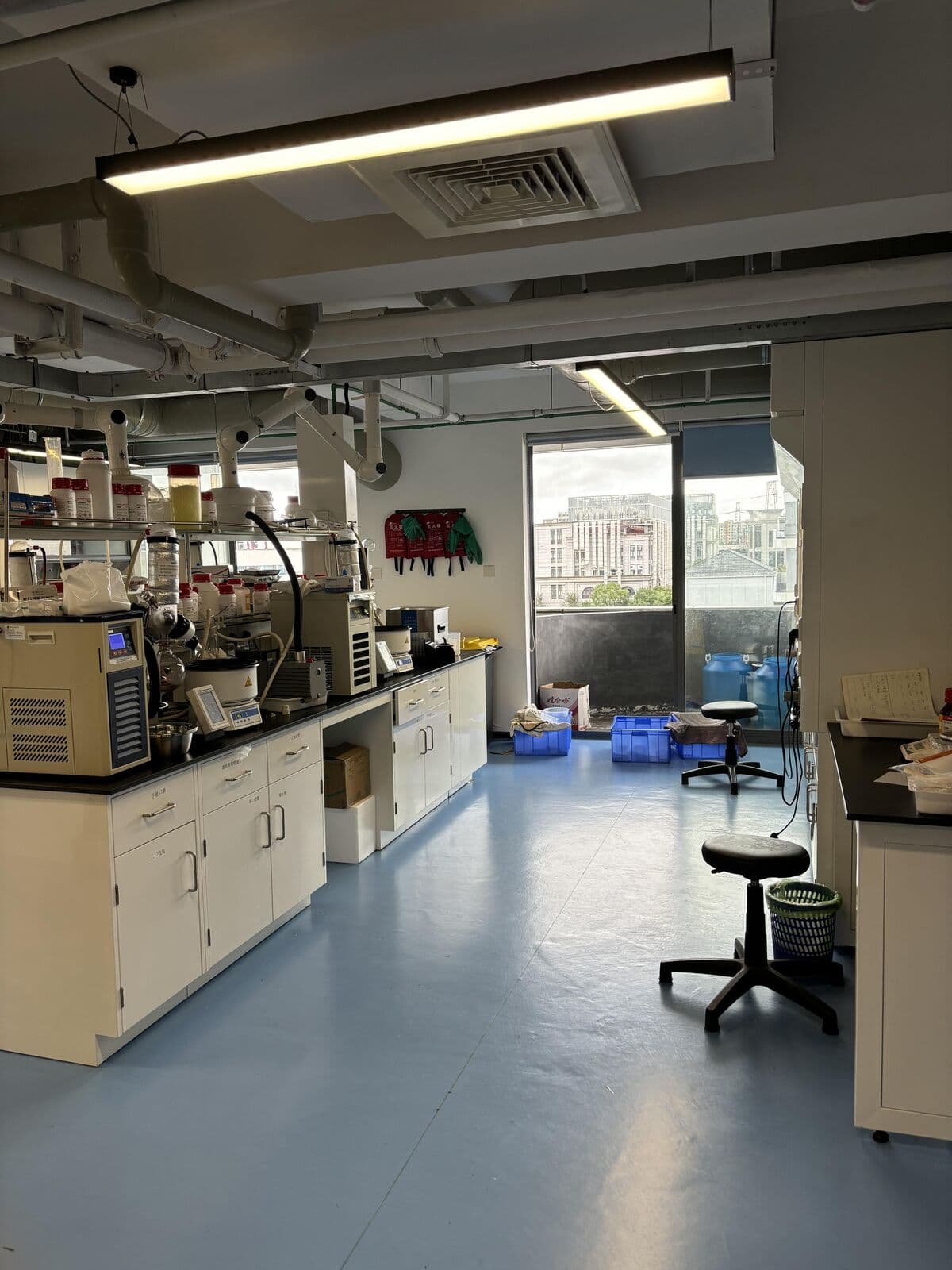
We provide free jar test service at our lab. Send us 5L of your wastewater and we will test 6-8 grades across both APAM and CPAM types, then send you a full report with photos, settling curves, and dosage recommendations. Turnaround: 3-5 business days. See our detailed jar test procedure guide for DIY testing.
Real-World Selection Examples
Field selection follows predictable patterns — gold mining tailings (pH 8-9, TSS 5000 ppm) use APAM 18-22M at 3-8 ppm, municipal belt press sludge uses CPAM 10-12M at 30-40% charge density and 3-6 kg/ton dry solids, paper mill white water uses CPAM 8-12M at 10-20% charge density, and sand washing uses APAM 12-15M at 2-5 ppm — with charge density mattering more than molecular weight for all sludge applications.
Gold mining tailings (pH 8-9, TSS 5000 ppm): APAM 18-22M MW, 25-30% hydrolysis, dosage 3-8 ppm. The high MW creates massive flocs that settle fast in thickeners. We ship this grade to gold mines in Ghana, Tanzania, and Indonesia. See our gold mining PAM guide.
Municipal WWTP sludge dewatering (belt press): CPAM 10-12M MW, 30-40% charge density, dosage 3-6 kg/ton dry solids. The medium charge density handles mixed primary + secondary sludge well. Higher charge density (50-60%) for waste activated sludge only. See our sludge dewatering guide.
Paper mill white water recovery: CPAM 8-12M MW, 10-20% charge density, dosage 0.5-2 ppm. Low charge density because paper fibers are only weakly charged. High MW for bridging fine fibers and fillers. See our paper making retention aid guide.
Sand washing plant (pH 7, TSS 10,000 ppm): APAM 12-15M MW, 20-25% hydrolysis, dosage 2-5 ppm. Sand particles are heavy and settle easily — you just need to capture the fines. Medium MW is sufficient. See our sand washing PAM guide.
Electroplating wastewater (heavy metals, pH 8-9 after neutralization): APAM 10-15M MW, 25-30% hydrolysis, dosage 2-5 ppm after coagulant. The APAM bridges metal hydroxide flocs formed by the coagulant. See our electroplating wastewater guide.
Dairy wastewater (high COD, pH 6-7): CPAM 8-12M MW, 40-50% charge density, dosage 5-8 kg/ton dry solids. Dairy sludge is highly organic with strong negative charge — needs high charge density CPAM for effective dewatering. The fat content makes floc formation tricky; overdosing causes sticky, non-dewaterable sludge. See our dairy wastewater guide.
Our Product Range
Our Xinxiang factory produces APAM (6-28M Da, 0-45% hydrolysis) and CPAM (6-20M Da, 5-70% charge density) on dedicated production lines with confirmed grade availability — every batch tested to ≥90% solid content, ≤0.05% residual monomer, and ≤90-minute dissolution time under documented quality control and regulated-use document review.
Key specs we guarantee: solid content ≥90%, dissolution time ≤90 minutes, residual monomer ≤0.05%. We hold regulated-use document reviews.
MOQ is 500kg for first orders — enough to run thorough jar tests and pilot trials before committing to bulk supply. Standard delivery is 7-10 days; urgent timing can be checked against China factory stock by grade.
For APAM, our most popular grades are high molecular weight APAM (18-25M Da, for mining) and medium molecular weight APAM (10-15M Da, for drinking water and general industrial use).
For CPAM, our bestsellers are medium charge density CPAM (30-40%, for mixed sludge) and high charge density CPAM (50-60%, for waste activated sludge and paper making). Understanding charge density is critical for CPAM selection — it determines how strongly the polymer interacts with your sludge particles.
Neither anionic nor cationic is the right answer for every feed. When the water carries a mix of positive and negative colloids, or when high salinity and a wide pH swing knock out a single-charge grade, a dual-charge polymer is the better call. See our amphoteric polyacrylamide guide for where the dual-charge chain earns its premium over plain APAM or CPAM.
Frequently Asked Questions
What happens if I use the wrong type of PAM?
Poor flocculation, wasted chemical, and potentially worse effluent quality than no treatment at all. Using APAM on organic sludge gives weak, small flocs that do not dewater. Using CPAM on inorganic mineral slurry gives cloudy supernatant because the charge mismatch prevents proper bridging. Always jar test before committing to a grade.
Is CPAM more expensive than APAM?
Yes, typically 10-20% more per ton. CPAM uses more expensive monomers (DMDAAC or AETAC) in production. But the total treatment cost depends on dosage — CPAM at 4 kg/ton dry solids may be cheaper overall than APAM at 8 ppm if your sludge volume is low. Per AWWA cost optimization guidelines, always compare total cost per cubic meter treated, not price per ton of chemical.
Can I switch from APAM to CPAM without changing equipment?
Yes, the dissolution and dosing equipment is identical. Same aging tanks, same mixers, same pumps. Just flush the system thoroughly with clean water before switching — residual APAM in the lines will react with CPAM and clog your dosing system. Allow 2-3 full system volumes of flush water.
Which type is better for the environment?
Both are equally safe. According to EPA discharge guidelines, neither APAM nor CPAM poses environmental risk at treatment dosages. The polymer is too large to be bioavailable. The only concern is residual acrylamide monomer, which is controlled to ≤0.05% in both types. For drinking water applications, both must meet regulated-use document review requirements.
Not Sure Which to Choose?
Send us your wastewater analysis (pH, TSS, COD, conductivity, and sludge type if applicable) and we will recommend the right type and grade within 24 hours. We also offer free samples for jar testing at your facility or in our lab.
WhatsApp: +86 187-3759-0940 | Request a quote
Get a Quote
Our factory in Xinxiang produces confirmed grade availability across core APAM, CPAM, NPAM, and PHPA products. MOQ 500kg, delivery 7-10 days standard. Contact us for pricing and free sample:
- WhatsApp: +86 187-3759-0940
- Email: info@chinapolyacrylamide.com
Recommended Product Grades
For the application discussed above, these are the polyacrylamide grades we ship most often:
Not sure which is right for you? Try our PAM Selector tool or request a quote.