Australia is the world's largest iron ore producer and a major coal and gold mining nation — all industries that consume massive quantities of polyacrylamide for tailings management and water recovery. Annual PAM consumption exceeds 12,000 tons, with Chinese suppliers holding 60%+ market share. We supply Australian mining companies, water utilities, and agricultural distributors with PAM formulated for Australian conditions — from Pilbara iron ore to Queensland coal to Murray-Darling Basin agriculture.
Australia PAM Market by Sector
| Sector | PAM Type | Annual Volume | Key Regions |
|---|---|---|---|
| Iron Ore (Pilbara) | APAM 18-25M MW | 4,000+ tons | Western Australia |
| Coal Mining | APAM 12-18M MW | 2,500+ tons | Queensland, NSW |
| Gold Mining | APAM 15-22M MW | 1,500+ tons | WA (Kalgoorlie), Victoria |
| Municipal Water Treatment | APAM / CPAM, documents confirmed by grade | 2,000+ tons | All states |
| Agriculture (Soil + Irrigation) | APAM low MW (4-8M) | 1,500+ tons | NSW, Victoria, SA |
Iron Ore Tailings: Pilbara Operations
The Pilbara region produces 900+ million tons of iron ore annually — over 50% of global seaborne supply. Every ton of ore generates 0.3-0.5 tons of tailings requiring PAM treatment. The unique challenges of Pilbara tailings:
- High iron oxide content — Hematite and goethite particles carry variable surface charge depending on pH. Our APAM-20 grade (20M MW, 25% hydrolysis) is optimized for iron oxide surfaces. See PAM for iron ore mining for full grade selection
- Extreme heat — Ambient temperatures reach 45°C+, process water runs at 35-40°C. Standard PAM loses 15-20% efficiency above 35°C. Our heat-stable grades maintain 90%+ performance at 40°C
- Water scarcity — Pilbara receives <300mm rainfall/year. Water recovery from tailings is critical — every percentage point of improvement saves millions of dollars annually
- Scale — A single Pilbara operation processes 50-100 million tons/year, consuming 500-2,000 tons of PAM annually
Our recommended grades for Pilbara iron ore:
- Thickener feed: APAM-20 (18-22M MW, 25-30% hydrolysis), dosage 15-35 g/ton ore. Target: overflow <50 NTU, underflow 60-65% solids
- Paste thickener: APAM-28 (25-28M MW, 28-32% hydrolysis), dosage 30-60 g/ton. Target: underflow 65-72% solids for dry stacking
- TSF management: APAM-18 (15-18M MW, 20-25% hydrolysis), dosage 5-15 ppm at spigot discharge
Coal Mining: Queensland & NSW
Australian coal mines generate fine coal tailings that require APAM for thickener operation and water recycling. Key applications:
- Coal preparation plant thickener: APAM 12-18M MW, 20-25% hydrolysis, dosage 3-8 ppm. Settles coal fines in 30-60 minutes vs 7-14 days without PAM
- Tailings dam management: APAM 15-18M MW at spigot, 5-10 ppm. Accelerates consolidation and reduces supernatant pond size — see tailings management with PAM
- Mine water treatment: APAM 10-15M MW for turbidity control in mine dewatering discharge. Meets EPA discharge limits (<50 NTU)
See our detailed coal washing PAM guide for dosage calculations and grade selection.
Need PAM for Australian operations?
Free sample + jar test report. WhatsApp: +86 187-3759-0940
Australian Municipal Water Sector: Where PAM Goes
Australia's major water utilities — Sydney Water, Melbourne Water, SA Water, Water Corporation (WA), Urban Utilities (Brisbane) — collectively process 4.5+ billion m³ of water and wastewater annually. Per Australian Water Association (AWA) industry surveys, polyacrylamide is now standard practice across all major utilities for sludge dewatering and clarification.
- Drinking water clarification — APAM (low-anionic, document-supported) at 0.05-0.5 ppm as a flocculant aid following alum or PACl. Used at major treatment plants in NSW, Victoria, and SA. We supply Australian utilities with regulated-use powder grades meeting their residual monomer specs.
- Biosolids dewatering at WWTPs — CPAM at belt press or centrifuge, dose 6-12 kg/ton DS. Australian utilities increasingly target Class A biosolids for land application, which raises CPAM dose 15-20% versus Class B targets.
- Stormwater and combined sewer overflow — passive PAM blocks (slow-release log) for sediment basins on construction sites. Required by most state EPAs for sites >2,500 m². We supply log-form APAM for this market through Australian distributors.
- Industrial water reuse — Sydney Water and Melbourne Water are running water reuse projects targeting 30%+ recycled water by 2030. PAM in DAF and tertiary clarification is part of every recycle scheme we have seen tendered.
Murray-Darling Basin: Agricultural PAM Applications
The Murray-Darling Basin produces around 40% of Australia's agricultural output by value. Water use efficiency is a constant pressure point — irrigation allocations have been progressively cut over the past two decades. Linear and granular APAM (low-MW, low-charge) plays three roles in basin agriculture:
- Furrow irrigation soil amendment — APAM at 1-5 kg/ha applied with the first irrigation cuts soil erosion 80-95% and infiltration improves 15-30%. Cotton growers in northern NSW have been using PAM this way for 15+ years. Granular APAM (4-8M MW, 5-10% hydrolysis) is the standard form.
- Turbid dam clarification — farm dams in clay soil regions stay turbid for months after refill. Linear APAM (5-15M MW) at 0.5-2 ppm clarifies a 5,000 m³ farm dam in 24-48 hours. Lets stock water systems run filters longer between cleanings.
- Erosion control on cropping country — bare-fallow paddocks before sowing lose topsoil to wind and rain. Granular APAM applied 5-15 kg/ha holds soil aggregates together through the high-risk window. Per CSIRO Land and Water research on soil conditioning, PAM-treated soils show measurable structural stability gains in fine-textured Vertosols common across the Basin.
We supply agricultural-grade APAM through Australian rural distributors who consolidate orders and reach growers in regions where direct-import volumes are too small to justify a container. Typical pack sizes: 25 kg bags or 1 ton bulk bags. If you are an agricultural distributor, ask us about co-branded supply. For full application guidance on dosage, mixing, and climate-specific rates, see our PAM for agriculture and soil guide.
Australian Suppliers vs Direct Import: The Honest View
Most PAM in Australia is sold by a small number of distributors and water-treatment chemical companies — Veolia Water Technologies, Ixom, Orica Watercare, and a handful of mining-chemical specialists. They carry product, hold stock at multiple locations, and provide local technical support. That has real value, especially for utilities and operations needing 24-hour delivery.
Where direct import from a Chinese factory like ours wins:
- Volume — at 20+ tons/year, FCL direct import typically lands 15-30% below distributor pricing
- Custom grades — most Australian distributors carry 4-8 standard grades. We can produce a specific MW/charge density combination at any volume above 1 ton. Useful for mining operations whose tailings do not fit a standard grade.
- Batch consistency — we manufacture every batch ourselves. Distributors source from different manufacturers depending on price/availability, which is why customers often see batch-to-batch variation.
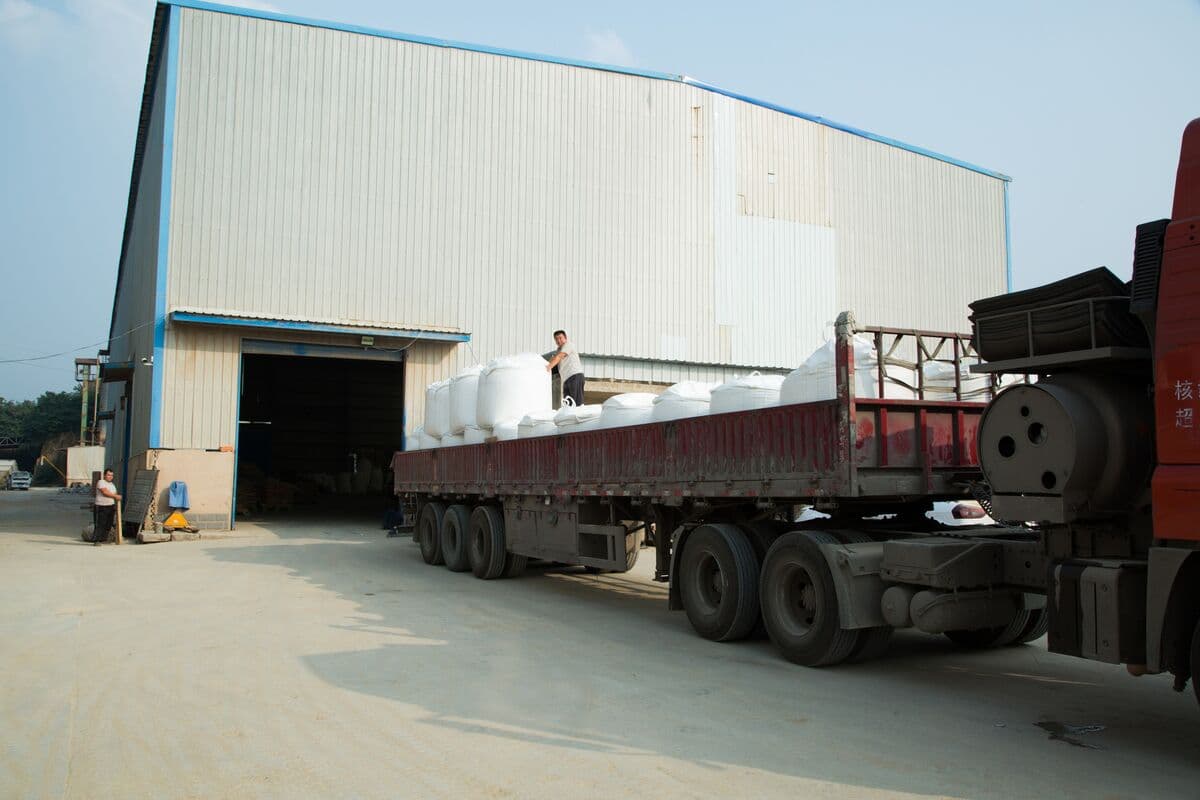
Where local supply wins: small orders (under 1 ton), urgent delivery (under 1 week), drinking water with strict approved-supplier lists, sites without import capability. Honest answer: we work alongside the local market, not against it. For larger buyers, we ship FCL direct to the requested Australian port; for smaller LCL orders, the buyer can use an appointed importer or consolidator.
Shipping to Australia
| Route | Transit Time | Destination |
|---|---|---|
| Shanghai → Port Hedland | 10-14 days | Pilbara iron ore hub |
| Qingdao → Brisbane | 12-16 days | Queensland coal + distribution |
| Shanghai → Melbourne | 14-18 days | Victoria + South Australia |
| Qingdao → Fremantle (Perth) | 12-15 days | WA gold mining + agriculture |
Total lead time order-to-delivery: 4-5 weeks (production 7-10 days + shipping 10-18 days). For urgent orders, popular mining grades can be checked against China factory stock before quotation.
Australian Compliance & Import Requirements
- Import duty: 5% (HS 3906.90). GST 10% applies on import value + duty + freight
- Anti-dumping: No anti-dumping duties on PAM from China (unlike some other chemicals)
- Drinking water documents: Required documents must be confirmed by grade and batch before order
- Quality documents: COA, SDS, and shipment documents are prepared for buyer review
- MSDS/SDS: Full English-language Safety Data Sheet provided with every shipment. See our safety and SDS guide for details
- Biosecurity: All packaging is ISPM-15 compliant (heat-treated pallets). No fumigation required
Why Australian Buyers Choose Us
- Batch consistency: ±0.5M MW tolerance — critical for automated dosing systems in large mining operations. No more "first batch good, second batch bad". Our manufacturer profile covers our QC process in detail
- solid content ≥90%: Higher than many competitors (88-90%), meaning less moisture, longer shelf life, and lower shipping cost per active ingredient
- Free settling tests: Send us your tailings or water sample. We test 5-8 PAM grades and provide a dosage optimization report with cost-per-ton calculations
- Technical support: Remote video guidance for thickener optimization and dosing system setup
- Emergency stock: 3-5 day dispatch for production-critical situations
Frequently Asked Questions
Can you supply documentation for drinking water applications?
They can be quoted only after document review. Tell us the required certificate name, utility specification, target dosage, and grade requirement before order. We confirm whether the proposed grade and batch can support the requested documents instead of assuming all PAM grades qualify.
How do you handle Australian biosecurity requirements?
All packaging uses ISPM-15 compliant heat-treated pallets — no fumigation required at Australian ports. We provide full phytosanitary documentation with every shipment. PAM powder is classified as non-hazardous for import purposes (HS 3906.90).
Can you supply direct to mine site, or do we need a local distributor?
We ship direct FCL (full container load) to Port Hedland, Fremantle, Brisbane, or Melbourne for large operations (20+ tons/order). For smaller orders or LCL (less than container load), buyers can use an appointed Australian importer or consolidator. Contact us and we will recommend the most cost-effective shipment structure for your volume.
What is the minimum order for a trial?
MOQ is 500 kg for first orders — enough for 2-4 weeks of jar testing and pilot trials at most Australian mining operations. We send free 1-5 kg samples before the trial order for initial jar testing. Standard lead time: 4-5 weeks to Australian ports.
Request Australia Pricing
We supply mining operations and water utilities across Australia — from Pilbara iron ore to Queensland coal to Melbourne municipal water. Our Henan supply base ships export orders to multiple export markets. Contact us for CIF pricing to your nearest Australian port:
- WhatsApp: +86 187-3759-0940
- Email: info@chinapolyacrylamide.com
Recommended Product Grades
For the application discussed above, these are the polyacrylamide grades we ship most often:
Compare global suppliers in our Top 10 PAM Manufacturers guide. Ready to order? View factory pricing and MOQ or request a quote.