Polyacrylamide safety is a legitimate concern — but most fears are based on misconceptions. The real risk is residual acrylamide monomer, not the PAM polymer itself. This guide separates fact from fiction, explains what SDS (Safety Data Sheet) actually says, and shows you how to handle PAM safely in industrial settings.
The Toxicity Facts: PAM vs Acrylamide Monomer
Polyacrylamide (PAM) polymer itself is non-toxic due to its high molecular weight (5-20 million Da) preventing biological absorption, while the residual acrylamide monomer — a neurotoxin at high doses — is the actual safety concern, controlled to ≤0.05% (500 ppm) in industrial-grade PAM products meeting regulated-use document review standards.
| Substance | Toxicity | In Our PAM | Risk Level |
|---|---|---|---|
| PAM polymer | Non-toxic (high MW, not absorbed) | 99.95% | ✅ None |
| Acrylamide monomer | Neurotoxin (low MW, absorbed through skin) | ≤0.05% (500 ppm) | ⚠️ Controlled |
| Water (in solution) | Non-toxic | ~8% | ✅ None |
Exposure Routes & Real Risk
The three exposure routes for polyacrylamide in industrial settings are dermal contact (most common, with acrylamide penetrating intact skin over hours), inhalation of dry powder dust (rare, preventable with dust masks), and accidental ingestion (lowest risk, as high-MW polymer is not absorbed in the GI tract).
Skin Contact (Most Common)
- Risk: Acrylamide can penetrate skin, especially if skin is damaged or wet
- Symptoms: Numbness, tingling in fingers/toes (peripheral neuropathy)
- Prevention: Wear nitrile gloves (latex is permeable to acrylamide), wash hands after handling
- Our PAM: ≤0.05% acrylamide. At 1 ppm PAM dosage in water, effective acrylamide exposure is 0.0005 ppm — 1,000× below occupational limits
Inhalation (Rare)
- Risk: Dry powder can create dust; acrylamide vapor is possible at high temperatures
- Prevention: Use dust masks when handling dry powder, ensure ventilation in storage areas
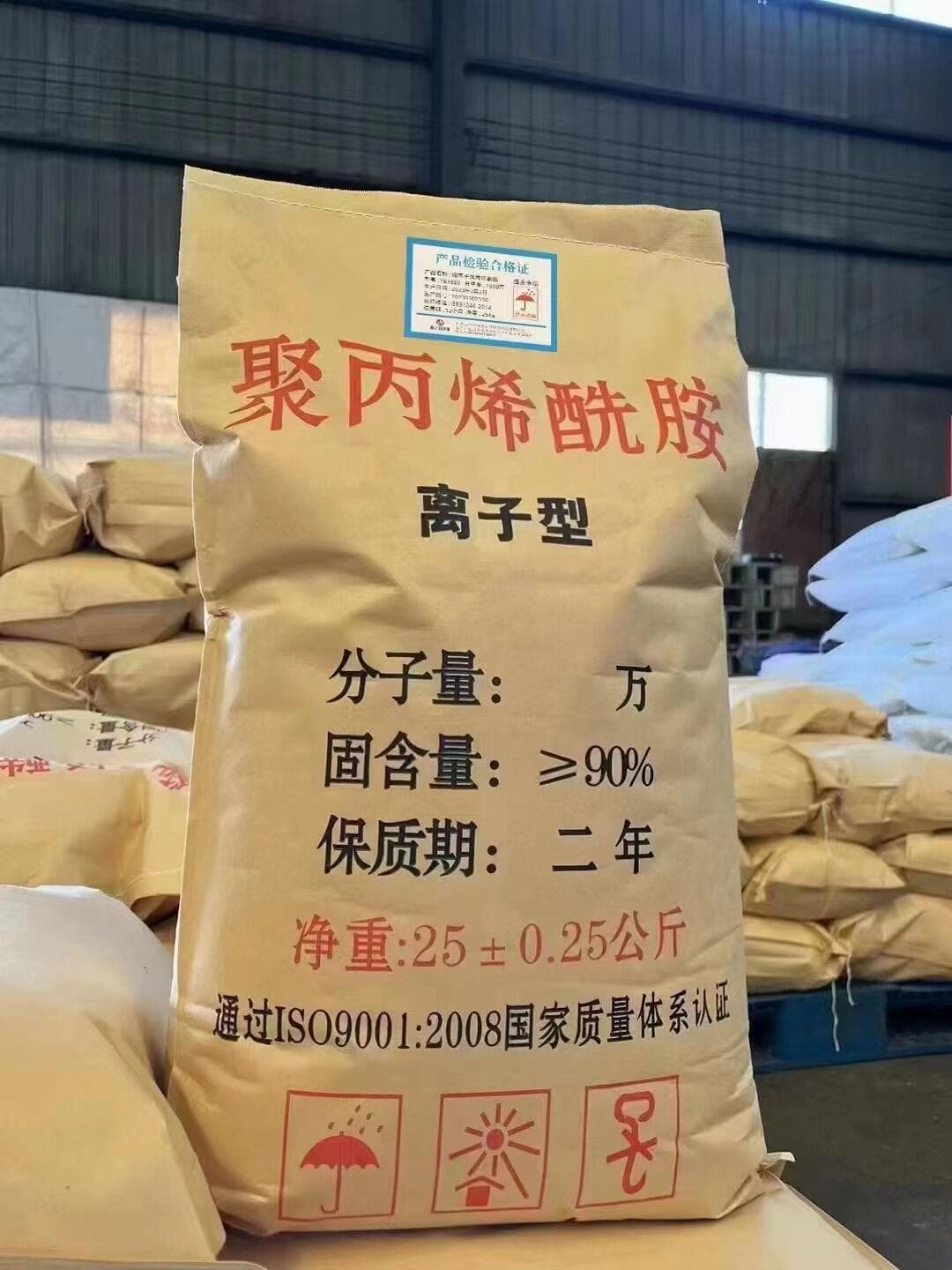
- Our PAM: solid content ≥90% means lower dust generation than competitors
Ingestion (Accidental)
- Risk: Low — PAM is not absorbed in GI tract due to high MW
- Prevention: Don't eat while handling, wash hands before eating
- Our PAM: document-supported for drinking water contact — must be used only after document and dosage review
Understanding the SDS (Safety Data Sheet)
A polyacrylamide Safety Data Sheet (SDS) classifies PAM as Hazard Category 4 (low hazard) for skin irritation, with Section 3 listing residual acrylamide monomer content (≤0.05%) as the primary hazard component rather than the polymer itself, and Section 8 recommending nitrile gloves, eye protection, and ventilation as standard controls.
Our SDS lists PAM as "Hazard Category 4" (low hazard) for skin irritation. Here is what each section means:
- Section 2 (Hazard Identification): Lists acrylamide monomer as the hazard, not PAM polymer
- Section 3 (Composition): Shows ≤0.05% acrylamide monomer — this is the key number
- Section 8 (Exposure Controls): Recommends gloves, eye protection, ventilation — standard precautions
- Section 11 (Toxicological Information): LD50 (lethal dose) data is for pure acrylamide, not our product
Key takeaway: The SDS is conservative (worst-case scenario). Our actual product is much safer because acrylamide content is ≤0.05%.
Safe Handling Procedures
Safe handling of polyacrylamide requires nitrile gloves (not latex, which is permeable to acrylamide), dust masks during dry powder handling, eye protection, and adequate ventilation — with the primary goal of minimizing dermal contact and dust inhalation during dissolution and dosing operations.
Proper handling starts with correct PAM dissolution technique — improper mixing creates unnecessary dust exposure and wastes product.
| Task | PPE Required | Duration Limit | Notes |
|---|---|---|---|
| Handling dry powder | Nitrile gloves, dust mask, eye protection | No limit (with PPE) | Avoid creating dust clouds |
| Dissolving PAM | Nitrile gloves, eye protection | No limit | Wash hands after |
| Dosing into treatment system | Nitrile gloves | No limit | Solution is dilute, low risk |
| Cleaning equipment | Nitrile gloves, eye protection | No limit | Rinse thoroughly with water |
For correct dosage calculation, always run a jar test first — over-dosing wastes product and increases operator exposure time.
Need PAM for safe water treatment?
Free sample + jar test report. WhatsApp: +86 187-3759-0940
Regulatory Limits & Compliance
Polyacrylamide regulatory limits focus on residual acrylamide monomer content: OSHA sets occupational exposure at 0.03 mg/m³ (8-hour TWA), WHO limits acrylamide in drinking water to 0.5 µg/L, and the EU restricts regulated-use acrylamide to 0.5 µg/kg — all achievable with PAM products containing ≤0.05% residual monomer.
- OSHA (USA): Acrylamide occupational exposure limit = 0.03 mg/m³ (8-hour TWA)
- WHO (drinking water): Acrylamide limit = 0.5 µg/L (0.0005 ppm)
- EU (Food Contact): Acrylamide in food = 0.5 µg/kg (extremely strict)
- Our PAM: At 1 ppm dosage in water, effective acrylamide = 0.0005 ppm — meets WHO limit
For applications requiring the strictest safety standards, see our regulated-use PAM guide covering potable water documentation requirements.
Storage Safety
Polyacrylamide storage requires cool, dry conditions below 35°C with humidity under 80%, sealed bags on pallets with FIFO rotation, maintaining a 2-year shelf life when stored properly — with degradation from heat or moisture potentially increasing free acrylamide monomer levels above specification.
Proper storage prevents degradation that could increase free monomer levels. PAM should be stored in a cool, dry place away from direct sunlight. For detailed storage requirements and shelf life information, see our PAM shelf life and storage guide.
Key storage rules: keep bags sealed until use, store below 35°C, avoid stacking more than 10 bags high (25kg bags). Humidity above 80% can cause caking — if your warehouse is humid, use pallets and dehumidifiers.
Per documented quality control quality management standards, we recommend first-in-first-out (FIFO) rotation. Our PAM has a 2-year shelf life when stored properly, but performance is best within 12 months of manufacture.
Spill Response Procedures
Polyacrylamide spill response is classified as non-hazardous under OSHA guidelines, requiring no emergency evacuation — the primary hazard is extreme slipperiness of dissolved PAM solutions (even at 0.01% concentration), with dry powder spills managed by careful sweeping or HEPA vacuuming to avoid dust generation.
PAM spills are not hazardous emergencies, but they create slip hazards. Dissolved PAM on floors is extremely slippery — more dangerous than the chemical itself.
Dry powder spill: sweep up carefully, avoid creating dust. Use a vacuum with HEPA filter if available. Do not use compressed air — it creates dust clouds. Dispose of collected powder as non-hazardous industrial waste.
Solution spill: absorb with sand, sawdust, or absorbent pads. Flush area with large amounts of water. The slip hazard persists until all polymer is removed — PAM solutions are incredibly slippery even at 0.01% concentration.
According to OSHA spill response guidelines, PAM does not require emergency evacuation or specialized hazmat response. Standard industrial cleanup procedures apply. Document the spill for your safety records.
Setting Up a Workplace Safety Program
A PAM workplace safety program for facilities using more than 1 ton/month should include annual operator training, monthly PPE inspections, quarterly air sampling for acrylamide exposure monitoring, and annual health screenings — with documentation maintained per OSHA recordkeeping requirements.
If your plant uses more than 1 ton/month of PAM, you should have a formal safety program. Here is what we recommend based on PAM production and supply experience since 2009:
| Program Element | Frequency | Who | Documentation |
|---|---|---|---|
| Safety training | Annual + new hires | All operators | Training records |
| PPE inspection | Monthly | Safety officer | Inspection checklist |
| Exposure monitoring | Quarterly | Lab / external | Air sampling results |
| Health screening | Annual | Occupational health | Medical records |
| SDS review/update | When supplier changes | Safety officer | Updated SDS file |
We provide free safety training materials to customers ordering 5+ tons. This includes PowerPoint presentations, safety posters (English/Chinese/Arabic), and video demonstrations of proper handling technique.
Emulsion vs Powder: Safety Differences
Emulsion PAM introduces flammability risk from its petroleum-based carrier oil (flash point 150-200°C) that powder PAM does not have, while powder PAM's primary risk is respirable dust during handling — making powder the safer choice for most water treatment applications where instant dissolution is not required.
Emulsion PAM has different safety considerations than powder. Emulsions contain petroleum-based carrier oils (typically mineral oil or vegetable oil), which adds flammability risk that powder does not have.
Powder PAM: main risk is dust inhalation. Use dust masks, avoid compressed air, pour slowly. No fire risk.
Emulsion PAM: main risk is oil-based carrier. Store away from ignition sources. Flash point is typically 150-200°C (carrier oil dependent). Spills are oily and slippery. Cleanup requires oil absorbents, not just water.
For most water treatment applications, we recommend powder PAM — it is safer to store, cheaper to ship, and has longer shelf life. Emulsion is only preferred when you need instant dissolution (under 5 minutes).
Transport and Shipping Safety
Polyacrylamide is classified as non-dangerous goods under IMDG (sea), IATA (air), and ADR (road) transport regulations, requiring no special shipping documentation — a significant logistics advantage over other water treatment chemicals like chlorine or ferric chloride that require hazmat handling and restricted routing.
PAM is classified as non-dangerous goods for transport. No special shipping documentation required under IMDG (sea), IATA (air), or ADR (road) regulations. This simplifies logistics significantly compared to other water treatment chemicals like chlorine or sulfuric acid.
Shipping requirements: standard 25kg woven bags on pallets, shrink-wrapped. Keep dry during transit. No temperature control needed (but avoid prolonged exposure above 50°C in containers). Our standard packaging passes ISTA 3A drop and vibration testing.
Per documented quality control environmental management standards, PAM transport poses zero environmental risk. Even if a container falls into the ocean, PAM is non-toxic to marine life at the concentrations that would result from a spill. Compare this to other flocculants like ferric chloride or aluminum sulfate, which are corrosive and harmful to aquatic ecosystems.
Customs classification: HS code 3906.90 (other acrylic polymers). No import restrictions in any country we ship to. We handle all export documentation from our Xinxiang factory including commercial invoice, packing list, certificate of origin, and MSDS/SDS in your required language — you just need to provide your import license number and consignee details.
For bulk orders (20+ tons), we ship in 1-ton jumbo bags (FIBC) on 20ft containers. Each container holds 20-22 tons. We can also do 750kg bags or custom packaging per your warehouse requirements.
Important note for tropical destinations: containers sitting at port in direct sun can reach 60-70°C internally. While PAM does not degrade at these temperatures short-term, prolonged heat exposure (weeks) can cause caking. Request thermal-lined containers for shipments to Middle East, Africa, or Southeast Asia during summer months. We include silica gel desiccant packs in every shipment to prevent moisture damage during ocean transit.
FAQ
Is PAM banned anywhere?
No. PAM is approved for use in drinking water treatment in USA, EU, Canada, Australia, and most countries. Some jurisdictions restrict it in sensitive waterways, but industrial use is universally permitted.
Can PAM cause cancer?
Acrylamide monomer is classified as a "probable human carcinogen" by IARC, but only at high doses. For any regulated-use application, confirm the exact grade, batch COA, residual monomer data, SDS, and required certificate before ordering.
What if I get PAM on my skin?
Wash immediately with soap and water. If irritation persists, seek medical attention. Acrylamide penetration is slow (hours), so immediate washing prevents absorption.
Can I use PAM without gloves?
Not recommended. Even though our PAM is low-risk, acrylamide can penetrate skin. Gloves are cheap insurance — always wear them.
Need Safety Documentation?
We provide full SDS in English, Chinese, Spanish, and French. All our PAM is document-supported and tested for residual acrylamide ≤0.05%. Contact us for:
- Full SDS (Safety Data Sheet)
- Certificate of Analysis (residual monomer testing)
- Potable water documentation
- Technical support for safe handling
- WhatsApp: +86 187-3759-0940
- Email: info@chinapolyacrylamide.com
Recommended Product Grades
For the application discussed above, these are the polyacrylamide grades we ship most often:
Not sure which is right for you? Try our PAM Selector tool or request a quote.