
Magnafloc 355 SSK Equivalent — Anionic Polyacrylamide
ChinaPAM supplies anionic polyacrylamide positioned against Magnafloc 355 and 355 SSK for industrial wastewater and mineral settling duty, in standard and coarse granulation. Free trial sample, MOQ 500 kg.
Supply Route Comparison
Published reference data and the ChinaPAM route for BASF Magnafloc 355 / 355 SSK
| Parameter | ChinaPAM Supply Route | BASF Magnafloc 355 / 355 SSK |
|---|---|---|
| Type | Anionic PAM powder | Anionic PAM powder |
| Molecular Weight | High (our scale) | Anionic series; grade-level figure via data sheet |
| Charge Density | Medium (our scale) | Anionic series; grade-level figure via data sheet |
| Granulation | Standard or coarse | Standard and SSK (coarse) |
| Comparable position | Same grade covers FLOPAM AN 956 SH duty | Separate product line |
| MOQ | 500 kg | Set by regional distributor |
| Trial Sample | Free 5 kg with jar test protocol | Via distributor request |
Specifications
| Our Product | Anionic polyacrylamide powder |
| Positioned Against | BASF Magnafloc 355 / 355 SSK |
| Type | Anionic (partially hydrolysed polyacrylamide) |
| Molecular Weight | High (our scale) |
| Charge Density | Medium (our scale) |
| Granulation | Standard or coarse |
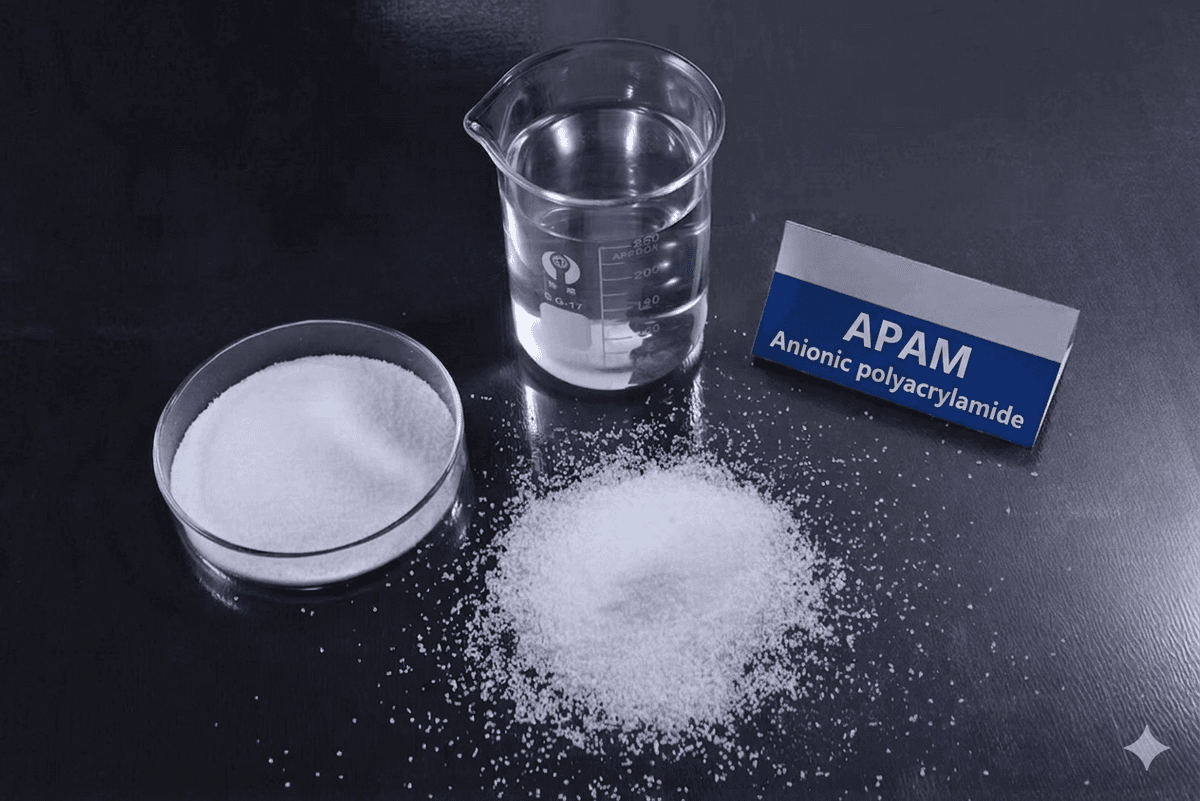
| Appearance | White granular powder |
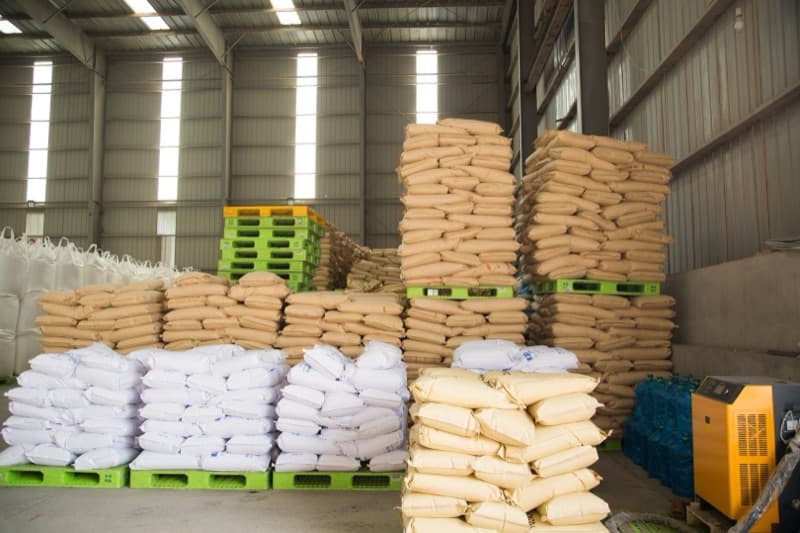
| Packaging | 25 kg PP woven bags + PE liner |
Key Features
- Selected against the published Magnafloc 355 anionic profile
- Standard and coarse granulation both held in stock
- Also positioned against FLOPAM AN 956 SH duty in the same charge band
- Free trial sample with jar test protocol
- MOQ 500 kg, direct from factory
Applications
- Industrial wastewater primary and secondary clarification
- Mineral processing tailings settling and thickening
- Sand, gravel and aggregate wash water recovery
- Steel, smelting and metallurgical effluent
- Coal preparation plant water recovery
Get a Quote for BASF Magnafloc 355 / 355 SSK Alternative Supply
Start with the grade name, a bag-label photo or your purchasing requirement. We can discuss current pricing and sample options now; process details can follow.
Related Articles
Granulation is a make-up problem, not a chemistry problem
Two grades that are the same polymer at different granulation will give the same flocculation result once dissolved, and completely different results if one of them is not fully dissolved. That is the whole reason variants like 355 SSK exist, and it is why a substitution decision that only matches the polymer sometimes fails on site for reasons that have nothing to do with the polymer.
Fine powder wets faster and reaches full chain extension sooner, but it dusts at the hopper and forms fish-eyes — gel-coated lumps with dry powder trapped inside — if it enters the water faster than the wetting cone can disperse it. Coarse granulation solves both, and pays for it with dissolution time. A plant with a 20-minute ageing tank and coarse granulation is dosing partly dissolved polymer and paying for chain length it never gets to use.
Where this shows up in the numbers is a dose that crept upward over months with no change in feed. That pattern usually means dissolution, not the polymer. Before re-sourcing, measure the actual ageing time at working concentration and check the wetting cone for build-up, because a new supplier will not fix either.
Choosing between the anionic positions rather than guessing
The anionic family varies along two axes: molecular weight, which sets floc size and settling rate, and charge density, which sets how firmly the chain attaches to the particle. Most substitution errors come from matching one axis and ignoring the other. A high molecular weight, low charge grade and a high molecular weight, medium charge grade look similar on a specification sheet and behave differently on a stream with high surface charge.
The practical route is to run two charge steps side by side at your working dose. If the higher charge step gives a visibly tighter floc and clearer supernatant, your stream has charge demand and the medium position is right. If it gives a smaller, more fragile floc, you are over-charging and repulsion is working against you — step down. This test takes an afternoon and settles a question that specification sheets cannot.
Molecular weight is the easier axis to read from the outside: if your constraint is settling rate or clarifier throughput, you want the highest molecular weight your shear conditions will tolerate. If floc arrives at the clarifier broken because of a pump or a long launder, a very high molecular weight grade is the wrong answer no matter what the settling test in a quiet beaker showed.
| Duty | Molecular weight | Charge density | Reason |
|---|---|---|---|
| Mineral tailings thickening | High to very high | Low to medium | Settling rate dominates; excess charge repels high-charge mineral surfaces |
| Industrial wastewater clarification | High | Medium | Mixed solids benefit from charge assistance |
| Sand and aggregate wash water | High | Low to medium | Coarse solids settle readily; bridging is the main mechanism |
| Enhanced oil recovery | Very high, salt-tolerant | Specific to reservoir brine | Viscosity in brine, not flocculation, is the function |
| Sludge dewatering | Not applicable | Not applicable | Organic solids require cationic charge; anionic will not work |
What we will and will not claim
We are an independent manufacturer with no affiliation to, endorsement from, or distribution agreement with BASF. Magnafloc is their trademark and appears here only to identify the product a buyer is looking to replace. We do not claim our product is identical to theirs, and we will not publish a numerical match against grade-level figures that are distributed through their data sheet rather than openly available.
What is testable is this: we manufacture high molecular weight anionic polyacrylamide across the low-to-medium charge band in both standard and coarse granulation, the 355 and 355 SSK positions sit inside that, and a free sample lets you run the comparison on your feed. For test methodology, the American Water Works Association documents standard jar-test practice, and the Water Environment Federation publishes solids-separation guidance useful for setting acceptance criteria before the trial rather than after it.
Dosage Guide
Industrial clarification typically runs at low single-digit ppm on the liquor; mineral settling and thickening duty is set in g/t on dry solids. Start from your current Magnafloc 355 rate and confirm by jar or cylinder settling test before changing the dose.
Frequently Asked Questions — Magnafloc 355 SSK Equivalent — Anionic Polyacrylamide
What is the difference between Magnafloc 355 and 355 SSK?
The SSK suffix marks a coarser granulation, not a different polymer. Coarse granulation resists dusting at the hopper and reduces fish-eye formation where mixing energy is limited, at the cost of longer dissolution time. We hold both, so tell us which you run and why — a plant that moved to coarse because of a dust complaint has a different requirement from one that moved because of undissolved gel blocking a pump.
How does this compare with the Magnafloc 336 or 333 position?
They are all in the anionic family but at different molecular weight and charge combinations, which is why we hold separate pages for them rather than one generic Magnafloc page. If you are unsure which position your duty needs, send the duty description and current dose rather than the grade number and we will work back to it.
Can this replace FLOPAM AN 956 SH?
It sits in the same charge and molecular weight band, so the same grade of ours addresses that duty. We list it here rather than on a separate page because splitting one product across two pages helps nobody — you would get the same recommendation from us either way. Send the duty and we will confirm.
Does coarse granulation change the dose?
Not the polymer dose at the same active content, but it changes the dissolution time you need to allow. Coarse granulation needs longer ageing to reach full chain extension, and dosing a partly dissolved solution wastes polymer without showing up as a dosing error. If your ageing tank gives less than about 45 minutes at working concentration, that is worth checking before you blame the product.
Which duties suit medium anionic charge rather than low or high?
Medium charge suits streams carrying mixed inorganic solids where some charge assistance helps but the surface charge is not extreme. Very high surface charge streams can repel a medium-charge polymer, and very low charge demand streams do not need it. The jar test separates these quickly if you run two charge steps side by side rather than only one.
Do you supply a copy of Magnafloc 355?
No. We supply independently manufactured anionic polyacrylamide selected against the published 355 service profile. We are not affiliated with BASF, we do not claim our product is identical to theirs, and Magnafloc is their trademark. Confirm suitability by test on your own material.
Related Products
Trademark notice. BASF Magnafloc 355 / 355 SSK and all other third-party product and brand names on this page are trademarks or registered trademarks of their respective owners. Henan Jinghua New Material Technology Co., Ltd. is not affiliated with, endorsed by, sponsored by or authorised by those owners, and no such relationship is implied. Those names are used here for the sole purpose of identifying the products our grades are compared against, which is necessary to describe what we supply. Our products are independently manufactured and are not licensed copies. Grade descriptors quoted for third-party products are taken from each manufacturer’s own published literature and follow that manufacturer’s own scale; we do not publish figures those manufacturers do not publish. Performance on your process should be confirmed by jar test or CST test before any change of supply.