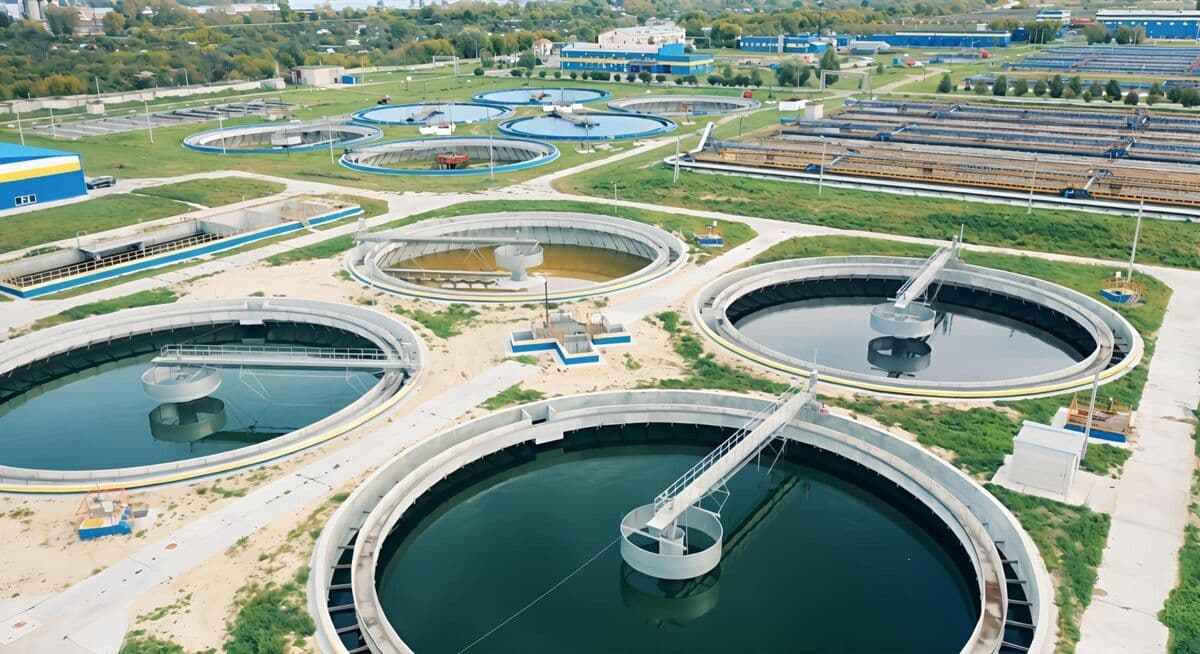
Polyacrylamide overdosing is the most expensive invisible problem in water treatment. A plant running at 2× optimal dose does not look broken — the water still clarifies, the sludge still dewaters — but you are burning $18,000-72,000/year in wasted chemical. Worse, severe overdosing actually degrades performance: excess polymer re-stabilizes particles, increases effluent turbidity, and fouls downstream equipment. We see this in roughly 40% of the plants that send us samples for re-optimization.
This guide covers exactly how to detect PAM overdosing in your system, what causes it, and how to fix it without disrupting operations. Every recommendation comes from jar test data across 200+ customer samples in our applications laboratory.
Suspect you are overdosing?
Send us a 5L sample and your current dosage. We run a free jar test and tell you exactly how much you can cut. Check our dosage calculation guide for the math, or request a quote for optimized grades.
7 Signs You Are Overdosing PAM
PAM overdosing rarely causes sudden failure — it creeps in gradually as operators increase dose to compensate for seasonal changes and never reduce it back. These seven indicators, ranked from easiest to hardest to detect, tell you whether your plant is running above optimal concentration.
| # | Indicator | What You See | Overdose Severity |
|---|---|---|---|
| 1 | Sticky/slimy flocs | Flocs adhere to tank walls, scrapers, and weirs — slippery biofilm-like coating | Moderate (1.5-2× optimal) |
| 2 | Increasing effluent turbidity despite higher dose | Turbidity rises when you add more PAM — the classic charge-reversal signal | Severe (2-3× optimal) |
| 3 | Foam on clarifier surface | Persistent white/grey foam that does not dissipate — excess dissolved polymer creates surface tension | Moderate (1.5-2× optimal) |
| 4 | Belt press/centrifuge blinding | Filter cloth clogs faster, cake does not release cleanly, wash water consumption increases 30-50% | Moderate (1.5-2.5× optimal) |
| 5 | Residual polymer in effluent | Downstream COD spike, fish toxicity risk if discharged, or foaming in receiving water body | Severe (2-4× optimal) |
| 6 | Large, fragile flocs that shear easily | Flocs look impressive (5-10 mm) but break apart at the slightest turbulence — carry-over increases | Mild (1.2-1.5× optimal) |
| 7 | PAM cost per m³ trending up with no flow increase | Monthly chemical cost rising while influent quality and volume remain stable | Any level — accounting signal |
Why Plants End Up Overdosing
In our experience testing 200+ customer samples, overdosing almost never starts as a deliberate decision. It accumulates through five predictable mechanisms:
- Seasonal dose increase never reversed — operator raises dose for spring turbidity spike, forgets to reduce in summer. After 2-3 years of one-way ratcheting, plant runs at 2-3× baseline.
- Supplier changed grade without re-testing — new PAM batch has 20% higher MW or charge density. Same dose in grams gives 20-40% more effective polymer.
- Dosing pump calibration drift — peristaltic pump tubing stretches over 6-12 months, output increases 15-30% while display still shows original setpoint.
- Safety margin stacking — engineer sets 15% safety margin, shift supervisor adds 10%, operator adds 10% more "just in case." Net: 40% over optimal.
- Wrong concentration calculation — solution tank mixed at 0.15% instead of 0.1% due to calculation error or sloppy powder weighing. 50% overdose from day one.
The Real Cost of Overdosing
PAM overdosing costs go far beyond wasted chemical. Here is the full picture for a typical 10,000 m³/day municipal WWTP:
| Cost Category | At Optimal Dose | At 2× Overdose | Annual Waste |
|---|---|---|---|
| PAM chemical cost | $36,000/yr | $72,000/yr | $36,000 |
| Belt press wash water | $4,800/yr | $7,200/yr | $2,400 |
| Filter cloth replacement | $3,000/yr | $5,500/yr | $2,500 |
| Sludge disposal (wetter cake) | $48,000/yr | $55,000/yr | $7,000 |
| Total | $91,800/yr | $139,700/yr | $47,900 |
That is nearly $48,000/year wasted at a single mid-size plant. For industrial facilities processing mining tailings or oil sands at higher dosages, the waste can exceed $200,000/year.
Quick Diagnostic: Are You Overdosing?
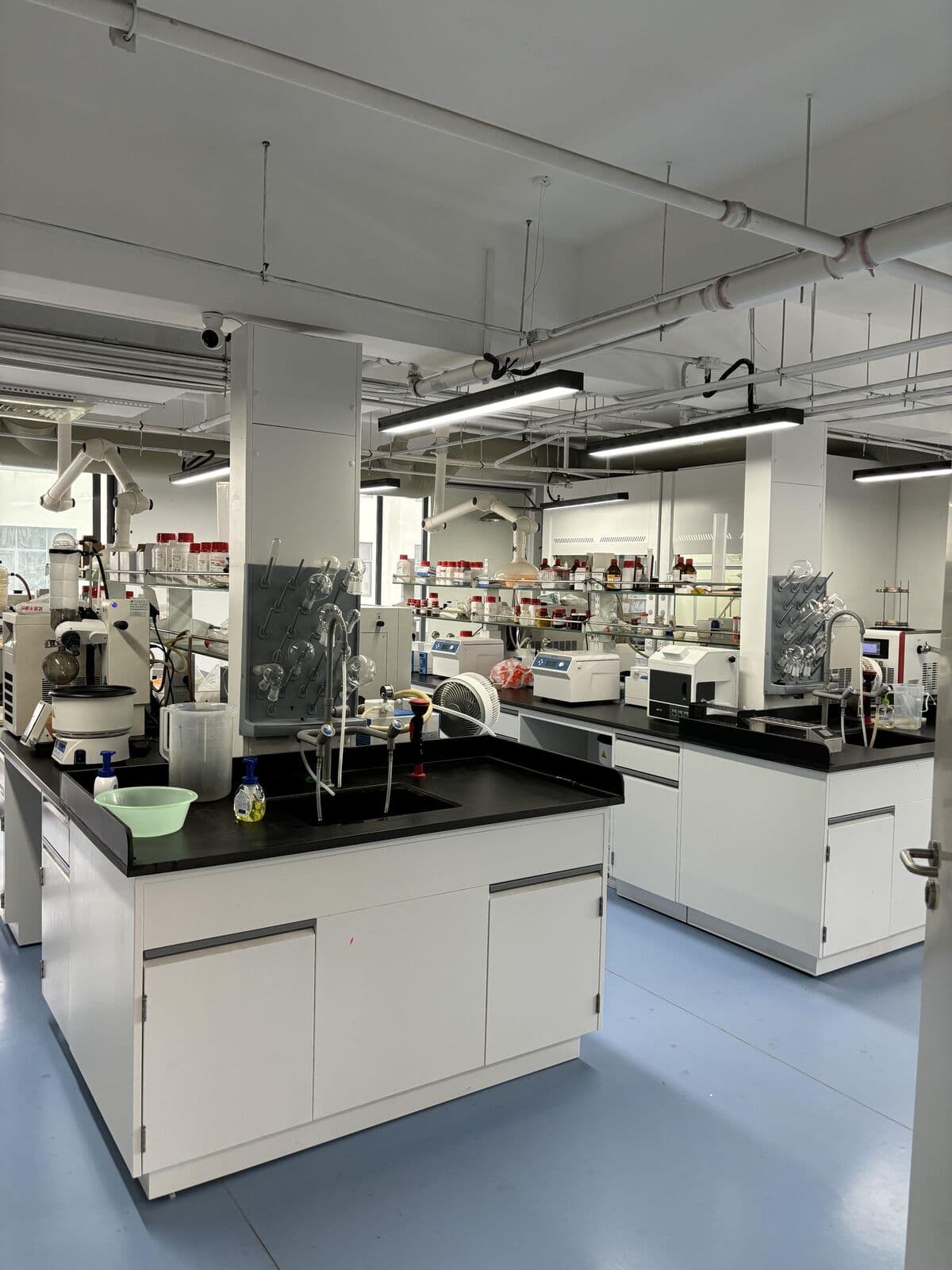
Run this 15-minute field test before sending samples to a lab:
- Half-dose test — reduce PAM feed by 50% for 30 minutes. If effluent turbidity stays within 10% of normal, you were overdosing by at least 50%.
- Streaming current check — if your plant has a streaming current detector (SCD), read the value. Positive values on anionic PAM systems or negative values on cationic systems indicate charge reversal from overdose.
- Cotton swab test — drag a clean cotton swab across the clarifier weir. If it picks up a slimy film, excess polymer is accumulating on surfaces.
- Foam persistence test — scoop clarifier surface water into a jar, shake vigorously for 10 seconds. If foam persists >30 seconds, dissolved polymer concentration is elevated.
If any two of these tests indicate overdosing, stop increasing dose immediately and run a proper jar test to re-establish optimal dosage.
How to Fix Overdosing Without Disrupting Operations
Do not cut dosage by 50% overnight — you risk treatment failure if your system has adapted to excess polymer (e.g., sludge blanket held together by residual PAM). Instead, follow this stepdown protocol we recommend to every plant we supply:
| Week | Dose Reduction | Monitor | Go/No-Go |
|---|---|---|---|
| 1 | −15% | Effluent turbidity, settling rate | Turbidity within ±5 NTU of baseline → continue |
| 2 | −15% (total −30%) | Effluent turbidity, belt press cake %DS | Cake %DS drops <1% absolute → continue |
| 3 | −10% (total −40%) | All above + foam/weir cleanliness | Any parameter degrades >10% → hold at previous week |
| 4 | −10% (total −50%) | Full parameter suite | Stable = new baseline. Run jar test to confirm. |
Most plants stabilize at 30-50% below their starting dose. The ones that cannot reduce beyond 15% typically have a different root cause — wrong PAM grade, inadequate mixing energy, or coagulant under-dosing masking the real problem.
Preventing Future Overdosing
- Quarterly jar tests — re-validate dosage every 3 months and after any feed water quality change. Season changes alone can shift optimal dose by 20-30%.
- Dosing pump calibration — verify pump output monthly with a graduated cylinder and stopwatch. Replace peristaltic tubing every 6 months.
- Streaming current monitoring — install an inline SCD for continuous dose feedback. Set alarms at ±30% from target value.
- Operator training — teach operators that "more is not better" with polymer. Document optimal dose range and forbidden adjustments.
- Dose lock — set pump maximum at 120% of jar test optimal. Operators can reduce but not increase beyond safety margin without supervisor approval.
When High Dosage Is Actually Correct
Not every high-dose situation is overdosing. These scenarios legitimately require above-typical dosages:
- Mining tailings with >30% solids — 30-50 g/ton is normal for high-density thickener underflow
- Cold water (<10°C) — PAM effectiveness drops 20-30% in cold conditions, requiring proportionally higher dose
- High-salinity water (>5,000 TDS) — anionic PAM chain collapse requires 1.5-2× normal dose or switch to cationic
- Very fine particles (<1 µm clay) — colloidal systems need higher polymer loading per unit surface area
The difference between "correct high dose" and "overdosing" is jar test validation. If your jar test confirms that optimal is 20 ppm and you are running at 20 ppm, you are not overdosing — your water is just hard to treat. If your jar test says 10 ppm and you are running at 20 ppm, that is $36,000/year walking out the door.
How We Help: Free Dose Optimization
When you buy PAM from us, dose optimization is included — not as a sales pitch but because overdosing our own product means you reorder less frequently and eventually switch to a cheaper competitor who promises "the same performance at lower dose." We would rather you use less of our PAM and stay a customer for 5 years than overdose and leave after 1 year.
Our standard service for customers consuming 3+ tons/month:
- Initial jar test on your wastewater sample (free, 3-5 day turnaround)
- Dose optimization report with recommended grade and concentration range
- Quarterly re-testing if you send updated samples
- Technical support for dosing system setup and calibration
Stop Wasting PAM — Get Your Optimal Dose
Send us a 5L sample + your current dosage. We will tell you exactly how much you can cut — typical savings: 30-50% chemical cost reduction.
Optimized-Dose Product Grades
These grades are engineered for maximum performance at minimum dosage — helping you avoid overdosing from the start:
- APAM High Molecular Weight — maximum bridging at low dose
- CPAM High Charge Density — strong neutralization, lower consumption
Not sure which fits? Try our PAM Selector tool or request a quote.
Related Technical Guides
Standards Note
Per AWWA B453 standard for polyacrylamide use in water treatment, maximum allowable monomer content is 0.05% and maximum dosage for potable water applications is 1 mg/L active polymer. Industrial applications have no regulatory dose ceiling but economic optimization applies.
ISO 14001 environmental management systems require documented chemical consumption monitoring — overdosing PAM violates the resource efficiency principle and may affect EMS certification audits.
This article is part of our complete polyacrylamide water treatment guide. Related topics: food processing wastewater, jar test procedure.