Magnafloc 336 Equivalent — Very High MW Anionic Polyacrylamide
Our very high molecular weight anionic polyacrylamide positioned against Magnafloc 336 for mineral processing, thickener duty and Bayer process settling. Free trial samples, batch COA included.
Supply Route Comparison
Published reference data and the ChinaPAM route for BASF Magnafloc 336
| Parameter | ChinaPAM Supply Route | BASF Magnafloc 336 |
|---|---|---|
| Type | Anionic PAM powder | Anionic PAM powder |
| Molecular Weight | Very high (our scale) | Very high, described qualitatively (manufacturer data sheet) |
| Charge Density | Selected on settling test result | Not published on the data sheet we obtained |
| Grade Naming | Grade named after trial, not before | Magnafloc 336 |
| MOQ | 500 kg | Set by regional distributor |
| Lead Time | 7–10 days ex-works | Set by regional distributor |
| Trial Sample | Free 5 kg with test protocol | Via distributor request |
Specifications
| Our Grade | Contact us for grade selection |
| Positioned Against | BASF Magnafloc 336 |
| Type | Anionic (partially hydrolysed polyacrylamide) |
| Molecular Weight | Very high (our scale) |
| Charge Density | Selected on trial result — see note below |
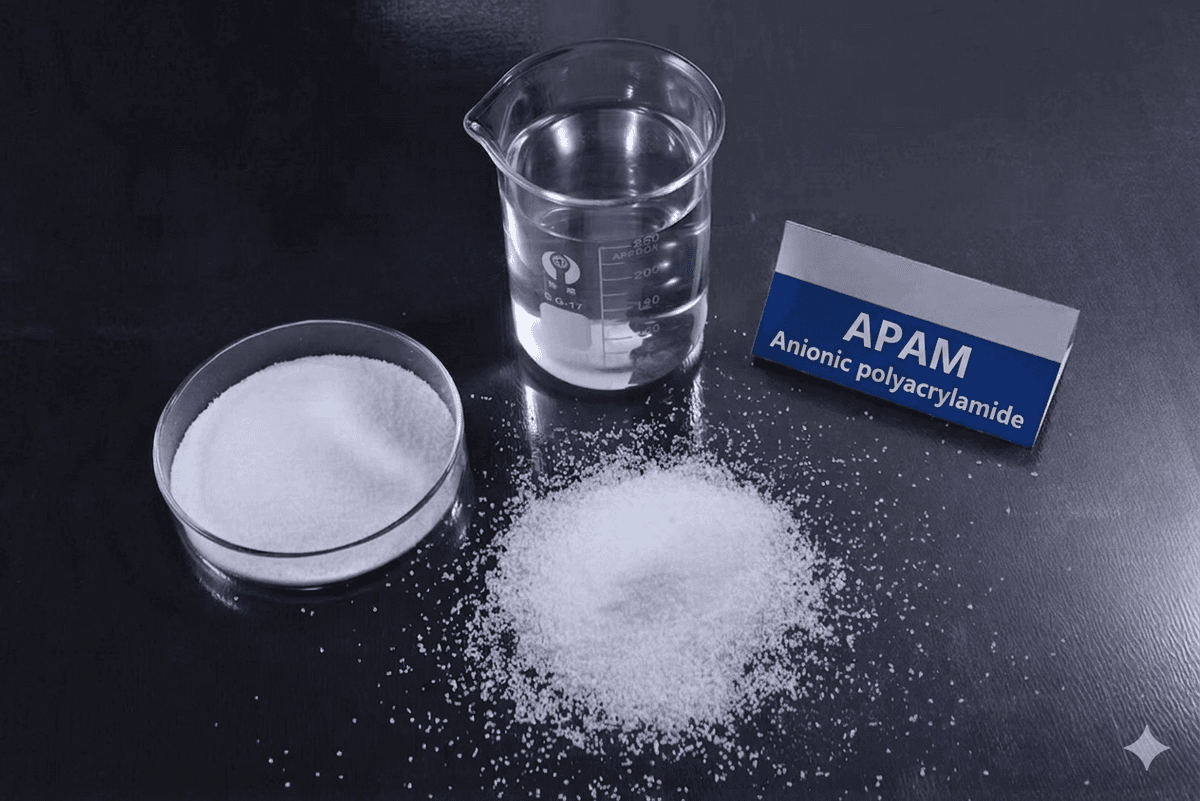
| Appearance | White granular powder |
| Packaging | 25 kg PP woven bags + PE liner |
Key Features
- Molecular weight class matched to the published Magnafloc 336 description
- Charge density selected from a settling test rather than assumed from a lookup table
- Built for high-rate thickeners where settling rate sets throughput
- High pH and elevated temperature duty covered within the anionic range
- Free trial sample with settling test protocol
- Batch-specific TDS, COA and MSDS with every shipment
Applications
- Mineral processing thickeners and clarifiers
- Bauxite residue and red mud settling in alumina refining
- Iron ore, copper and gold tailings thickening
- Coal preparation plant water recovery circuits
- Industrial clarification where carryover is the binding constraint
Get a Quote for BASF Magnafloc 336 Alternative Supply
Start with the grade name, a bag-label photo or your purchasing requirement. We can discuss current pricing and sample options now; process details can follow.
Related Articles
How to Qualify a Grade When the Charge Density Is Not Published
This is the situation with most of the Magnafloc range, and it is worth being precise about why it blocks a paper equivalence rather than merely making one less convenient. An anionic polyacrylamide has two independent specifications that both govern performance: molecular weight, which sets how far the chain can reach across the gap between particles, and charge density, which sets how strongly it anchors to the particle surface and how extended the chain stays in the process water it is dissolved into. Two grades can share a molecular weight class and behave nothing alike because one carries 8 percent anionic charge and the other 35 percent.
When a data sheet gives a qualitative molecular weight description and no charge figure, half the specification is missing. A cross-reference table that names a single grade against it has filled that half in by assumption. On a forgiving duty the assumption may cost nothing. On a high-fines tailings stream, a recycled hard-water circuit or a hot caustic liquor it produces a grade that under-doses, over-doses or fails to respond to dosing at all, and the plant reads that as a quality problem with the substitute rather than a selection error.
The way through it is not more desk research. It is a settling test that establishes the charge band empirically on your own slurry, which takes an afternoon and gives a defensible answer. What follows is the protocol we run, written so that your own laboratory can reproduce it independently of us.
| Step | What you do | What it tells you |
|---|---|---|
| 1. Baseline | Run your incumbent grade at its current plant dose on a fresh slurry sample | The performance bar the substitute has to clear, measured on the same slurry and the same day |
| 2. Charge sweep | Run three candidate grades spanning low, medium and high charge at the same molecular weight class and the same dose | Which charge band the slurry actually responds to — this is the figure the data sheet did not give you |
| 3. Dose curve | Take the winning charge band and run five doses around the baseline, typically 0.5× to 2× | The optimum dose, and whether the substitute reaches the bar at a lower or higher active rate |
| 4. Supernatant | Measure clarity or suspended solids on the overflow, not just the settling rate | Whether fines are being captured or merely swept down by the coarse fraction |
| 5. Process water | Repeat the winning combination in recycled process water rather than fresh | Whether hardness and dissolved salts collapse the result — the most common cause of a trial that succeeds on the bench and fails in the plant |
| 6. Plant trial | Run the shortlisted grade on one stage where a poor result is contained | Confirmation under real mixing, real residence time and real feed variability |
Where Very High Molecular Weight Earns Its Cost
Grades at the top of the molecular weight ladder are harder to make, harder to dissolve and more expensive per tonne, so it is worth knowing which duties actually need them. The honest answer is: those where settling rate governs throughput. In a high-rate or paste thickener the vessel is sized on rise rate, and a longer chain builds a larger, faster-settling floc that lets the same tank handle more feed. There the molecular weight is buying capacity, and it pays for itself.
Where settling rate is not the constraint, the extra molecular weight often buys nothing measurable. On a duty limited by supernatant clarity rather than rate, a lower molecular weight grade at the right charge frequently gives a cleaner overflow, because very long chains build open, water-rich flocs that trap fines poorly and shear apart in the launder. If your problem is carryover rather than tank capacity, moving up the molecular weight ladder is the wrong direction.
There is also a practical handling cost that catches plants out on first delivery. Solution viscosity rises steeply with molecular weight, so stock strength that works for a standard grade becomes unpumpable at the top of the range. Make up at 0.05 to 0.1 percent, allow full ageing before dosing, and check that your existing make-up system can disperse the powder without fisheyeing. A grade that is correct on paper will still fail if it never fully hydrates.
Dosage Guide
Polymer demand for very high molecular weight anionic duty is established by settling test on the target slurry. Use your current Magnafloc 336 dose rate as the starting reference. Make up at 0.05 to 0.1 percent rather than the usual 0.25 to 0.5 percent, because solution viscosity at this molecular weight makes stronger stock difficult to pump and to disperse into the feed.
Frequently Asked Questions — Magnafloc 336 Equivalent — Very High MW Anionic Polyacrylamide
Why will you not name a specific grade against Magnafloc 336?
Because the data sheet we obtained gives a molecular weight description and no charge density figure. Charge density is the half of the specification that decides which anionic grade actually performs on your slurry, so naming a grade from the molecular weight alone would be a guess dressed up as an equivalence. Most cross-reference tables on the internet make exactly that guess. Send us a slurry sample and we will run a settling test and name the grade with the data attached.
What do you need from me to make the match?
The grade name from your tender or delivery note, the duty and stage you are dosing, the approximate solids content and particle size distribution, the process water chemistry including pH and temperature, and ideally a one to two litre slurry sample. With those we can run a settling comparison against our own grades rather than working from the number.
Is Magnafloc still a BASF product?
BASF acquired the Magnafloc and Zetag brands from Ciba Specialty Chemicals in 2009, and following the 2019 divestment of parts of its water treatment polymer business, regional distribution moved to Solenis and others in some markets. The model numbers stayed in use throughout. According to AWWA guidance on polymer evaluation, performance should be assessed on physical-chemical parameters rather than brand name or corporate ownership.
Can you cover the Bayer process and red mud duty?
Within the anionic range, yes, but high pH and elevated temperature stability are the governing requirements there and the stage you are dosing matters more than the grade number. Our [red mud and Bayer settling guide](/blog/polyacrylamide-red-mud-alumina-settling) sets out where our anionic grades fit and where they do not. Send us your liquor conditions and we will work from those.
Is your grade a licensed copy of Magnafloc 336?
No. It is an independently manufactured anionic polyacrylamide positioned against the published Magnafloc 336 description. Grade descriptors follow different in-house scales, which is why we show each side on its own scale and settle the match with a test on your own slurry.
Related Products
Trademark notice. BASF Magnafloc 336 and all other third-party product and brand names on this page are trademarks or registered trademarks of their respective owners. Henan Jinghua New Material Technology Co., Ltd. is not affiliated with, endorsed by, sponsored by or authorised by those owners, and no such relationship is implied. Those names are used here for the sole purpose of identifying the products our grades are compared against, which is necessary to describe what we supply. Our products are independently manufactured and are not licensed copies. Grade descriptors quoted for third-party products are taken from each manufacturer’s own published literature and follow that manufacturer’s own scale; we do not publish figures those manufacturers do not publish. Performance on your process should be confirmed by jar test or CST test before any change of supply.