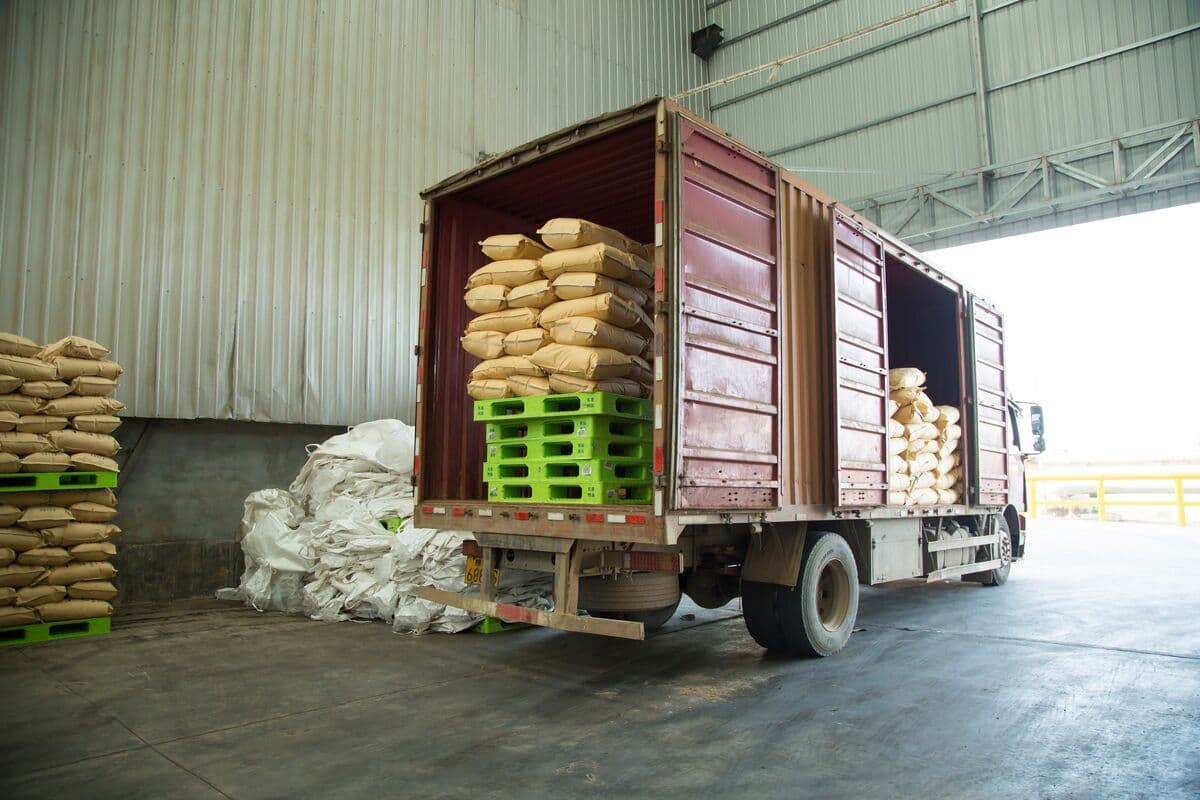
India imports 80,000+ tons of polyacrylamide annually — making it one of the world's largest and fastest-growing PAM markets outside China. Municipal wastewater treatment expansion under Namami Gange and Swachh Bharat Mission, plus booming mining and oil sectors, drive consistent demand growth of 12-15% per year. We supply PAM to Indian distributors and end-users, shipping to Mumbai (JNPT), Chennai, Kolkata (Haldia), and Mundra ports.
India PAM Market: Key Numbers
| Segment | Annual Demand | Growth Rate | Key States |
|---|---|---|---|
| Municipal Water/Wastewater | export orders | 15-18% | Maharashtra, UP, Gujarat |
| Mining & Minerals | 20,000+ tons | 10-12% | Odisha, Jharkhand, Rajasthan |
| Oil & Gas (EOR + Drilling) | 15,000+ tons | 8-10% | Gujarat, Assam, Rajasthan |
| Paper & Pulp | 10,000+ tons | 6-8% | AP, Tamil Nadu, Maharashtra |
| Textile Wastewater | 5,000+ tons | 12-15% | Gujarat, Tamil Nadu, Punjab |
Why Indian Buyers Source PAM from China
India has domestic PAM production (SNF India, Thermax, etc.), but Chinese PAM dominates imports for three reasons:
- Price advantage — Chinese PAM is 30-40% cheaper than domestic Indian production at equivalent quality. Our FOB price for APAM 18M MW: $1,200-1,500/ton vs Indian domestic $1,800-2,200/ton. See our China supplier MOQ & pricing guide for full details
- Molecular weight range — Indian manufacturers typically max out at 15-18M MW. We produce up to 28M MW for demanding mining tailings applications. Our molecular weight guide covers grade selection
- Custom formulation — Indian producers offer 3-5 standard grades. We offer 18+ grades with custom charge density and molecular weight combinations
Shipping to India: Logistics & Timeline
| Route | Transit Time | Best For |
|---|---|---|
| Qingdao → JNPT (Mumbai) | 14-18 days | West India (Maharashtra, Gujarat) |
| Shanghai → Chennai | 12-15 days | South India (Tamil Nadu, AP) |
| Qingdao → Kolkata (Haldia) | 15-20 days | East India (Odisha, Jharkhand) |
| Shanghai → Mundra | 12-16 days | Gujarat industrial zone |
Total lead time from order to delivery: 3-4 weeks (production 7-10 days + shipping 12-18 days). For urgent orders, popular grades can be checked against China factory stock before quotation.
India Import Duties & Regulations
Importing PAM into India is straightforward but requires understanding the tariff structure. The HS Code for polyacrylamide is 3906.90.90 (Acrylamide polymers, other). Basic Customs Duty (BCD) is 7.5%, and IGST (Integrated Goods and Services Tax) is 18%. The total landed cost addition is roughly 28-30% over FOB price — significant, but Chinese PAM remains competitive against Indian domestic production due to the base price advantage of 30-40%.
- HS Code: 3906.90.90 (Acrylamide polymers, other)
- Basic Customs Duty (BCD): 7.5%
- IGST: 18%
- Total landed cost addition: ~28-30% over FOB price
- BIS status: Normally not required for industrial-grade PAM; potable-water or food-processing use must be checked against the tender and local authority
- Anti-dumping duty: Currently none on PAM from China (unlike some other chemicals)
For bulk wholesale pricing and shipping options, we offer volume discounts starting at 20 tons. Even with 28-30% import duties, Chinese PAM remains competitive against Indian domestic production due to the base price advantage.
Need PAM delivered to India?
Free sample + jar test report. WhatsApp: +86 187-3759-0940
Most Popular Grades for India Market
| Application | Grade | Specs | Monthly Volume |
|---|---|---|---|
| Municipal WWTP sludge | CPAM-50 | 12M MW, 50% charge | 20-50 tons |
| Iron ore tailings | APAM-18 | 18M MW, 25% hydrolysis | 50-100 tons |
| EOR flooding | PHPA-25 | 25M MW, partially hydrolyzed | 100-500 tons |
| Textile effluent | CPAM-30 | 10M MW, 30% charge | 10-30 tons |
| Paper retention aid | CPAM-20 | 8M MW, 20% charge | 15-40 tons |
For EOR applications, see our detailed enhanced oil recovery (EOR) guide covering HPAM grade selection for high-temperature reservoirs. For municipal sludge dewatering, our CPAM sludge dewatering guide covers charge density selection in detail.
Market Dynamics & Growth Drivers
India's PAM demand is driven by three structural trends. First, Namami Gange and Swachh Bharat initiatives have mandated wastewater treatment for all municipalities — 4,000+ new STPs are under construction or planned. Second, mining expansion in Odisha and Jharkhand (iron ore, coal, bauxite) requires tailings management. Third, oil companies are investing heavily in EOR (Enhanced Oil Recovery) in mature fields like Bombay High and Assam. Per FICCI (Federation of Indian Chambers of Commerce and Industry) industry reports, PAM consumption in India is projected to grow 12-15% annually through 2030, outpacing global growth of 6-8%.
What Goes Wrong When Indian Buyers Source PAM from China
We supply India from our Henan factory. The problems we see aren't about product quality — they're about the buying process. If the first order is bought only on price, without grade confirmation and storage planning, the second order often becomes unstable.
The most common one: buying on price alone from a trading company that doesn't manufacture. The first shipment may pass because the trader sources from a good factory. The second shipment can come from a different factory because the first one raised prices. Molecular weight drops from 18M to 14M, performance tanks, and the buyer blames "Chinese quality." We've inherited a lot of customers this way. The fix is simple: ask for the factory's production license, batch COA, and production-site information before placing repeat orders.
Second problem: not accounting for India's monsoon season. PAM is hygroscopic — it absorbs moisture from the air. Bags stored in a Mumbai warehouse during July-September without proper sealing will clump and partially dissolve before use. We ship in double-layer PE bags with desiccant for India orders, and we tell every new customer: store in a dry room below 35°C, use within 6 months of arrival. Per our shelf life and storage guide, improper storage is the single biggest cause of performance complaints.
Frequently Asked Questions
Do I need BIS certification for PAM imported from China?
No — industrial-grade PAM for wastewater, mining, and paper projects is normally handled under general chemical import rules, not BIS mandatory certification. Potable-water or food-processing applications are different: check the tender, state authority, or buyer specification before ordering. We confirm regulated-use documents by exact grade and batch; standard industrial grades should not be treated as automatically approved for potable-water or food-contact use. According to Bureau of Indian Standards guidelines, polymer flocculants for industrial wastewater treatment fall under general chemical import rules, not the mandatory certification list.
How do I handle customs clearance for PAM in India?
Straightforward under HS Code 3906.90.90. You'll pay 7.5% BCD + 18% IGST = roughly 28-30% on CIF value. Most Indian importers clear PAM through a CHA (Customs House Agent) in Mumbai, Chennai, or Kolkata — cost is $150-300 per shipment. We provide full documentation: commercial invoice, packing list, COA, MSDS, and Bill of Lading. For first-time importers, we can connect you with a CHA we've worked with before. The whole process from port arrival to warehouse delivery typically takes 5-10 working days.
Can you supply PAM for Namami Gange projects?
We can quote PAM for STP and infrastructure contractors when the tender specification is clear. The key requirement for government projects is documentation: provide the grade target, COA requirements, SDS language, third-party testing requirement, destination port, and delivery timeline before quotation. If the tender requires SGS, Bureau Veritas, or local lab testing, plan that cost and timing before the purchase order.
India Inquiry Checklist
A strong India inquiry should include both technical and commercial details. For municipal sludge, send sludge source, dry solids, dewatering equipment, current polymer dose, cake moisture, and monthly consumption. For mining, send ore type, pH, TSS, thickener size, target overflow clarity, and current flocculant benchmark. For paper, textile, or industrial wastewater, send pH, COD, TSS, conductivity, color, and whether the treatment target is clarification or sludge dewatering.
Commercial details matter just as much. Tell us whether the buyer wants FOB China, CIF Nhava Sheva, CIF Chennai, CIF Kolkata, or a different port. Confirm whether the importer already has a CHA, whether the order is a 500 kg trial, 5 MT LCL order, or 20 MT FCL order, and whether OEM labeling is needed. If the project is part of a tender, attach the document wording instead of rewriting it into a short WhatsApp message.
For Indian buyers comparing local distributors with direct factory supply, the useful comparison is landed cost per active kilogram and treatment cost per cubic meter, not simply the FOB price per ton. Direct import can win on repeat volume, but a local distributor may still be better for emergency stock or very small orders. Use the China sourcing checklist above together with the global PAM manufacturer comparison when building your supplier shortlist.
Quality Assurance for Indian Buyers
Indian buyers are particularly quality-conscious due to past experiences with inconsistent Chinese suppliers. We understand this — it's the reason we invested in a quality system that goes beyond what most Chinese manufacturers offer. Per Bureau of Indian Standards (BIS) guidelines for imported industrial chemicals, buyers should verify COA data against independent testing for the first 2-3 shipments until supplier consistency is established. Our quality guarantee system addresses this directly:
- Three-tier QC: In-process monitoring → batch testing → pre-shipment inspection. Every batch gets a Certificate of Analysis (COA) with molecular weight, charge density, solid content (≥90%), dissolving time (≤90 min), and residual monomer (≤0.05%)
- Retention samples: We keep 200-500g samples from every batch for 12 months. If any quality dispute arises, we test the retained sample at a third-party lab
- Batch consistency: Our confirmed production partners are calibrated to deliver ±0.5M MW tolerance. No more "first batch good, second batch bad" — the industry's biggest complaint about Chinese suppliers
- Free jar testing: Send us your water/sludge sample, we test 5-8 PAM grades and recommend the optimal one with dosage data
Payment & Trade Terms
- First order: 30% T/T advance + 70% against B/L copy (standard for new business relationships)
- Repeat orders: 100% T/T against B/L copy, or L/C at sight for larger volumes
- Long-term contracts: Quarterly pricing with volume discounts (5% off for 100+ tons/quarter, 8% off for 200+ tons/quarter)
- MOQ: 500kg for trial orders, standard container shipments are 5-20 tons per order
- Incoterms: FOB Qingdao/Shanghai, CFR Indian port, or CIF (we handle freight and insurance)
Get a Quote for India Delivery
We supply Indian buyers with consistent-quality PAM. Whether you need 500kg for testing or 100 tons/month for ongoing projects, we have the capacity (confirmed grade availability) and the grades (18+ formulations) to match your requirements.
Contact us for India-specific pricing (includes duty calculation) and free sample:
- WhatsApp: +86 187-3759-0940
- Email: info@chinapolyacrylamide.com
Recommended Product Grades
For the application discussed above, these are the polyacrylamide grades we ship most often:
Compare global suppliers in our Top 10 PAM Manufacturers guide. Ready to order? View factory pricing and MOQ or request a quote.