
Polymer flooding for enhanced oil recovery recovers 8-20% of original oil in place that waterflooding leaves behind — and HPAM (partially hydrolyzed polyacrylamide) is the chemistry that does 95% of the work. The other 5% goes to hydrophobically associating polymers and biopolymers for niche reservoirs. We ship HPAM to EOR operators in Venezuela, Oman, Kazakhstan, China's Bohai Bay, and the US Permian, and the buyer questions are always the same: what molecular weight, what hydrolysis degree, will it survive the reservoir salinity and temperature, and how much do I actually need?
This guide answers those four questions with our production specs, the reservoir envelope each grade fits, and the screening math operators use to size a polymer flood. If you already know the reservoir spec and just need the grade number, the table is first.
Our HPAM Grades for EOR
| Grade | Molecular Weight | Hydrolysis | Reservoir Fit | Max Salinity (ppm TDS) | Max Temp |
|---|---|---|---|---|---|
| HPAM-EOR18 | 18-20M | 22-26% | Low-salinity sandstone | ≤20,000 | 70°C |
| HPAM-EOR22 | 22-25M | 25-30% | Daqing-type sandstone | ≤8,000 | 75°C |
| HPAM-EOR25 | 25-28M | 28-32% | Ultra-high MW, clean brine | ≤5,000 | 70°C |
| HPAM-SR12 | 12-16M | 15-20% | Salt-resistant, offshore | ≤80,000 | 85°C |
| HPAM-HT10 | 10-14M | 10-18% | High-temp carbonate | ≤50,000 (Ca²⁺≤500) | 95°C |
| AMPS-HPAM | 8-12M | AMPS 20-30% | Extreme T/S harsh brine | ≤200,000 | 120°C |
MW = weight-average, intrinsic viscosity method (GB/T 12005.10). Filterability ratio (FR) ≤1.3 at 1.2 µm (API RP 63) on all grades. Residual acrylamide ≤0.05%.
Why Polymer Flooding Beats Waterflood
Water has a viscosity of ~1 cP. Crude oil ranges from 2 cP (light) to 1,000+ cP (heavy). When water is pushed through a reservoir to displace oil, the mobility ratio M (μ_oil ÷ μ_water) is unfavorable — water fingers through the oil instead of pushing it uniformly, and sweep efficiency collapses. You leave 40-60% of the oil behind.
Dissolve 800-2,500 ppm HPAM in the injection water and brine viscosity jumps from 1 cP to 10-50 cP. The mobility ratio drops, the flood front stabilizes, and sweep efficiency improves across both the areal and vertical dimensions. Typical EOR polymer floods recover an additional 8-20% of original oil in place (OOIP) on top of waterflood.
The math at $70/bbl oil: a 100 million barrel OOIP reservoir with 10% incremental polymer recovery = 10 MMbbl × $70 = $700M incremental revenue. Polymer cost at 1,500 ppm and $2/kg, assuming 0.3 PV injection over a 500 MMbbl pore volume = ~225,000 tonnes × $2,000 = $450M. Gross margin $250M before operating costs — and that is why every major operator has a polymer-flood program in active screening.
The Three Mechanisms HPAM Provides
1. Mobility Control (Viscosity Increase)
Primary mechanism. At 1,000 ppm in fresh water, a 20M MW HPAM gives ~35 cP at 7 s⁻¹ shear. At 1,500 ppm in 5,000 ppm TDS brine, the same polymer gives ~15 cP (salt collapses the polymer coil and drops viscosity by roughly 50-60%). The target is usually to hit a mobility ratio of M ≤ 1 at reservoir conditions — which for a 20 cP crude means ~18-25 cP polymer solution. Note that the shear rate is part of the number: the same solution reads several times higher at low shear, which is why a lab figure has to state concentration, temperature, brine and shear rate before it can be compared. Our guide to polyacrylamide viscosity measurement and control covers the conditions and the degradation mechanisms in detail.
2. Conformance Control (Profile Modification)
Polymer solution prefers to flow through low-permeability zones in a stratified reservoir — the opposite of water, which fingers into the high-k streaks. HPAM redirects injection water out of thief zones and into bypassed oil-bearing intervals. In reservoirs with permeability contrast above 10:1, conformance gain is often worth more than the viscosity gain.
3. Residual Resistance (Adsorption)
Once injected, HPAM adsorbs onto rock surfaces at 20-100 µg/g. Even after the polymer bank passes, the adsorbed layer continues to reduce water permeability (residual resistance factor 1.5-5). This keeps the chase water from fingering through the pore network that the polymer already cleaned.
Selection Criteria: Matching Grade to Reservoir
Molecular Weight
Higher MW = more viscosity per ppm = lower polymer cost per barrel of oil recovered. But high MW polymer shears in pumps, chokes, and pore throats, and it will not inject at all into tight rock. Practical rules:
- Permeability >500 mD: go to 22-28M MW. Higher viscosity efficiency, injectivity is fine.
- Permeability 100-500 mD: 18-22M MW. The 20M sweet spot for most sandstone floods.
- Permeability 20-100 mD: 10-16M MW, or partially pre-sheared polymer. Filterability ratio becomes critical.
- Permeability <20 mD: polymer flood is usually not economic — switch to surfactant or gas EOR.
Our HPAM-EOR22 is the Daqing-type workhorse grade. If you are unsure, start there and screen up or down based on core-flood injectivity.
Hydrolysis Degree
Hydrolysis is the % of acrylamide groups converted to acrylate. Carboxylate groups expand the polymer coil in fresh water (more viscosity) but bind calcium and precipitate in hard brine. Standard EOR grades run 22-30% hydrolysis.
Higher hydrolysis (30%+) gives more viscosity in fresh water but fails in brine with >100 ppm Ca²⁺. Lower hydrolysis (15-20%) is salt-tolerant but has to be dosed higher. For hard-brine reservoirs, we switch from HPAM to AMPS-HPAM or salt-resistant HPAM-SR12 — the AMPS or sulfonate groups do not precipitate with calcium.
Salinity and Temperature
Standard HPAM starts losing viscosity above 20,000 ppm TDS and above 75°C. For offshore North Sea (35,000-45,000 ppm), Middle East carbonates (100,000+ ppm), or deep onshore reservoirs above 85°C, standard HPAM is not stable — you need AMPS-modified or hydrophobically associating grades.
Our HPAM-HT10 is formulated for carbonate reservoirs to 95°C and mid-salinity brine. For extreme conditions (Oman Marmul, Saudi carbonates), the AMPS-HPAM with 20-30% AMPS content holds viscosity to 120°C and 200,000 ppm TDS — at roughly 2.2-2.5× the per-kg cost of standard HPAM. For GCC-specific supply logistics, document requirements, and CIF Jebel Ali pricing, see our Middle East PAM supplier guide.
Shear Stability and Injectivity
HPAM is mechanically fragile. Flow through a choke, a partially open valve, or a perforation can shear the polymer and cut viscosity by 30-70% before it even reaches the reservoir. Every polymer flood design has to account for:
- Surface shear: centrifugal pumps are the enemy. Use progressive cavity or diaphragm pumps for polymer transfer.
- Downhole shear: perforation velocity <1 m/s. Restricted-entry completions need polymer pre-shearing at surface.
- Filterability: FR <1.3 on 1.2 µm filter is the API RP 63 spec. Polymer with microgels fails core injectivity.
We ship EOR-grade HPAM with filterability-ratio data by lot when the grade requires it. Mills and polymer plants that do not provide lot-level FR data are shipping product that often fails at the injection wellhead. Choosing between emulsion and powder format also matters once shear is on the table.
Dosage Math: How Much Polymer Do You Need?
Rough sizing for a polymer flood:
Polymer mass (tonnes) = PV × φ × Sw × C × (1 - RF_adsorbed) ÷ 1,000
Where PV = pore volume injected (m³), φ = porosity, Sw = water saturation at polymer injection, C = polymer concentration (kg/m³). Most floods inject 0.3-0.5 PV of polymer solution at 1,000-2,500 ppm.
Worked example: a 50-acre 5-spot pilot with 80 ft net pay, 22% porosity, targeting 0.35 PV injection at 1,800 ppm. Pore volume ≈ 50 × 43,560 × 80 × 0.22 × 0.1781 = 6.8 million bbl ≈ 1.08 × 10⁶ m³. Polymer needed: 1.08 × 10⁶ × 0.35 × 1.8 kg/m³ = 680 tonnes. At $2.20/kg delivered, that is $1.5M of polymer to move 400,000 incremental barrels — $3.75/bbl polymer cost, clear economics at $70/bbl oil.
For dosage calculation fundamentals, see our PAM dosage calculation guide.
Need PAM for EOR polymer flooding?
Free sample + jar test report. WhatsApp: +86 187-3759-0940
EOR vs Drilling Fluid HPAM
Common confusion: drilling-fluid HPAM (PHPA) and EOR HPAM are not the same product. PHPA for drilling is 6-10M MW, 30-35% hydrolysis, and optimized for shale inhibition — it does not need the viscosity efficiency or filterability of EOR grades. EOR HPAM is 2-3× the MW and requires <1.3 FR filterability that drilling PHPA never has to meet.
If you are looking at drilling fluids, see our oil drilling PAM guide or the more detailed PHPA drilling mud additive guide which covers viscosifier selection and rig dissolution procedures. For hydraulic fracturing specifically — where PAM works as a slickwater friction reducer rather than a viscosifier — see our polyacrylamide in fracturing fluid guide, and our notes on friction reducer qualification and drag-reduction testing for the bench work behind grade selection.
Field Case: Chinese Onshore Sandstone
We supplied HPAM-EOR22 to a pilot in the Bohai Bay basin: 120 mD sandstone, 65°C, 3,800 ppm TDS injection brine, 18 cP crude. The operator injected 0.4 PV at 1,800 ppm over 26 months. Results:
- Incremental oil recovery: 12.3% OOIP over waterflood baseline
- Water cut reduction: 88% → 71% during polymer bank arrival
- Polymer consumption: 2,150 tonnes
- Polymer cost per incremental barrel: $3.85/bbl (HPAM only)
- Project IRR at $65/bbl: 31%
The filterability ratio of every delivered lot ran 1.08-1.22 — well inside the 1.3 API spec — and the operator reported no injectivity loss over the 26-month campaign.
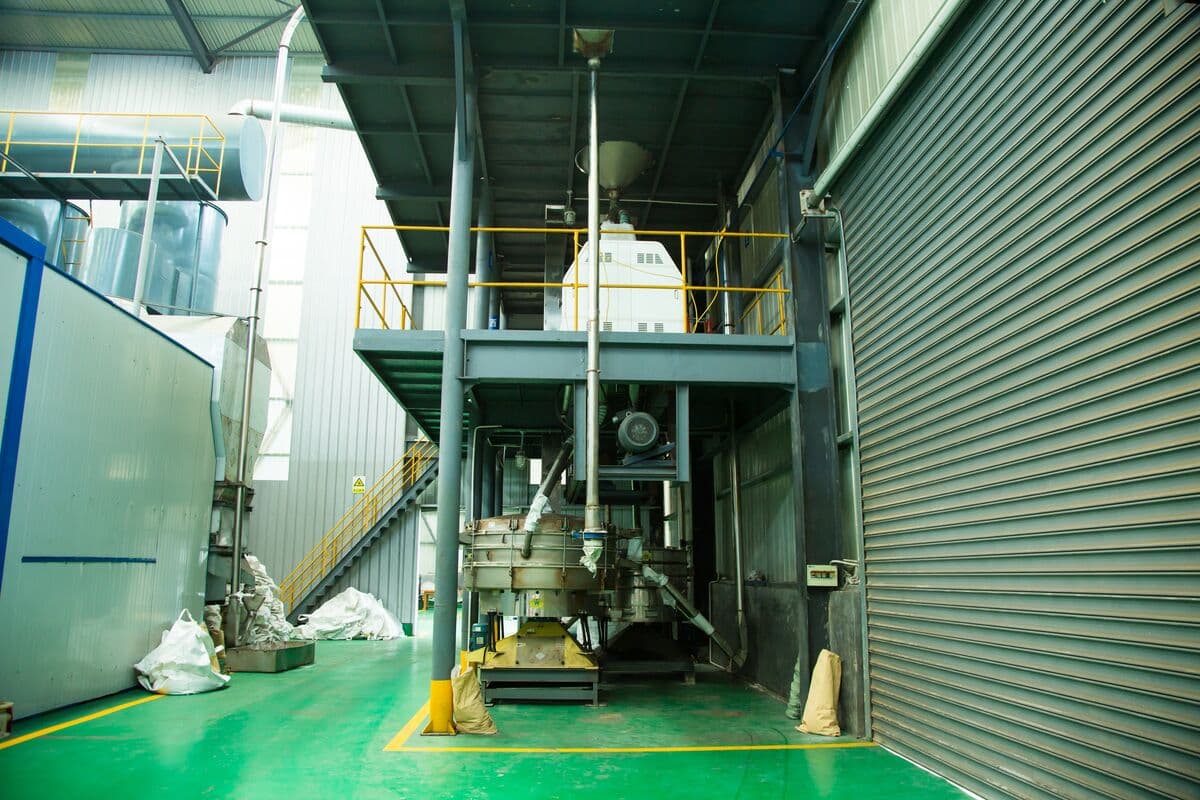
Our EOR Production and QA
EOR-grade HPAM is the most demanding product we make. We run it on a dedicated line with:
- Confirmed oilfield-grade availability, with TDS, COA, SDS, and shipment document support from our Xinxiang team
- Three-stage QC: acrylamide monomer purity (≥99.5%), mid-polymerization intrinsic viscosity, final product (MW, hydrolysis, FR, residual monomer, solid content ≥90%)
- Filterability guarantee: FR ≤1.3 at 1.2 µm on every shipped lot, with COA attached
- Documents/QC: TDS, SDS, batch COA, FR data when required, and document confirmation for produced-water discharge grades
- Export: multiple export markets, export orders out of Qingdao and Shanghai
For deep background on molecular weight selection and how MW maps to viscosity efficiency, see our PAM molecular weight guide. For bulk pricing on EOR-grade orders, our 2026 price guide has current FOB numbers.
Frequently Asked Questions
How long does a polymer flood take to show results?
Polymer response time depends on well spacing and injection rate. For a typical 5-spot pattern with 200m well spacing, expect 6-12 months from first polymer injection to seeing reduced water cut at the producers. Full incremental oil recovery takes 3-5 years. This is not a quick fix — it is a long-term investment that pays off over the remaining field life.
Can polymer flooding work in carbonate reservoirs?
Yes, but with limitations. Carbonates typically have higher temperature (80-120°C), higher salinity (50,000-200,000 ppm TDS), and higher calcium content (500-2,000 ppm Ca²⁺). Standard HPAM fails in these conditions. You need AMPS-modified grades (our AMPS-HPAM) or hydrophobically associating polymers. Cost per kg is 2-3× higher, but the incremental oil value in carbonate reservoirs (often light crude, $70-80/bbl) justifies it.
What is the difference between polymer flooding and gel treatment?
Polymer flooding is a sweep-efficiency process — you inject a continuous bank of polymer solution (0.3-0.5 PV) to displace oil. Gel treatment is a conformance process — you inject a small volume (100-5,000 bbl) of crosslinked polymer into thief zones to block water channeling. Different problems, different solutions. Many fields use both: gel treatment first to fix the worst channels, then polymer flood for sweep improvement.
How do you handle polymer degradation during storage and mixing?
Three degradation pathways: (1) Mechanical — avoid centrifugal pumps, use progressive cavity. (2) Chemical — dissolved oxygen attacks the polymer backbone. We recommend nitrogen-blanketed mixing tanks and oxygen scavengers (sodium bisulfite, 5-10 ppm). (3) Biological — bacteria eat the polymer. Add biocide (formaldehyde 100-200 ppm or isothiazolinone) to the make-up water. With proper handling, polymer solution maintains >90% of initial viscosity for 7-14 days in the surface system.
What is your minimum order for EOR pilot projects?
500 kg for screening and core-flood testing. For a field pilot (typically 500-2,000 tonnes over 12-24 months), we offer staged delivery schedules — monthly shipments matched to injection rate. This avoids warehouse costs and ensures fresh product. Payment terms are negotiable for pilot-scale commitments with major operators.
Ordering
MOQ is 500 kg for pilot and screening work, 25-tonne container loads for field deployment. Lead time 10-14 days for EOR grades (longer QA cycle than standard PAM). We ship 25 kg multi-wall paper bags palletized, or 500 kg bulk bags for large campaigns.
Before ordering, send us the reservoir data: depth, temperature, permeability, porosity, connate water TDS and hardness, injection brine TDS and hardness, crude viscosity at reservoir temperature, and target polymer viscosity. We send back a grade recommendation and jar-test-ready samples.
WhatsApp +86 187-3759-0940 or request a quote. Our EOR technical team includes two reservoir engineers, so the specs conversation goes faster than with pure traders.
Get a Quote
Our factory in Xinxiang produces confirmed grade availability across core APAM, CPAM, NPAM, and PHPA products. MOQ 500kg, delivery 7-10 days standard. Contact us for pricing and free sample:
- WhatsApp: +86 187-3759-0940
- Email: info@chinapolyacrylamide.com
Recommended Product Grades
For the application discussed above, these are the polyacrylamide grades we ship most often:
- PHPA oilfield-grade polyacrylamide
- APAM High Molecular Weight grade
- FLOPAAM 3630S equivalent — the grade most often named on polymer flooding specifications
See the full range of oilfield and gas industry applications for equipment context and selection criteria across this industry.
Not sure which is right for you? Try our PAM Selector tool or request a quote.