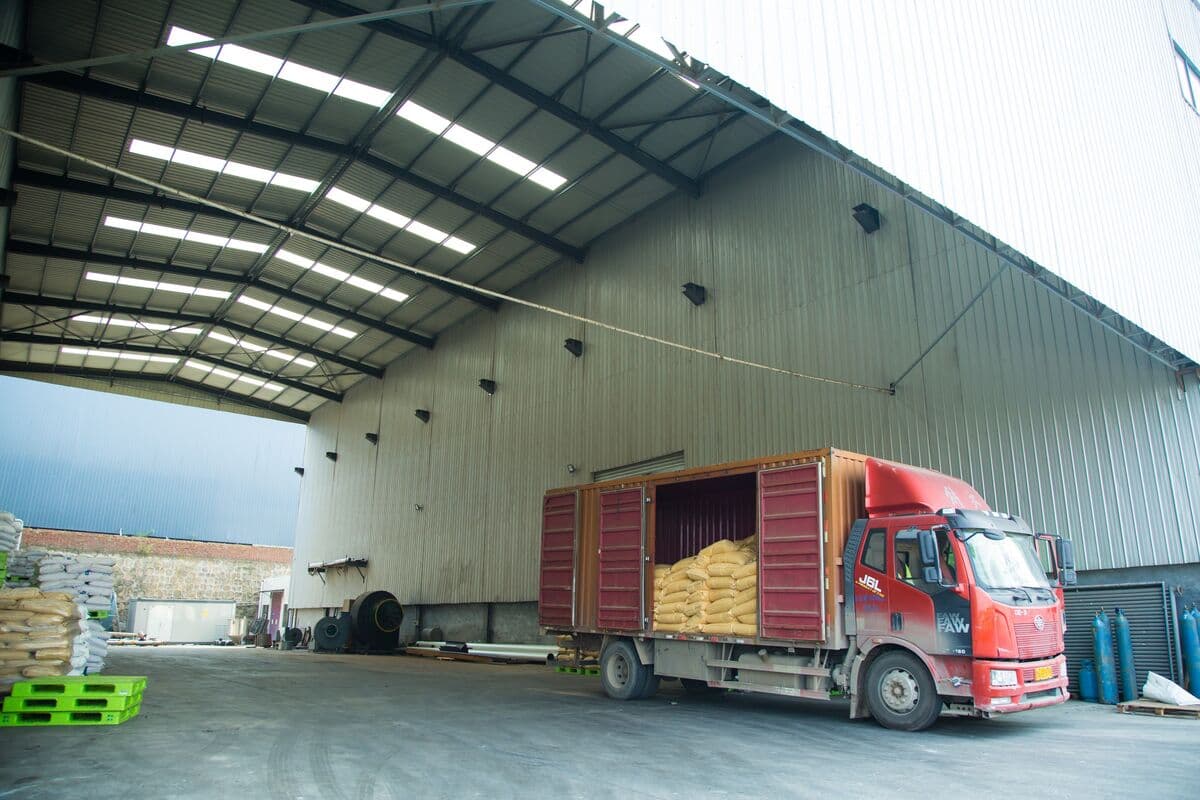
Brazil is one of the world's largest water treatment markets — and one of the most underserved when it comes to PAM supply. We ship to Brazilian mines and WWTPs from our Henan factory, and the pattern we see quoted against us is consistent: operators paying a 25–40% premium for European PAM because they don't know there's a direct-from-factory alternative at the same quality. Polyacrylamide (PAM) is the flocculant of choice across Brazil's water treatment sector, and ChinaPAM supplies Brazilian operators with reliable, cost-effective flocculants backed by Portuguese-language technical support.
| Application Sector | Primary PAM Type | Typical Dosage | Key Players |
|---|---|---|---|
| Iron ore mining (tailings) | Anionic APAM 18–22M Da | 20–50 g/t | Vale, Samarco, local distributors |
| Municipal wastewater (WWTP) | Anionic APAM 12–18M Da | 5–15 g/t | SABESP, CEDAE, regional utilities |
| Phosphate mining (acid mine drainage) | Nonionic NPAM 8–12M Da | 10–25 g/t | Mosaic, Yara, regional operators |
| Oil & gas produced water | Cationic CPAM 5–10M Da | 15–40 g/t | Petrobras, independent operators |
| Sugar mill wastewater | Anionic APAM 15–20M Da | 8–20 g/t | Regional mills, cooperatives |
Why Brazil Is a Strategic PAM Market
Brazil's polyacrylamide market is growing at 6–8% annually, driven by iron ore mining expansion (Vale/Samarco consuming thousands of tonnes for tailings), municipal WWTP upgrades to meet CONAMA discharge standards, and Petrobras pre-salt produced water treatment — creating demand for 50,000+ tonnes of PAM annually across mining, municipal, and industrial sectors.
The growth drivers are stacking up fast:
- Mining expansion: Vale and Samarco operate some of the world's largest iron ore and copper mines, consuming thousands of tonnes of PAM annually for tailings management.
- Municipal infrastructure: Cities like São Paulo, Rio de Janeiro, and Brasília are upgrading wastewater treatment capacity to meet CONAMA discharge standards.
- Agricultural processing: Brazil's sugar, ethanol, and palm oil industries generate massive wastewater volumes requiring flocculant treatment.
- Oil & gas: Petrobras and independent operators in the pre-salt fields require PAM for produced water treatment.
Most Brazilian operators currently source PAM from European suppliers (BASF, SNF) or local distributors who mark up 30–50%. We offer the same quality at 20–30% lower cost, with direct supply relationships and technical support in Portuguese. No middlemen, no mystery sourcing.
PAM Grades for Brazilian Applications
Brazilian PAM applications span five major sectors requiring distinct grades: iron ore tailings (anionic APAM 18–22M Da at 20–50 g/t), municipal WWTPs (APAM 12–18M Da at 5–15 g/t), phosphate acid mine drainage (nonionic NPAM 8–12M Da at pH 2–4), oil & gas produced water (cationic CPAM 5–10M Da), and sugar mill wastewater (APAM 15–20M Da at 8–20 g/t).
Iron Ore Tailings Thickeners
Vale's Minas Gerais and Pará operations are the largest PAM consumers in Brazil — we're talking thousands of tonnes per year just for tailings management. Iron ore tailings are highly abrasive with significant clay content, requiring high molecular weight anionic PAM (18–22 million Da) at 25–35% charge density.
Our high molecular weight APAM has proven performance at multiple Brazilian thickener facilities. Typical dosage: 20–50 g/t dry solids, depending on clay mineralogy and thickener design. We provide jar test samples and technical consultation to optimize for your specific ore type.
Municipal Wastewater Treatment
Brazilian municipal WWTPs typically use medium molecular weight anionic PAM (12–18 million Da) at 20–30% charge density for primary and secondary clarification. SABESP and CEDAE are major consumers. We've supplied both directly — our PAM meets all Brazilian environmental standards and regulated-use document review requirements for potable water contact.
Acid Mine Drainage (Phosphate Mining)
Phosphate mining in the Triângulo Mineiro region generates acidic drainage (pH 2–4) that kills most flocculants. Anionic PAM won't work at that pH — the charge collapses. You need nonionic PAM for reliable flocculation in AMD. Our nonionic PAM for mineral processing performs consistently across pH 2–11 and is the correct choice for AMD treatment ponds.
Supply Chain and Logistics to Brazil
ChinaPAM ships to Brazil via two routes: full containers (20 tonnes, 28–35 days transit from Shanghai/Qingdao to Santos) at minimum 10 tonnes, or consolidation shipments (35–45 days, minimum 500 kg) — with typical order-to-delivery of 35–50 days including customs clearance at Santos or Rio de Janeiro ports.
We ship through two primary routes:
- Direct shipment: Full containers (20 tonnes) from Shanghai or Qingdao to Santos Port (São Paulo) or Rio de Janeiro. Transit time: 28–35 days. Minimum order: 10 tonnes.
- Consolidation shipment: Partial containers combined with other shipments to reduce freight cost. Transit time: 35–45 days. Minimum order: 500 kg.
We work with established freight forwarders in Brazil and handle all customs documentation. Typical lead time from order confirmation to delivery in São Paulo: 35–50 days for direct shipment, 45–60 days for consolidation.
For urgent requirements, we can arrange air freight to Rio de Janeiro or São Paulo (transit time: 5–7 days) at premium freight cost.
How to Evaluate Our APAM on Iron Ore Tailings
We do not claim an installed base at named Brazilian mining operations. What we offer instead is a structured trial you run on your own thickener, against your current product, so the numbers you act on are yours rather than ours.
For a Minas Gerais or Pará iron ore tailings duty, a representative evaluation looks like this:
- Grade to test: anionic APAM, 18–22 million Da, 25–35% charge density
- Bench stage: jar tests against your incumbent at matched dose, on fresh tailings slurry
- Metrics to log: thickener underflow solids, overflow turbidity (NTU), settling rate, dose per tonne of dry solids
- Plant stage: single-thickener trial before switching the whole circuit
We supply free samples with COA and dissolution guidance for this purpose. Typical performance ranges for this grade class are given above as representative process ranges, not as results measured at a specific customer site.
Regulatory Compliance in Brazil
PAM supplied to Brazil must be reviewed against CONAMA Resolution 430/2011 discharge standards, buyer specifications, and any potable-water-contact document requirements. Residual acrylamide monomer limits should be confirmed by COA and, where required, by buyer-arranged third-party testing before approval.
All PAM supplied to Brazil must comply with:
- CONAMA Resolution 430/2011: Environmental discharge standards for treated wastewater
- ABNT NBR 12040: Brazilian standard for flocculants in water treatment
- Potable-water contact documents: Required documents must be confirmed by grade, batch, and project before municipal water applications
- Residual monomer <0.05%: Environmental requirement for all PAM grades
For Brazil orders, we provide Certificate of Analysis (COA) and shipment documents before dispatch, then confirm any regulated-use document requirement by grade and batch. For water-treatment applications, residual acrylamide monomer should be controlled at the source and verified against the buyer's required limit. Third-party inspection can be arranged at buyer request before shipment.
Dissolution & Dosing Best Practices for Brazilian Plants
Proper PAM dissolution in Brazilian conditions requires 45–60 minutes at 0.1–0.3% concentration with controlled mixing (200–400 RPM initial wetting, then 60–100 RPM maturation) — dumping powder directly into the process stream wastes 30–50% of chemical effectiveness due to incomplete hydration and fish-eye formation.
The biggest mistake we see at Brazilian plants: dumping PAM powder directly into the process stream. This wastes 30-50% of your chemical. I've walked into plants where they're complaining about PAM performance, and the problem is literally just dissolution technique.
Key parameters for Brazilian conditions:
- Water temperature: Brazil's warm climate (25-35°C ambient) actually helps — dissolution is faster than in cold climates. But don't exceed 40°C or you'll degrade the polymer chain
- Mixing speed: 200-400 RPM during initial wetting, then reduce to 60-100 RPM for maturation. High shear destroys molecular weight
- Aging time: Minimum 45 minutes for powder grades, 20 minutes for emulsion. Under-aged solution gives 40-60% less performance
- Solution shelf life: Use within 24-48 hours. Brazilian heat accelerates degradation — keep solution tanks shaded or insulated
For step-by-step dissolution procedures, see our PAM dissolving method guide. If you're choosing between powder and emulsion formats for your Brazilian operation, our emulsion vs powder comparison breaks down the cost and handling tradeoffs.
Cost Analysis: China PAM vs European Suppliers
Brazilian buyers typically pay a 25–40% premium for European PAM (SNF, BASF, Kemira) at $2,400–3,200/ton CIF Santos versus $1,500–2,100/ton for comparable ChinaPAM grades. On a 200 ton/year operation that price gap works out to roughly $180,000–220,000 per year. These are indicative market ranges — ask both suppliers for a current quote on your exact grade and volume.
Here's the real cost breakdown for a 200 ton/year operation:
- European PAM CIF Santos: $2,400-3,200/ton depending on grade
- ChinaPAM CIF Santos: $1,500-2,100/ton for equivalent grades
- Indicative gap on 200 tons: $180,000-220,000 USD per year
- Performance: matched on paper when MW, charge density and residual monomer are equivalent — confirm on your slurry with side-by-side jar tests before switching
The savings come from lower manufacturing costs (energy, labor, raw materials) — not from cutting quality. Our factory in Xinxiang produces confirmed grades under documented quality control with batch COA support. According to WEF standards for polymer procurement, the key quality indicators are molecular weight consistency, charge density accuracy, and residual monomer content — all of which are stated in writing on every COA.
For current market pricing across all grades, check our 2026 PAM price guide.
One thing Brazilian buyers often overlook: freight cost per ton drops significantly at full container load (20 tons). A 5-ton order costs roughly $180/ton in freight to Santos, while a 20-ton FCL drops to $90/ton. If your annual consumption exceeds 40 tons, quarterly 10-ton shipments are more economical than monthly 3-ton orders. We help Brazilian customers plan shipment schedules to minimize landed cost.
Storage in Brazilian warehouses requires attention to humidity. PAM powder absorbs moisture above 60% RH, forming lumps that dissolve poorly. Keep bags on pallets, off concrete floors, in covered warehouses with ventilation. Shelf life in proper Brazilian warehouse conditions: 18-24 months. For detailed storage guidance, see our PAM shelf life and storage guide.
Technical Support in Portuguese
ChinaPAM provides Portuguese-language technical support for Brazilian operations including jar testing, on-site dissolution training, flocculation troubleshooting, and quarterly performance reviews — because selling PAM without technical backup is just selling powder.
We provide full technical support in Portuguese:
- Jar testing and dosage optimization for your specific wastewater
- On-site training for PAM dissolution and dosing procedures
- Troubleshooting for flocculation performance issues
- Quarterly performance reviews and product recommendations
Contact our Brazil specialist via WhatsApp or email for a free consultation.
FAQ
What is the minimum order quantity for shipment to Brazil?
For consolidation shipments: 500 kg. For direct container shipment: 10 tonnes. We can arrange partial container shipments if you need 2–5 tonnes.
Do you have a distributor in Brazil?
We work directly with end-users and do not currently have an exclusive distributor in Brazil. This allows us to offer competitive pricing and direct technical support. We can connect you with freight forwarders and customs brokers in Santos and Rio de Janeiro if needed.
Can you provide samples for jar testing?
Yes. We provide 5 kg samples of recommended PAM grades for free jar testing. Shipping cost to Brazil is approximately $80–120 USD via express courier (5–7 days). After jar testing, if you place a commercial order, we credit 50% of the sample shipping cost against your first invoice.
What payment terms do you offer?
Standard terms: 50% deposit, 50% on bill of lading. We also accept L/C (letter of credit) for orders >5 tonnes. For established customers, we offer 30-day net terms after the first successful shipment.
How do I run a jar test to compare your PAM against my current supplier?
Simple. Send us 20 liters of your raw water or tailings slurry. We'll run a full jar test series at our lab — testing 3-5 PAM grades at multiple dosages — and send you a video report showing settling curves, turbidity readings, and recommended dosage. Total turnaround: 7-10 days from sample receipt. See our jar test procedure guide for the methodology we use.
Can your PAM handle Brazil's high-turbidity rainy season water?
Yes. During rainy season, raw water turbidity in Brazilian rivers can spike from 50 NTU to 2,000+ NTU overnight. Our high-MW APAM (18-22M) handles these spikes by increasing dosage 2-3× from baseline. The key is having a flexible dosing system and keeping adequate stock. We recommend Brazilian plants maintain 2-3 months of PAM inventory to avoid supply gaps during peak demand.
Supply PAM to Your Brazilian Operation
Tell us your application, current consumption, and performance requirements. We'll provide a sample, technical consultation, and a competitive quote.
Recommended Product Grades
For the application discussed above, these are the polyacrylamide grades we ship most often:
Compare global suppliers in our Top 10 PAM Manufacturers guide. Ready to order? View factory pricing and MOQ or request a quote.
Standards Note
According to CONAMA discharge-control practice, chemical treatment should be evaluated against the plant permit and final effluent target.
Per ABNT procurement practice, imported chemical documentation should match the shipped batch, consignee, and intended industrial use.