We supply PHPA drilling mud polymer to oilfields in Oman, UAE, Brazil, and Kazakhstan. The biggest mistake we see? Operators using the same PHPA grade for every well. A horizontal well in the Middle East at 115°C needs different polymer than a vertical well at 80°C. A reactive shale formation needs different polymer than a sandstone. Here is what we use and why it matters.
What PHPA Does in Drilling Mud
| Function | PHPA Grade | MW | Dosage | Temp Limit |
|---|---|---|---|---|
| Viscosifier | High MW PHPA | 15-25M | 0.5-2.0 kg/m³ | 120°C |
| Shale inhibitor | Low-medium MW PHPA | 6-12M | 1.0-3.0 kg/m³ | 150°C |
| Fluid loss reducer | Medium MW PHPA | 8-15M | 1.0-2.5 kg/m³ | 130°C |
1. Viscosifier: Carrying Cuttings
Drilling mud needs viscosity to suspend and transport cuttings from bottom to surface. Without it, cuttings settle in the annulus and cause stuck pipe. High MW PHPA (15-25M) is the most cost-effective viscosifier for water-based muds.
At just 1.0 kg/m³, our 18M PHPA increases apparent viscosity 3-8x. It also provides excellent shear-thinning behavior — low viscosity at the bit (fast ROP) and high viscosity in the annulus (good cuttings transport). This is why PHPA outperforms xanthan gum in most wells.
We produce 18M and 20M grades specifically for viscosification. Both dissolve in under 60 minutes and work across pH 6.5-8.5 without adjustment.
2. Shale Inhibitor: Preventing Washout
Reactive shales (montmorillonite, smectite) absorb water and swell. This causes wellbore instability, sloughing, and stuck pipe — the #1 cause of non-productive time (NPT) in drilling according to IADC (International Association of Drilling Contractors) incident data. PHPA prevents this through two mechanisms: encapsulation (polymer wraps around shale cuttings) and osmotic pressure reduction.
For shale inhibition, lower MW PHPA (6-12M) works better because shorter chains penetrate shale pores more effectively. Dosage: 1.0-3.0 kg/m³ depending on shale reactivity. In reactive formations like Marcellus or Eagle Ford, PHPA-based muds reduce washout by 30-50% compared to untreated water-based muds. See our molecular weight guide for how MW affects penetration.
We produce 8M and 10M grades for shale inhibition. These are our most popular grades for Middle East and Southeast Asia wells.
3. Fluid Loss Reducer: Protecting Formations
Drilling fluid invades permeable formations. Excessive fluid loss causes formation damage, differential sticking, and lost circulation. Per API RP 13B-1 testing standards, medium MW PHPA (8-15M) reduces API fluid loss by 40-60% by forming a thin, tough filter cake.
Typical results: API fluid loss drops from 15-25 mL/30min to 6-10 mL/30min. Filter cake thickness drops from 3-5mm to 1-2mm. The cake is soft and easily removable — important for production zones where you do not want permanent damage.
Temperature Stability: The Critical Factor
Standard PHPA degrades above 120°C due to hydrolysis of amide groups. For deeper wells (4,000-6,000m) where bottomhole temperature reaches 130-180°C, standard PHPA fails. We offer modified grades:
- <120°C: Standard PHPA (18M, 20M, 10M grades)
- 120-150°C: AMPS-modified PHPA (sulfonated monomer resists thermal hydrolysis)
- 150-180°C: AMPS/NVP terpolymer (multiple thermal-stable monomers)
We test every high-temperature grade in an aging cell at actual bottomhole temperature for 24 hours. If viscosity drops more than 10%, we do not ship it. This is why our high-temp grades work where competitors' fail.
Worked Example: Horizontal Well, 4,200m MD, Reactive Shale
Modelled scenario — reactive shale, 115°C bottomhole, offset well lost 3 days to NPT
The Problem
Take an offset well drilled with generic water-based mud, where shale washout in the reactive section cost 3 days to stuck pipe. The question on the next well is what mud system avoids repeating it.
How We Would Specify It
A KCl/PHPA system: 10M PHPA (shale inhibitor grade) at 2.0 kg/m³, plus 18M PHPA at 1.0 kg/m³ for viscosity. At 115°C bottomhole, standard PHPA is adequate — no thermally stabilised grade needed, which matters for budget. We supply both grades with technical support on the mix.
Modelled Outcome
PHPA Water-Based Mud vs Oil-Based Mud
Oil-based muds (OBM) provide excellent shale inhibition, but at massive cost and environmental penalty. PHPA water-based muds are increasingly replacing OBM:
| Factor | PHPA Water-Based | Oil-Based |
|---|---|---|
| Cost per m³ | $50-150 | $200-500 |
| Shale inhibition | Good (70-85% of OBM) | Excellent |
| Cuttings disposal | Direct discharge (most regions) | Requires treatment ($50-200/ton) |
| Environmental impact | Low (biodegradable) | High |
| Formation damage | Moderate (manageable) | Low |
For wells below 120°C with moderate shale reactivity, PHPA water-based mud delivers 70-85% of OBM performance at 40-60% lower total cost. The environmental savings (no cuttings treatment) often tip the economics further in favor of water-based systems. The choice between emulsion and powder PHPA also affects rig logistics.
Our Quality Control for Drilling Grades
Oilfield polymers demand tighter specs than general industrial grades. Every batch of our drilling PHPA goes through 3-tier QC:
- In-process monitoring: Real-time polymerization temperature (±0.5°C tolerance), initiator ratio tracking, viscosity monitoring
- Batch testing: MW (±0.5M tolerance), solid content (≥90%), dissolution time (≤90 min), filterability ratio, residual monomer (≤0.05%)
- Pre-shipment inspection: Packaging integrity, moisture protection, container loading supervision
We retain samples from every batch for 24 months. If you have a performance issue in the field, we can pull the retained sample and compare against your returned sample.
How to Select the Right Grade
- Define the primary function: Viscosity? Shale inhibition? Fluid loss? Or all three?
- Check bottomhole temperature: Standard PHPA below 120°C; AMPS-modified above 120°C
- Determine salinity: High TDS (>50,000 ppm) requires salt-tolerant formulations
- Match molecular weight: Higher MW = more viscosity but slower dissolution
- Choose format: Powder for cost efficiency, emulsion for rapid hydration on rig
Not sure which grade fits your well? Send us your mud program or offset well data. Our lab team recommends the optimal product within 24 hours.
Pricing (2026, FOB China)
- PHPA viscosifier (15-25M MW): $1,800-2,200/MT
- PHPA shale inhibitor (6-12M MW): $1,500-1,800/MT
- AMPS-modified PHPA (high temp): $2,500-3,000/MT
MOQ: 500kg first order. FCL (20MT+): 10-12% discount. Delivery: 7-10 days standard; urgent timing can be checked against China factory stock by grade. For broader market context, see the 2026 PAM price guide.
Send us your mud program
Tell us your well depth, bottomhole temperature, formation type, and current mud system. We will recommend the right PHPA grade and send free samples for lab testing.
WhatsApp: +86 187-3759-0940 · Email: info@chinapolyacrylamide.com
PHPA vs Xanthan Gum vs CMC: Which Drilling Additive?
PHPA is not the only polymer used in water-based muds — xanthan gum and CMC (carboxymethyl cellulose) are common alternatives. Each has a different job. Mixing them up is one of the most expensive mistakes we see on rigs.
| Additive | Primary Function | Temp Limit | Salt Tolerance | Cost (FOB China) | Best For |
|---|---|---|---|---|---|
| PHPA | Viscosifier + shale inhibitor + fluid loss | 120°C (standard) / 150°C (AMPS-modified) | Good up to 50,000 ppm TDS; salt-tolerant grades to 150,000 ppm | $1,500–2,200/MT | Reactive shale, horizontal wells, KCl mud systems |
| Xanthan Gum | Viscosifier (shear-thinning) | 120°C | Excellent — stable in saturated brine | $3,500–5,000/MT | Salt/brine muds, completion fluids, high-salinity formations |
| CMC (LV/HV) | Fluid loss reducer | 100°C | Moderate — degrades above 30,000 ppm TDS | $800–1,200/MT | Shallow wells, freshwater muds, low-temperature formations |
The practical takeaway: PHPA does three jobs at once (viscosity + shale inhibition + fluid loss) at a cost between CMC and xanthan gum. For most water-based mud programs in reactive shale formations, PHPA is the most cost-effective single additive. Xanthan gum is worth the premium only when you are drilling in saturated brine or completion fluids where PHPA's salt tolerance falls short.
How to Dissolve PHPA on the Rig Without Clumping
Clumping (fish-eyes) is the most common PHPA problem on rigs — and it is entirely avoidable. The cause is always the same: powder hits water before it has dispersed, the outer layer hydrates instantly and forms a gel skin that traps dry powder inside.
- Water temperature: 20–40°C. Cold water (<15°C) slows hydration and increases clumping risk. Hot water (>50°C) causes surface gelation before the powder disperses.
- Start the mixer first. Get the water moving at 200–300 rpm before adding any powder. Never add powder to still water.
- Add powder slowly into the vortex. Sprinkle at the edge of the vortex, not the center. Rate: no more than 1 kg per minute for a 1,000-liter mixing tank.
- Reduce speed after addition. Once all powder is in, drop to 50–80 rpm for the hydration period. High shear after addition breaks polymer chains and reduces MW.
- Hydration time: 60–90 minutes minimum. Do not use the solution before it is fully hydrated — partially dissolved PHPA gives 30–50% lower performance.
- Target concentration: 0.3–0.5% (3–5 g/L). Higher concentrations are harder to pump and mix unevenly into the mud.
If you are seeing persistent clumps despite following this procedure, the issue is usually powder that has absorbed moisture during storage. Check that bags are sealed and stored below 35°C.
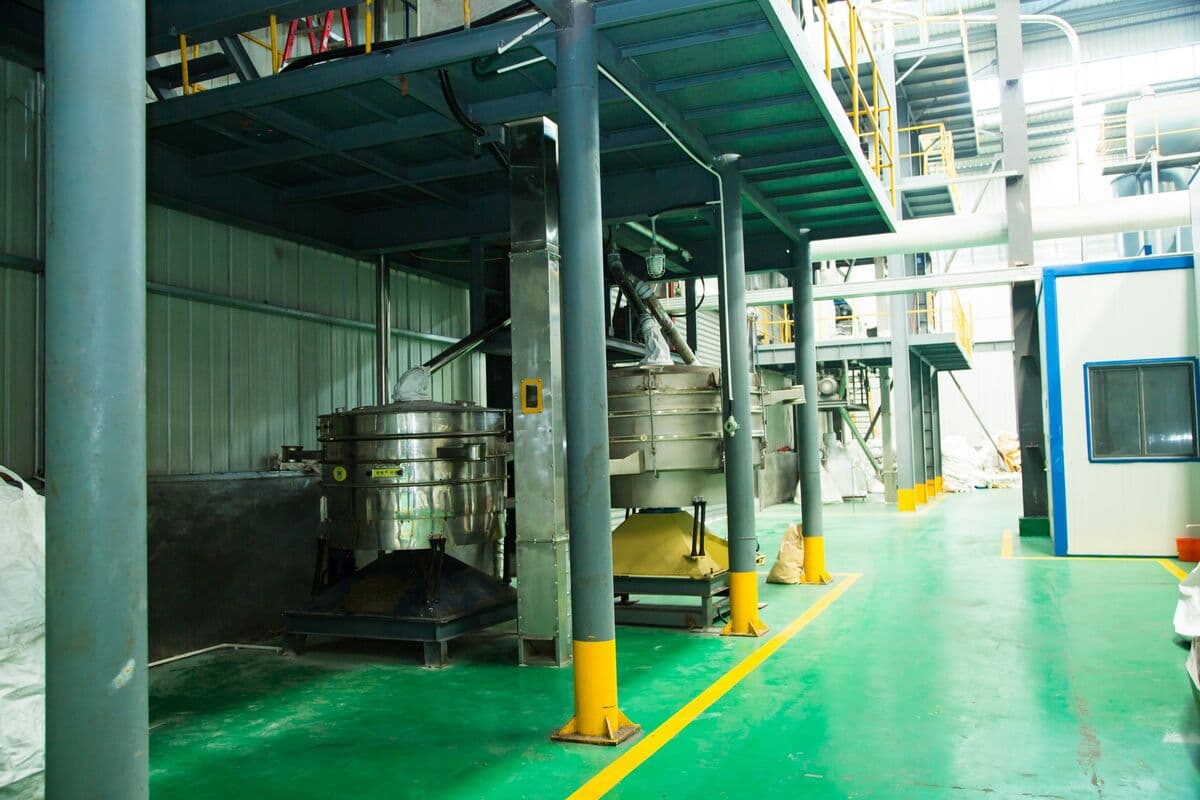
Our drilling-grade PHPA is packaged in double-layer PE-lined kraft bags with desiccant inserts, specifically to prevent moisture uptake during sea freight to humid regions (Middle East, Southeast Asia). From our Xinxiang facility — documented production and warehouse materials — we ship to rig sites in Oman, UAE, Kazakhstan, and Brazil with full COA and MSDS documentation.
Frequently Asked Questions
Can I use the same PHPA grade for vertical and horizontal wells?
Not recommended. Horizontal wells have longer exposure time in the reactive section and higher equivalent circulating density (ECD). They typically need lower-MW PHPA (10-12M) for shale inhibition to avoid excessive viscosity buildup in the lateral. Vertical wells can use higher-MW grades (18-20M) for better cuttings transport in the annulus. We produce both and can recommend based on your well profile.
How much PHPA do I need per well?
Rough estimate: 5-15 tons per well depending on depth, diameter, and mud volume. A typical 4,000m horizontal well with 800 m³ active mud volume at 1.5 kg/m³ PHPA concentration needs about 1.2 tons initially, plus 0.3-0.5 tons for maintenance treatments during drilling. We recommend ordering 20% extra as contingency — running out of polymer mid-well is far more expensive than having surplus.
What is the shelf life of PHPA powder?
24 months in original sealed packaging stored below 35°C and away from direct sunlight. In hot climates (Middle East, West Africa), store in air-conditioned warehouses or shaded containers. Once opened, use within 30 days. Dissolved PHPA solution: use within 24 hours — it degrades rapidly once hydrated.
Related
- Complete PAM for oil drilling guide
- Polyacrylamide in fracturing fluid: friction reducer, gel & fluid loss
- Enhanced oil recovery (EOR) with PAM
- PAM supplier China: MOQ & pricing
Recommended Product Grades
For the application discussed above, these are the polyacrylamide grades we ship most often:
- PHPA oilfield-grade polyacrylamide
- APAM High Molecular Weight grade
- Magnafloc 155, 156 and 1011 equivalent — 1011 is the grade most often named on drilling fluid specifications
- FLOPAAM 3630S equivalent — a different duty entirely: polymer flooding, where the polymer is a viscosifier rather than a flocculant
See the full range of oilfield and gas industry applications for equipment context and selection criteria across this industry.
Not sure which is right for you? Try our PAM Selector tool or request a quote.
For a complementary view, see our PAM in oil drilling overview.