If you work in oil and gas, you already know PAM. It is in your drilling mud, your frac fluid, your EOR injection, and your produced water treatment. What you might not know is how much money you are leaving on the table by using the wrong grade. I have seen operators running standard 12M Da PHPA in reactive shale sections where a 6-10M Da grade would have prevented every bit-balling incident they had that quarter. And I have seen EOR projects fail because someone bought "high molecular weight" polymer without checking whether it could survive their 90°C reservoir.
Quick Overview: PAM in Oil Drilling
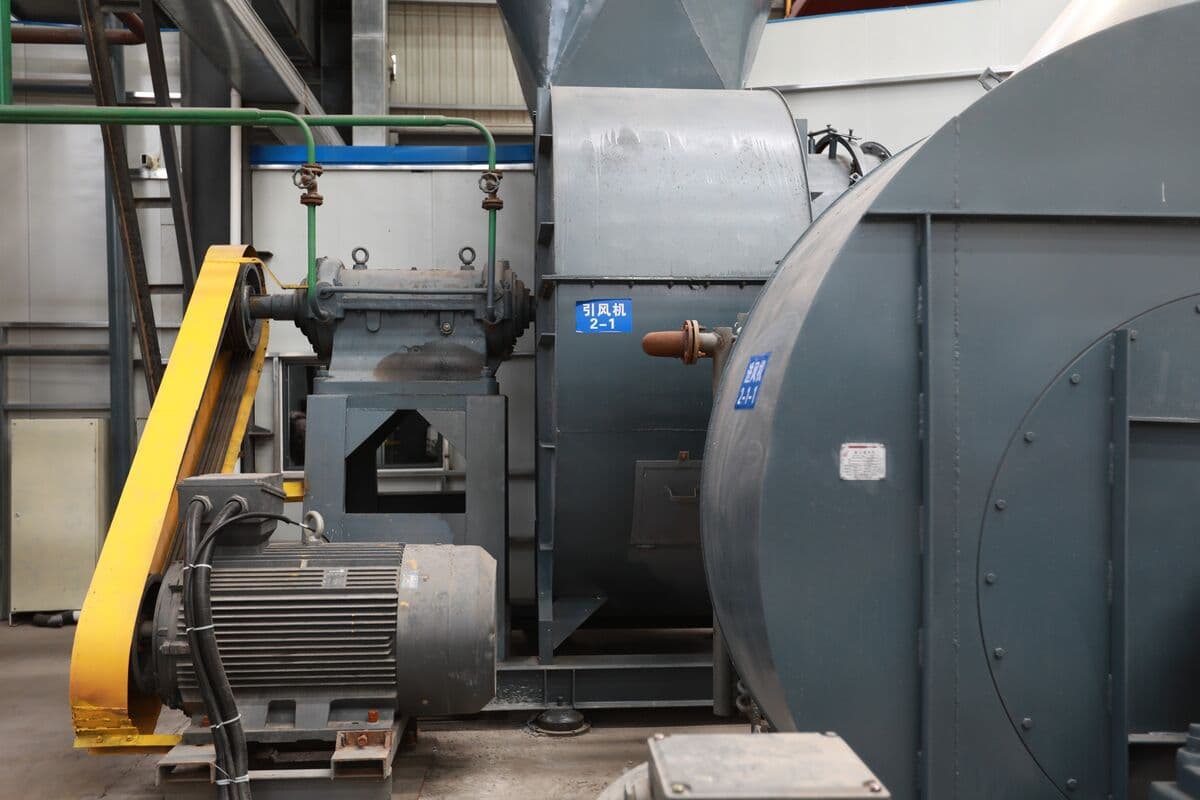
Oil drilling equipment and pump systems
Polyacrylamide serves five distinct functions in oil and gas operations — drilling fluid viscosification (PHPA at 15-25M Da, 0.5-2.0 kg/m³), shale inhibition (low-MW PHPA at 6-10M Da, 1-3 kg/m³), enhanced oil recovery (ultra-high MW at 20-28M Da, 1000-2500 ppm), friction reduction in hydraulic fracturing (emulsion at 12-18M Da, 0.25-1.0 gpt), and produced water treatment (CPAM at 8-15M Da, 2-10 ppm) — each requiring fundamentally different polymer architecture.
| Application | PAM Type | Molecular Weight | Typical Dosage |
|---|---|---|---|
| Drilling Fluid Viscosifier | APAM / Partially Hydrolyzed (PHPA) | 15-25 million Da | 0.5-2.0 kg/m³ |
| Shale Inhibitor | Low-MW PHPA | 6-10 million Da | 1.0-3.0 kg/m³ |
| Enhanced Oil Recovery (EOR) | Ultra-high MW APAM | 20-28 million Da | 1000-2500 ppm |
| Friction Reducer (Fracking) | Emulsion APAM | 12-18 million Da | 0.25-1.0 gpt |
| Produced Water Treatment | CPAM | 8-15 million Da | 2-10 ppm |
1. PAM as Drilling Fluid Additive
Partially hydrolyzed polyacrylamide (PHPA) at 15-25 million Da molecular weight and 25-30% hydrolysis degree increases drilling mud viscosity 3-8× at 1.0 kg/m³ concentration while reducing fluid loss by 40-60% and encapsulating reactive shale to prevent clay swelling — making it the standard viscosifier in water-based drilling fluid systems where oil-based alternatives face environmental restrictions.
We have been shipping PHPA to drilling operations since 2009. The most common mistake we see? Operators using a single PHPA grade from spud to TD. Your top-hole reactive shale section needs a completely different polymer than your deeper, hotter intervals. A 6-10M Da grade at 1.5-3.0 kg/m³ handles shale inhibition in the top section, while your main hole needs 18-22M Da at 0.5-1.0 kg/m³ for viscosity and fluid loss control.
A common failure: repeated stuck pipe in a Miocene shale section while running 20M Da PHPA. High MW is excellent for viscosity and poor for shale encapsulation — the long chains cannot penetrate shale pore throats to seal them. The fix is counter-intuitive, which is why it gets missed: drop to an 8M Da grade at around 2.0 kg/m³ for that interval specifically, and carry viscosity elsewhere in the mud program.
Key performance indicators:
- Apparent viscosity increase: 3-8x at 1.0 kg/m³ concentration
- Fluid loss reduction: 40-60% compared to untreated mud
- Shale encapsulation: prevents clay swelling and bit balling
- Temperature stability: effective up to 120°C (for standard grades)
The apparent viscosity figure only means something with its test conditions attached, and on a rig the two that move it most are mud salinity and the shear rate you read it at. If your measured viscosity is coming in under what the data sheet suggests, work through hydration time, salinity and shear before changing product — our guide to PAM viscosity control and degradation covers how to tell a genuine batch problem from a measurement artefact.
2. Enhanced Oil Recovery (EOR)
Polymer flooding with ultra-high molecular weight PAM (20-28M Da) at 1000-2500 ppm concentration increases injected water viscosity to match reservoir oil mobility, improving sweep efficiency and recovering an additional 10-20% of original oil in place (OOIP) after conventional waterflooding — the mechanism works by eliminating viscous fingering that causes injected water to bypass 40-60% of the reservoir volume.
EOR is where the real money is in oilfield PAM. A single mature field polymer flood can consume 3,000-5,000 tons of polymer per year. According to SPE technical papers on polymer flooding, injectivity loss is the primary risk — our grades are designed with controlled molecular weight distribution to minimize screen-out at the wellbore face. We have been supplying EOR projects in the Middle East and South America where reservoir temperatures hit 60-90°C. The challenge at those temperatures is that standard HPAM starts losing viscosity within 24-48 hours above 85°C.
I had a client in Oman who tried standard 24M Da HPAM in a 92°C reservoir. Within two weeks, their injection viscosity dropped from 15 cP to 4 cP — basically expensive water at that point. We reformulated with our AMPS-co-acrylamide grade at 18M Da. Six months later, viscosity was still holding at 12 cP. The extra $400/ton for the sulfonated grade saved them from a $2M project failure.
For high-temperature reservoirs above 85°C, we recommend our sulfonated copolymer grades that maintain viscosity where standard HPAM degrades. The choice of emulsion vs powder format also matters at this scale — EOR projects typically use powder for cost reasons, but the dissolution infrastructure needs to handle 50-100 tons/day throughput.
3. Friction Reducer for Hydraulic Fracturing
PAM-based friction reducers for hydraulic fracturing fluid in emulsion form reduce turbulent pipe friction by 60-80% at 0.25-1.0 gallons per thousand gallons (gpt) dosage, enabling higher pump rates at lower surface pressure — our FR-series achieves 70%+ drag reduction in fresh water and 55%+ in 2% KCl brine, with full hydration in under 2 minutes compared to 60-90 minutes for powder PHPA that cannot keep pace with continuous frac pumping operations. For the three distinct roles PAM plays in frac fluid — friction reducer, gelling agent, and fluid-loss control — plus water-quality effects and grade selection, see our polyacrylamide in fracturing fluid guide.
The frac market is all about speed. You are pumping 80-100 barrels per minute through 5 inches of pipe. Every percent of friction reduction translates to lower horsepower requirements and faster stage completion. We have customers in the Permian Basin running our emulsion FR at 0.5 gpt who cut their average stage time by 12 minutes. Across a 40-stage well, that is 8 hours saved — real money when you are paying $50,000/day for a frac spread. Before committing to a grade, read how to spec and friction-loop qualify a slickwater friction reducer, since drag-reduction percentages only compare when the test water and pipe geometry match.
One thing I always tell new frac customers: do not try to save money by using powder PHPA instead of emulsion FR. I have seen it attempted three times. Every time, the powder cannot hydrate fast enough at the blender. You end up with partially dissolved polymer that gives maybe 20% drag reduction instead of 70%. The $200/ton you saved on chemical costs you just lost ten times over in pump time and fuel.
4. Produced Water Treatment
Cationic polyacrylamide (CPAM) at 8-15 million Da molecular weight and 30-50% charge density flocculates oilfield produced water contaminants — suspended solids, emulsified oil droplets, and dissolved organics — at 2-10 ppm dosage for removal via dissolved air flotation (DAF) or gravity settling, reducing oil-in-water from 50-200 mg/L to below 10 mg/L discharge limits.
Produced water is the unglamorous side of oilfield chemistry, but the volumes are staggering. A mature waterflood field produces 5-10 barrels of water for every barrel of oil. That water needs treatment before disposal or reinjection. We have customers in the Middle East treating 200,000+ barrels/day of produced water with our CPAM.
The tricky part with produced water is the oil content. Per API RP 13B guidelines on oilfield water treatment, free oil above 100 mg/L interferes with polymer performance — the oil coats the polymer chains and prevents them from bridging solid particles. If your produced water has high free oil, you need a primary oil-water separator upstream of the polymer dosing point. We have worked through this with several clients who were getting poor results because they were dosing polymer into water that still had 500+ mg/L free oil. Fix the upstream separation first, then the polymer works beautifully.
Need PAM for oilfield applications?
Free sample + jar test report. WhatsApp: +86 187-3759-0940
How to Select the Right Grade
Oilfield PAM grade selection depends on five parameters evaluated in sequence — application type (drilling/EOR/frac/water treatment), bottomhole temperature (standard HPAM below 85°C, sulfonated grades above), formation brine salinity (salt-tolerant formulations above 50,000 ppm TDS), target molecular weight (higher MW = more viscosity but slower dissolution and higher shear sensitivity), and physical format (powder for cost, emulsion for speed).
Here is how we walk customers through it:
- Define the application — drilling fluid, EOR, fracking, or water treatment? Each needs a fundamentally different polymer.
- Check temperature — standard HPAM works below 85°C; above that, you need sulfonated grades and the price goes up 20-40%
- Determine salinity — high TDS (>50,000 ppm) collapses standard HPAM chains. You need salt-tolerant formulations
- Match molecular weight — higher MW = more viscosity but slower dissolution and more shear sensitivity
- Choose format — powder for cost efficiency (90%+ active), emulsion for speed (30-40% active but instant hydration)
Not sure which grade fits your well conditions? Send us your mud report or water analysis on WhatsApp. Our lab team will recommend the optimal product within 48 hours — and we will send free samples for your own testing.
PHPA Grade Selection by Well Conditions
PHPA grade selection maps directly to bottomhole temperature, formation reactivity, and mud salinity — shallow fresh-water wells use standard 18-22M Da PHPA at 0.5-1.0 kg/m³, reactive shale sections need low-MW 6-10M Da at 1.5-3.0 kg/m³ for pore-throat penetration, HPHT wells above 150°C require sulfonated terpolymers at 12-15M Da, and deepwater risers need cold-water dispersible grades that hydrate at 2-15°C seawater temperatures.
I have put together this table from field feedback since 2009. It is not theoretical — these are the grades and dosages that actually work in the hole, not what looks good on a lab bench at 25°C.
| Well Type | BHT | Salinity | PHPA Grade | Dosage |
|---|---|---|---|---|
| Shallow water-based mud | <60°C | Fresh-low | Standard PHPA, 18-22M MW, 25% hyd. | 0.5-1.0 kg/m³ |
| Reactive shale (top-hole) | 40-90°C | Fresh-medium | Low MW PHPA, 6-10M, 30% hyd. | 1.5-3.0 kg/m³ |
| Onshore vertical/directional | 60-110°C | Medium (NaCl/KCl) | Standard PHPA, 18-22M MW, 25-30% hyd. | 0.8-2.0 kg/m³ |
| High-temperature (HT) | 110-150°C | Medium-high | AMPS-co-PHPA, 15-18M MW | 1.5-3.0 kg/m³ |
| High-pressure/high-temp (HPHT) | >150°C | High | Sulfonated copolymer, 12-15M MW | 2.0-4.0 kg/m³ |
| Saturated salt drilling | 60-120°C | Saturated NaCl | Salt-tolerant PHPA, 14-16M MW | 2.0-4.0 kg/m³ |
| Offshore deepwater | 2-15°C (mud line) | Sea water | Cold-water dispersible PHPA | 1.0-2.5 kg/m³ |
Temperature and Salinity Limits
Standard HPAM (acrylamide/acrylate copolymer) maintains viscosity to approximately 85°C in fresh water and 75°C in 50,000 mg/L brine before hydrolysis-driven chain scission causes 30-50% viscosity loss within 24-48 hours — AMPS-co-acrylamide extends the limit to 120°C with 5,000 mg/L Ca²⁺ tolerance, while sulfonated terpolymers survive 150°C in seawater with 15,000 mg/L Ca²⁺ tolerance.
This is where most oilfield polymer failures happen. Someone reads "high temperature stable" on a product sheet without checking what that actually means for their specific brine chemistry. Calcium is the killer — even 2,000 mg/L Ca²⁺ can precipitate standard HPAM at 80°C, turning your expensive polymer solution into a useless gel.
- Standard HPAM (acrylamide/acrylate) — stable to ~85°C in fresh water; ~75°C in 50,000 mg/L TDS brine. Above these limits, viscosity drops 30-50% within 24-48 hours.
- AMPS-co-acrylamide — stable to ~120°C in fresh water; ~110°C in 100,000 mg/L brine. Calcium tolerance up to 5,000 mg/L Ca²⁺.
- Sulfonated terpolymers (AMPS + AM + NVP or N-vinylcaprolactam) — stable to ~150°C in seawater; ~140°C in heavy brines. Calcium tolerance up to 15,000 mg/L Ca²⁺.
- Cold-water dispersible PHPA — manufactured with surfactant coating for rapid dispersion in 2-15°C seawater (deepwater riser systems where conventional powder lumps).
For wells with bottomhole temperatures above 130°C and TDS above 80,000 mg/L, you need a custom-formulated polymer. Do not try to make standard grades work — they will not. We have produced AMPS terpolymers for projects in Oman and Kazakhstan operating at 145-148°C in Permian-equivalent brines. Standard HPAM would have failed within 12 hours of circulation. The custom formulation costs 30-40% more per ton but lasts the entire well section instead of needing constant replenishment.
Friction Reducer vs Viscosifier — When to Use Which
Friction reducers and viscosifiers are both PAM derivatives but serve opposite rheological purposes — viscosifiers (powder PHPA, 90%+ active, 60-90 min hydration) build viscosity for hole cleaning and fluid loss control under low-medium shear, while friction reducers (inverse emulsion, 30-40% active, 30-90 second hydration) suppress turbulent drag at high shear rates during frac pumping — using the wrong one in the wrong application wastes 80%+ of the polymer's potential effectiveness.
This confusion costs operators real money. Here is the simplest way to remember it: if you are drilling, you want viscosity (use PHPA powder). If you are fracking, you want low friction (use emulsion FR). They are not interchangeable, even though they are both "polyacrylamide." Per IADC drilling fluid specifications, PHPA concentration should be maintained at 0.5-2.0 kg/m³ depending on formation reactivity.
| Parameter | Viscosifier (PHPA) | Friction Reducer (FR) |
|---|---|---|
| Purpose | Build viscosity for hole cleaning, fluid loss control | Reduce turbulent friction in slickwater frac fluids |
| Format | Powder, 100% active | Inverse emulsion, 30-40% active |
| Hydration time | 60-90 minutes | 30-90 seconds (on-the-fly) |
| Dosage | 0.5-3 kg/m³ | 0.25-1 gpt (gallons per thousand) |
| Effective shear range | Maintains viscosity under low-medium shear | Performance peaks at high shear (frac pumping) |
| Solid content delivered | 90+% | 30-40% |
| Cost basis | $/kg active polymer | $/gal liquid (lower per gallon, similar per active kg) |
| When to use | Drilling, completion, plug-and-abandon | Hydraulic fracturing, slickwater operations |
I have seen this mistake three times in the field: someone uses powder PHPA in a frac job because it is cheaper per kg of active polymer. The powder cannot hydrate fast enough at the manifold — by the time it reaches the perfs it is still partially undissolved, providing maybe 20% of expected drag reduction. You end up burning more diesel on pump horsepower than you saved on chemical. Always use emulsion FR for fracking. Always.
FAQ: PAM in Oil & Gas
These are the questions we get most often from drilling engineers and production chemists — real operational questions, not textbook stuff.
How is PHPA different from xanthan gum or guar in drilling muds?
PHPA is synthetic; xanthan and guar are biopolymers. PHPA gives shale inhibition and bulk viscosity at lower dosage than xanthan but has weaker low-shear viscosity (gel strength). Most water-based mud formulations use both: PHPA at 0.5-2 kg/m³ for inhibition and viscosity, xanthan at 0.5-2 kg/m³ for low-shear gel and barite suspension. Guar and HEC are largely fracking-side, rarely in drilling muds today.
Why does HPAM lose viscosity faster in seawater than fresh water?
Salt ions (Na⁺, Mg²⁺, Ca²⁺) shield the negative charges on the polymer chain, causing the chain to coil up rather than extend. Coiled chains contribute much less to viscosity than extended ones. In seawater, expect HPAM viscosity to drop 70-85% compared to fresh-water performance at the same concentration. AMPS-modified copolymers resist this effect because the sulfonate group remains charged across a wider salinity range.
What is the maximum injection time for an EOR polymer flood?
Field-proven projects have run continuous polymer injection for 5-10 years. Daqing field in China has been running polymer flooding since 1996 across multiple blocks. Polymer slug size is typically 30-80% of pore volume, injected over 3-7 years depending on rate and reservoir size. Beyond about 10 years continuous injection, most operators move to surfactant-polymer (SP) or alkali-surfactant-polymer (ASP) flooding for diminishing-returns reasons.
Can produced water be re-used for polymer flood make-up?
Yes, but it requires pretreatment. Produced water typically contains dissolved oxygen, ferrous iron, sulfides, and bacteria — all of which degrade polymer viscosity. Standard pretreatment: oxygen scavenger (sodium bisulfite or thiosulfate, 50-200 ppm), biocide (THPS or glutaraldehyde, 100-500 ppm), and filtration to remove suspended solids below 5 microns. Make-up viscosity using treated produced water is typically 80-90% of fresh-water reference.
How do you choose between liquid emulsion and powder for friction reducers?
Emulsion is the default for fracking — fast hydration, no dust, easy handling in cold weather. Powder FR exists but is rarely used because its 60-90 minute hydration time does not match frac pumping rates. The exception is small-scale operations with batch mixing tanks where powder economics win. For continuous high-volume frac jobs, always emulsion.
Worked Example: Polymer Flood Economics on a Mature Waterflood
Modelled, not a delivered project — we are not claiming an installed EOR reference. This is the economics of a polymer flood on a mature waterflood pattern, worked through so you can sanity-check a project of your own: 24M Da HPAM at 1,500 ppm, water cut moving from around 91% toward 72%, oil rate roughly doubling over the first year or so, and 8-12% additional OOIP over project life at a polymer consumption in the low thousands of tonnes.
What makes or breaks this case is infrastructure, not chemistry. On a field with 20-plus years of waterflooding, the injection wells, water treatment and disposal capacity already exist, so polymer is close to a pure chemical cost — no new wells, no new pipelines. That is why payback can land inside a year. Run the same numbers on a field that needs new injection facilities and the answer changes completely.
The reservoir conditions assumed here are moderate: 75°C BHT, 40,000 mg/L TDS brine. That is standard HPAM territory and does not require expensive sulfonated grades — worth confirming early, because the grade decision moves the polymer budget more than the concentration does. Above roughly 85°C or 100,000 mg/L TDS, this arithmetic no longer applies.
Our Quality Assurance for Oilfield Grades
Oilfield-grade PAM requires tighter manufacturing tolerances than general industrial grades — our 3-tier QC system maintains ±0.5M Da molecular weight tolerance, ≥90% solid content, dissolution time ≤90 minutes, and filterability ratio testing on every batch, with 24-month retention samples enabling field-to-factory traceability for any performance investigation.
Why does this matter? Because in oilfield applications, batch inconsistency kills you. If your EOR polymer varies by ±3M Da between batches (which is common with lower-quality manufacturers), your injection viscosity swings by 20-30%. That means your reservoir sweep pattern changes unpredictably. Your production forecast becomes unreliable. Your economics fall apart.
We hold ±0.5M Da tolerance because we control polymerization temperature to ±0.5°C and monitor initiator ratios in real-time. It costs more to manufacture this way, but our oilfield customers need it.
Packaging & Shipping for Oilfield Projects
Standard oilfield PAM ships in 25kg PE-lined kraft bags on pallets (20 MT per 20ft container), with 750kg jumbo bags available for large EOR projects consuming 500+ tons/month. From our Xinxiang factory to Qingdao port takes under 1 day; standard lead time is 7-10 days from order confirmation, and urgent timing can be checked against China factory stock for popular oilfield grades.
For EOR projects, logistics planning matters as much as polymer quality. A 500-ton/month project needs 25 containers per month arriving on schedule. We have dedicated export coordinators for oilfield accounts who manage the shipping pipeline — you should never run out of polymer because a container got delayed at customs.
We currently supply oilfield PAM to projects in Oman, UAE, Brazil, Colombia, Kazakhstan, and Indonesia. Our export team handles all documentation including MSDS, COA, and customs paperwork. If you are in a country with complex import regulations for chemicals, we have probably already navigated it.
Pricing Factors
Oilfield-grade PAM costs 10-20% more than standard industrial grades due to tighter ±0.5M Da MW tolerance and additional filterability testing — current FOB China pricing ranges from $1,800-2,200/ton for PHPA drilling grade to $2,200-2,800/ton for EOR ultra-high MW and $2,500-3,200/ton for emulsion friction reducers, with volume discounts of 8-15% for contracts above 100 tons/month.
The price premium for oilfield grades is real, but so is the performance difference. I have seen operators try to save $200/ton by using industrial-grade PAM in drilling mud. The batch-to-batch MW variation caused viscosity swings that required constant mud engineer attention and extra treatments. They spent more on mud maintenance than they saved on polymer price. Buy the right grade for the application.
- PHPA drilling grade: $1,800-2,200/ton FOB China
- EOR ultra-high MW: $2,200-2,800/ton
- Emulsion friction reducer: $2,500-3,200/ton
- CPAM for produced water: $1,900-2,400/ton
Volume discounts apply for contracts above 100 tons/month. First-order MOQ is 500kg — enough for field trials before committing to bulk supply.
Ready to Source Oilfield PAM?
We manufacture every grade mentioned in this article — PHPA for drilling, ultra-high MW for EOR, emulsion FR for fracking, CPAM for produced water. All in-house, all with full batch traceability. No trading companies, no mystery sourcing.
The fastest way to get started: WhatsApp us your mud report or water analysis at +86 187-3759-0940. Our lab team will recommend the right product within 24 hours and ship free samples for your qualification testing. We have done this hundreds of times — we know what works in the field, not just in the lab. See also our enhanced oil recovery (EOR) guide for deeper EOR-specific content. For dosage calculations across different oilfield applications, refer to our dosage calculation guide. If you need to understand how molecular weight selection impacts viscosity in downhole conditions, that guide covers the physics in detail.
→ Request a quote for oilfield polyacrylamide
Get a Quote
Our factory in Xinxiang produces confirmed grade availability across core APAM, CPAM, NPAM, and PHPA products. MOQ 500kg, delivery 7-10 days standard. Contact us for pricing and free sample:
- WhatsApp: +86 187-3759-0940
- Email: info@chinapolyacrylamide.com
Recommended Product Grades
For the application discussed above, these are the polyacrylamide grades we ship most often:
- PHPA oilfield-grade polyacrylamide
- APAM High Molecular Weight grade
- FLOPAAM 3630S equivalent — for injection rather than drilling: viscosity in brine, not filtration control
See the full range of oilfield and gas industry applications for equipment context and selection criteria across this industry.
Not sure which is right for you? Try our PAM Selector tool or request a quote.
For a complementary view, see our PHPA drilling mud additive guide.