
Stone cutting, washing, smoothing and polishing operations generate wastewater carrying fine suspended mineral particles that can affect downstream equipment, surface quality and water-reuse potential when left untreated. Selecting the right polyacrylamide family for that water loop depends on the actual stone type or mix, the process step, the water chemistry and the plant conditions — not on a universal charge-family rule. This guide sets out the buyer inputs, candidate-screening logic, trial controls and scale-up checks that turn a stone-processing procurement problem into a workable sample and quotation request.
What ChinaPAM Can and Cannot Confirm Before Seeing Your Data
ChinaPAM can review stone type or mixed-stone description, wastewater condition and water-reuse or clarification target, then compare current anionic, cationic and nonionic PAM families and discuss a sample and quotation route. Full flow, equipment and acceptance details can follow after first contact.
What cannot be confirmed without buyer data: a named grade, a fixed dose, guaranteed turbidity removal, guaranteed water-reuse fitness or a current-stock promise. The reason is not caution for its own sake — it is that stone-processing wastewater varies too widely for any honest supplier to release a universal recipe. Research covering multiple stone types and treatment conditions consistently shows that mineralogy or particle surface behavior, pH, solids or turbidity level, polymer family and concentration, molecular weight and mixing conditions each shift the flocculation response independently. Published studies support this conclusion, and none of them allows the result to be transferred to a different stone type or plant without re-screening. Those same studies called for wider validation of their own findings.
The practical implication: a buyer who locks the water sample, process step, baseline measurements and acceptance targets before requesting a PAM grade will receive a defensible recommendation. A buyer who asks for the “best grade for granite” will receive a screening plan instead, because a granite trade name can cover differing mineralogical profiles and particle surface behaviors that each interact differently with polymer charge and molecular weight.
The sections that follow walk through each procurement step. For the generic industrial-effluent treatment train, see the industrial-effluent treatment overview.
Map the Stone-Processing Water Loop Before Selecting a Polymer
The polymer addition point depends on which step in the stone water loop creates the treatment problem. Stone operations vary considerably in layout, but the core water loop follows a consistent logic:
Cutting: Diamond wire saws, gang saws or disc saws use cooling and lubrication water that picks up fine stone dust and slurry. Cutting generates fine suspended mineral particles with high surface area; the exact size distribution depends on blade type, stone hardness and cutting speed. The volume of water used per shift and the solids loading depend on the same factors.
Washing: Slab or block washing after cutting removes residual slurry. Wash water carries a mix of fine mineral particles and any cutting-fluid residues. The wastewater profile at this step has its own solids loading and particle-size distribution and should be measured at the actual plant inlet to characterize it for screening.
Smoothing and polishing: Grinding and polishing steps generate a mineral powder suspension with a characteristic particle size range set by the abrasive grit. The polishing loop can contain fine suspended mineral particles; the particle size distribution and mineral composition depend on the abrasive grit, stone type and polishing compound in use and must be measured independently at the plant inlet.
Collection, clarification, recycle and purge: Water from one or more of the above steps is collected in a sump or tank, treated in a clarifier or settling basin, and recycled back to the process. A controlled purge prevents salt or dissolved solid build-up in the recycle loop. Sludge from the clarifier is handled separately — either dewatered on-site or disposed of.
Research on stone cutting and natural-stone processing confirms that fine suspended mineral particles carried in reused water can affect downstream operation and surface processing quality, which makes clarification and water-loop management a genuine operational need rather than a regulatory afterthought. The exact addition point — whether into the feed sump, a coagulation stage, the clarifier inlet, or a recycle return — depends on plant layout and must be reviewed on site before a trial.
Characterize the Actual Stone and Wastewater Before Requesting a Grade
One reason stone-processing PAM trials produce inconsistent results is not a wrong polymer family — it is that the buyer locked a grade before locking the water and process inputs. Research consistently shows that flocculation response in stone-processing water depends on stone mineralogy or particle surface behavior, pH, solids or turbidity level, polymer type and concentration, molecular weight, mixing conditions and the full treatment-train context. Each variable can shift the result independently, and none of them is fixed by the stone trade name alone.
Filling in the table below before contacting a supplier reduces avoidable clarification and establishes a baseline for the screening comparison rather than relying on assumptions.
| Input | What to record | Why it matters |
|---|---|---|
| Stone type or mix | Granite, marble, travertine, sandstone, mixed-quarry description, or supplier stone ID | Mineralogy and particle surface behavior vary by stone family and even by quarry; a trade name is not a surface-chemistry specification |
| Process step | Cutting, washing, grinding, polishing, or a combination with a description of the water loop | Particle size, solids loading and chemical environment differ by step |
| pH | Measured value in the recirculation sump or at the clarifier inlet, noting daily range if it varies | pH directly affects polymer ionization, coagulant performance and the sign and magnitude of particle surface charge |
| Turbidity or suspended solids | NTU or mg/L at the treatment inlet; if only one is available, record it and note how it was measured | Determines polymer demand and sets the baseline for judging supernatant improvement |
| Flow rate and volume | m³/h at peak production and at typical daily average, plus total daily volume if known | Fixes polymer consumption, makes dilution and dose rates calculable, and defines equipment sizing |
| Recycle ratio | Fraction of clarified water returned to process versus discharged or disposed of | High-recycle loops accumulate dissolved minerals and polymer breakdown products over time, which shifts flocculation behavior |
| Current treatment | Existing coagulant, flocculant, pH adjustment, or settling aid already in use, including dose and supplier | Avoids duplicating a product already in the loop and identifies interaction risks |
| Variability | Whether the stone type, process step or water quality changes by shift, season or product line | A highly variable feed may require a wider screening window or a more flexible operating strategy |
| Sample availability | Whether a water sample or representative sludge sample can be collected and sent | A matched physical sample supports a direct screening comparison; water-data summaries are an acceptable starting point when shipment is not possible |
It is acceptable to send partial data initially. A stone type or mix, a wastewater summary and a clarification or reuse target are enough to start a screening discussion. Full flow, equipment and acceptance details can follow.
Define Acceptance Targets Before Starting Any Screening
A useful step a buyer can take before requesting PAM samples is to write down what a successful outcome actually means in operational terms. Without a defined acceptance target, a trial comparison has no objective endpoint — and different people at the same plant may interpret the same test result differently.
Acceptance targets for stone-processing wastewater treatment cover six areas:
| Parameter | Decision question | Notes |
|---|---|---|
| Clarification speed | How quickly must the settled zone form to keep up with production flow? | Dictated by clarifier retention time and flow rate, not by a universal standard |
| Supernatant quality | What turbidity or suspended-solids level is acceptable in the recycled water or at the discharge point? | Reuse targets for cutting or polishing may differ from discharge regulatory limits |
| Sludge density and handling | Is a dense, handleable cake required, or is a pumpable slurry acceptable? | Sludge density affects disposal cost and whether dewatering equipment is needed |
| Dewatering behavior | If a belt press, filter press or centrifuge is used, what cake dryness or filtrate clarity is required? | Polymer selection for dewatering may differ from polymer selection for clarification; define which step is being qualified |
| Water-reuse suitability | What residual turbidity, conductivity or chemical species are acceptable in water returned to cutting or polishing? | Stone surfaces can be affected by residual polymer or dissolved minerals if reuse water is not adequately controlled |
| Operating constraints | What mixing equipment, dosing system and operator attention are available? | A solution that requires dedicated dilution equipment or continuous operator adjustment may not be practical in a small stone shop |
Buyer-defined acceptance targets also protect against supplier over-claim. A supplier who knows the target can make a bounded commitment. A supplier who is asked for the “best grade” without a defined target: a grade request without an acceptance target cannot establish application fit for the specific water and process conditions.
Choosing Candidate Polymer Families Without a Universal Charge Shortcut
The central screening question for stone-processing wastewater is whether to evaluate anionic, cationic or nonionic PAM — or more than one family in parallel. The short answer is that no universal charge-family rule can be derived from the stone trade name alone, and the literature confirms this directly.
A 2024 laboratory study published in Discover Civil Engineering (DOI 10.1007/s44290-024-00060-4) compared anionic and cationic polymer performance on granite and marble wastewater under defined pH and solids conditions. The study found that for the tested granite sample, a cationic polymer showed more effective flocculation, while for the tested marble sample, an anionic polymer was more effective at the stated pH. The same study noted that bridging mechanisms allowed the alternative charge family to function in both cases, and the authors explicitly called for wider validation before generalizing the results to other stone types, quarry sources, pH ranges or plant conditions. This finding is bounded to those two specific samples, those conditions and that laboratory setting. It cannot be used to assign granite universally to cationic PAM or marble universally to anionic PAM.
For practical procurement, the granite-cationic and marble-anionic research observations are useful as a starting hypothesis for structuring a side-by-side screening test — not as a specification. The relevant variables that can shift the charge-family answer include:
- Stone mineralogy and mixed-feed composition: Granite from different quarries can carry different surface-active mineral species. If a plant processes multiple product lines, mixed-stone feeds produce water with characteristics that blend contributions from multiple mineralogies.
- pH: Particle surface charge and polymer ionization both depend on pH. An anionic polymer effective at one pH may under-perform if the buyer’s measured pH sits outside that polymer’s useful ionization window, and a cationic polymer can behave differently at a different pH in the same feed. Screen using the buyer’s measured pH, not a published pH example.
- Solids loading and particle size: Finer particles with higher surface area per unit mass create greater polymer demand. A dose that works for one particle size distribution may over- or under-dose a different distribution from the same stone type.
- Existing coagulant: When an inorganic coagulant is already in use, the residual charge and floc structure entering the polymer stage shift the effective polymer selection window.
- Nonionic PAM: Where the buyer’s water inputs suggest that bridging rather than charge neutralization is the dominant mechanism, a nonionic polymer is a valid candidate for the initial screening panel alongside anionic and cationic options. The decision to include it should follow from the buyer’s actual pH, mineralogy and water-chemistry data, not from a universal claim of broader suitability.
For a comprehensive comparison of the general principles behind anionic and cationic PAM selection, see the anionic vs. cationic polyacrylamide guide. ChinaPAM’s current product range covers anionic PAM, cationic PAM and nonionic PAM families; the specific candidate grades within each family are reviewed after the buyer’s process and water inputs are locked.
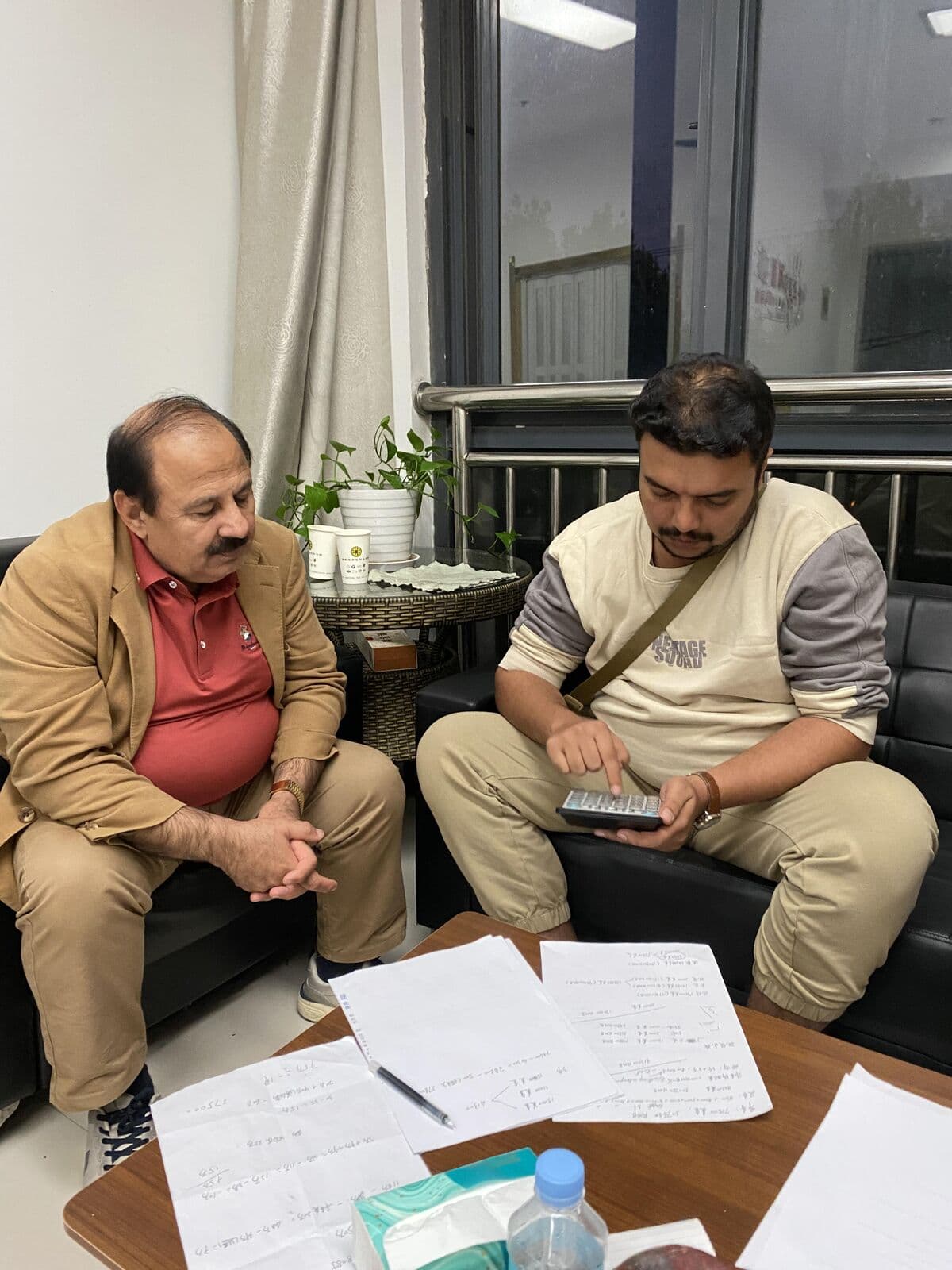
Stone type, water data, treatment train, reuse target and equipment constraints should be locked before a plant trial. The discussion above represents the supplier-side review process, not a stone-industry customer case.
Build the Stone-Specific Matched Trial Brief
A screening trial for stone-processing wastewater only produces actionable results when the test conditions match the actual plant conditions closely enough to predict plant behavior. A brief that locks the critical variables before starting prevents discovering after the test that the water sample was not collected at a representative time, or that the mixing conditions used in the lab were not achievable at the plant.
The following trial brief elements are specific to stone-processing water. For the complete jar-test procedure, see the polyacrylamide jar-test procedure guide. This section covers only the stone-specific inputs and acceptance measures needed to make that generic procedure meaningful for this application.
- Water sample: Collect from the actual treatment inlet during a representative production run. Label with stone type or mix, process step, collection date and time, and any known pH or turbidity readings taken at collection. Avoid collecting after a shutdown period when the sump has settled and the particle distribution no longer represents running conditions.
- Baseline measurements: Measure pH, turbidity (NTU or mg/L SS), temperature, and conductivity before adding any polymer. These baseline values are the reference for judging supernatant improvement. If a coagulant is used, measure after coagulant addition and before polymer addition to isolate the polymer’s contribution.
- Candidate identities: Specify each polymer candidate by family (anionic, cationic, nonionic), charge density and molecular weight band. Including at least one representative from each candidate family allows a direct comparison under identical conditions.
- Make-down conditions: Record the dilution concentration and water quality used for polymer preparation. Using plant water rather than distilled water for make-down is more representative, unless the plant water is known to degrade the polymer solution.
- Mixing sequence: Define the addition point (before or after coagulant), the mixing speed and duration, and the settling time. Keep these constant across all candidates to ensure the comparison is fair.
- Buyer acceptance measures: Record the supernatant turbidity at pre-agreed identical observation intervals across all candidates, and note the appearance of the floc (size, density, whether it floats or sinks) and the compactness of the settled sludge. These are the acceptance criteria against which the supplier will evaluate the result.
A trial brief that includes all six elements above can be shared with a supplier before the sample is shipped, allowing the supplier to confirm whether the candidate included in the sample is appropriate for the stated conditions or whether a different candidate should be added to the panel.
Read Results and Diagnose Failure
Stone-processing wastewater trials fail in recognizable patterns. Understanding what each symptom means helps the buyer determine whether the polymer family was wrong, the dose was wrong, the conditions were not matched, or the water changed between sample collection and testing. One of the two source-grounded failure modes in this guide addresses this directly: selecting a polymer family from the stone label alone, without locking actual mineralogy or mixed-stone feed, pH, solids and side-by-side response, can produce settling failure or inconsistency when the feed changes.
| Symptom | Likely variables to check | Next step |
|---|---|---|
| Slow settling — floc forms but settles slowly | Molecular weight too low; mixing energy too high breaking floc; dose too low for solids loading | Try higher MW candidate; reduce mixing speed after floc formation; check solids against baseline |
| Hazy supernatant — settles but not clear | Very fine colloids not captured; charge mismatch between polymer and particle surface; insufficient coagulant pre-treatment | Add or adjust coagulant step; screen a different charge family; check pH versus optimal ionization window for current polymer |
| Weak or pin floc — small pinpoint floc that does not grow | Polymer dose too low; insufficient polymer-particle contact time; water sample pH far from polymer ionization window | Increase dose incrementally; extend slow-mix time; re-check pH and compare to the charge-optimum band for the candidate |
| Broken or disintegrating floc | Over-mixing after floc formation; pump shear during transfer; dose too high (excess restabilization) | Reduce fast-mix duration; add polymer after coagulant floc has partially formed; reduce dose stepwise |
| Floating solids | Air entrapment in floc from excess agitation; buoyant organic material in polishing water | Reduce mixing energy; check for surfactant or organic load in polishing water; consider DAF rather than gravity settling |
| Excessive carryover in recycled water | Underflow rate too high; clarifier retention time too short; water sample not representative of current solids loading | Check clarifier geometry against current flow rate; re-collect water sample at peak production load; verify recirculation pump rate |
| Result inconsistency shift to shift | Stone type or mix changes; pH or solids loading varies; operator mixing practice differs | Re-characterize feed variability; re-characterize the changed feed by re-measuring pH, solids and turbidity; repeat matched side-by-side family screening across the measured operating pH and solids range; add operator record log to identify which variable shifted |
Consistent symptom logging across multiple trials is a direct way to distinguish a wrong polymer family from a wrong dose, and a wrong dose from an uncontrolled process variable. Record stone type, process step, pH, turbidity, polymer family and dose alongside each result so that patterns become visible across the dataset.
Scale from Jar Test to the Real Water Loop
Jar-test results and plant performance can diverge substantially when scale-up variables are not controlled. Research on stone-processing water treatment scale-up identifies several conditions that laboratory tests do not automatically reproduce: pumping cycles, coagulant addition order, sludge recycle, flow control, sludge depth and the interaction between dose and mixing conditions. A laboratory dose alone does not define a plant operating route for stone-processing wastewater.
The second source-grounded failure mode in this guide addresses this directly: copying a published dose or jar-test result into the plant without matching solids, turbidity, dilution, mixing, flow, clarifier geometry, recycle and sludge-handling conditions can lead to under-dosing, over-dosing, floc breakage, unstable clarification or poor scale-up even when the polymer family was reasonable. The control is to use literature and bench screening results to choose variables and an operating window, then confirm the candidate through matched plant-trial conditions with buyer-defined acceptance criteria.
The plant-trial record should document at minimum:
- Flow conditions: Actual flow rate during the trial versus design flow. If the trial runs at reduced production, note that the dose-per-unit-volume relationship may shift at full production.
- Pump shear exposure: Whether the polymer solution passes through a pump between preparation and addition. High-shear pumps can degrade high-MW polymer solutions, reducing effectiveness even at the same nominal dose.
- Dilution and make-down conditions: The polymer concentration at the addition point. Undiluted or concentrated polymer added directly to the water loop can cause localized overdose and floc restabilization, producing a result opposite to the intention.
- Mixing energy and duration: Fast-mix and slow-mix times and speeds matched as closely as possible to the jar-test conditions. If the plant uses a different energy input than the lab, the effective dose-response curve shifts.
- Addition point: Whether the polymer is added before or after coagulant, and at what point in the clarifier flow path. Moving the addition point without re-testing the dose is one possible cause of unexplained plant performance drops.
- Clarifier geometry and retention time: Whether the clarifier used in the plant trial matches the settling test conditions in terms of upflow rate and retention time. A clarifier with a higher upflow rate than the jar-test allows will produce worse clarity at the same dose.
- Sludge recycle and depth: Whether settled sludge is being recycled, and at what sludge-blanket depth the clarifier is operating. Sludge recycle can assist clarification in some configurations and interfere in others.
- Operator log: A record of the dose applied, the result observed, and any adjustment made during the trial. Without a log, it is impossible to identify which variable caused a result change during a multi-day trial.
- Change boundary: An agreed limit on how much the dose, addition point or mixing conditions can be adjusted during the trial before a formal restart is required. Uncontrolled mid-trial adjustments make the dataset uninterpretable.
For the complete sample-to-plant-trial qualification workflow, including incoming-QC steps and bulk-release criteria, see the polyacrylamide sample-to-bulk qualification guide.
Compare Cost in Use and Prepare the RFQ
Polymer cost in stone-processing applications is determined by effective consumption — the quantity of polymer actually applied per cubic meter of water treated at the confirmed operating dose — not by the purchase price per kilogram alone. Two polymers at the same price per kilogram may have very different cost in use if their effective dose rates differ, or if one requires more preparation time, generates more sludge or causes more variation that requires additional operator attention.
The input worksheet below is designed to be filled in once a candidate and a working dose range have been identified through screening. Use the PAM dosage consumption calculator to convert dose rate and flow data into daily and monthly product volume; the calculator requires only user-supplied dose and flow values and does not publish a stone-specific dose. For background on how dose rates translate to water-treatment outcomes, see the polyacrylamide dosage guide.
| Cost factor | What to record for the RFQ |
|---|---|
| Product consumption | Dose confirmed in screening (mg/L or g/m³) × daily treated volume (m³/day). Separate peak and typical if they differ significantly. |
| Preparation and handling burden | Whether the plant can dissolve powder or needs an emulsion product; dissolution tank capacity; make-down time per batch. |
| Sludge volume and disposal | Estimated sludge volume from the trial at the operating dose. If sludge disposal has a cost per tonne, include it in the comparison across candidates. |
| Water-reuse value | If a confirmed polymer enables higher recycle ratio, estimate the freshwater cost avoided per day at the planned production rate. |
| Supplier documents | TDS, COA (batch), SDS. These determine whether the product is admissible to your site or to a downstream processing or discharge requirement. |
| Quotation inputs | Product form (powder or emulsion), pack size, annual volume estimate, delivery address, payment terms preference. |
For a complete RFQ template including specification, document checklist and technical requirements, see the polyacrylamide RFQ specification template. The RFQ does not need to reference this article or the screening route; it only needs to specify the confirmed product identity, form, dose band and acceptance documents.
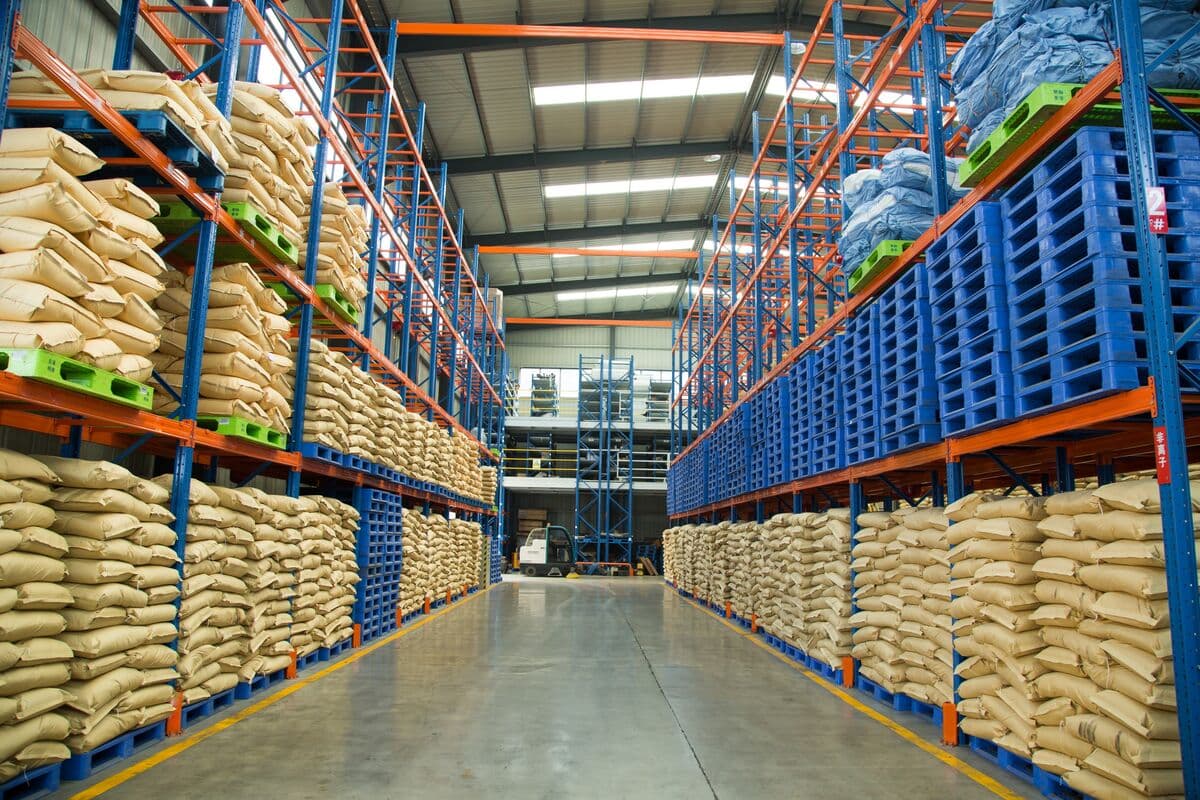
Commercial qualification should preserve the selected product identity and the approved operating window from sample through supply. This warehouse image represents a ChinaPAM storage context only; it does not prove current stock levels, a stone-specific grade or approval for this application.
Send the Minimum Brief for Sample and Quotation
The minimum information needed to start a productive sample and quotation discussion is limited to the inputs listed below. Full equipment drawings, process design documents and regulatory discharge licenses are not required for first contact. The following checklist is enough to allow a supplier to confirm whether a candidate screening route is plausible and to propose an appropriate next step:
- Stone type or mixed-stone description (trade name, quarry description, or a mix fraction breakdown)
- Process step or steps where water treatment is needed (cutting, washing, polishing, or a combined description)
- Current water data or a wastewater sample: turbidity or suspended-solids reading, pH, and approximate flow if known
- Clarification, sludge or reuse target in operational terms (for example: recycle to cutting, meet a discharge limit, reduce sludge disposal volume)
Fuller flow, equipment and acceptance documents can follow after initial screening, unless the buyer already has them ready to share.
Request Stone-Wastewater Screening and Quotation
Send the stone type or mixed-stone description, one wastewater sample or current water-data summary, and your clarification or reuse target. ChinaPAM will review the current anionic, cationic and nonionic PAM screening route and discuss a sample and quotation. Full flow, equipment and acceptance details can follow after first contact.
Send the stone-wastewater input brief or use the inquiry form to ask for the stone-wastewater input checklist.
Frequently Asked Questions
Does ChinaPAM have a named grade for granite wastewater?
No named grade is assigned to granite wastewater from the current product master. The current anionic, cationic and nonionic families each contain grades that are candidates for stone-processing water depending on the specific mineralogy, pH and solids conditions. The correct candidate is determined by reviewing the buyer’s water and process inputs, not by the stone trade name. Send the stone type and water data to start a screening discussion.
Can I use a marble PAM result as a starting point for travertine water?
Travertine water must be tested independently under its own measured conditions. Marble and travertine share a calcium carbonate mineralogy but differ in formation, texture, porosity and impurity content, which affects particle surface behavior in wastewater. A marble result may inform which families are relevant to include in the initial travertine comparison panel, but it does not determine the preferred starting point. Measure the actual pH, solids and turbidity of the travertine water at the treatment inlet, then screen relevant candidate families side by side under those specific conditions. Do not transfer a charge assumption, dose or settling-time result from marble to travertine without re-running the matched comparison.
What if the stone type changes regularly?
When feed conditions vary across stone types in a multi-product stone shop, the appropriate response is to broaden the initial screening panel to cover the range of stone types in the feed, run each major stone type as a separate baseline in the jar test, and identify whether a single operating strategy covers the full range or whether the dose or candidate needs to shift when the stone type changes. If matched trials show that one candidate cannot cover both feeds, qualify two candidates and define a clear switching rule tied to the incoming stone type or process step, so the decision is made in advance rather than improvised during production.
Is an anionic PAM always wrong for granite?
Not always. A 2024 laboratory study found cationic more effective for the tested granite sample under the stated conditions, while noting that bridging still allowed anionic PAM to function. The authors called for wider validation. Whether anionic PAM is wrong for a specific granite depends on the mineralogy, pH and solids of that specific water — which is why side-by-side screening is recommended rather than elimination based on the stone label.
Sources and Evidence Limits
The traceable facts and failure-mode reasoning in this guide draw from the following research sources. Each source is cited with the scope it actually supports. No result from any of these sources is presented as ChinaPAM testing, a ChinaPAM case study or a customer outcome.
- Springer Nature / Discover Civil Engineering (2024): A laboratory study on granite and marble wastewater comparing anionic and cationic polymer response. DOI: 10.1007/s44290-024-00060-4. Scope: two stone samples, laboratory conditions, defined pH and solids levels; the authors called for wider validation.
- Desalination and Water Treatment (2010): A study on simulated stone-cutting wastewater (marble slurry, 4% solids) using a named third-party cationic polymer. DOI: 10.5004/dwt.2010.1652. Scope: simulated slurry and specific plant conditions; dose and results are not transferable without matching conditions.
- Journal of Environmental Management (2009): A study on stone-processing wastewater treatment pilots. DOI: 10.1016/j.jenvman.2007.11.004. Scope: available as NCBI MEDLINE abstract; numeric dose and results are abstract-level only and are not used as transferable guidance.
- CLEAN — Soil, Air, Water (2009): A study on natural-stone processing wastewater. DOI: 10.1002/clen.200800209. Scope: available as archived abstract and Crossref metadata; full text not confirmed accessible.
For context on the industrial-effluent treatment train, see the industrial-effluent treatment overview. For stone-processing wastewater, this article covers only the stone-specific procurement decision; the generic PAM theory and treatment chemistry that applies across all industrial applications is covered in that linked resource.