Textile wastewater is notoriously difficult to treat — it contains dyes, surfactants, heavy metals, and suspended fibers. Polyacrylamide is one of the few chemicals that works reliably across the wide pH and chemical composition range of textile effluent. Here is how to select the right PAM grade and dosage for your textile mill. For grade selection across other applications too, our complete water treatment buyer's guide puts textile effluent in context with the full range.
Textile Wastewater Characteristics
Textile wastewater treatment with polyacrylamide requires grade selection based on process pH: APAM (15-25M MW) for alkaline reactive dye effluent at pH 10-12, NPAM (8-12M MW) for acidic dye wastewater at pH 3-5, and CPAM (30-60% charge density) for neutral pigment printing and combined streams — achieving 80-95% TSS removal and 60-80% color reduction at 2-10 ppm dosage.
| Process | pH Range | Main Contaminants | Recommended PAM |
|---|---|---|---|
| Dyeing (reactive dyes) | 10-12 (alkaline) | Dyes, salt, alkali | APAM 15-25M MW |
| Dyeing (acid dyes) | 3-5 (acidic) | Dyes, acid, metal ions | NPAM 8-12M MW |
| Printing (pigment) | 6-8 (neutral) | Pigments, binders, starch | CPAM 30-50% charge |
| Finishing (sizing) | 6-8 (neutral) | Starch, oils, waxes | CPAM 40-60% charge |
| Bleaching | 9-11 (alkaline) | Peroxide, alkali, suspended fiber | APAM 12-18M MW |
| Washing (combined) | 5-9 (variable) | Mixed (all of above) | CPAM 30-50% charge |
Why PAM Works for Textile Wastewater
PAM's effectiveness across the full pH spectrum (3-12) makes it uniquely suited for textile mills where wastewater pH swings wildly between acid dye baths and alkaline reactive dye processes throughout a single production day — no other polymer flocculant offers this range with a simple grade swap between APAM, CPAM, and NPAM. Textile wastewater has both organic (dyes, surfactants) and inorganic (fiber, salts) contaminants. Most flocculants work in one pH range and fail in another. PAM covers the whole spectrum:
- In alkaline conditions (pH 9-12) — APAM works through bridging, unaffected by high pH
- In neutral conditions (pH 6-8) — CPAM works through charge neutralization
- In acidic conditions (pH 3-5) — NPAM (nonionic) works through pure bridging, unaffected by low pH
This flexibility makes PAM ideal for mills that process multiple fiber types and dye classes, where wastewater pH varies throughout the day. Our anionic vs cationic PAM guide helps narrow the choice.
Reactive Dye Wastewater (Alkaline, pH 10-12)
APAM for reactive dye wastewater works at pH 10-12 where most cationic flocculants precipitate and fail, using 15-25M molecular weight anionic polyacrylamide at 2-8 ppm to bridge dye-laden particles into settleable flocs — achieving 60-80% color reduction and TSS below 50 ppm from initial loads of 200-500 ppm. Reactive dyes are applied in strongly alkaline conditions. The wastewater comes out at pH 10-12 with excess dye, salt, and alkali. Most cationic flocculants (ferric chloride included) just precipitate at this pH and do nothing useful.
APAM with 15-25M molecular weight and 25-35% hydrolysis handles this. The anionic charge is unaffected by high pH. Dosage: 2-8 ppm depending on dye concentration. We've had mills in Bangladesh try to use CPAM here — complete waste of money. At pH 11, cationic charge gets screened immediately.
Typical performance: TSS reduction from 200-500 ppm to <50 ppm, color reduction 60-80%, turbidity <10 NTU.
Acid Dye Wastewater (Acidic, pH 3-5)
Nonionic PAM (NPAM) for acid dye textile wastewater provides 70-90% TSS removal at pH 3-5 where both anionic and cationic PAM lose effectiveness due to charge collapse, using 8-12M molecular weight at 3-10 ppm combined with inorganic coagulant for optimal color and solids removal. Acid dyes run in sulfuric or acetic acid conditions. At pH 3-5, both APAM and CPAM lose their charges and stop working. I've seen this trip up treatment operators who don't realize their PAM grade matters this much.
NPAM at 8-12M molecular weight is the answer. Pure polymer bridging, no charge dependence. Dosage: 3-10 ppm. Color reduction is lower in acidic conditions (40-60%) because dyes stay dissolved — if you need better color removal, adjust pH to neutral first, then dose.
Pigment Printing Wastewater (Neutral, pH 6-8)
CPAM for pigment printing wastewater neutralizes negatively charged pigment and binder particles at pH 6-8 using 30-50% charge density and 10-15M molecular weight at 2-6 ppm, achieving 80-95% TSS reduction and turbidity below 5 NTU — producing supernatant clear enough for process water reuse in non-critical applications. Pigment printing uses binders (starch, acrylics) and pigments suspended in water. The particles are negatively charged, so CPAM's positive charge grabs them directly.
Dosage: 2-6 ppm. This is one of the easier textile streams to treat — consistent pH, consistent contaminants, predictable results. Clear supernatant is often good enough for reuse in washing.
Sizing and Finishing Wastewater
CPAM for textile sizing wastewater handles the high organic load of starch, oils, waxes, and synthetic binders using 40-60% charge density at 3-8 ppm, with pre-treatment oil-water separation recommended for oily streams to prevent PAM from being consumed by emulsified oil before it can flocculate suspended solids. Sizing wastewater is heavy on organics — starch, oils, waxes, synthetic binders. All negatively charged. CPAM at 40-60% charge density handles it at 3-8 ppm.
If the stream is oily, run it through an oil-water separator first. Otherwise the PAM wastes itself on emulsified oil droplets instead of flocculating the solids you actually need to remove.
Need PAM for textile wastewater treatment?
Free sample + jar test report. WhatsApp: +86 187-3759-0940
Combined Wastewater (Mixed pH and Contaminants)
Combined textile wastewater treatment requires pH equalization (6-12 hour retention tank) followed by adjustment to pH 6-8 before CPAM dosing at 3-10 ppm with 30-50% charge density — because without equalization, batch-to-batch pH swings from 4 to 11 make consistent PAM performance impossible regardless of grade selection. Most mills don't segregate their streams — everything goes into one equalization tank. The combined stream has variable pH (5-9), mixed contaminants, and changes hour to hour.
CPAM at 30-50% charge density is the best compromise for combined streams. But the real key is pH equalization. Without it, you're chasing a moving target. Add an equalization tank (6-12 hours retention), adjust pH to 6-8, then dose PAM. Consistent feed = consistent results.
Dosage: 3-10 ppm depending on composition. Always run jar tests with your actual wastewater to optimize.
Jar Testing for Textile Wastewater
Textile wastewater composition varies by mill, process, and season. Jar testing is essential:
- Collect wastewater samples from each process (dyeing, printing, finishing)
- Measure pH, TSS, color (ADMI units), and conductivity
- Prepare 0.1% PAM solutions of different types (APAM, CPAM, NPAM)
- Add PAM at 1, 2, 5, 10 ppm increments to each sample
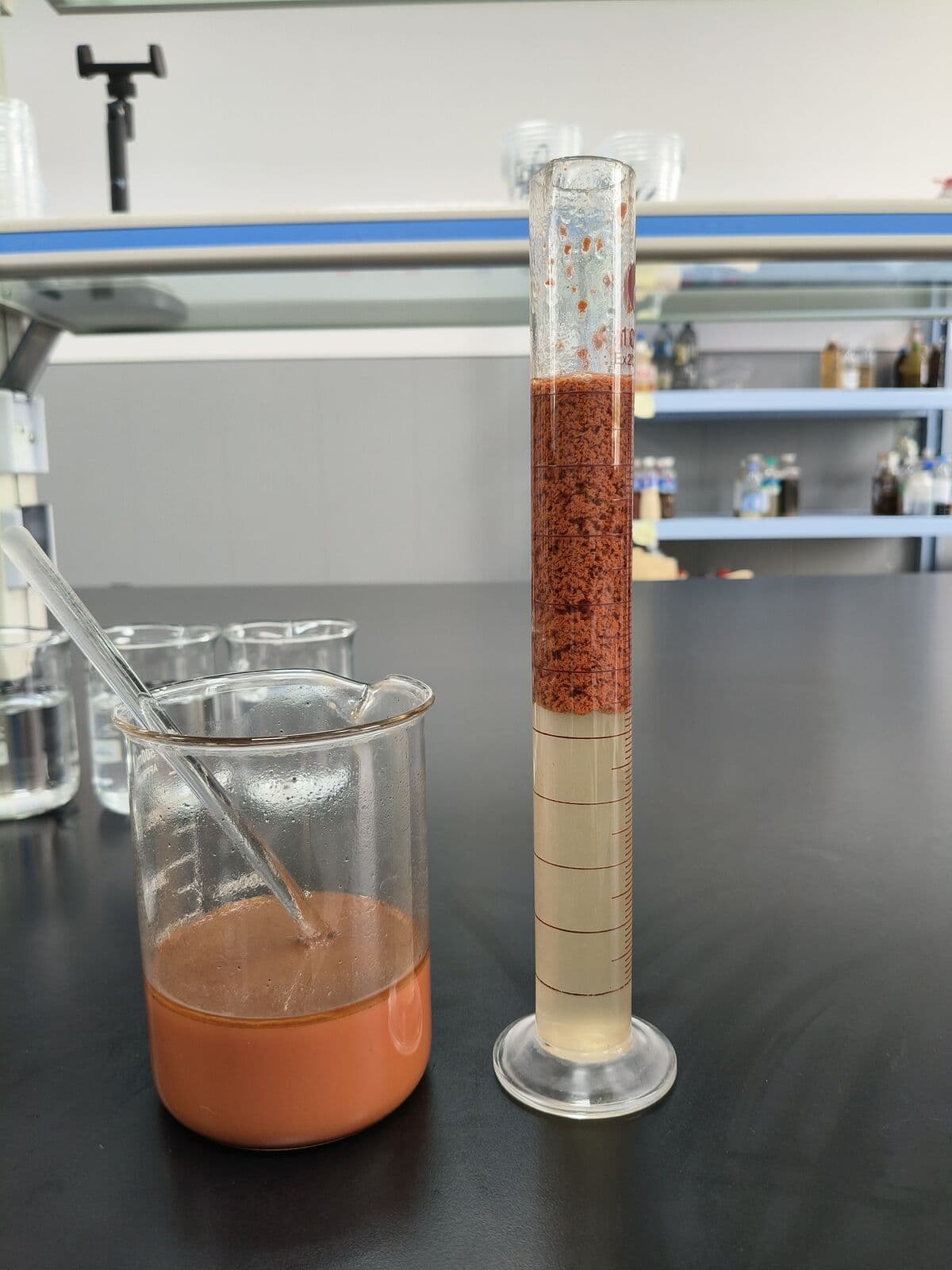
- Observe floc formation, settling speed, and supernatant clarity
- Measure final TSS and color of supernatant
- Select the PAM type and dose that achieves target clarity at lowest cost
Our Textile-Grade PAM
At our Xinxiang factory, we produce all three PAM types for textile applications:
- APAM for alkaline wastewater: 12-25M MW, 20-35% hydrolysis
- CPAM for neutral/mixed wastewater: 10-15M MW, 30-60% charge density
- NPAM for acidic wastewater: 8-12M MW, 0% charge (nonionic)
All grades meet our standard specs: solid content ≥90%, dissolution time ≤90 minutes, residual monomer ≤0.05%. We also supply emulsion formats for mills that cannot wait 60-90 minutes for powder dissolution.
Worked Example: Erratic Effluent on a Textile Mill
Modelled, not a delivered project. The pattern is familiar on textile effluent: ferric chloride as primary flocculant, and performance all over the place — clear effluent some days, turbid the next. The cause is almost always pH, swinging anywhere from 4 to 11 depending on which processes are running. Adding pH equalisation ahead of PAM treatment is what turns inconsistent results (TSS 50-200 ppm, 40-50% colour removal on ferric chloride alone) into reliable compliance (TSS under 30 ppm, 70-80% colour removal) at lower total chemical cost — running CPAM at 3-5 ppm behind PAC at 100 ppm with 30 minutes of lamella clarifier retention.
We recommended a three-stage approach:
- pH adjustment to neutral (6-8) using lime
- CPAM dosing at 3-5 ppm after PAC coagulant at 100 ppm
- Settling in a lamella clarifier (30 minutes retention)
Results after 1 month of operation:
- Effluent TSS: consistently <30 ppm (previously 50-200 ppm)
- Color: reduced 70-80% (previously 40-50% with ferric alone)
- Turbidity: <5 NTU (previously 20-50 NTU)
- Chemical cost: reduced 20% (CPAM is cheaper than ferric chloride on a per-cubic-meter basis)
- Sludge volume: reduced 30% (better floc density with PAM vs ferric)
The key insight is that pH equalisation, not polymer selection, is what removes the inconsistency. Once pH sits stable at 7-8, CPAM performance becomes predictable — and predictable is what state pollution control board compliance actually requires. If your effluent results vary day to day, fix pH control before you change flocculant supplier.
Regulatory Compliance
Per EPA industrial wastewater discharge standards and WEF treatment guidelines, coagulant + PAM chemical treatment is the most cost-effective primary treatment for textile wastewater, removing 80-95% of suspended solids and 60-80% of color in a single clarification step — essential for meeting increasingly strict zero liquid discharge (ZLD) requirements being imposed on new textile facilities in India, China, and Bangladesh.
According to WEF industrial wastewater treatment guidelines, chemical treatment with coagulant + PAM is the most cost-effective primary treatment for textile wastewater. It removes 80-95% of suspended solids and 60-80% of color in a single step, making downstream biological treatment (if needed) much more efficient.
For mills targeting water reuse, PAM-based clarification is the essential first step. After PAM treatment, the clarified water can go through membrane filtration (UF/RO) for reuse in non-critical processes like washing and cooling. This reduces freshwater consumption by 40-60%.
Textile Sludge Dewatering
Textile sludge dewatering with CPAM at 5-10 kg/ton dry solids achieves 25-35% cake solids on belt press (using 10-12M MW, 40-50% charge) or centrifuge (8-12M MW, 30-40% charge for shear resistance), with the dewatered cake classified as non-hazardous industrial waste unless heavy metals from chrome or metal-complex dyes are present. Textile sludge is colored, fibrous, and full of chemical precipitates. CPAM conditions it for mechanical dewatering.
For belt press dewatering: use CPAM 10-12M MW, 40-50% charge density. For centrifuge: use CPAM 8-12M MW, 30-40% charge density. The lower MW for centrifuge gives shear-resistant flocs that survive the G-force. See our sludge dewatering guide for detailed equipment-specific recommendations.
Dewatered textile sludge (25-35% solids) is typically disposed as non-hazardous industrial waste unless it contains heavy metals from certain dye types (chrome dyes, metal-complex dyes). Test your sludge for heavy metals before choosing a disposal route.
Frequently Asked Questions
Can PAM remove color from textile wastewater completely?
PAM removes 60-80% of color by flocculating suspended dye particles and colloids. But dissolved dyes (especially reactive dyes that did not fix to fabric) pass through PAM treatment. For complete color removal, you need additional treatment: activated carbon adsorption, ozone oxidation, or advanced oxidation processes (AOP) after PAM clarification.
What PAM type works best for reactive dye wastewater?
Reactive dyes are anionic (negatively charged) in solution. CPAM with 40-60% charge density gives the best color removal because the positive charge attracts and neutralizes the anionic dye molecules. Dosage is higher than for other dye types: 5-10 ppm. Pre-treatment with inorganic coagulant (PAC at 100-200 ppm) before CPAM significantly improves performance. For more on charge density selection, see our dedicated guide.
How do I handle pH fluctuations in combined textile wastewater?
Install an equalization tank (6-12 hours retention) before the treatment system. This averages out pH spikes from batch dyeing operations. After equalization, adjust pH to 7-8 with lime or acid, then dose PAM. Without equalization, PAM performance is unpredictable because each batch has different chemistry. For proper PAM dissolution and dosing, consistent feed water quality is essential.
Is PAM treatment alone sufficient to meet discharge standards?
For TSS and turbidity: usually yes. For BOD/COD: PAM removes 30-50% of COD (the particulate fraction), but dissolved organics remain. Most textile mills need biological treatment (activated sludge or MBBR) after PAM clarification to meet BOD/COD limits. PAM is the essential pre-treatment that makes biological treatment work efficiently by removing solids that would otherwise overload the bio-reactor.
Get the Right PAM for Your Textile Mill
Send us your wastewater analysis (pH, TSS, color, conductivity, process types) and we will recommend the optimal PAM type and dosage within 24 hours. Free samples available for jar testing. We currently supply textile mills in India, Bangladesh, Vietnam, Turkey, Pakistan, and Indonesia with both clarification and sludge dewatering grades.
For mills with variable wastewater composition, we recommend testing 3-4 PAM grades to find the one that works across your full pH and contaminant range. We ship free 1kg samples of each grade for your evaluation.
WhatsApp: +86 187-3759-0940 | Request a quote
Get a Quote
Our factory in Xinxiang produces confirmed grade availability across core APAM, CPAM, NPAM, and PHPA products. MOQ 500kg, delivery 7-10 days standard. Contact us for pricing and free sample:
- WhatsApp: +86 187-3759-0940
- Email: info@chinapolyacrylamide.com
Recommended Product Grades
For the application discussed above, these are the polyacrylamide grades we ship most often:
See the full range of textile and dyeing wastewater applications for equipment context and selection criteria across this industry.
For process-specific design context, see our dyeing wastewater solution, printing wastewater solution and textile sizing solution.
Not sure which is right for you? Try our PAM Selector tool or request a quote.