FLOPAM FO 8990 Equivalent: Bare and SH Cationic PAM Selection
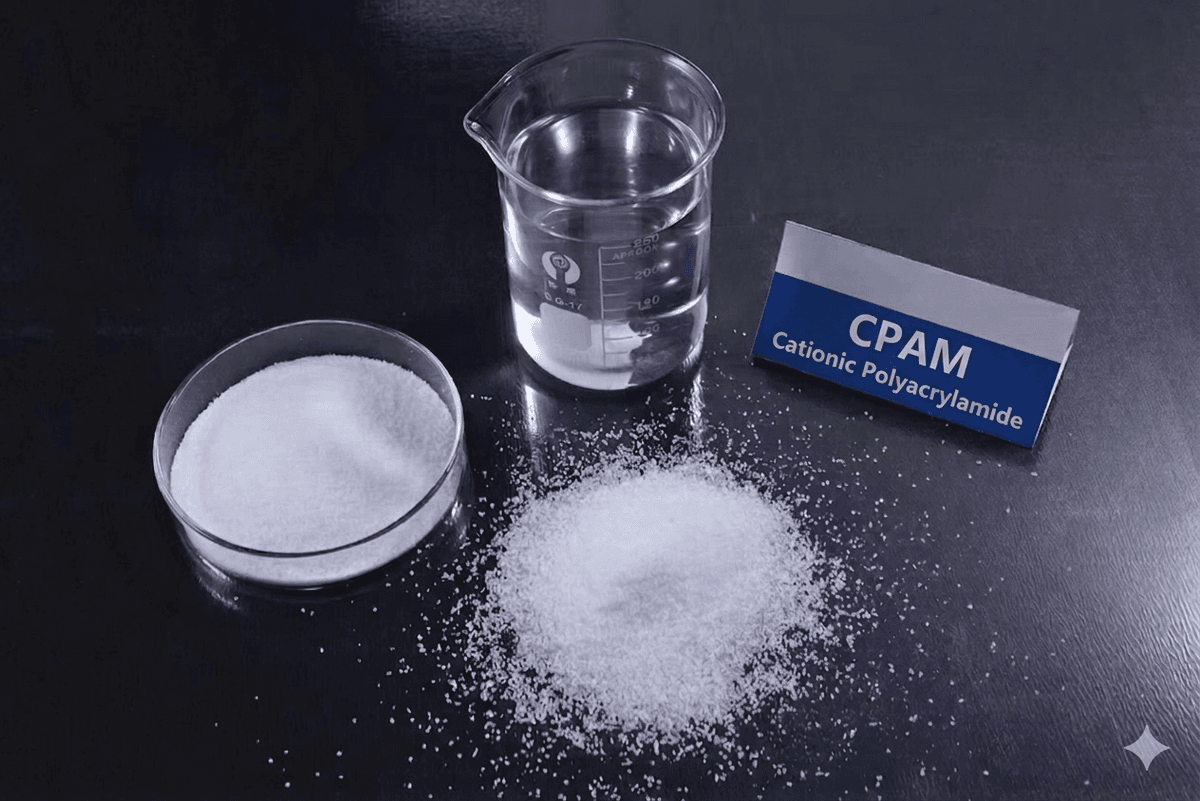
ChinaPAM supplies cationic PAM powder and can quote against FLOPAM FO 8990 and FO 8990 SH enquiries. The held SNF 2007 catalogue prints both as separate rows with different published values, and our current public master has no band named Standard MW — both points are stated before any selection. Contact us to discuss pricing, sample arrangements and applicable product documents.
Supply Route Comparison
Published reference data and the ChinaPAM route for SNF FLOPAM FO 8990
Reference figures are from SNF SAS Catalogue 2007 Poudres, page 13 — a historical indicative table, not a current contractual specification, and not a statement about current SNF products or availability. Verify against a current SNF data sheet before use in any contractual context. FLOPAM is a registered trademark of SNF SAS. ChinaPAM supplies its own cationic PAM powder grades; this page does not imply affiliation with or endorsement by SNF SAS, and no exact or identical equivalence is claimed.
| Parameter | ChinaPAM Supply Route | SNF FLOPAM FO 8990 |
|---|---|---|
| Type | Cationic PAM powder | Cationic PAM powder (SNF Catalogue 2007 p.13) |
| Published charge (both rows) | We publish qualitative charge bands on our own scale; the two scales are set independently and we do not convert between them | Very High, on SNF's own descriptive scale (SNF Catalogue 2007 p.13) |
| Published MW descriptor (both rows) | Our current public master has no band named Standard MW; we do not rank SNF's Standard descriptor against our own band names | Standard, on SNF's own descriptive scale (SNF Catalogue 2007 p.13) |
| Brookfield — FO 8990 | Our own values are issued per grade with the quotation; we do not restate a 2007 competitor figure as ours | 600 / 300 / 110 cps at 5 / 2.5 / 1 g/L (SNF Catalogue 2007 p.13) |
| Brookfield — FO 8990 SH | Our own values are issued per grade with the quotation; we do not restate a 2007 competitor figure as ours | 700 / 350 / 110 cps at 5 / 2.5 / 1 g/L (SNF Catalogue 2007 p.13) |
| Make-up — FO 8990 | 1–3 g/L recommended, 5 g/L maximum, dissolution within 60 minutes at working concentration | 4 g/L rec., 20 g/L max., 60 min (SNF Catalogue 2007 p.13) |
| Make-up — FO 8990 SH | 1–3 g/L recommended, 5 g/L maximum, dissolution within 60 minutes at working concentration | 4 g/L rec., 10 g/L max., 60 min (SNF Catalogue 2007 p.13) |
| Make-up boundary | We keep both sets of make-up parameters separate and check your system against our 1–3 g/L window before a sample plan is agreed | Both published maximums sit above our approved maximum |
| Cross-scale comparison | SNF's descriptors and our band names are separate scales; no numeric or ranked conversion between them is offered | SNF descriptors apply to SNF's own scale |
| Unknowns to settle | Which of our grades is quoted is settled at quotation and confirmed on your own material | Current SNF specification, current availability and any figure not printed on page 13 are not held by us |
| Verification step | Same-material sample comparison against the grade you currently run, at several dose rates, on your own system | Not applicable — reference product |
Specifications
| Our Product | Cationic polyacrylamide powder |
| Positioned Against | SNF FLOPAM FO 8990 / FO 8990 SH |
| Commercial State | SELECTION_SERVICE — cationic powder selection and quotation; grade confirmed at quotation |
| Their FO 8990 (bare) | Very High charge / Standard MW; Brookfield 600/300/110 cps (SNF Catalogue 2007 p.13) |
| Their FO 8990 SH | Very High charge / Standard MW; Brookfield 700/350/110 cps (SNF Catalogue 2007 p.13) |
| Their Make-up (bare) | 4 g/L rec., 20 g/L max., 60 min (SNF Catalogue 2007 p.13) |
| Their Make-up (SH) | 4 g/L rec., 10 g/L max., 60 min (SNF Catalogue 2007 p.13) |
| MW band gap | Our current public master has no band named Standard MW; no ranking against SNF’s Standard descriptor is claimed |
| Our Preparation | 1–3 g/L recommended; max 5 g/L; ≤60 min at working concentration |
| Source | SNF SAS Catalogue 2007 Poudres — historical indicative values, not a current specification |
Key Features
- Cationic PAM powder selection and quotation against a confirmed FO 8990 or FO 8990 SH label
- SNF publishes both rows on page 13 at Very High charge and Standard MW on its own scale
- The two rows publish different values: 600/300/110 cps against 700/350/110 cps, and 20 g/L against 10 g/L maximum
- Our current public master has no band named Standard MW — the gap is stated, not ranked against our own band names
- Both published maximums are above our approved 5 g/L maximum, so make-up concentration is checked before sampling
- Contact us to discuss pricing, sample arrangements and applicable product documents.
Applications
- Confirming whether your label reads FO 8990 or FO 8990 SH before a route is quoted
- Checking whether your make-up system can run at our 1–3 g/L window, given the higher published figures on the SNF rows
- Preparing a same-material sample comparison against the grade you currently run
- Assembling the information needed for a quotation and for review of applicable product documents
Get a Quote for SNF FLOPAM FO 8990 Alternative Supply
Send the complete grade string including any suffix, or a bag-label photo, and your current make-up concentration if you have it. We can discuss pricing and sample arrangements now.
Related Articles
What the held source actually prints
Our factual basis for this page is a single historical document: SNF SAS Catalogue 2007 Poudres. On page 13 it lists FLOPAM FO 8990 and FLOPAM FO 8990 SH. Both are described, on SNF’s own descriptive scale, as Very High charge and Standard molecular weight. FO 8990 is printed at Brookfield 600, 300 and 110 cps for 5, 2.5 and 1 g/L solutions, with a make-up line of 4 g/L recommended, 20 g/L maximum and 60 minutes. FO 8990 SH is printed at 700, 350 and 110 cps on the same three concentrations, with 4 g/L recommended, 10 g/L maximum and 60 minutes.
That is the extent of it. The catalogue is from 2007, its own text describes the figures as indicative average values, and it is not a current SNF specification. It says nothing about what SNF sells today, at what specification, or on what lead time. Anything on this page beyond the two rows above and our own published parameters is written as an open item, not as a conclusion.
Why the suffix stays on the enquiry
The two rows carry the same charge and molecular-weight descriptors but different published numbers. Viscosity differs at 5 and 2.5 g/L — 600 against 700, and 300 against 350 — while the 1 g/L figures are close, 110 on both. The published maximum make-up concentration differs by a wider margin, 20 g/L against 10 g/L.
We do not explain why the source prints them differently; the catalogue does not say, and we will not invent a reason. What follows practically is narrower: if an enquiry arrives as FO 8990 without a suffix, we cannot tell which row you are holding, and the difference between the rows is the only distinction the source gives us. So we ask for the complete label, or a photograph of the bag, before quoting a route.
The molecular-weight band gap, stated plainly
SNF’s page 13 rows use the descriptor Standard for molecular weight. Our current public master does not contain a band by that name. That is the honest position, and it is worth stating early rather than at the bottom of a page.
It would be easy to write that one of our bands sits just above or just below SNF’s Standard. We do not, because nothing in our source supports it. The two vocabularies were written by different companies for their own product ranges, with no shared reference point, no shared test method disclosed, and no published mapping. Ranking one against the other would be an inference dressed up as a specification. Which of our grades we quote against an FO 8990 enquiry is decided when we review the enquiry, and it is confirmed by comparison on your own material — not by lining up two sets of adjectives.
What we will state is which of our own routes are in scope, so the page is not vague about it. Two candidate routes are open for FO 8990 and FO 8990 SH enquiries: our Medium-molecular-weight / High-charge cationic powder route, where solution handling and a lower chain-length position govern the duty, and our Very-high-molecular-weight / Very-high-charge cationic powder route, where charge demand and bridging govern it. Both band pairs are named on our own scale and nowhere else. Neither route is offered as an equivalent of the Standard molecular-weight descriptor on the SNF rows, neither is placed above or below it, and we claim no mechanistic advantage for either route over the other or over the FLOPAM grade. A comparison run on your own material is what decides between them.
What we can commit to now, and what the trial settles
The commercial part is not in doubt. We supply cationic polyacrylamide powder, we can quote against a confirmed FO 8990 or FO 8990 SH label, and we can discuss pricing, sample arrangements and review of the applicable product documents as soon as the enquiry arrives. Send the grade string and your required quantity and we will take it from there.
The open items are equally clear. We do not hold a current SNF specification, we hold no figure for these grades beyond page 13, and we do not claim an exact or identical match. The trial closes those gaps: a candidate grade of ours run against the grade you currently use, on your own material, at several dose rates, under your own make-up conditions, with your make-up concentration checked against our 1–3 g/L window beforehand. That produces measurements from your site, which is a better basis for a purchase than any reading of a nineteen-year-old table.
Dosage Guide
Two sets of make-up parameters apply and they are not merged. Source figures for FO 8990 (Catalogue 2007 p.13): 4 g/L recommended, 20 g/L maximum, 60 minutes. Source figures for FO 8990 SH (Catalogue 2007 p.13): 4 g/L recommended, 10 g/L maximum, 60 minutes. Our approved parameters: 1–3 g/L recommended, 5 g/L maximum, dissolution within 60 minutes at working concentration. Both published maximums sit above our approved maximum. Whether your existing make-up and dosing arrangement can run within our window is confirmed before a sample plan is agreed. Dose rate is established on your own material during the sample comparison, not carried over from either table.
Frequently Asked Questions — FLOPAM FO 8990 Equivalent: Bare and SH Cationic PAM Selection
Can you quote against FLOPAM FO 8990 or FO 8990 SH?
Yes. We supply cationic PAM powder and can quote once the label is confirmed, including which of the two rows it matches. We can discuss pricing, sample arrangements and applicable product documents at that point. We will not claim our grade is exact or identical to the SNF product.
What do you need from me to open the enquiry?
The complete grade string including any suffix — or a bag-label photo — plus your make-up concentration if you know it, and your required quantity. That is enough for us to confirm the route and quote.
Why does the SH suffix matter here?
Because our source prints FO 8990 and FO 8990 SH as two separate rows with different published values: 600/300/110 cps against 700/350/110 cps, and a 20 g/L against a 10 g/L published maximum. Dropping the suffix removes the only distinction the source gives us, so we keep it on the enquiry.
Your source lists Standard MW. What is your equivalent band?
We do not have one with that name. Our current public master publishes its own qualitative molecular-weight bands, and none of them is named Standard. We state that gap rather than assign SNF’s Standard descriptor a position above or below one of our band names — the two scales were set independently.
What does a sample plan actually settle?
It compares a candidate grade of ours against the grade you currently run, on your own material, at several dose rates, under your own make-up conditions. It replaces the open items on this page with measurements from your site rather than an inference from a 2007 table.
Related Products
Trademark notice. SNF FLOPAM FO 8990 and all other third-party product and brand names on this page are trademarks or registered trademarks of their respective owners. Henan Jinghua New Material Technology Co., Ltd. is not affiliated with, endorsed by, sponsored by or authorised by those owners, and no such relationship is implied. Those names are used here for the sole purpose of identifying the products our grades are compared against, which is necessary to describe what we supply. Our products are independently manufactured and are not licensed copies. Grade descriptors quoted for third-party products are taken from each manufacturer’s own published literature and follow that manufacturer’s own scale; we do not publish figures those manufacturers do not publish. Performance on your process should be confirmed by jar test or CST test before any change of supply.