FLOPAM FO 4191 AR Equivalent: Cationic PAM Same-Type Screening Route
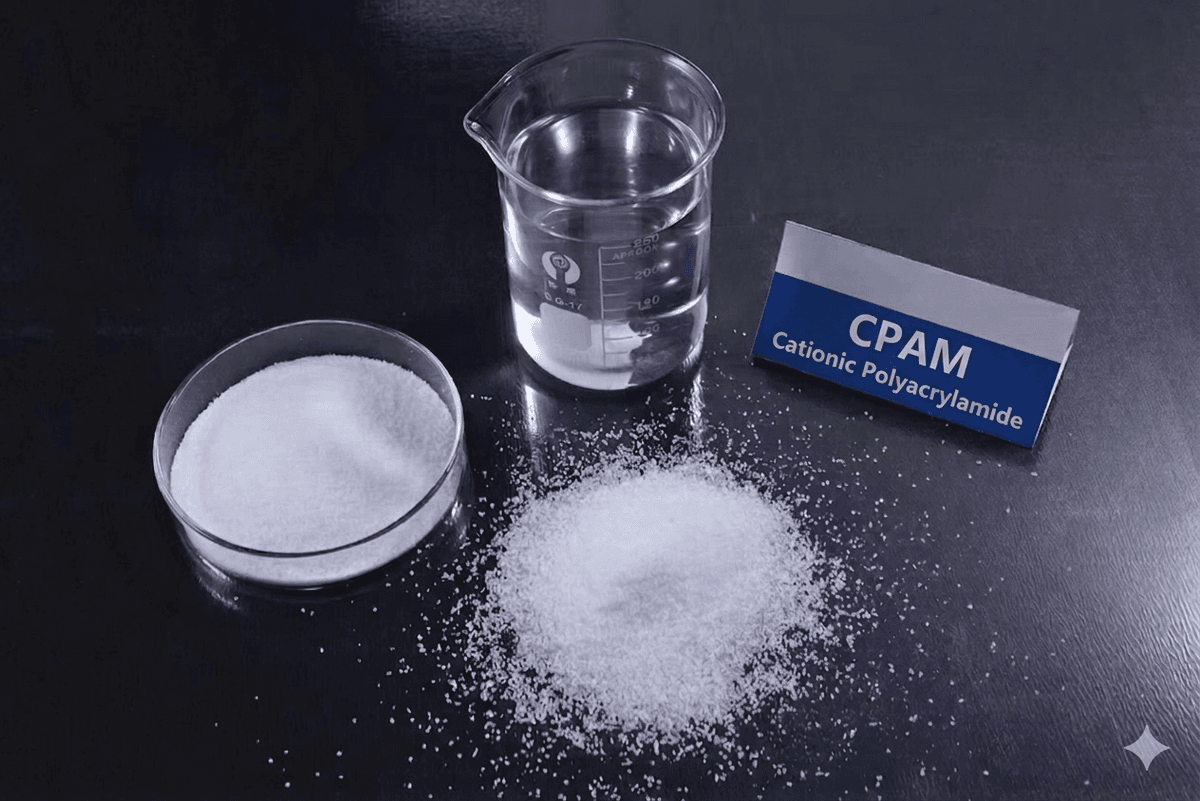
ChinaPAM supplies low-charge cationic PAM powder and can quote, arrange documents and discuss sample options for FLOPAM FO 4191 AR enquiries. C8008 is the closest public-band screening candidate at Low charge / Medium molecular weight. Our master does not prove the AR high-conductivity-resistant feature — quotation and sampling must use the buyer's actual conductivity and feed conditions.
Supply Route Comparison
Published reference data and the ChinaPAM route for SNF FLOPAM FO 4191 AR
Reference figures are from SNF SAS Catalogue 2007 Poudres, page 18 — historical indicative tables whose own text states they do not constitute a specification, and which say nothing about current SNF products or availability. The AR suffix and the high-conductivity-resistant family context are reproduced from the historical catalogue for identification purposes only. FLOPAM is a registered trademark of SNF SAS. ChinaPAM supplies its own cationic PAM powder grades; this page does not imply affiliation with or endorsement by SNF SAS, and no exact or identical equivalence is claimed.
| Parameter | ChinaPAM Supply Route | SNF FLOPAM FO 4191 AR |
|---|---|---|
| Type | Cationic PAM powder | Cationic PAM powder (SNF Catalogue 2007 p.18) |
| Charge band | Low (ChinaPAM scale) | Low (SNF Catalogue 2007 p.18) |
| Molecular-weight band | Medium (ChinaPAM scale — C8008) | Medium (SNF Catalogue 2007 p.18) |
| Approximate bulk density | Confirm on the applicable document for the grade quoted | Approximately 0.70 (SNF Catalogue 2007 p.18) |
| Brookfield @5 / 2.5 / 1 g/L | Confirm on the applicable document for the grade quoted | 650 / 300 / 100 cps (SNF Catalogue 2007 p.18) |
| Make-up concentration | 1–3 g/L recommended, max 5 g/L | 5 g/L recommended, 10 g/L maximum (SNF Catalogue 2007 p.18) |
| Dissolution time | ≤60 min at working concentration | 120 min in DI water at 5 g/L and 25°C (SNF Catalogue 2007 p.18) |
| AR high-conductivity resistance | Unproven by the 26-grade ChinaPAM master; actual-feed testing required before claiming this property | Historical catalogue places this grade in a high-conductivity-resistant family (SNF Catalogue 2007 p.18) |
| Cross-scale comparison | Our bands and SNF's bands are set independently; no numeric conversion between the two scales | SNF descriptors apply to SNF's own scale |
| Verification step | Same-feed bench comparison using actual process water conductivity before a changeover | Not applicable — reference product |
Specifications
| Our Product | Cationic polyacrylamide powder |
| Positioned Against | SNF FLOPAM FO 4191 AR |
| Commercial State | SAME_TYPE_SCREENING — low-charge cationic powder; AR high-conductivity resistance unproven in our master |
| Their FO 4191 AR | Low charge / Medium MW; bulk density ≈0.70; Brookfield 650/300/100 cps; 5/10 g/L; 120 min (SNF Catalogue 2007 p.18) |
| AR family context | Historical catalogue labels this family high-conductivity resistant |
| Our screening candidate | C8008 — Low charge / Medium MW on our scale; closest public-band match |
| AR gap | High-conductivity resistance is not proven by the 26-grade ChinaPAM master; actual-feed testing required |
| Our Preparation | 1–3 g/L recommended; max 5 g/L; ≤60 min at working concentration |
| Source | SNF SAS Catalogue 2007 Poudres — historical indicative values, not a current specification |
Key Features
- C8008 named as closest public-band screening candidate: Low charge / Medium molecular weight on our scale
- AR suffix retained throughout — high-conductivity resistance unproven in our current master
- Cationic PAM powder quotation, documents and sample discussion against a confirmed FO 4191 AR label
- The held catalogue prints FO 4191 AR at 650/300/100 cps, 5/10 g/L and 120-minute dissolution on SNF's scale
- No exact, identical or drop-in equivalence is claimed; high-conductivity-resistance claim requires actual-feed testing
Applications
- Confirming the complete FO 4191 AR grade string, including AR suffix, before a route is quoted
- Screening a low-charge cationic powder lane for high-conductivity process water after the buyer provides actual feed conditions
- Checking whether the existing make-up and dosing system suits the 1–3 g/L ChinaPAM preparation window
- Assembling the information needed for a quotation and for review of applicable product documents
Get a Quote for SNF FLOPAM FO 4191 AR Alternative Supply
Send the complete grade string including the AR suffix, or a bag-label photo, plus your feed conductivity and processing conditions. We can discuss pricing, applicable documents and sample options now.
Related Articles
What the Held Catalogue Prints for FO 4191 AR
The factual basis for this page is a single historical document: SNF SAS Catalogue 2007 Poudres, page 18. The page lists FLOPAM FO 4191 AR as a cationic powder at Low charge density and Medium molecular weight on SNF's own scale, with approximate bulk density 0.70, Brookfield viscosity of 650 cps at 5 g/L, 300 cps at 2.5 g/L and 100 cps at 1 g/L, recommended make-up at 5 g/L and maximum at 10 g/L, and 120 minutes dissolution in DI water at 5 g/L and 25 degrees C.
The held 2007 catalogue places FO 4191 AR on page 18 under a family heading labelled high-conductivity resistant. We retain AR only as part of the complete product name; the held source does not define the letters themselves. The 2007 catalogue is an indicative historical document and its own footnotes describe the values as average figures given as an indication, explicitly not a specification. It tells us nothing about current SNF products, specifications or availability, and no claim on those points is made here.
Why the AR Suffix Cannot Be Dropped
FO 4191 AR and a generic low-charge medium-MW cationic powder are not interchangeable by description. The 2007 catalogue places FO 4191 AR on page 18 under a family labelled high-conductivity resistant, and the AR suffix is part of the full grade string that identifies this product. Removing that suffix from the enquiry or from the trial design can make an ordinary low-charge screening route look equivalent to a product that was positioned for high-conductivity process water.
The practical consequence is: if a buyer's feed runs at high conductivity — sludge dewatering with elevated ionic strength, for instance, or a paper mill white-water circuit — and the trial polymer is evaluated in laboratory DI water instead of the real feed, the conductivity-resistance property cannot be observed. A result from DI water is not a result from the process.
Where Our Published Master Stops, Stated Before Any Trial
C8008 is at Low charge and Medium molecular weight on the ChinaPAM scale, which is the band pair that matches the FO 4191 AR row in the held catalogue. That match makes C8008 the closest public-band screening candidate for this grade. The gap is the AR property: our current 26-grade master does not include a high-conductivity-resistance attribute for C8008 or any other published grade.
We will not assert the AR feature for C8008 until it is tested and confirmed on the buyer's actual feed. The scope of the route is same-type low-charge cationic powder screening, with actual-feed conductivity testing as the step that establishes whether the AR characteristic is present in the selected grade at the buyer's operating conditions.
Designing the Comparison to Reveal the Conductivity Question
Prepare C8008 at 1–3 g/L, maximum 5 g/L, with dissolution within 60 minutes at working concentration. Do not make it up at the 5 g/L DI-water condition printed on this page — that condition belongs to the SNF test protocol and changes the dissolved polymer mass per litre compared with our preparation window.
Use the actual process water for both the make-up and the test. If the relevant duty involves elevated conductivity, run one set of jars at your typical operating conductivity and a second set at laboratory conductivity so the two conditions can be compared. Record dose rate, settled solids, clarity, centrate or filtrate quality and shear response. Send us the results and we will go through them with you before quoting for volume supply.
Dosage Guide
Establish the working dose on your actual process water rather than on DI water. Prepare C8008 at 1–3 g/L, maximum 5 g/L, with dissolution within 60 minutes at working concentration. The SNF historical dissolution figure of 120 minutes at 5 g/L in DI water at 25°C belongs to the FO 4191 AR grade and is not our preparation parameter. Because the AR conductivity-resistance feature is not proven by our current master, the performance comparison must be run at the conductivity level representative of the real duty, not at laboratory conditions alone.
Frequently Asked Questions — FLOPAM FO 4191 AR Equivalent: Cationic PAM Same-Type Screening Route
Can you quote a cationic PAM powder for a FLOPAM FO 4191 AR enquiry?
Yes. ChinaPAM supplies cationic polyacrylamide powder and can quote against a confirmed FO 4191 AR label, arrange review of the applicable product documents and discuss sample options. C8008 is the closest public-band candidate at Low charge and Medium molecular weight on our scale. What we do not do is claim any grade of ours proves the AR high-conductivity-resistant feature — that requires testing on the buyer's actual feed.
Why must the AR suffix stay on the enquiry?
Because removing it can make ordinary low-charge screening look like confirmed high-conductivity resistance. The held catalogue places FO 4191 AR in a family labelled high-conductivity resistant. Our current 26-grade master does not prove that characteristic for C8008 or any other grade we publish. Keeping the AR on the enquiry preserves the honest scope: same-type low-charge screening in parallel with actual-feed testing, not a proven conductivity-resistant substitute.
What do you need from me to prepare a quotation?
The complete grade string including the AR suffix, or a photograph of the bag label, plus the quantity, destination and — where possible — the feed water conductivity and the conductivity range where the polymer must perform. Process details help scope the trial but are not needed to price the enquiry or start document review.
Which of your grades would be screened?
C8008 is the candidate: it sits at Low charge and Medium molecular weight on the ChinaPAM scale, which matches the band pair printed for FO 4191 AR in the held catalogue. The AR gap — that high-conductivity resistance is not proven by our master — is the key difference that governs how the bench trial is designed.
How should the bench comparison handle the conductivity question?
The trial must use your actual process water, not laboratory deionised water. Prepare both grades at working concentration in the real feed, at the actual conductivity range of your process, and run the comparison at several dose rates. The AR feature only becomes visible when the comparison is conducted at the conductivity level representative of your duty — that value comes from your feed measurement, not from a published reference range.
Trademark notice. SNF FLOPAM FO 4191 AR and all other third-party product and brand names on this page are trademarks or registered trademarks of their respective owners. Henan Jinghua New Material Technology Co., Ltd. is not affiliated with, endorsed by, sponsored by or authorised by those owners, and no such relationship is implied. Those names are used here for the sole purpose of identifying the products our grades are compared against, which is necessary to describe what we supply. Our products are independently manufactured and are not licensed copies. Grade descriptors quoted for third-party products are taken from each manufacturer’s own published literature and follow that manufacturer’s own scale; we do not publish figures those manufacturers do not publish. Performance on your process should be confirmed by jar test or CST test before any change of supply.