FLOPAM FO 4498 SH Equivalent — Medium-Charge High-MW Structured Cationic PAM
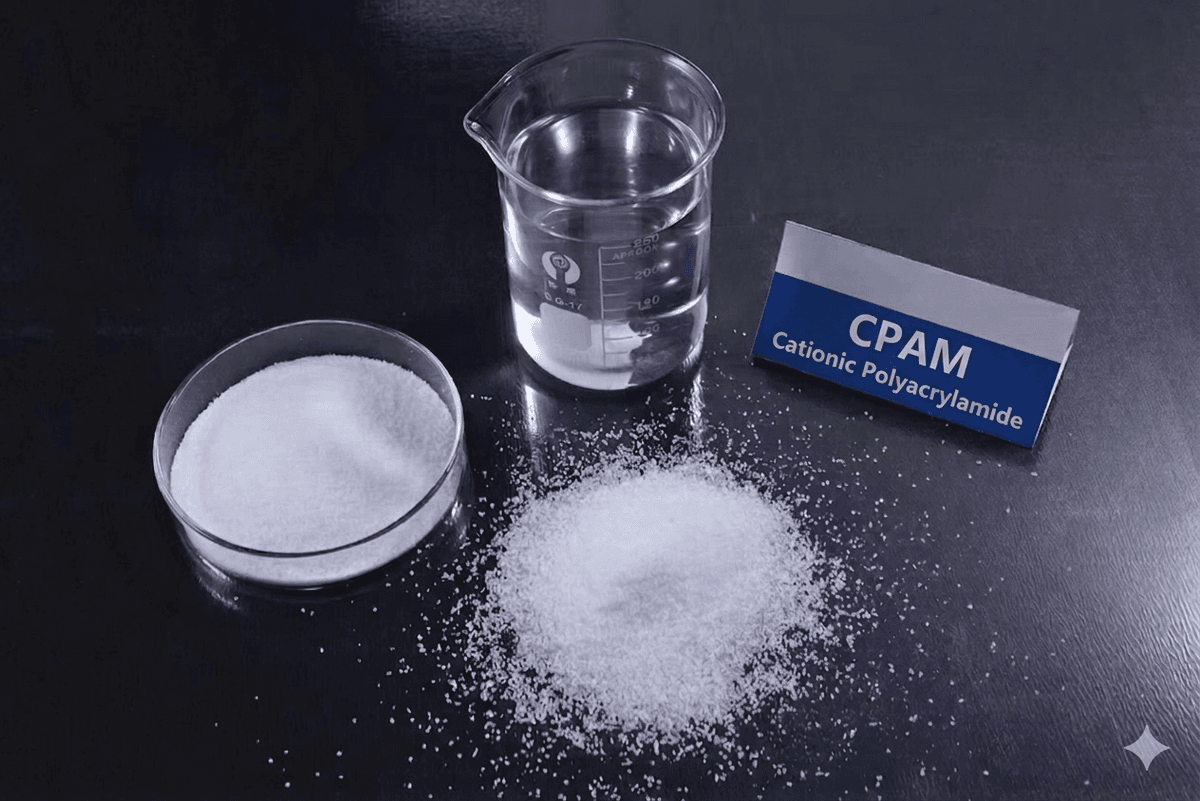
ChinaPAM supplies cationic PAM powder and quotes a screening route for FLOPAM FO 4498 SH enquiries. SNF Catalogue 2007 p.15 places FO 4498 SH at Medium charge and High molecular weight, with approx. 650/360/140 cps at 5/2.5/1 g/L — the highest 5 g/L viscosity in that structured-cationic group. C8003 is the longer-chain primary lane; C8001 is the charge-aligned alternative.
Supply Route Comparison
Published reference data and the ChinaPAM route for SNF FLOPAM FO 4498 SH
Grade facts are from SNF SAS Catalogue 2007 Poudres, p.15 — historical indicative data for information only, not a current SNF specification, not evidence of current SNF availability, and not contractual values. FLOPAM is a registered trademark of SNF SAS. ChinaPAM supplies separately branded ChinaPAM cationic PAM powder grades; no competitor value is used as a ChinaPAM specification. No affiliation with or endorsement by SNF SAS is implied. No exact, drop-in, identical or same-performance equivalence is claimed, no same structured attribute is claimed, and no same-feed comparative test is evidenced in this source pack.
| Parameter | ChinaPAM Supply Route | SNF FLOPAM FO 4498 SH |
|---|---|---|
| Type | Cationic PAM powder | Cationic structured PAM powder |
| Charge (published scales — do not convert) | C8003 normalises to High on our scale; C8001 to Medium | Medium (SNF Catalogue 2007 p.15) |
| Molecular Weight (published scales — do not convert) | C8003 normalises to High on our scale; C8001 to Medium | High (SNF Catalogue 2007 p.15) |
| Brookfield @5 g/L | Confirmed for the quoted grade in the applicable product or batch documents | Approx. 650 cps (SNF Catalogue 2007 p.15) |
| Brookfield @2.5 g/L | Confirmed for the quoted grade in the applicable product or batch documents | Approx. 360 cps (SNF Catalogue 2007 p.15) |
| Brookfield @1 g/L | Confirmed for the quoted grade in the applicable product or batch documents | Approx. 140 cps (SNF Catalogue 2007 p.15) |
| Bulk Density | Confirmed for the quoted grade in the applicable product or batch documents | 0.75 (SNF Catalogue 2007 p.15) |
| Particle Size | Confirmed for the quoted grade in the applicable product or batch documents | Max 2% > 10 mesh; max 6% < 100 mesh (SNF Catalogue 2007 p.15) |
| Recommended make-up | 1–3 g/L recommended | 4 g/L (SNF Catalogue 2007 p.15) |
| Maximum concentration | Max 5 g/L | 10 g/L (SNF Catalogue 2007 p.15) |
| Dissolution time | ≤60 min at working concentration | 60 min at 5 g/L, 25°C in DI water (SNF Catalogue 2007 p.15) |
| Solution holding time | Establish by fresh-versus-aged jar test on your feed | 1 day stated in catalogue (mechanism not established) |
| Structure claim | Not claimed — our master states no structured attribute | Structured polymer (SNF published descriptor) |
| MOQ | 500 kg | Set by regional distributor |
| Lead Time | Confirmed with the current quotation at enquiry | Confirm with regional distributor |
Specifications
| Our Primary Lane | C8003 — longer-chain cationic PAM powder |
| Our Alternative Lane | C8001 — charge-aligned cationic PAM powder |
| Commercial State | SAME_TYPE_SCREENING — cationic powder routes available; grade confirmed at enquiry |
| Positioned Against | SNF FLOPAM FO 4498 SH |
| Their Charge (SNF published) | Medium (SNF Catalogue 2007 p.15) |
| Their MW (SNF published) | High (SNF Catalogue 2007 p.15) |
| Their Brookfield @5/2.5/1 g/L | Approx. 650/360/140 cps (SNF Catalogue 2007 p.15) |
| Their Bulk Density (SNF published) | 0.75 (SNF Catalogue 2007 p.15) |
| Their Particle Size (SNF published) | Max 2% > 10 mesh; max 6% < 100 mesh (SNF Catalogue 2007 p.15) |
| Their Rec. Concentration | 4 g/L (SNF Catalogue 2007 p.15) |
| Their Max. Concentration | 10 g/L (SNF Catalogue 2007 p.15) |
| Their Dissolution Time | 60 min at 5 g/L, 25°C in DI water (SNF Catalogue 2007 p.15) |
| Their Solution Stability | 1 day (SNF Catalogue 2007 p.15) |
| Their Storage | 0–35°C; shelf life 24 months (SNF Catalogue 2007 p.15) |
| Their Packaging | 25 kg bags / 750 kg big bags (SNF Catalogue 2007 p.15) |
| Source | SNF SAS Catalogue 2007 Poudres p.15 — information only, not a specification |
Key Features
- Cationic PAM powder quoted against a confirmed FO 4498 SH duty, not against the number alone
- C8003 longer-chain primary lane; C8001 charge-aligned alternative if the duty is charge-limited
- In the FO 4498 pair, the SH row is listed High MW and the bare row Standard MW; the catalogue does not define the suffix itself — 650 cps vs 350 cps at 5 g/L
- Cross-brand charge and MW comparison kept qualitative — the two published scales do not convert
- No exact, drop-in, identical or same-performance claim; no same-structured-attribute claim
- Fresh-versus-aged jar testing recommended before adopting any holding time for made-up solution
- MOQ 500 kg; current pricing and lead time confirmed with the quotation
Applications
- Exact-model enquiries where the bag label or purchase order reads FLOPAM FO 4498 SH
- Sludge dewatering duty where high-shear floc survival suggests a chain-length-led route
- Make-up and dosing system review where a 650 cps solution viscosity is at the top of pump capability
- Same-material trial comparison of C8003, or C8001, against the incumbent on your own feed
Get a Quote for SNF FLOPAM FO 4498 SH Alternative Supply
Send the complete grade string including the SH suffix, a bag-label photo if you have one, your current use or feed type, your dosing equipment (pump type and make-up system), the result you are targeting, and your expected volume. We will confirm whether C8003 or C8001 is the right lane, current pricing, applicable documents and sample options.
Related Articles
FO 4498 SH: What the Medium-Charge, High-MW Combination Is Actually Asking For
Three facts define this column on SNF Catalogue 2007 p.15, and each one has a procurement consequence. First, the charge tier is Medium — mid-range, not the high-charge end of the cationic range. Second, the molecular weight tier is High: in the FO 4498 pair, the SH row is listed High MW and the bare row Standard MW, and the catalogue does not define the suffix itself. Third, the approximate Brookfield readings are 650/360/140 cps at 5/2.5/1 g/L, which makes the 5 g/L figure the highest among the structured cationic grades on that page. Read together, those three facts describe a polymer that is being asked to do its work through chain length while holding charge in the middle of the range. That is an unusual combination to source against, because most cationic dewatering selection is driven by charge first.
The combination is also the reason the cross-brand comparison has to stay qualitative. Our primary lane, C8003, carries raw ChinaPAM bands that are both medium-high and normalise to High charge and High molecular weight on our own published scale. SNF publishes Medium charge for FO 4498 SH on its scale. These are two vendor scales with no published conversion, so the honest statement is directional: C8003 is our longer-chain cationic route, which matches the direction indicated by the High MW listing on the SH row of this pair, and it may sit higher on charge than the incumbent when normalised. If your process is charge-limited rather than chain-limited, C8001 is the charge-aligned alternative and is the better starting point. We do not resolve that question from the catalogue; it is resolved on your feed.
The viscosity figure deserves separate attention because it is the fact a plant notices first. At the catalogue recommended make-up of 4 g/L the solution is close to the 650 cps end of the curve, and the curve falls steeply — 360 cps at 2.5 g/L, 140 cps at 1 g/L. A dosing pump and dilution loop calibrated on a thinner polymer are being asked to work outside the conditions that calibration was established against, so delivery and dispersion have to be verified against the actual pump curve and discharge pressure and confirmed by measured output rather than assumed from the setting. Our own grades are made up at 1–3 g/L recommended, maximum 5 g/L, which is a deliberately lower band; if you move from a 4 g/L make-up to 2 g/L you must re-scale the volumetric feed rate to hold the same active polymer dose.
| Grade | SNF charge tier | SNF MW tier | Brookfield @5/2.5/1 g/L (approx.) | Our screening lane |
|---|---|---|---|---|
| FO 4498 SH | Medium | High | 650 / 360 / 140 cps | C8003 primary; C8001 charge-aligned alternative |
| FO 4498 (bare) | Medium | Standard | 350 / 200 / 100 cps | C8001 — see the separate bare FO 4498 page |
| FO 4698 SH | Medium | High | 550 / 280 / 130 cps | C8015 (then C8035 if shear data requires) |
Two Failure Modes to Close Out Before You Order
The first failure mode is dropping the SH suffix in the enquiry. The trigger is a purchase order, tender line or e-mail that reads "FO 4498" when the bag on site reads "FO 4498 SH". The symptom appears at make-up rather than at dosing: the delivered powder produces a solution far thinner than the operator expects, because the bare row is listed at Standard molecular weight with approximately 350 cps at 5 g/L against 650 cps for the SH row. Operators commonly respond by raising the dose, which consumes polymer without addressing the mismatch, and the trial data then compares the wrong grade class against the incumbent. The check is mechanical: photograph the complete bag label including the suffix, and measure the viscosity of a 5 g/L solution of your incumbent before you place the enquiry. Those two items settle which of our two pages applies.
The second failure mode is adopting a solution holding time that the source does not support. The trigger is reading the catalogue "1 day" solution stability as a guaranteed property and building a make-up schedule around it — or, in the opposite direction, assuming that anything under 24 hours is automatically safe on your own water. The catalogue states the figure but does not establish a degradation mechanism or a quantified performance loss at any holding time, and dilution water hardness, temperature and shear history all bear on the outcome. The symptom is intermittent and hard to trace: dose rates that work on one shift and underperform on the next, with no change in feed. The check is a fresh-versus-aged jar test on your own material — make up one batch, test it fresh, hold the remainder under your real storage conditions, re-test at the holding time you want to use, and adopt only the holding time your own data supports.
Both checks belong in the enquiry rather than after delivery, because both change which grade we quote. Beyond them, the practical procurement decisions for this grade are: confirming the exact model string and suffix; deciding whether the duty is chain-limited (C8003) or charge-limited (C8001); sizing the make-up concentration against the viscosity your dosing system can actually handle; re-scaling the volumetric feed rate when the make-up concentration changes; setting a dissolution and ageing time that your own tanks support; establishing the active dose by CST or jar test rather than from a datasheet; verifying the documentation package covers the grade you are quoted; planning a same-material trial before a production commitment; confirming MOQ and packaging format against your storage and handling; and confirming current pricing and lead time with the quotation rather than assuming them from a published table.
Dosage Guide
Cationic polymer demand is set by the sludge or feed, not by the polymer datasheet, so establish it by CST or jar test using your current FO 4498 SH active dose rate as the starting reference. Plan the make-up system around viscosity: the catalogue 5 g/L reading for this grade is approximately 650 cps, the highest in its structured-cationic group, so a system sized for a 350 cps solution is operating outside its calibration basis at the same concentration — verify the duty against the actual pump curve and discharge pressure and confirm delivery by measured output. Our grades are made up at 1–3 g/L recommended, maximum 5 g/L, dissolving within 60 minutes at working concentration — a lower make-up concentration also lowers solution viscosity and usually improves dosing accuracy. Bracket the dose upward in small increments and stop where filtrate clarity and cake solids stop improving.
Frequently Asked Questions — FLOPAM FO 4498 SH Equivalent — Medium-Charge High-MW Structured Cationic PAM
Is FO 4498 SH the same as bare FO 4498?
No, and the difference is large enough to matter at the pump. Both sit at Medium charge on SNF Catalogue 2007 p.15, but FO 4498 SH is listed at High molecular weight and bare FO 4498 at Standard. The published 5 g/L Brookfield readings are approximately 650 cps and 350 cps respectively — the SH solution is roughly 1.9 times more viscous at the same make-up concentration. Send the full grade string from your bag label, including or excluding the SH, because the two lead to different screening routes. We publish a separate page for the bare FO 4498 row.
Which ChinaPAM grade do you start from for FO 4498 SH?
C8003 is the primary lane. It is our longer-chain cationic powder, and the FO 4498 SH column is asking for chain length on top of a mid-range charge. C8001 is the single published alternative and is the right start when your process turns out to be charge-limited rather than chain-limited — for example when floc forms but carries too little charge to hold captured solids. We confirm which lane to quote after reviewing your sludge or feed type, dewatering equipment and current dose rate.
Does C8003 match the SNF Medium charge and High MW position?
Not as an exact match, and we will not present it as one. The raw ChinaPAM bands behind C8003 are both medium-high and normalise to High charge and High molecular weight on our own published scale. SNF's Medium charge tier and our normalised High band are two separate vendor scales with no published conversion between them. The useful comparison is qualitative: C8003 is our longer-chain cationic route, which is the direction indicated by the High MW listing on the SH row of this pair. The quantitative answer comes from a trial on your actual feed.
The catalogue says one-day solution stability. Does the polymer degrade after that?
The catalogue states a one-day figure but does not establish a degradation mechanism or a guaranteed performance loss after 24 hours. Treat it as a testable risk rather than a known property. If you want to hold made-up solution longer than a shift, run a fresh-versus-aged jar test on your own feed: make up one batch, test it fresh, hold the remainder under your actual storage conditions, and re-test at the holding time you want to use. Adopt the holding time your own data supports.
Do you claim the same structured-polymer attribute?
No. SNF describes the p.15 grades as structured polymers. Our own master does not state a structured-polymer attribute for the ChinaPAM screening grades, so we do not claim it, and no same-feed comparative test is evidenced in this source pack. Verify fit by trial on your actual material before committing to a production volume.
What documents can you provide for FO 4498 SH enquiries?
Applicable TDS, COA and MSDS for the quoted ChinaPAM grade are confirmed at enquiry; the batch COA is supplied with the confirmed shipment. We can discuss sample options and the document package at the enquiry stage before any volume commitment.
Trademark notice. SNF FLOPAM FO 4498 SH and all other third-party product and brand names on this page are trademarks or registered trademarks of their respective owners. Henan Jinghua New Material Technology Co., Ltd. is not affiliated with, endorsed by, sponsored by or authorised by those owners, and no such relationship is implied. Those names are used here for the sole purpose of identifying the products our grades are compared against, which is necessary to describe what we supply. Our products are separately branded ChinaPAM grades and are not licensed copies. Grade descriptors quoted for third-party products are taken from each manufacturer’s own published literature and follow that manufacturer’s own scale; we do not publish figures those manufacturers do not publish. Performance on your process should be confirmed by jar test or CST test before any change of supply.