This guide is a screening and cost-comparison framework for municipal wastewater plants in Mexico. It does not present a delivered ChinaPAM project, installed utility reference or guaranteed result. Send the plant's actual sludge, equipment, incumbent polymer, current dose and target; use the sections below to build a jar-test plan and compare supplier quotations.
The example illustrates a selection problem worth testing: a plant can overspend when the polymer grade, dose and make-up procedure are not validated against the actual sludge. Operators comparing grades for the first time may find our complete water treatment buyer's guide a useful starting point. Here is the ChinaPAM screening approach for Mexico's municipal wastewater conditions and the operating data we request before recommending a trial grade.
Mexico Municipal Wastewater: Inputs That Change PAM Selection
Plant scale alone does not select a polymer. Seasonal flow, sludge source, dissolved salts, equipment, incumbent grade and the buyer's treatment target determine which candidates should enter a trial.
| Selection input | What to send | Why it changes the trial |
|---|---|---|
| Flow and peak flow | Normal, wet-season and peak values | Sets test throughput and dose comparison basis |
| Sludge source and solids | Primary, waste activated, digested or mixed; feed solids | Changes charge demand and dewatering response |
| Water chemistry | pH, conductivity or TDS and seasonal range | Defines conditions that must be reproduced in testing |
| Equipment and incumbent | Press or centrifuge, current polymer TDS, make-up and dose | Sets a fair side-by-side baseline |
Send these inputs and the plant's decision metrics. ChinaPAM can then shortlist a documented trial route and quote the sample, test support and supply terms that apply to the exact inquiry.
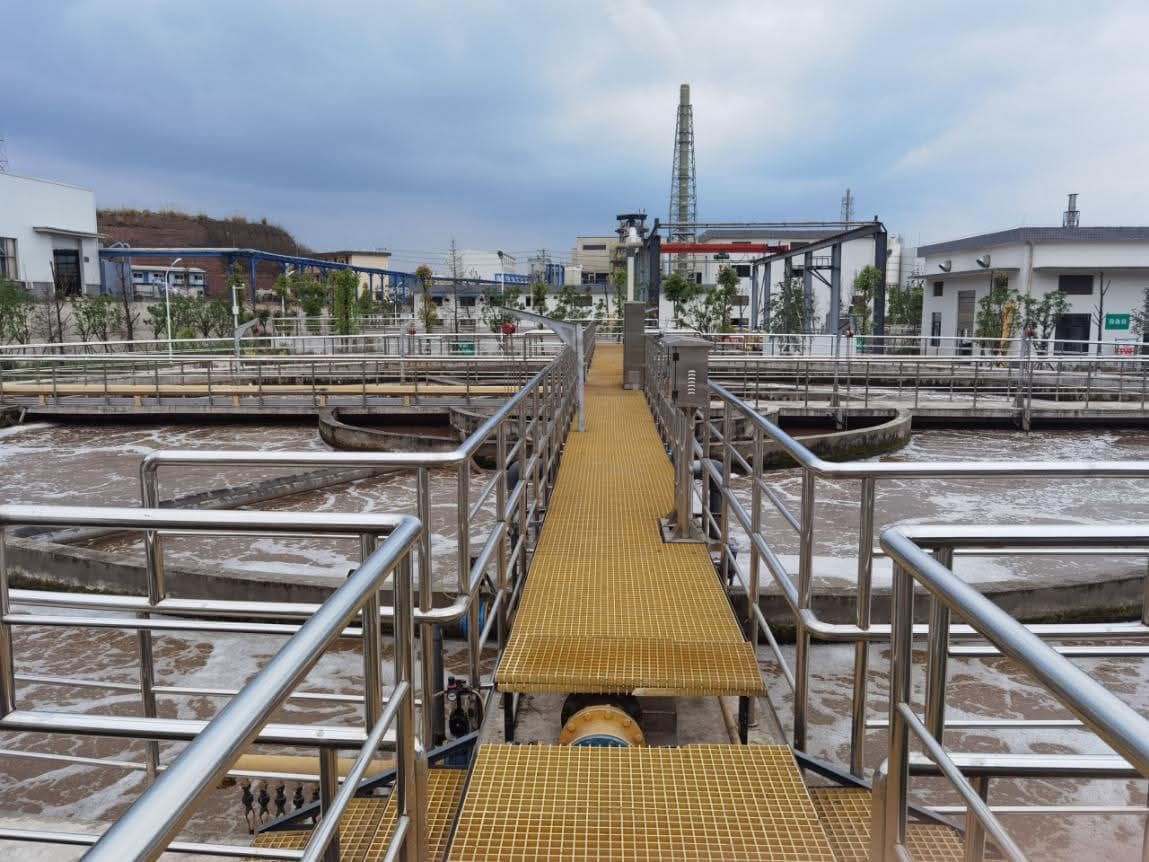
Aeration tanks at a municipal wastewater treatment plant; use the plant's actual sludge and operating conditions when screening a polymer route.
How to Screen PAM for Large Mexican WWTPs
Treat clarification and sludge dewatering as separate duties. For a CEPT or primary-clarification inquiry, send the coagulant program, influent solids, contact time, target capture and current polymer data. For sludge conditioning, send the sludge source, feed solids, equipment, incumbent polymer and current dose.
ChinaPAM can use those inputs to choose a small trial set from its documented anionic or cationic range. Run each candidate against the incumbent on the same feed and record the plant's required capture, clarity, cake-solids, throughput and dose metrics.
The plant's result decides the route. Site size, city name or another facility's operating claim cannot establish a polymer grade or guaranteed outcome for this inquiry.
4 Inputs to Lock Before a Mexico Municipal Trial
1. Grade and Batch Documentation
Send the incumbent bag label and current manufacturer TDS. For the quoted ChinaPAM grade, confirm the applicable TDS, SDS and batch documents rather than assuming that a family description applies to every grade or shipment.
Compare the stated descriptors and the plant result. Do not infer molecular weight, charge, residual monomer or batch tolerance from a distributor label or an unrelated product document.
2. Water Chemistry and Seasonal Variation
Ionic strength can change polymer response, so include pH, conductivity or TDS and the seasonal range in the trial brief. Reproduce the plant's actual water and sludge conditions during screening.
Use a dose curve across documented candidate grades and compare floc strength, separation, filtrate or supernatant quality and equipment response. The result selects the charge and molecular-weight position; no fixed charge band applies to every Mexican plant.
3. NOM-004 and Sludge-Handling Targets
The buyer should state its applicable NOM-004 classification, stabilization, disposal or reuse route and acceptance metrics. Polymer conditioning can be evaluated against mechanical dewatering results, but the polymer supplier cannot certify the plant's legal classification from a product description.
Compare disposal, transport and reuse economics with the buyer's current local costs and measured trial results. Do not substitute fixed national prices or promised cake-solids values for the plant calculation.
4. Procurement and Delivery Constraints
The current ChinaPAM powder catalog uses 500 kg as a trial-order reference. Payment terms, price validity, current availability, production timing and freight must be confirmed in the current quotation for the exact grade and destination.
State the required delivery point, Incoterm, qualification date and consumption plan so the quotation can show a dated supply route without implying permanent stock or a fixed transit time.
Trial Screening Inputs for Mexican Municipal WWTPs
| Treatment stage | Candidate family | Plant input | First test basis | Decision metric | Note |
|---|---|---|---|---|---|
| CEPT or storm flow | Documented anionic or cationic route after feed review | Influent, coagulant, contact time and target | Incumbent dose curve | Capture, clarity and settling | Actual-feed test |
| Primary clarification | Select after charge-demand review | Feed solids, pH and chemistry | Same-feed dose steps | Settling and supernatant quality | Confirm coagulant interaction |
| Sludge thickening | Documented cationic trial range | Sludge source and feed solids | Incumbent comparison | Capture, overflow and dose | Use actual sludge |
| Belt press | Documented cationic trial range | Press, make-up, feed and incumbent | Same-feed jar or drainage test | Cake solids, capture, throughput and dose | Field qualification follows bench test |
| Centrifuge | Documented cationic trial range | Bowl settings, sludge and incumbent | CST or jar screening | Cake, centrate, throughput and dose | Confirm under plant shear |
Do not assign a universal charge, molecular-weight or dose range from country or city alone. ChinaPAM will shortlist candidates from the plant data; the same-feed result decides which route advances.
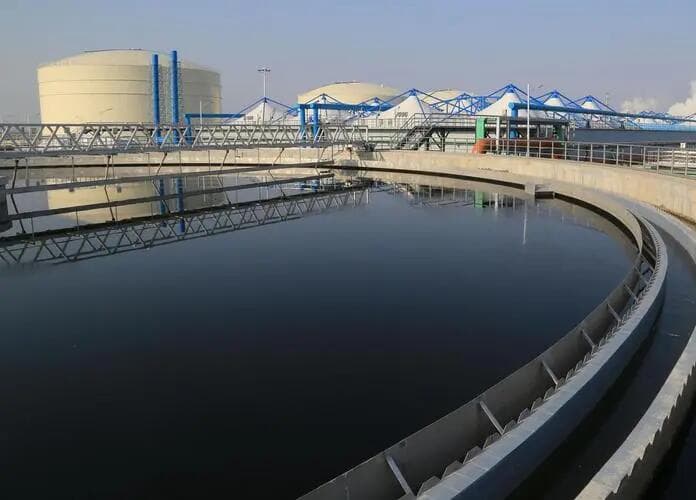
Secondary clarifier at a municipal WWTP; confirm polymer chemistry and dose on the plant's actual feed and operating conditions.
Cost-Comparison Template for a Municipal Plant
Fill this template with the plant's measured baseline, same-feed trial result and dated supplier quotations. It is a decision tool, not a delivered ChinaPAM case or guaranteed savings calculation.
| Parameter | Current baseline | Trial result | Commercial calculation |
|---|---|---|---|
| Cake solids and capture | Plant measurement | Same-feed measurement | Hauling and disposal impact |
| Polymer dose | Current kg per dry tonne | Trial kg per dry tonne | Delivered polymer cost per dry tonne |
| Equipment throughput | Current measured rate | Trial measured rate | Operating-time effect |
| Disposal or reuse route | Current verified route | Buyer-qualified route | Local verified cost or revenue |
| Delivered product cost | Current invoice | Dated ChinaPAM quote | Annualized only from actual consumption |
Review grade selection, dose and make-up together. Use the same sludge and record each step; do not assume a fixed charge band, improvement percentage or optimization period before the test.
For ChinaPAM powder, the general preparation guidance is 1–3 g/L, with 5 g/L as the maximum and up to 60 minutes dissolution. Confirm the selected grade's current TDS and the plant equipment before setting the field procedure.
What ChinaPAM Can Evaluate for Mexican Plants
| Inquiry item | What ChinaPAM should confirm |
|---|---|
| Supply status | Current status for the exact grade, quantity and required date; no blanket stock claim |
| Current CPAM powder range | The current catalog lists 12 CPAM models; select only after feed and equipment review |
| Quoted-grade documents | Confirm the applicable TDS, SDS and batch documents |
| Sample and jar-test option | The catalog lists availability; confirm amount, freight, deliverable and timing for this inquiry |
| Route and Incoterm | State the current route, delivery point and Incoterm in the dated destination quote |
| Trial-order quantity | 500 kg catalog reference; reconfirm for the selected grade |
| Price and payment | Current quotation only, with validity and applicable terms |
Build the commercial comparison from the plant's measured baseline, trial result, annual consumption and current delivered quotations. That shows whether chemical optimization is worth pursuing without borrowing a national investment figure or promising a fixed payback period.
For CEPT or peak-flow work, send the influent, coagulant program, contact time, current polymer and required capture. Compare candidates on the same feed and calculate capacity or cost effects only from the plant's measured result.
Frequently Asked Questions
What PAM type should a Mexican municipal plant screen?
Start from sludge source, pH, conductivity or TDS, equipment, incumbent polymer and dose. ChinaPAM can shortlist documented candidates, but the same-feed CST, jar or dewatering result selects the grade.
How does PAM relate to NOM-004 requirements?
Polymer conditioning can be measured through cake solids, capture, dose and equipment throughput. The buyer and its qualified advisers determine the applicable legal classification, stabilization and disposal or reuse route from the full plant process and current rule.
What is the delivery time from China to Mexico?
Confirm current availability or production status, port or delivery point, Incoterm, carrier route and estimated schedule in the dated quotation for the exact grade and quantity.
Can ChinaPAM support jar testing?
The current catalog lists sample and jar-test availability. Send the plant data and confirm the sample amount, freight, grades, test method, deliverable and timing for this inquiry before shipment.
What is the trial-order quantity and packaging?
The current powder catalog uses 500 kg as a trial-order reference and lists 25 kg bags; it also lists 750 kg jumbo bags for operations above 100 tons per month. Confirm the exact grade, packaging and quoted quantity before order.
Ready to Optimize Your Plant's PAM Performance?
ChinaPAM supplies polyacrylamide for export and can evaluate a Mexico municipal wastewater enquiry from your sludge data, current polymer and equipment. Request a jar-test plan and a grade recommendation for your actual conditions.
Next Steps for Mexican Municipal Plants
- Send the plant baseline — sludge source, feed solids, chemistry, equipment, incumbent polymer, dose and decision targets.
- Confirm the trial route — candidate grades and applicable documents after ChinaPAM reviews the duty.
- Quote the sample and test scope — amount, freight, test method, deliverable and timing for this inquiry.
- Run the side-by-side test — use the same feed and record dose, capture, clarity, cake solids and throughput as applicable.
- Request the volume quotation — exact grade, quantity, current availability, route, delivery estimate, price validity and payment terms.
Send the technical team the plant baseline to receive a documented trial and quotation path for the actual conditions.
Standards Note
Use the current plant permit, Mexican regulatory requirements and the buyer's engineering criteria when setting sludge-handling, flow-variation and discharge targets.
Evaluate sludge conditioning by the plant's measured cake solids, capture, polymer dose, equipment throughput and verified hauling or disposal cost.
Related technical checks for Mexico buyers include municipal sludge dewatering, PAM water-treatment dosage, and CPAM grade selection.