Short answer: before any PHPA-based mud goes into a wellbore, you need a qualification test ladder, not a single hydration number. Define the duty first — water base or brine, formation temperature, clay encapsulation or shale inhibition, compatibility with other additives — then run the five tests in order: hydration curve, salinity/calcium/pH matrix, rheology, fluid loss and hot rolling with cuttings dispersion. The field acceptance sheet is written before the test, not after.
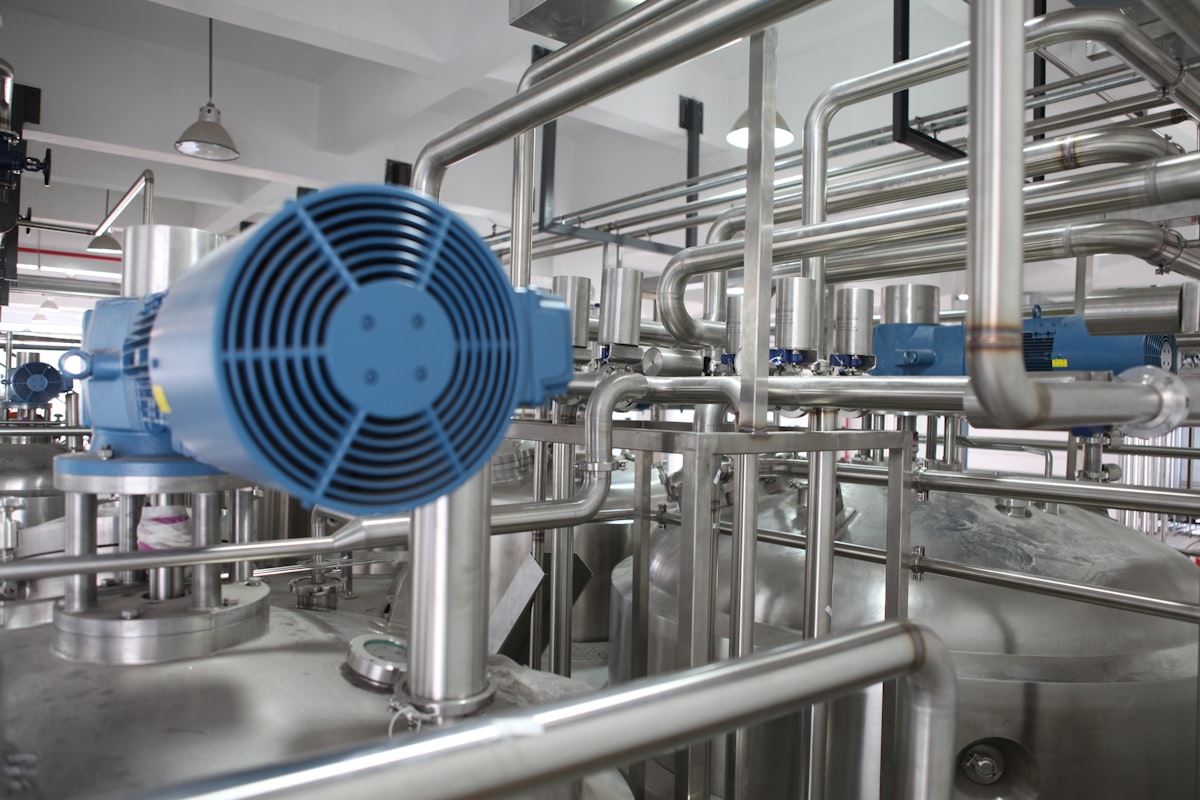
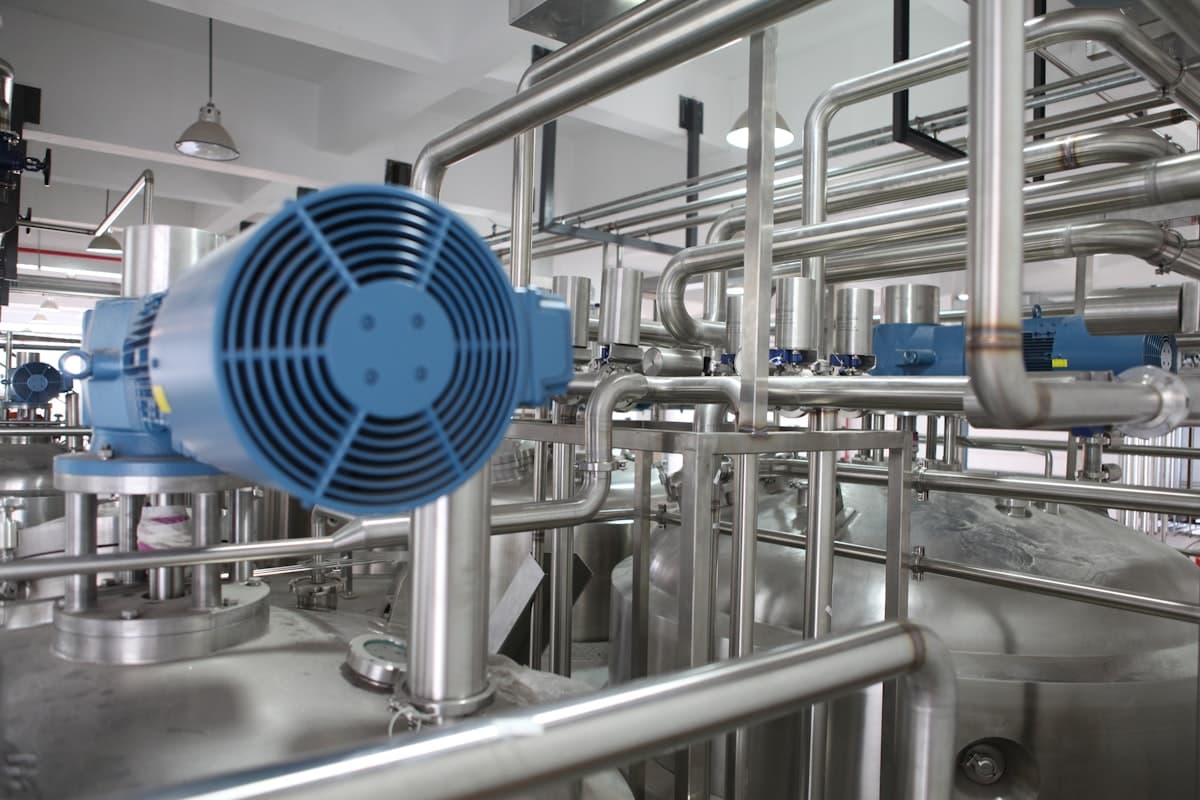
Drilling fluid circulation context. Not a photograph of a ChinaPAM application or a depiction of any specific well programme.
Define the duty before selecting a grade
PHPA is a family of partially hydrolysed polyacrylamide products, not a single specification, and the differences between grades matter:
- Hydrolysis degree determines how many carboxylate groups are available for clay encapsulation and shale inhibition. Low hydrolysis favours viscosity and fluid-loss control; higher hydrolysis favours inhibition of hydratable clays.
- Molecular weight determines viscosity contribution and the encapsulation reach across clay surfaces. Very high MW products tend to flocculate drill solids at low concentration, which can be desirable or disruptive depending on the solids-control strategy.
- Salt tolerance varies by grade. A freshwater PHPA may lose most of its viscosity in a KCl or NaCl brine; a saltwater-tolerant grade is hydrolysed and molecular-weight-selected for that environment. Know the brine before selecting the grade.
- Temperature stability. PHPA loses viscosity as temperature rises, and the rate at which that happens depends on the grade, the hydrolysis degree, the brine and the exposure time — there is no single temperature above which every PHPA fails. Treat the onset temperature as something to be established for the specific product and fluid, and verify thermal stability at maximum bottomhole circulating temperature for the planned exposure duration, not at surface temperature.
These four parameters interact. A grade selected on freshwater rheology will behave differently in a harsher downhole environment than the datasheet suggests — for example, in a 15% KCl brine at 130°C, quoted here only as an illustrative scenario rather than a standard condition or a value to design against. The qualification ladder exists to expose those differences on your specific fluid system before drilling.
Sample identity and test-condition reporting
This section matters for technical comparison and for any dispute resolution. Every test report must record:
- Lot number and manufacturing date of the sample tested
- Make-up water source: tap, distilled, or brine at stated concentration
- Mixing speed, mixer geometry and mixing time
- Hydration temperature and time before the first rheology measurement
- Atmospheric pressure or pressurised test cell, for hot tests
- All additives in the base fluid, in the order they were added
A polymer that is not identified to lot level cannot be reliably re-purchased or disputed if field performance diverges. A test result without its mixing protocol is not reproducible.
Test 1: Hydration curve
Mix polymer into make-up water and record Fann viscometer readings (6 rpm and 600 rpm) at regular intervals — typically 5, 15, 30 and 60 minutes — under constant temperature and mixing conditions. Plot the curve to find the hydration plateau: the time after which additional mixing produces no further viscosity increase.
The hydration curve gives you two numbers that directly affect field operations: minimum hydration time before the mud can be used, and the plateau viscosity you should expect in the mix tanks. If the plateau is reached quickly, the mud programme can be adjusted for faster mixing. If hydration is slow or incomplete, that is usually a signal that the mixing temperature, water quality or mixing energy is not matched to the grade.
Test 2: Salinity, calcium and pH matrix
Run rheology at the hydration plateau across a matrix of salinity, calcium and pH. The levels below are an illustrative screen, not a specification: centre the matrix on the actual field fluid you will drill with, and pick the levels from the well programme — the planned brine type and weight, the calcium you expect from the make-up water and any cement or formation contamination allowed for, and the pH range the mud programme will operate in. Bracket each of those with one level either side so the matrix shows you the gradient around your real operating point.
| Variable | Illustrative levels — replace with levels from your well programme | Why it matters |
|---|---|---|
| NaCl or KCl (%) | Centre on the planned brine weight, with one level either side; e.g. 0, 5, 10, 15 if the programme sits near 10% | Salt compresses anionic chain, reducing viscosity and inhibition reach |
| Ca²⁺ (mg/L) | Bracket the calcium expected from make-up water plus any contamination allowed for; e.g. 0, 200, 1000, 5000 | Divalent ions interact with the anionic groups and can reduce viscosity or take the polymer out of solution. Whether the loss recovers on treatment depends on the grade, the concentration and the fluid, so establish that by test rather than assuming it either way |
| pH | Span the pH range the mud programme will run at; e.g. 7, 9, 11 | High pH accelerates hydrolysis; low pH reduces anionic character; both affect viscosity and compatibility |
Record Fann readings at 3, 6, 100, 200, 300 and 600 rpm at each condition. Plot PV (plastic viscosity), YP (yield point) and gel strengths (10s, 10min). The matrix tells you which combinations are safe and where performance cliffs are.
Test 3: Rheology profile
With the brine condition established from Test 2, measure a full rheology profile at the planned operating concentration and at a higher concentration to understand dose response:
- Fann VG meter readings at all standard speeds (3, 6, 100, 200, 300, 600 rpm)
- PV, YP, n and K from the Power Law or Herschel-Bulkley model, depending on what your drilling engineer requires
- 10-second and 10-minute gel strengths
- At two temperatures if the well has a significant temperature gradient: surface and maximum bottomhole circulating temperature
Test 4: Fluid loss (API and HPHT)
A filter press run at ambient temperature and 100 psi differential gives a baseline fluid-loss number for low-temperature shallow sections. For deep wells or high-temperature sections, run an HPHT filter press at the planned bottomhole temperature and at 500 psi (or whatever differential the well plan specifies). Take the governing test method and its conditions from the specification your operator or laboratory works to, and record them with the result — the reference list at the end of this article points to the API standards catalog for orientation, which is not the same thing as citing a specific method, and it is not evidence that any single method applies to your programme.
Record both the filtrate volume and the filter cake thickness. A thin, flexible, low-permeability cake is the goal. A thick cake signals that the polymer or the base fluid is not adequately reducing filtration; a thin but brittle cake may fail under differential sticking conditions. Compare both against the acceptance criteria in the well programme, not against a general industry number.
Test 5: Hot rolling and cuttings dispersion
The hot rolling test is the most informative single test for assessing PHPA shale inhibition, but it is also the most frequently conducted incorrectly.
Example protocol. One commonly used form of the test runs as follows: weigh a representative shale sample, add it to the fluid at the planned solids loading, seal in a roller oven and hot-roll at the planned bottomhole temperature for 16 hours; retrieve, wet-screen over a 1 mm sieve, recover the retained fraction, dry at 70°C and weigh. The recovery percentage is the inhibition efficiency for that fluid-shale-temperature combination. Treat the 16-hour duration, the 1 mm screen and the 70°C drying step as parameters to align with your operator’s or laboratory’s own written method rather than as fixed values — they change the number you get, so the same method has to be used across every candidate for the comparison to mean anything.
Cuttings dispersion index (CDI). A higher CDI means more of the original cuttings mass was dispersed or broken down — which means the fluid is not inhibiting. A PHPA fluid in its design conditions should show higher recovery (lower CDI) than an uninhibited water base. If it does not, either the grade is wrong for the shale chemistry or the concentration is insufficient.
Shale sourcing. Results from standard commercial shale samples may not predict behaviour on your formation. If the target formation shale is available from a nearby well, test on actual formation shale.
Thermal aging. Before hot rolling, age the polymer fluid in the roller oven without shale at test temperature — for the same exposure duration your written method specifies, 16 hours in the example above — then cool and add shale for the full protocol. This separates polymer thermal stability from shale inhibition. If rheology after aging fails the acceptance criteria, the fluid is not thermally stable at that temperature and concentration, and no amount of inhibition data on the shale matters.
Shear tolerance and additive compatibility
Two additional checks before field trial sign-off:
Shear tolerance. Pass the formulated fluid through a choke valve or a high-shear device at a known shear rate, then measure rheology before and after. Viscosity lost to chain scission does not come back on standing, so a drop that persists after one pass is a result to act on rather than something to wait out. If viscosity drops more than the acceptance threshold, the candidate has not met the shear requirement for that well programme — which may point to the grade, the concentration or the shear conditions themselves; the test tells you it failed, not which of those to change.
Additive compatibility. Add each planned additive one at a time in the planned addition order to a test fluid containing the PHPA at its working concentration, and check rheology and fluid loss after each addition. PHPA can interact with cationic polymers, with KCl/KOH combinations, and with some bridging agents. Check compatibility before combining additives in the field, not after a viscosity upset in the pit.
Mixing order in the field
Order of addition matters. The sequence below is a candidate to validate with your mud engineer and your additive suppliers before it is used on a well, not a standard to follow as written:
- Base water (confirm quality: hardness, pH, any contamination)
- pH control (caustic or lime) to target pH
- Clay control (if bentonite is in the programme, pre-hydrate separately)
- PHPA — mixed at low shear for the hydration time established in Test 1
- Other viscosifiers or fluid-loss reducers
- Weighting material last, mixed at target density before circulation
Deviate from this order only with a tested reason. Adding PHPA after weight material or into a high-solids system often reduces hydration efficiency.
Failure modes and what they look like in lab and field
| Symptom | Likely cause | Check before changing grade |
|---|---|---|
| Viscosity below spec after hydration | Incomplete hydration: mixing time, temperature or water quality | Rehydrate at higher temperature or longer time; check make-up water hardness |
| Viscosity collapses on brine addition | Grade not selected for salt tolerance; chain coiling in electrolyte | Confirm the grade is rated for the planned brine concentration; test a saltwater-tolerant variant |
| Precipitation on Ca²⁺ addition | Calcium interacting with the anionic groups; whether it recovers on pre-treatment is a test result for that grade and concentration, not a given | Reduce Ca²⁺ with soda ash pre-treatment; or switch to a Ca-tolerant grade |
| Viscosity drop after hot rolling (thermal aging) | Candidates include thermal degradation of the polymer, insufficient concentration for the application, or an exposure duration longer than the grade tolerates; the test result alone does not separate them | Test at a lower temperature first to separate grade failure from concentration failure; check the temperature rating on the TDS |
| Poor cuttings recovery in hot roll despite good rheology | Grade not matched to formation clay chemistry; PHPA concentration below encapsulation threshold | Test higher concentration; test higher hydrolysis degree; use actual formation shale if available |
| Field rheology below lab result | Shear degradation in BHA or through choke; or solids contamination in pits | Run shear tolerance test at field BHA shear rate; inspect pit solids loading |
What each test proves and cannot prove
The five-test ladder can show, under the recorded laboratory conditions: hydration profile at your make-up conditions; rheology behaviour across the brine and temperature levels actually tested; fluid-loss performance at the filter-press conditions used; thermal stability at the test temperature and exposure duration; inhibition efficiency against a named shale under the hot-rolling method recorded; and compatibility with each planned additive individually. Each of those results is conditional on the method and the levels being written down with it — a number without its test conditions is not evidence of anything.
It cannot prove: performance against the specific formation shale if you tested with a substitute; behaviour at temperatures above those tested; performance after drilling-fluid contamination by formation brines not in the test matrix; whether the viscosity profile will hold through extended recirculation; or that the product will perform identically from a different manufacturing lot without re-qualification.
Field acceptance sheet and procurement checklist
Write the acceptance criteria before testing begins. A field acceptance sheet for PHPA qualification should specify:
- Minimum hydration time and target viscosity band at completion
- Rheology limits (PV, YP, gel strengths) at the planned brine concentration and temperature
- Maximum HPHT fluid loss at the planned temperature and pressure differential
- Minimum hot-roll cuttings recovery (%), identified to specific shale type and test temperature
- Maximum viscosity drop after shear tolerance test at the specified shear rate
- Pass/fail for compatibility with each additive in the programme
- Product identification: grade, lot number, manufacturer
- Documents to be supplied with delivery: TDS, SDS, CoA against the delivered lot
For adjacent topics see PHPA oilfield grade, drilling fluid water treatment, polyacrylamide for oil drilling, drilling mud additive selection, viscosity control, and the safety and SDS handling guide.
Sources
- SNF, Drilling fluid applications. snf.com/industry/oil-gas/drilling
- API, Standards catalog — drilling fluids and drilling operations (catalog listing, cited for orientation; no specific test method is quoted from it here). api.org/standards
Third-party names and sources above are cited for reference and attribution only. They do not indicate any affiliation with ChinaPAM and no figure from them describes a ChinaPAM project or result. PHPA performance in a drilling programme depends on formation chemistry, water chemistry, temperature, additive compatibility and operating conditions specific to the well, and must be established by testing on your own fluid system.
Share your well programme and get a qualification test plan
Send make-up water chemistry, planned brine concentration, maximum bottomhole circulating temperature, additive list and the acceptance criteria your drilling engineer requires. We will come back with a candidate grade recommendation and a five-test ladder with acceptance criteria written down before any product is shipped.
Quotation based on grade, quantity and destination · info@chinapolyacrylamide.com · WhatsApp +86 187-3759-0940