Superfloc C-492 Equivalent — Cationic Polyacrylamide
Our cationic polyacrylamide range covers the municipal and industrial sludge dewatering duties Superfloc C-492 is specified for. Free trial samples and batch COA available.
Supply Route Comparison
Published reference data and the ChinaPAM route for Kemira Superfloc C-492
| Parameter | ChinaPAM Supply Route | Kemira Superfloc C-492 |
|---|---|---|
| Type | Cationic PAM powder | Cationic PAM powder |
| Molecular Weight | High (our scale) | High (Kemira published scale) |
| Charge Density | Medium–High (our scale) | Medium–High (Kemira C-series) |
| MOQ | 500 kg | Set by regional distributor |
| Lead Time | 7–10 days ex-works | Set by regional distributor |
| Trial Sample | Free 5 kg with CST protocol | Via distributor request |
Specifications
| Our Product | Cationic polyacrylamide powder |
| Positioned Against | Kemira Superfloc C-492 |
| Type | Cationic (acrylamide–quaternary copolymer) |
| Molecular Weight | High |
| Charge Density | Medium–High |
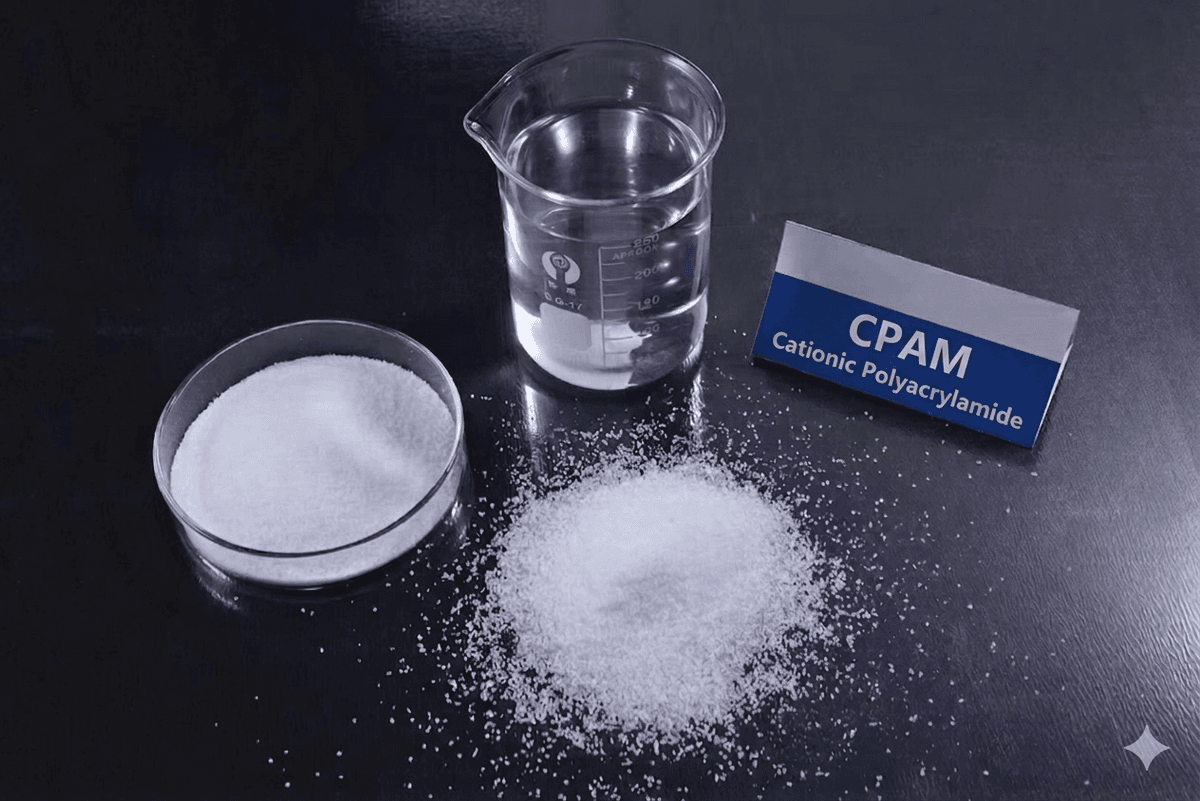
| Appearance | White granular powder |
| Packaging | 25 kg PP woven bags + PE liner |
Key Features
- Selected against the Superfloc C-492 cationic profile
- Suited to municipal sludge dewatering on belt press and centrifuge
- Free trial sample with CST test protocol
- Batch-specific TDS, COA and MSDS with every shipment
- MOQ 500 kg, direct from factory
Applications
- Municipal WWTP sludge dewatering — belt press and centrifuge
- Waste activated sludge thickening
- Industrial sludge — food, beverage, pulp and paper
- Dissolved air flotation (DAF) sludge conditioning
- Digested sludge dewatering
Get a Quote for Kemira Superfloc C-492 Alternative Supply
Start with the grade name, a bag-label photo or your purchasing requirement. We can discuss current pricing and sample options now; process details can follow.
Related Articles
Dosage Guide
Establish optimal dose by CST on your specific sludge. Use your current Superfloc C-492 rate as the starting reference.
Frequently Asked Questions — Superfloc C-492 Equivalent — Cationic Polyacrylamide
What does the "C" in Superfloc C-492 mean?
Cationic. Kemira uses a consistent prefix across the Superfloc range: C = cationic, A = anionic, N = nonionic. The three-digit number tracks charge density within the cationic series.
Do you supply a copy of Superfloc C-492?
No. We supply independently manufactured cationic polyacrylamide selected against the published C-492 profile. Kemira does not publish grade-level charge and MW figures, so verify performance with a CST test on your own sludge before switching rather than relying on a cross-reference number.
How do I know if C-492 charge density is right for my sludge?
Run a CST test across a charge range. Waste activated sludge from aerobic treatment typically demands medium-to-high cationic charge. Digested sludge may need less. The CST curve shows a clear minimum — that is your optimal charge and dose.
Can I get a sample before ordering?
Yes. We ship a free 5 kg trial quantity with a CST test protocol so you can compare cake solids and filtrate clarity against your current polymer.
What other Superfloc C grades can you match?
The C-series runs from C-410 to C-498 and beyond. Higher numbers indicate higher charge density. Tell us your exact grade number and we will nominate the closest grade from our cationic range.
Related Products
Trademark notice. Kemira Superfloc C-492 and all other third-party product and brand names on this page are trademarks or registered trademarks of their respective owners. Henan Jinghua New Material Technology Co., Ltd. is not affiliated with, endorsed by, sponsored by or authorised by those owners, and no such relationship is implied. Those names are used here for the sole purpose of identifying the products our grades are compared against, which is necessary to describe what we supply. Our products are independently manufactured and are not licensed copies. Grade descriptors quoted for third-party products are taken from each manufacturer’s own published literature and follow that manufacturer’s own scale; we do not publish figures those manufacturers do not publish. Performance on your process should be confirmed by jar test or CST test before any change of supply.