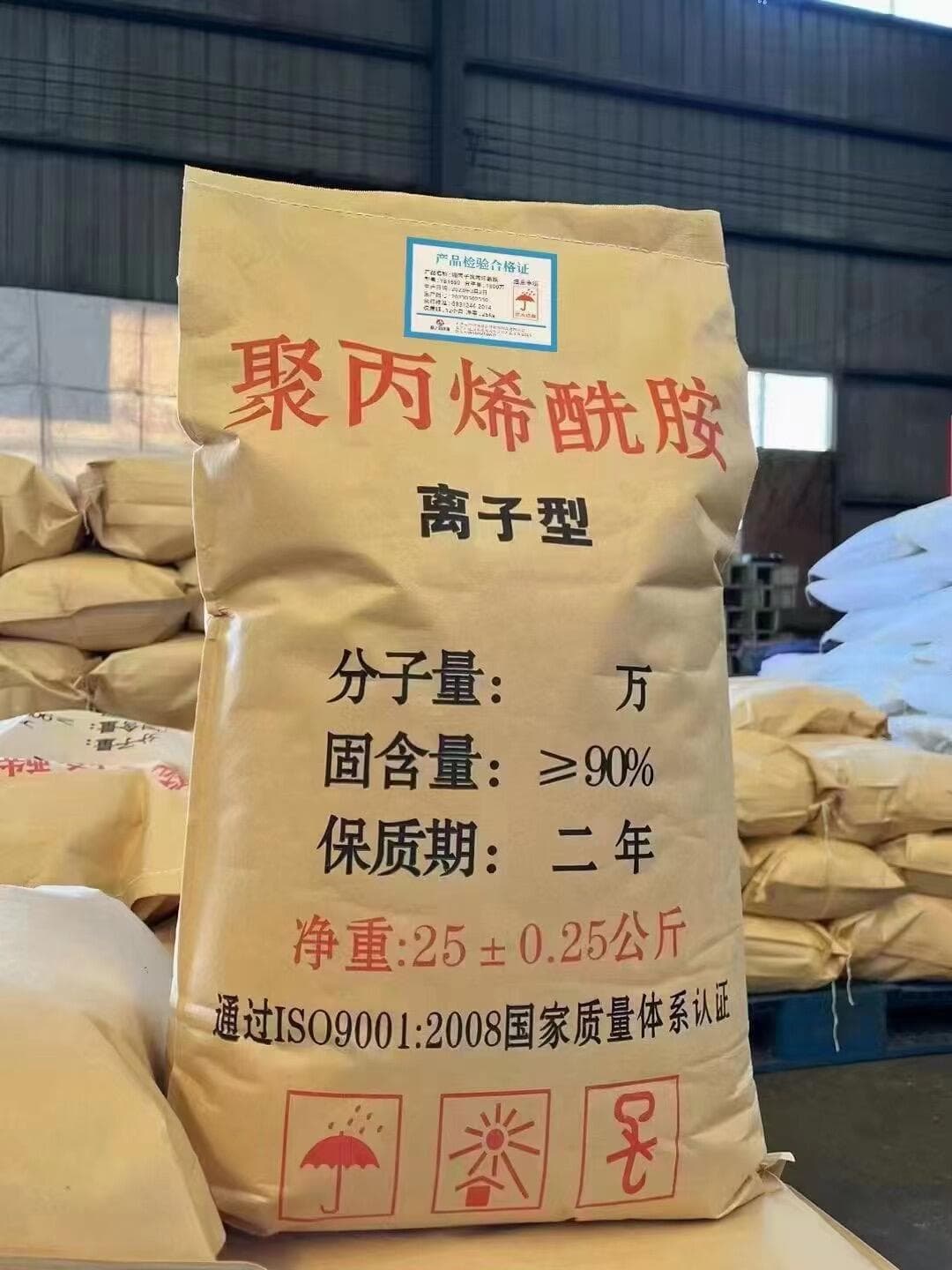
KemSep C-8109 Equivalent Screening (CNfloc C8008)
ChinaPAM can quote a cationic PAM powder screening route for a confirmed KemSep C-8109 enquiry, led by CNfloc C8008 with C8001 as the one backup. Same form, same ion type, low-charge direction. Send the complete model name with its C- prefix or a bag-label photo and the enquiry opens. ChinaPAM accepts the enquiry, quotes the screening route, and discusses sample arrangements after the grade and conditions are confirmed.
Supply Route Comparison
Published reference data and the ChinaPAM route for Kemira KemSep C-8109
KemSep is a trademark of Kemira Oyj. ChinaPAM is an independent manufacturer and is not affiliated with, endorsed by, licensed by or a distributor for Kemira. The brand and grade names are used only to identify the incumbent product a buyer is asking about. Charge and molecular-weight descriptors in the held sources are relative labels inside one supplier’s own range. They carry no calibrated numeric relationship to any other supplier’s labels and cannot be converted between ranges. Our products are separately branded ChinaPAM grades and are not licensed copies.
| Parameter | ChinaPAM Supply Route | Kemira KemSep C-8109 |
|---|---|---|
| Product form | Cationic polyacrylamide powder (CNfloc C8008, backup C8001) | Cationic dry polyacrylamide (DPAM), listed for mud dewatering in World Oil 2015, p.21, and placed in the KemSep 8000 dry series by the mirrored brochure |
| Charge position | C8008 is the low-charge lane on the ChinaPAM scale; C8001 is the single backup one step up | Described as low charge in the brochure product table. Charge and molecular-weight descriptors in the held sources are relative labels inside one supplier’s own range. They carry no calibrated numeric relationship to any other supplier’s labels and cannot be converted between ranges. |
| Molecular-weight position | Confirmed from the quoted ChinaPAM grade’s own data at quotation | Described as medium molecular weight in the same brochure table, again as a relative label rather than a figure |
| Source status | Current ChinaPAM grade data, read against the grade being quoted | A historical mirrored document. It is useful for series placement and relative position, and it is not treated as a current commercial specification. |
| Formulation | A separately branded ChinaPAM grade | Unknown. No identical-formula or drop-in claim is made in either direction. |
| Numeric cross-vendor alignment | Not claimed | Not established. The brochure gives word bands, and word bands from two suppliers do not convert. |
| Current availability | Confirmed in the quotation against grade, destination and order conditions | Current Kemira supplier and manufacturer status for the branded grade is recorded as unknown in the held sources, and so is current availability on either side. ChinaPAM makes no statement about the branded product’s present specification. |
| Documents | Applicable document set and TDS availability are confirmed against the quoted ChinaPAM grade; a batch-specific COA is tied to a confirmed shipment only. Price, current stock, lead time and sample dispatch are agreed in the quotation, not stated from the source documents. | A trade-press listing and a mirrored historical brochure table. Neither is a current specification. |
Specifications
| Incumbent Model | Kemira KemSep C-8109 (complete model name, C- prefix retained) |
| Screening Basis | Same-chemistry cationic PAM powder route; charge band established from the NREL data; fit confirmed by bench test. |
| Incumbent Product Form | Cationic dry polyacrylamide (DPAM) per World Oil 2015, p.21 |
| Incumbent Series Placement | KemSep 8000 dry-PAM series (mirrored brochure, p.2 product table) |
| Incumbent Charge Position | Low (relative label on the brochure’s own scale) |
| Incumbent MW Position | Medium (relative label on the brochure’s own scale) |
| ChinaPAM Screening Route | CNfloc C8008 screened first; CNfloc C8001 as the single backup |
| Form Relationship | Powder to powder — no emulsion-to-powder conversion on this route |
| Route Boundary | One screening route plus at most one backup. No exact equivalence, no performance guarantee. |
| Cross-Vendor Numeric Alignment | Not established — labels sit on separate supplier scales |
| Formulation Match | Unknown and not claimed |
| Manufacturing Entity For This Exact Route | Not claimed at model level |
| Current Availability (Either Side) | Unknown in the held sources; confirmed only in a quotation |
| Acceptance Basis | Charge-demand measurement plus a controlled dose ladder on the actual feed |
Key Features
- Powder-to-powder route: the form already matches, so the changeover risk sits in charge demand and make-down rather than in a form conversion
- Series placement published with its provenance intact — a mirrored historical brochure, named as such rather than passed off as a current specification
- Low-charge position used as the starting condition: C8008 first, C8001 as the single backup
- The brochure’s low / medium / high charge split across the 8000 series stated as relative labels, not as cross-vendor numbers
- Dissolution discipline treated as a first-order variable, with the approved preparation window published
- Two documented failure modes with the verification step for each
- C- prefix and complete model name carried through the enquiry unchanged
Applications
- Drilling-mud dewatering qualification where the incumbent is a dry cationic PAM named KemSep C-8109
- Low-charge dry-polymer procurement where a bag label, TDS or tender line carries the complete model
- Make-down review where fish-eyes, blocked lines or unstable dose response have already been seen
- Charge-demand checking before a higher-charge grade is accepted for a low-charge duty
- Separating a C-8109 enquiry from the medium-charge sibling in the same dry series
Get a Quote for Kemira KemSep C-8109 Alternative Supply
The complete model name with its C- prefix, or a bag-label photo, opens the enquiry. Your current make-down concentration and mixing time are the most useful next detail on a dry-polymer route.
Related Articles
The supply answer first: a powder-to-powder low-charge route
A confirmed KemSep C-8109 enquiry gets a cationic PAM powder screening route from ChinaPAM, with CNfloc C8008 screened first as the low-charge lane and CNfloc C8001 as the single backup. The form already matches on this one — dry polymer against dry polymer — which takes an entire class of changeover risk off the table before the trial starts.
The state is same-type screening. It is not a claim that ChinaPAM supplies the branded KemSep grade, and no grade is offered as a drop-in replacement. Where both candidates sit in the same band, the primary-and-backup order follows available ChinaPAM grade data and the order of the sources rather than any proven superiority.
ChinaPAM accepts the enquiry, quotes the route, and discusses sample arrangements after the grade and conditions are confirmed. Price, current stock and delivery timing are settled in the quotation and are not stated from the source documents.
Identity lock: the series separates low, medium and high by one digit
The C- prefix is part of the canonical name and the enquiry keeps it intact. In this dry series the charge split is carried by short model strings, so a shortened or retyped grade name is exactly how a low-charge duty ends up screened against a higher-charge route.
A photograph of the bag label settles it faster than any description. Where the buyer holds a current TDS, it is read alongside the label; this page does not substitute for it, and siblings in the series are never merged into one enquiry.
Current Kemira supplier and manufacturer status for the branded grade is recorded as unknown in the held sources, and so is current availability on either side. ChinaPAM makes no statement about the branded product’s present specification.
Three facts the held sources actually establish
Two of these three come from a mirrored historical brochure, which is named as such on every row rather than presented as a live datasheet.
| Fact | Where it comes from | What it does not establish |
|---|---|---|
| C-8109 is a cationic dry polyacrylamide (DPAM) listed for drilling-mud dewatering. | World Oil, 2015, page 21. | Form and duty family only — no charge figure, no MW figure and no performance claim. |
| A mirrored Kemira-origin brochure places C-8109 in the KemSep 8000 dry-PAM series. | Mirrored brochure, page 2 product table (historical mirrored document). | Series membership only. A historical mirror is not evidence of the current commercial specification or of present availability. |
| The same brochure table describes it as cationic, low charge, medium molecular weight. | Mirrored brochure, page 2 product table. | These are relative labels inside that brochure’s own range. They establish no cross-vendor numeric equivalence and cannot be converted into ChinaPAM charge or MW values. |
What is matched, what stays open, and the intake that narrows it
Ion type and physical form are matched here, and the charge direction is readable from the brochure. Numeric alignment, formulation and process performance are not established and stay recorded as unknown and test-required.
Useful intake: feed source, solids percentage, pH, temperature, conductivity or salinity, the biological-versus-primary solids share where it applies, the incumbent active dose on an active-polymer basis, the current make-down concentration and maturation time, the dewatering equipment, and the acceptance targets you are judged against. On a dry route the make-down details earn their place at the top of that list.
The complete label alone opens the enquiry; the rest sharpens the screening route and the trial plan.
Preparation: the same form still has to be dissolved properly
Matching the form removes the inversion problem but not the dissolution problem. Dry polymer that is under-wetted or made down too concentrated will give fish-eyes, block lines and produce a dose response that moves around for reasons that have nothing to do with the polymer’s chemistry.
ChinaPAM powder preparation runs at a 1–3 g/L recommended window, 5 g/L maximum, and no longer than 60 minutes at working concentration. Preparation concentration is not process dosage.
Each product is prepared under its own applicable instructions and the comparison is normalised to active polymer. Preparation concentration is not process dosage, and confusing the two is the quickest way to mis-read a trial.
Two failure modes, and the check that catches each one
Both are grounded in the evidence held for this model and in the series structure the brochure sets out.
| Trigger | Consequence | Verification step |
|---|---|---|
| Dry polymer is under-wetted or made down over-concentrated, and dosed before it has fully dissolved. | Fish-eyes, blocked dosing lines and an unstable dose response that masks the real performance of the route. | Make down inside the approved 1–3 g/L window, 5 g/L maximum, under 60 minutes; inspect for fish-eyes and undissolved material and confirm pump delivery before any treatment result is recorded. |
| A medium- or high-charge grade is chosen for a low-charge duty without measuring the feed’s charge demand. | Charge reversal or simply wasted polymer, with worse filtrate quality at a higher cost per cubic metre. | Measure charge demand on the actual feed, screen C8008 first and bring C8001 in only as the backup, recording pH, filtrate turbidity, captured solids and cake dryness at each rung. |
Trial design, acceptance metrics and the go/no-go rule
Both products run on the same feed, the same equipment and the same time window, on an active-polymer basis, across a controlled dose ladder. Nothing from a published table is transferred onto the buyer’s feed as a starting dose.
Acceptance metrics are agreed before the first jar: the settling or dewatering measure that governs the duty, filtrate turbidity, captured solids, cake dryness, throughput, active dose and handling behaviour. The failing conditions are recorded as well as the passing ones — a low-charge dry-PAM procurement decision is materially different from a medium-charge one, and the curve is what shows which band the duty actually wants.
If identity, form or acceptance data conflict, the proposed route is rejected and the requirement is checked again against the original model, duty and trial target before another route is offered. Applicable document set and TDS availability are confirmed against the quoted ChinaPAM grade; a batch-specific COA is tied to a confirmed shipment only. Price, current stock, lead time and sample dispatch are agreed in the quotation, not stated from the source documents.
Brand Equivalents & Replacements
ChinaPAM answers a confirmed KemSep C-8109 enquiry with its own cationic powder screening route: CNfloc C8008 leads the low-charge lane and C8001 is the one backup. Both sides are dry polymer here, so the enquiry goes straight to document screening and application conditions, then a quotation, with sample arrangements discussed from there. Charge demand on your own feed stays the open question until a controlled trial answers it; no tested replacement, drop-in status or equivalent performance is claimed.
| Brand | Grade | Notes |
|---|---|---|
| Kemira KemSep | C-8109 | Cationic dry PAM (DPAM) for mud dewatering (World Oil 2015, p.21); a mirrored Kemira-origin brochure places it in the KemSep 8000 dry series and describes it as cationic, low charge, medium MW — relative labels on that brochure’s own scale. ChinaPAM screens CNfloc C8008 first with C8001 as the single backup. Same-type screening only. |
Need a replacement for a different grade? Contact us with your current product specs.
Frequently Asked Questions — KemSep C-8109 Equivalent Screening (CNfloc C8008)
Can ChinaPAM supply for a KemSep C-8109 requirement?
Yes — as a same-type cationic powder screening route led by CNfloc C8008, with CNfloc C8001 as the single backup. The complete model name including the C- prefix, or a bag-label photo, opens the enquiry. ChinaPAM does not claim to supply the branded KemSep grade and offers no drop-in replacement for it.
Is this an easier changeover than the emulsion grades in the same brand?
One part of it is. The incumbent here is a dry polyacrylamide and the screened route is also a powder, so there is no emulsion-to-powder conversion and no redesign of the make-up train. What does not get easier is the charge-demand question and the dissolution discipline — those still decide whether the trial means anything.
How much weight does the brochure carry as evidence?
Enough to establish series placement and relative position, and no more. It is a mirrored Kemira-origin document and this page labels it that way on every row that uses it. It is not treated as a current commercial specification, and nothing about present availability is read out of it.
Can the low charge label be matched to a ChinaPAM number?
No. Low, medium and high in that table are relative positions inside one supplier’s own range. Charge and molecular-weight descriptors in the held sources are relative labels inside one supplier’s own range. They carry no calibrated numeric relationship to any other supplier’s labels and cannot be converted between ranges. C8008 is screened first because it is the low-charge lane in the ChinaPAM range, which is a direction, not an equivalence.
What if the low-charge route does not pass on our feed?
C8001 comes in as the single backup, and the result is recorded either way. If neither rung passes, the right move is to reopen the charge-band decision with the measured charge demand in hand rather than to keep substituting grades. A route that only passes at a dose the plant cannot afford is a fail, and it gets reported as one.
What is confirmed in the quotation, and what is not stated here?
The quotation confirms the screening route, sample arrangements, the applicable document set, packing and delivery against your selected grade, destination and order conditions. Applicable document set and TDS availability are confirmed against the quoted ChinaPAM grade; a batch-specific COA is tied to a confirmed shipment only. Price, current stock, lead time and sample dispatch are agreed in the quotation, not stated from the source documents.
Related Products

Trademark notice. Kemira KemSep C-8109 and all other third-party product and brand names on this page are trademarks or registered trademarks of their respective owners. Henan Jinghua New Material Technology Co., Ltd. is not affiliated with, endorsed by, sponsored by or authorised by those owners, and no such relationship is implied. Those names are used here for the sole purpose of identifying the products our grades are compared against, which is necessary to describe what we supply. Our products are separately branded ChinaPAM grades and are not licensed copies. Grade descriptors quoted for third-party products are taken from each manufacturer’s own published literature and follow that manufacturer’s own scale; we do not publish figures those manufacturers do not publish. Performance on your process should be confirmed by jar test or CST test before any change of supply.