FLOPAM DW 533 Equivalent — Cationic Polyacrylamide
ChinaPAM supplies cationic polyacrylamide positioned against FLOPAM DW 533 for drinking water clarification duty. Regulatory approvals confirmed per market before supply. MOQ 500 kg.
Supply Route Comparison
Published reference data and the ChinaPAM route for SNF FLOPAM DW 533
| Parameter | ChinaPAM Supply Route | SNF FLOPAM DW 533 |
|---|---|---|
| Type | Cationic PAM powder | Cationic PAM powder |
| Intended service | Potable duty subject to approval confirmation | Drinking water series (DW prefix) |
| Regulatory approval | Stated per product, batch and market in writing | Per grade and region; confirm with supplier |
| Residual monomer | Specification supplied per batch | Per data sheet |
| Charge Density | Selected to raw water demand | Grade-specific; figure via data sheet |
| MOQ | 500 kg | Set by regional distributor |
| Trial Sample | Subject to approval status for your market | Via distributor request |
Specifications
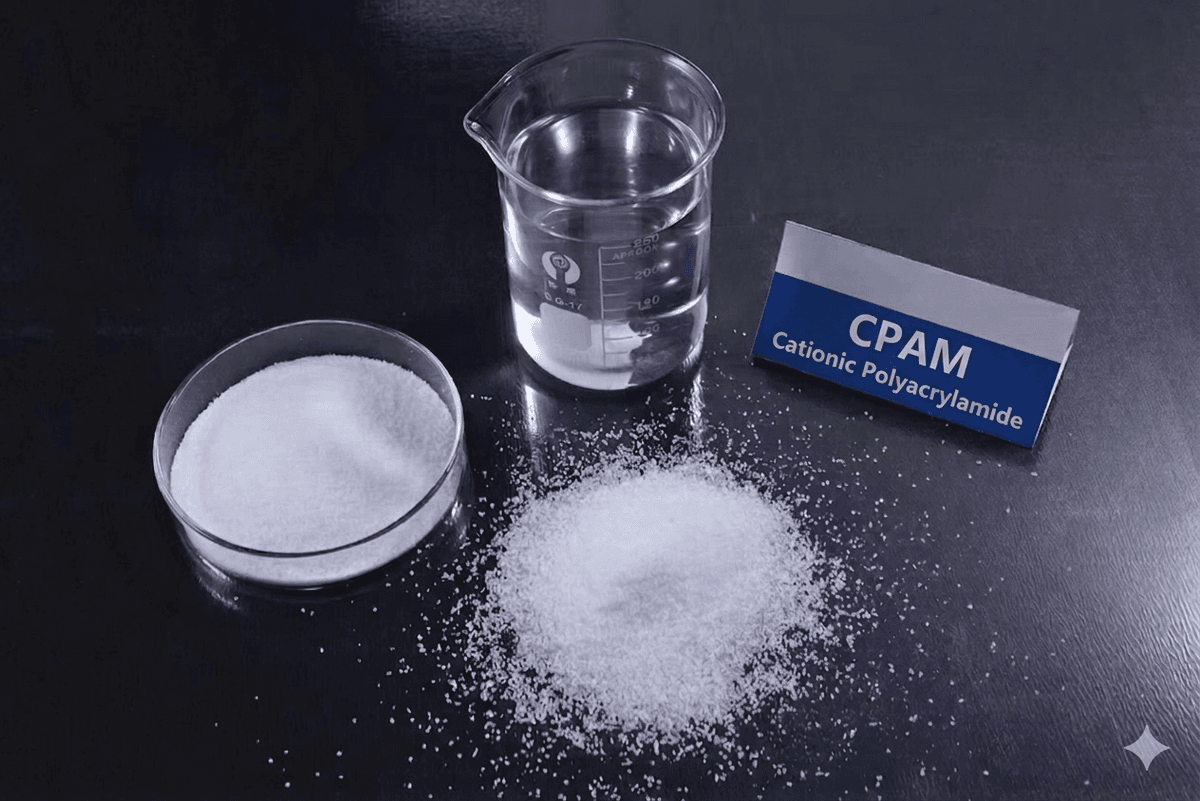
| Our Product | Cationic polyacrylamide powder |
| Positioned Against | SNF FLOPAM DW 533 |
| Type | Cationic polyacrylamide |
| Molecular Weight | Medium–High (our scale) |
| Charge Density | Selected to raw water charge demand |
| Potable approval | Confirmed per product, batch and market before supply |
| Appearance | White granular powder |
| Packaging | 25 kg PP woven bags + PE liner |
Key Features
- Positioned against the FLOPAM DW 533 drinking water clarification duty
- Regulatory approval status confirmed in writing before quotation
- Residual monomer specification supplied per batch
- Charge position selected against your raw water, not a catalogue default
- MOQ 500 kg, direct from factory
Applications
- Drinking water clarification where the product holds the required approval
- Raw water pre-treatment ahead of filtration
- Surface water turbidity removal
- Industrial process water where potable-grade specification is called for
Get a Quote for SNF FLOPAM DW 533 Alternative Supply
Start with the grade name, a bag-label photo or your purchasing requirement. We can discuss current pricing and sample options now; process details can follow.
Related Articles
For potable duty, approval decides the sourcing question
On an industrial duty, a substitution decision is settled by a test. On a drinking water duty it is settled by documentation first and a test second, because a product that outperforms the incumbent is useless if it may not lawfully be dosed into the supply. This inverts the normal sourcing sequence and it is the single most important thing to get right when replacing a DW-series grade.
Approval schemes are national and product-specific. NSF/ANSI 60 governs drinking water treatment chemicals in North America; other jurisdictions operate their own schemes with their own testing and listing requirements. In every case the listing attaches to a named product manufactured at a named site, which is why a general statement that a chemistry is approved somewhere carries no weight for your plant.
The consequence for buyers is worth stating plainly: ask for the approval in writing, naming the product, the site and the scheme, before you evaluate performance. A supplier who is willing to discuss performance but vague about the certificate has told you something important. We would rather lose a potable enquiry on that basis than win it and leave a utility exposed.
Raw water is a moving target in a way sludge is not
Sludge from a given works is fairly consistent week to week. Raw surface water is not. Turbidity can move by an order of magnitude after rainfall, organic content rises seasonally, and temperature changes both coagulation kinetics and polymer dissolution. A cationic polymer chosen on a clear winter sample can be badly matched to the same source in a spring flush.
This is why potable jar testing is a programme rather than a single test. The useful protocol runs the candidate across the range of conditions the works actually sees, including the worst case, and reads settled turbidity and filter run length together — because a polymer that clarifies well but shortens filter runs has moved the cost rather than removed it. Filter performance is where potable polymer decisions are often actually won or lost.
Where seasonal swing is wide, carrying two charge positions and switching is frequently better economics than forcing one grade to cover everything. That is a plant operating decision rather than a purchasing one, but it changes what you should ask a supplier for: not a single best grade, but a pair with a defined switching criterion.
| Question | Who answers it | Evidence to require |
|---|---|---|
| Is the product approved for potable use in my jurisdiction? | Supplier, in writing | Named product, named site, named scheme and listing reference |
| What is the residual monomer level? | Supplier, per batch | Batch certificate, not a catalogue nominal figure |
| Does it work on my raw water at worst case? | Your jar test programme | Settled turbidity plus filter run length across seasons |
| What dose will I actually run? | Your jar test | Dose curve on your own water, not a transferred figure |
| Is supply continuity assured for a regulated duty? | Supplier commercial terms | Lead time, batch consistency and change-notification commitment |
What we will and will not claim
We are an independent manufacturer with no affiliation to, endorsement from, or distribution agreement with SNF. FLOPAM is their trademark and appears here only to identify the product a buyer is looking to replace. We do not claim our product is identical to theirs.
On this page in particular we are deliberately narrower than on our industrial pages. We will not publish a blanket claim that our products are approved for drinking water, because approval is product, site and market specific and a general claim would be misleading. What we will do is state the position in writing for the specific product and market you need, supply batch residual monomer data, and decline the business where we do not hold what your jurisdiction requires. Guidance on drinking water treatment chemical selection and evaluation is published by the American Water Works Association, and the World Health Organization publishes drinking water quality guidelines that inform most national schemes.
Dosage Guide
Drinking water clarification typically runs below 1 ppm as polymer on the raw water, with the exact rate set by jar test against seasonal raw water quality. Do not transfer a dose figure from an industrial duty to a potable one.
Frequently Asked Questions — FLOPAM DW 533 Equivalent — Cationic Polyacrylamide
What does the DW prefix mean?
It designates grades offered by that manufacturer for drinking water service. The important point is that it refers to the regulatory position of a specific product, not to a distinct polymer chemistry. Two products with near-identical polymer properties can differ entirely in whether they may lawfully be dosed into potable water in your country.
Do you hold NSF/ANSI 60 certification?
Certification applies to a specific product from a specific manufacturing site, so the only honest answer is per product and per market. Tell us the jurisdiction and the duty and we will state in writing what a specific product actually holds before you commit to anything. Where we do not hold what you need, we will say so — supplying an industrial grade into a potable duty is not something we will do.
Why can you not simply match the polymer properties?
Because for this duty the polymer properties are the easier half of the problem. A close match on charge and molecular weight is achievable; a match on regulatory standing is a separate question answered by documentation, not by chemistry. Any supplier who answers a potable enquiry purely on performance has skipped the part that decides whether you can use it.
What is the concern with residual monomer in potable duty?
Acrylamide monomer is the residual of concern and potable approval schemes limit it. This is why batch-level specification matters rather than a nominal figure on a product sheet, and why we supply the specification for the batch you are receiving rather than a catalogue value.
How should charge position be set for raw water?
By jar test on your own raw water across the seasons that matter. Raw surface water charge demand shifts with turbidity, organic content and temperature, so a grade selected in one season can be wrong in another. Where seasonal swing is large, plants often carry two charge positions rather than one compromise grade.
Do you supply a copy of FLOPAM DW 533?
No. We supply independently manufactured cationic polyacrylamide, and for potable service only where the specific product holds the approval your market requires. We are not affiliated with SNF, we do not claim our product is identical, and FLOPAM is their trademark.
Related Products
Trademark notice. SNF FLOPAM DW 533 and all other third-party product and brand names on this page are trademarks or registered trademarks of their respective owners. Henan Jinghua New Material Technology Co., Ltd. is not affiliated with, endorsed by, sponsored by or authorised by those owners, and no such relationship is implied. Those names are used here for the sole purpose of identifying the products our grades are compared against, which is necessary to describe what we supply. Our products are independently manufactured and are not licensed copies. Grade descriptors quoted for third-party products are taken from each manufacturer’s own published literature and follow that manufacturer’s own scale; we do not publish figures those manufacturers do not publish. Performance on your process should be confirmed by jar test or CST test before any change of supply.