Solenis does not publish grade-level charge density and molecular weight figures for the Clarifloc range, so this guide sets out our own range with our published descriptors and offers a tested substitution rather than a cross-reference built on inferred numbers. This guide provides a direct cross-reference for procurement teams evaluating Clarifloc alternatives.
Solenis (formerly part of Ashland Water Technologies, then Hercules) is a specialty chemicals company with strong market share in paper mill water treatment, industrial WWTP, and municipal sludge dewatering across North America and Europe. Their Clarifloc polymer line is specified in thousands of paper mill and WWTP operating procedures. Solenis also distributes Eka Chemicals and Drew Marine polymer products in some regions, all of which fall within the same ionic-MW cross-reference framework.
Like all polyacrylamide products, Clarifloc performance depends on ionic type, charge density, and molecular weight — not brand name. According to WEF MOP 8, polymer selection for dewatering depends on these three parameters. According to TAPPI (Technical Association of the Pulp and Paper Industry), flocculant selection for paper mill white water treatment and dewatering is validated by jar testing and full-scale trials, not by brand specification. ChinaPAM supplies cationic polyacrylamide and anionic polyacrylamide across the full Clarifloc specification range — available from 500 kg trial with free lab samples. Where a tender names a competing model directly, our Zetag 8185 and 8187 equivalent, Zetag 8125 equivalent, Zetag 8165 equivalent and FLOPAM FO 4650 equivalent pages state our grade profile against each manufacturer’s own published scale.
What We Can and Cannot Verify About Clarifloc Grades
Clarifloc is Solenis’s flocculant line, using a letter prefix for ionic type, with A for anionic, C for cationic and WE for specific water and effluent grades, followed by a grade number.
Here is the honest position on parameters. We tried to obtain manufacturer data sheets stating charge density and molecular weight for the Clarifloc grades most often named in tenders. We could not. Clarifloc’s public product pages describe applications and benefits but do not publish grade-level charge density and molecular weight figures, and we could not reach a technical data sheet that does.
That leaves two options. We could publish a cross-reference table with numbers we inferred from third-party trading sites, which is what most competing pages do, or we could tell you what we actually supply and offer to test against your current product. We are doing the second. A flocculant that is close but not right costs a plant far more in re-trials and lost throughput than the price difference on the polymer.
If you have the technical data sheet for your current grade, send it over. With the manufacturer’s own charge and molecular weight descriptors in hand we can point to a candidate grade immediately instead of working blind.
Our Cationic Range: What We Supply Against Clarifloc C-Series Duties
Clarifloc’s cationic line covers sludge dewatering on belt presses, centrifuges and screw presses. Those are the same duties our cationic range is built for. Rather than assert grade-for-grade equivalence we cannot evidence, here is our range with our own published descriptors so you can see where it sits.
| Our Grade | Charge Density | Molecular Weight | Typical Duty |
|---|---|---|---|
| CNfloc C8008 | Low | Medium | Low-organic water treatment sludge |
| CNfloc C8015 | Medium | Medium | Mixed municipal sludge |
| CNfloc C8003 | Medium-High | Medium-High | Municipal and industrial sludge dewatering |
| CNfloc C8005 | High | High | Belt press and centrifuge, waste activated sludge |
| CNfloc C8055 | Very High | High | Difficult digested sludge, high charge demand |
| CNfloc C8006 | Very High | High | Highest charge tier in our cationic range |
To select from this list we need three things: the sludge type and origin, the dewatering equipment, and either your current polymer dose or a sample we can test. With those we can narrow to one or two candidates and ship trial quantities. See our municipal sludge dewatering guide for how the selection logic works.
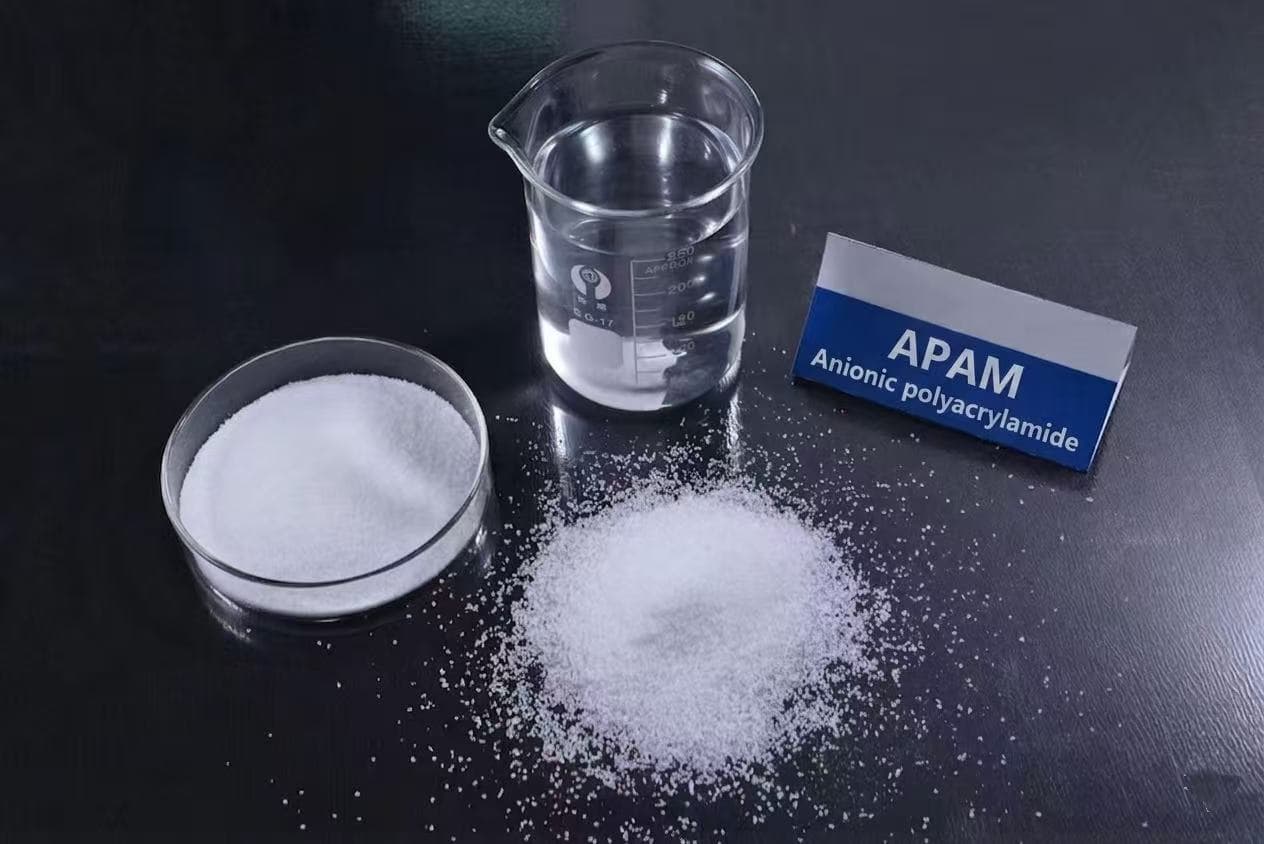
Our Anionic Range: What We Supply Against Clarifloc A-Series Duties
The anionic side handles mineral slurries, tailings, coal circuit water and raw water clarification. Our range and its published profiles:
| Our Grade | Charge Density | Molecular Weight | Typical Duty |
|---|---|---|---|
| CNfloc 1062 | Medium | Medium | Raw water clarification, coal circuit water |
| CNfloc 1063 | Medium-High | Medium | Industrial effluent settling |
| CNfloc 1054 | High | High | Mineral processing thickeners, tailings |
| CNfloc 1054V | High | Very High | Highest MW anionic tier, iron ore and gold tailings |
| CNfloc 1054VK | High | High | Tailings duty variant |
Several oilfield-oriented anionic grades sit outside this table, including our K and 635 series. Those cover frac flowback and produced water flocculation and dewatering, which is water treatment work rather than enhanced oil recovery, so ask about them if that is your stream. Full detail is in our FLOPAM cross-reference guide, which is built on a manufacturer catalogue that does publish grade-level descriptors.
Clarifloc is not the only Solenis line that reaches us in tenders. The Praestol anionic series comes up as often, and because its grade-level figures are distributed through the data sheet rather than published openly it needs the same treatment: position against the charge family and the duty, not against numbers we cannot source. Our Praestol 2540 equivalent page sets out exactly what we can and cannot state, and what the trial has to settle.
Quick Cross-Reference (All Grades)
| Clarifloc Grade | CNfloc Equivalent | Type |
|---|---|---|
| C-308 | C8008 | Cationic |
| C-316 | C8015 | Cationic |
| C-325 | C8003 | Cationic |
| C-335 | C8003 | Cationic |
| C-348 | C8005 | Cationic |
| C-358 | C8055 | Cationic |
| C-368 | C8006 | Cationic |
| A-21 | 1062 | Anionic |
| A-25 | 1063 | Anionic |
| A-31 | 1054 | Anionic |
| A-38 | 1054V | Anionic |
| A-43 | 1054VK | Anionic |
| A-47 | 1054VK | Anionic |
| N-100 | 1003 | Nonionic |
Frequently Asked Questions
5-Step Switching Protocol: Clarifloc → CNfloc
- Grade identification — Confirm your current Clarifloc grade from purchase records or SCADA dosing data. Map to CNfloc equivalent using the cross-reference tables above.
- Sample request — Request 1–2 CNfloc candidates (we recommend testing two adjacent grades). We ship 1 kg DHL lab samples free within 5 business days.
- Lab screening (jar test) — Run a standardized jar test or belt press simulation on your actual sludge or process water at operating pH and temperature. Compare settling rate, filtrate clarity, optimal dose, and cake solids to your current Clarifloc baseline. See our jar test procedure guide for methodology.
- Field trial (2–4 weeks) — Run the best-performing CNfloc grade at full plant scale. Track polymer consumption (kg/dry ton or g/m³), cake solids (%), filtrate TSS (mg/L), belt speed, and centrifuge amperage. Most plants complete qualification within 2 weeks.
- Commercial conversion — If trial performance meets or exceeds Clarifloc baseline, place first commercial order (MOQ 1 MT). No equipment modification required — CNfloc powder uses identical dissolution parameters to Clarifloc powder (0.1–0.5% solution, 30–60 min aging, low-shear mixing).
Paper Mill Applications: Clarifloc vs CNfloc
Solenis built its Clarifloc brand strength primarily in the paper and pulp industry. According to TAPPI (Technical Association of the Pulp and Paper Industry), PAM flocculants are used in four key paper mill applications where CNfloc provides direct equivalents:
- White water clarification — anionic PAM settles fibre fines and filler particles for DAF or settling pond recovery. CNfloc 1062 and CNfloc 1063 cover this duty on the anionic side, with CNfloc 1042 as the nonionic option where conductivity is low.
- Sludge dewatering (paper mill WWTP) — paper mill sludge generally calls for the medium-high to high end of the cationic range, which is where CNfloc C8003 and CNfloc C8005 sit. Belt press or screw press conditioning.
- Retention and drainage aid — while primarily a wet-end additive role, some mills use high molecular weight anionic PAM as a retention aid for fines and fillers, where CNfloc 1054 is the grade to trial. Works with microparticle or dual-polymer systems.
- Broke pit flocculation — Clarifloc C-308 → CNfloc C8003. Low-charge cationic PAM for de-inking and broke fiber recovery at neutral pH.
Is Solenis Clarifloc the same product as Ashland Clarifloc?
Yes. Solenis acquired Ashland Water Technologies in 2014, including the Clarifloc polymer line. The model numbers and formulations remain unchanged. Some regions still see distributor invoices with the Ashland brand on legacy packaging, but the chemistry is identical. This means the same CNfloc cross-reference table above applies to both Ashland and Solenis Clarifloc grades.
Can I test CNfloc before committing to a full container order?
Yes. We ship 1 kg DHL lab samples within 5 business days of inquiry — free of charge for qualified buyers. For a jar test trial on your actual sludge or process water, minimum order is 500 kg. This is enough for several weeks of field evaluation at a medium WWTP or paper mill. See our jar test procedure guide for testing methodology.
Does ChinaPAM supply emulsion PAM to replace Clarifloc WE-series?
Currently CNfloc is available in dry powder form. Powder PAM dissolved at 0.1–0.3% solution delivers equivalent performance to inverse emulsion when properly dissolved. For most belt press and centrifuge applications, powder PAM is preferred due to lower unit cost, simpler storage, and longer shelf life. If your dosing system requires liquid emulsion specifically, contact us — we can arrange custom formulations for high-volume accounts.
What quality assurance does ChinaPAM provide?
Each ChinaPAM quotation should identify the requested grade documents: TDS (charge density, MW class, solid content, dissolution time), COA per batch, SDS, residual monomer data, and export documentation. Per AWWA B453 (Standard for Polyacrylamide), critical acceptance parameters include residual monomer, solid content, and ionic charge within specification. For drinking water and food-contact applications, confirm the exact certificate requirement, grade, batch, and destination-market rule before using any regulated-use claim.
For other major brand cross-references in the same collection: SNF FLOPAM alternatives, Kemira Superfloc alternatives, BASF Zetag / Magnafloc alternatives. For sourcing details, see our China PAM supplier guide. Visit our homepage for full catalog and technical support.
Compare a matched grade against your current Clarifloc
Tell us your Clarifloc model number and the application it serves. We will identify the equivalent, ship 1 kg lab samples free of charge with no obligation, and quote against your real operating conditions rather than a datasheet.
Quotation based on grade, quantity and destination · info@chinapolyacrylamide.com · WhatsApp +86 187-3759-0940