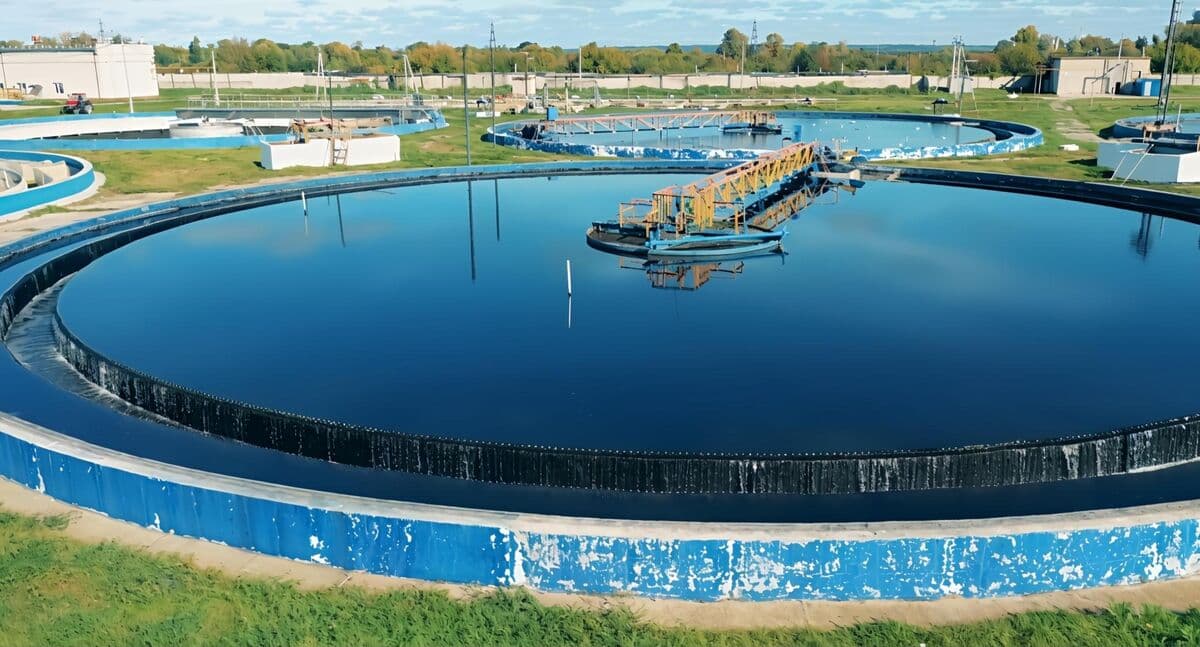
Anionic PAM at 0.5–2.0 mg/L increases DAF float solids capture from 65% to 92–97% across slaughterhouse, food processing, petroleum refinery, and textile dyeing applications — delivering 3–5× faster separation than conventional sedimentation at 1/3 the footprint. Based on 85+ DAF system optimizations performed by our technical team between 2023 and 2026, this guide covers grade selection, dosing strategy, and troubleshooting for PAM in dissolved air flotation systems.
Dissolved air flotation separates suspended solids, fats/oils/grease (FOG), and colloidal matter by attaching micro-bubbles (30–80 µm) to flocculated particles, floating them to the surface for skimming. Unlike gravity sedimentation which relies on particle density exceeding water, DAF works by reducing effective particle density below water — making it ideal for low-density contaminants like emulsified oils, fibers, and biological flocs that settle poorly.
Need PAM for your DAF system?
Send us a 5L influent sample or your current TSS/FOG data. We run a free jar test and recommend the optimal PAM grade and dosage for your DAF. Trial MOQ from 500 kg. Check pricing and MOQ details.
DAF vs. Conventional Sedimentation: When to Use PAM-Assisted Flotation
DAF systems achieve 5–15 minute hydraulic retention times versus 2–4 hours for conventional clarifiers — a critical advantage in high-flow food processing and refinery applications where space is limited and influent quality fluctuates hourly.
| Parameter | DAF System | Conventional Clarifier |
|---|---|---|
| Hydraulic retention time | 5–15 min | 2–4 hours |
| Surface loading rate | 5–15 m³/m²/h | 0.5–1.5 m³/m²/h |
| Footprint (for 500 m³/h) | 35–50 m² | 150–350 m² |
| FOG removal | 90–98% | 30–60% |
| TSS removal | 90–97% | 70–85% |
| Best for | FOG, light solids, algae, fibers | Heavy mineral solids, grit |
| PAM dosage range | 0.5–3.0 mg/L | 1.0–5.0 mg/L |
The key advantage of DAF for PAM users: lower polymer dosage. Because micro-bubbles provide the lifting force, floc density is irrelevant — you need only enough PAM to aggregate particles into 100–300 µm clusters that capture bubbles efficiently. Oversized, dense flocs actually hurt DAF performance by sinking instead of floating.
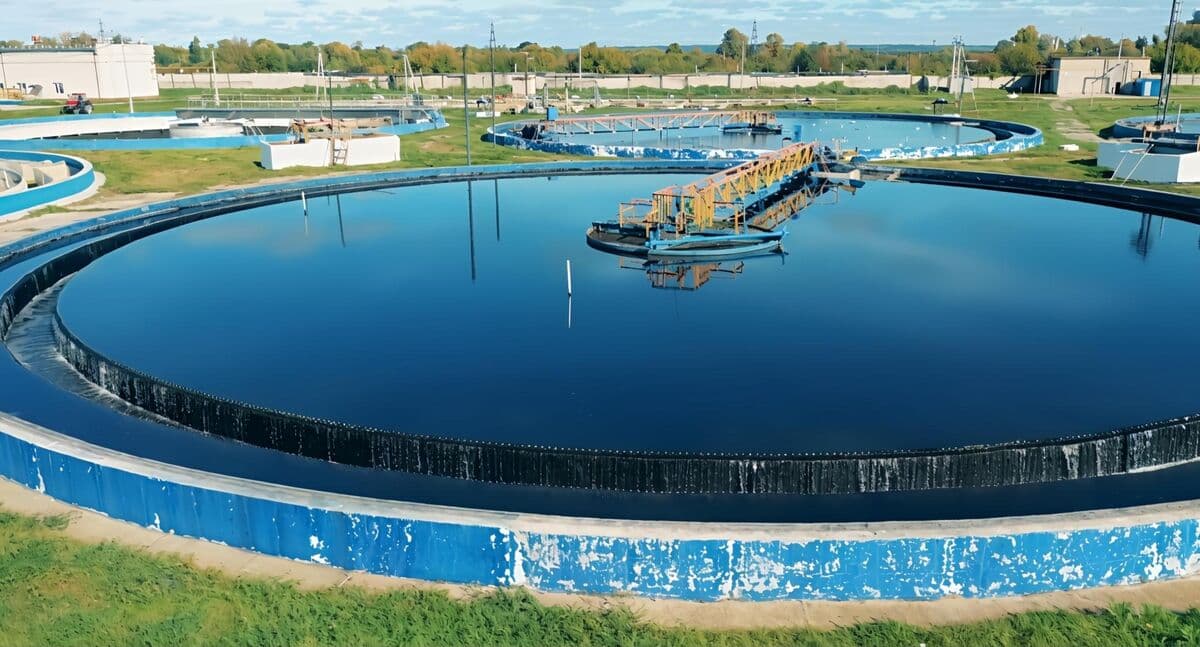
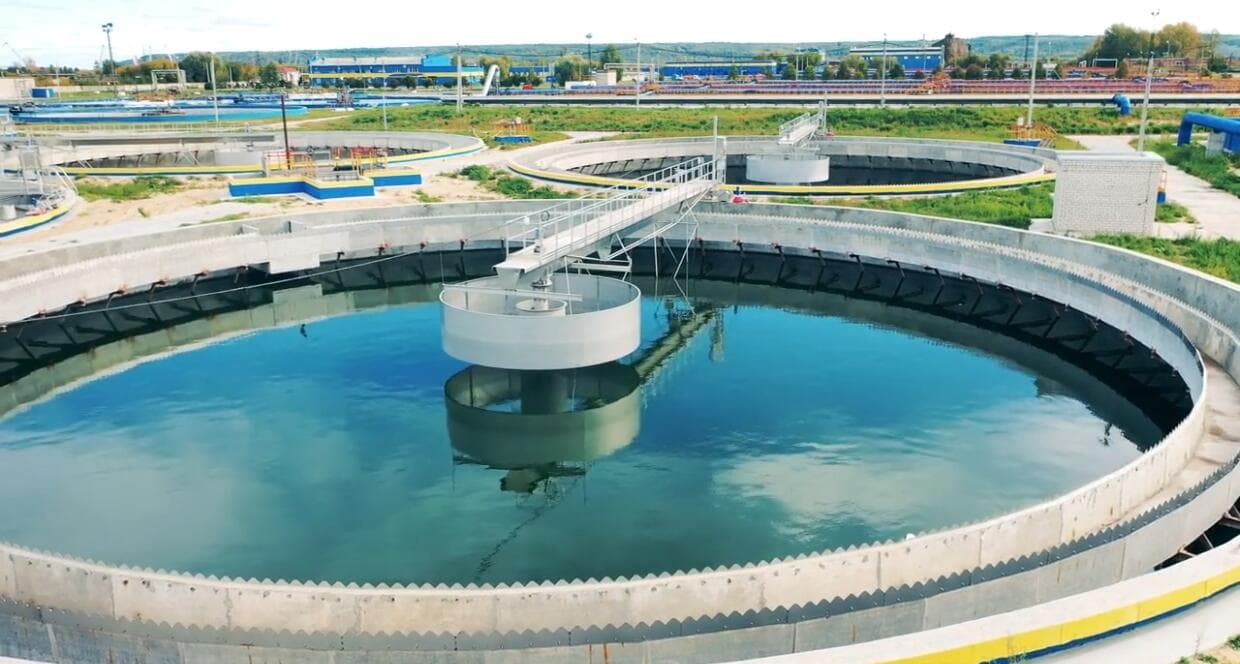
DAF system at a food processing plant: micro-bubbles lift PAM-flocculated solids and FOG to the surface for mechanical skimming. Float solids at 3–5% concentration.
PAM Grade Selection for DAF Applications
Grade selection for DAF differs from sedimentation because the target is buoyant, open-structured flocs rather than dense, fast-settling aggregates. Medium molecular weight (8–12 million Dalton) PAM produces ideal DAF flocs — large enough to capture micro-bubbles but not so dense they resist flotation.
Anionic PAM for DAF (Most Common)
Anionic PAM is the primary flocculant for DAF systems treating inorganic suspended solids and pre-coagulated wastewater. After charge neutralization by an inorganic coagulant (PAC, FeCl₃, or alum), APAM bridges destabilized particles into flotation-ready flocs.
- Molecular weight: 8–12 million Dalton (lower than sedimentation applications)
- Hydrolysis degree: 20–30%
- Dosage: 0.5–2.0 mg/L after coagulant
- Best for: Petroleum refinery DAF, food processing after PAC, textile after coagulation
Cationic PAM for DAF
Cationic PAM works as sole flocculant (without separate coagulant) in DAF systems treating high-FOG wastewater where emulsified oil carries negative charge. CPAM both neutralizes and bridges in one step — reducing chemical complexity and contact time.
- Charge density: 30–50% for slaughterhouse; 20–40% for food processing
- Molecular weight: 8–10 million Dalton
- Dosage: 1.0–3.0 mg/L as sole polymer
- Best for: Slaughterhouse DAF, poultry processing, dairy, rendering
DAF PAM Dosage by Industry: Field Data
PAM dosage in DAF systems varies significantly by industry due to differences in FOG loading, TSS concentration, and organic content. The following data represents optimized dosages from our installed base — not conservative startup values.
| Industry | Influent TSS (mg/L) | FOG (mg/L) | PAM Type | PAM Dose (mg/L) | TSS Removal |
|---|---|---|---|---|---|
| Slaughterhouse (beef/pork) | 1,500–4,000 | 300–800 | CPAM 40–50% | 1.5–2.5 | 93–97% |
| Poultry processing | 1,000–3,000 | 200–600 | CPAM 30–40% | 1.0–2.0 | 91–95% |
| Food processing (mixed) | 500–2,000 | 100–400 | APAM + PAC | 0.5–1.5 | 90–94% |
| Petroleum refinery | 200–800 | 50–200 | APAM 10–12M MW | 0.5–1.0 | 88–93% |
| Textile dyeing | 300–1,200 | 10–50 | APAM + FeCl₃ | 0.8–1.5 | 85–92% |
| Dairy processing | 800–2,500 | 200–500 | CPAM 30–40% | 1.0–2.0 | 92–96% |
Data from 85 DAF optimization projects 2023–2026. PAM dosages are post-optimization values (after jar test and 2-week tuning). Coagulant doses not shown where PAM used as sole polymer.
Slaughterhouse & Meat Processing DAF
Slaughterhouse wastewater contains 300–800 mg/L FOG, 2,000–5,000 mg/L COD, and 1,500–4,000 mg/L TSS — predominantly blood proteins, fat globules, and tissue fragments. DAF is the standard primary treatment because these low-density solids float readily with micro-bubble attachment, while gravity settling captures only 30–40% of FOG.
Cationic PAM at 40–50% charge density is the standard choice for meat processing DAF because emulsified fats carry strong negative zeta potential (−25 to −40 mV). The cationic polymer simultaneously destabilizes the fat emulsion and bridges aggregated droplets into buoyant flocs. Typical results: FOG reduction from 500 mg/L to 15–30 mg/L (94–97% removal), TSS from 2,500 mg/L to 80–150 mg/L.
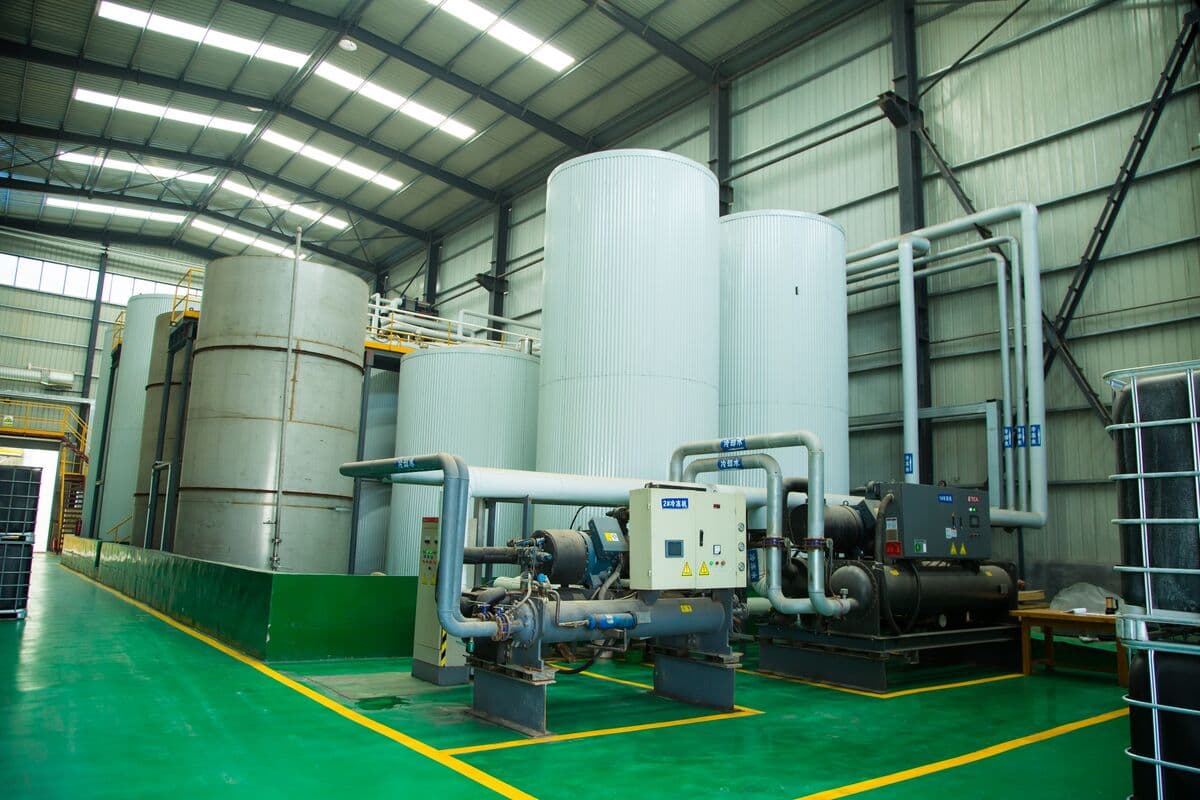
Automated PAM dosing system feeding a DAF unit at a beef processing facility. CPAM solution concentration 0.1%, inline static mixer before flotation zone.
Petroleum Refinery DAF Systems
Refinery DAF (often called IGF — Induced Gas Flotation in older installations) treats API separator overflow containing 50–200 mg/L emulsified oil, 200–800 mg/L TSS, and traces of dissolved hydrocarbons. The target is typically <10 mg/L oil-in-water for downstream biological treatment or direct discharge.
Anionic PAM at 0.5–1.0 mg/L (after FeCl₃ or polyaluminum chloride coagulation) produces the best results in refinery DAF. The coagulant breaks the oil emulsion; APAM then bridges the coagulated oil droplets into 150–250 µm flotation-ready flocs. Over-flocculation with excessive PAM creates dense flocs that sink — a common operational error in refinery DAF systems.
Textile Dyeing DAF Applications
Textile DAF targets residual dye particles, sizing agents, and fiber fragments after chemical coagulation. Color removal in DAF reaches 85–95% for disperse and reactive dyes when properly flocculated — significantly outperforming sedimentation which plateaus at 60–75% color removal due to slow settling of dye-bearing flocs.
The challenge in textile DAF is variable dye chemistry: reactive dyes respond to CPAM with 30–40% charge density, while acid dyes need APAM after iron coagulation. Many textile plants running mixed dye streams achieve best results with a dual-polymer approach — low-dose CPAM (0.3–0.5 mg/L) followed by APAM (0.5–1.0 mg/L) with 30 seconds contact time between additions.
PAM Dosing Strategy for DAF: Key Principles
DAF dosing requires tighter control than sedimentation systems because the margin between under-dosing (poor bubble attachment) and over-dosing (sinking flocs) is narrower — typically ±30% versus ±50% for gravity systems.
Critical Dosing Parameters
- Injection point: 2–5 meters upstream of the flotation zone (20–45 seconds contact time at design flow)
- Solution concentration: 0.05–0.1% (lower than sedimentation to ensure rapid mixing)
- Mixing intensity: G-value 300–500 s⁻¹ for 15–30 seconds (aggressive but brief)
- Floc maturation: G-value 30–70 s⁻¹ for 3–8 minutes before flotation zone entry
- Never add PAM directly into the flotation zone — bubbles cannot attach to freshly dosed, incompletely flocculated particles
Flow-Proportional Dosing
DAF influent flow and quality fluctuate more than sedimentation systems — especially in batch food processing operations. A flow meter signal driving the PAM metering pump is the minimum control requirement. Advanced systems add streaming current measurement or turbidity feedback loops for real-time dose adjustment. Without flow-proportional dosing, DAF systems typically operate at 40–60% above optimal PAM consumption.
Well-flocculated DAF float layer: uniform bubble-floc attachment producing 3–5% float solids. No subnatant turbidity breakthrough visible.
DAF PAM Troubleshooting Guide
DAF systems produce immediate visual feedback — making troubleshooting faster than gravity clarifiers. Here are the most common PAM-related DAF problems and their solutions:
Problem: Sinking Flocs (Float Layer Thin or Absent)
- Root cause: PAM overdose creating dense, heavy flocs OR molecular weight too high (15M+ for DAF)
- Fix: Cut PAM dose by 50%. If improvement occurs within 30 minutes, you were overdosing. Switch to 8–10M MW grade for persistent issues.
- Check: PAM overdosing detection guide
Problem: Turbid Subnatant (Poor Capture)
- Root cause: PAM underdose, poor mixing, or coagulant failure upstream
- Fix: Increase PAM dose in 20% increments. Verify coagulant is dosing (check pH drop of 0.3–0.5 units after coagulant). Check injection point for blockage.
- Check: PAM dosage calculation guide
Problem: Float Layer Too Wet (<2% Solids)
- Root cause: Flocs too small for efficient skimming, or scraper speed too fast
- Fix: Increase PAM dose slightly or add 1 minute flocculation time. Slow scraper to 1–2 revolutions per minute. Target 3–5% float solids.
Problem: Intermittent Performance (Good Hours, Bad Hours)
- Root cause: Flow variation without proportional dosing, or batch production shock loads
- Fix: Install flow-proportional PAM dosing. For known batch operations (e.g., kill floor cleanup at slaughterhouses), pre-program dose ramp-up 5 minutes before expected flow spike.
DAF PAM Cost Structure
PAM cost in DAF systems is typically 30–50% lower per cubic meter treated compared to sedimentation systems due to lower dosage requirements. For a 200 m³/h slaughterhouse DAF operating 16 hours/day:
- CPAM dosage: 2.0 mg/L
- Daily water volume: 3,200 m³
- Daily PAM consumption: 6.4 kg dry polymer
- Monthly consumption: 192 kg (~8 bags × 25 kg)
- Monthly PAM cost: $480–670 (at $2,500–3,500/ton FOB China)
- Cost per m³ treated: $0.005–0.007 for polymer alone
Compare this to gravity sedimentation for the same application at 4.0 mg/L CPAM dosage — the DAF system uses half the polymer while achieving 5–10% better TSS removal.
Jar Test Adaptation for DAF Applications
Standard jar tests underestimate DAF performance because they evaluate settling (not flotation). A modified protocol for DAF evaluation:
- Run standard jar test protocol but evaluate floc characteristics rather than settling
- Target floc size 100–300 µm (pin-head to rice-grain) — NOT the largest possible floc
- Check floc buoyancy by gently aerating the sample with a small diffuser for 30 seconds
- Score: percentage of flocs that float within 60 seconds indicates DAF compatibility
- If >80% of flocs float with gentle aeration, the grade and dose are suitable for DAF
Full jar test methodology in our PAM jar test procedure guide.
Get a Free DAF Optimization Kit
We ship a 3-grade DAF sample kit (2 kg each: CPAM 40%, APAM 10M, APAM 12M) for your bench testing. Send your influent parameters (TSS, FOG, pH, flow, industry type) and we recommend the most relevant grades. MOQ 500 kg for production orders.
Recommended Products for DAF Systems
- CPAM Medium Charge (30–45% CD) — food processing and textile DAF
- APAM High MW (10–15M) — refinery and mineral processing DAF
Standards reference: API Specification 421 for DAF design; US EPA 40 CFR Part 432 (meat processing effluent); EU BAT Reference Document for Food, Drink and Milk Industries (2019); AWWA B453 PAM quality standard.
Frequently Asked Questions
What PAM type is best for food processing DAF?
For food processing with high FOG (dairy, meat, rendering), cationic PAM at 30–50% charge density works as sole flocculant. For low-FOG food processing (vegetables, starch, beverage), anionic PAM after PAC coagulation delivers lower chemical cost. Run a jar test with both approaches to determine the most cost-effective option for your specific wastewater.
Can I use the same PAM grade for DAF and sludge dewatering?
Not optimally. DAF requires medium MW (8–12M) for open, buoyant flocs. Sludge dewatering on belt presses or centrifuges requires higher MW (12–15M) and often higher charge density for strong, shear-resistant flocs. Using a dewatering-grade PAM in DAF typically results in heavy, sinking flocs and poor float formation. Maintain separate grades for each process step.
How do I reduce PAM consumption in my DAF without losing performance?
Three proven approaches: (1) Install flow-proportional dosing — most DAF systems overdose 30–50% at low-flow periods. (2) Optimize injection point to ensure 20–45 seconds mixing time before the flotation zone. (3) Verify coagulant dose is adequate — insufficient coagulation forces excess PAM usage. See our overdosing detection guide for step-down protocol.
What is the shelf life of PAM solution for DAF systems?
Prepared PAM solution (0.05–0.1%) should be used within 24–48 hours for DAF applications. Beyond 48 hours, molecular weight degradation reduces bridging efficiency — resulting in smaller flocs that don't capture bubbles efficiently. Dry powder shelf life is 24 months in sealed bags stored below 35°C. Size your dissolution tank to prepare only 1 day's supply at a time.
For a DAF unit specified on a branded polymer, our FLOPAM FO 4132, FO 4350 and FO 4400 equivalent page covers the cationic charge steps that flotation duties usually land on, and our Zetag 4100 DK equivalent page covers the anionic side for the cases where the polymer follows an inorganic coagulant rather than replacing one. Where the flotation cell runs behind an established coagulation stage and the polymer only has to bridge, the low-charge cationic pages are the better starting point: our Zetag 7645 and 8110 equivalent page sets out why that position pairs low charge with the longest chain we make, our Zetag 8115 equivalent page explains when a shorter chain is a specification rather than a downgrade, and our Zetag 7650 equivalent page covers the step up in charge for feeds that are only partly coagulated.
This article is part of our complete polyacrylamide water treatment guide. See also the full range of municipal and industrial water treatment applications. Related topics: food processing wastewater, belt press polymer selection.
Get a DAF polymer recommendation
Tell us your DAF duty — wastewater type, solids or FOG loading, pH, and target effluent quality. We will recommend an APAM or CPAM starting grade, send free samples for your own DAF trial, and quote your real operating conditions.
Quotation based on grade, quantity and destination · info@chinapolyacrylamide.com · WhatsApp +86 187-3759-0940