Selecting the right PAM flocculant for water treatment is not complicated — but getting it wrong means poor settling, wasted chemical, and failed discharge standards. This guide covers how to match polyacrylamide type and dosage to your specific water conditions, based on what we see working across 45+ countries where our products are deployed.
Quick Reference: PAM Type by Water Type
| Water Type | Recommended PAM | Charge Density | Typical Dosage |
|---|---|---|---|
| Municipal wastewater (sludge) | CPAM | 30-60% | 3-8 kg/ton dry solids |
| Industrial wastewater (inorganic) | APAM | 20-40% | 1-5 ppm |
| Mining / mineral processing | APAM | 15-35% | 5-30 g/ton ore |
| Strongly acidic wastewater | NPAM | 0% (nonionic) | 2-8 ppm |
| Paper mill effluent | CPAM | 40-70% | 0.5-2 kg/ton fiber |
| Drinking water clarification | APAM (NSF grade) | 10-20% | 0.1-0.5 ppm |
How PAM Flocculation Works
PAM flocculants work through two mechanisms: charge neutralization and bridging. The long polymer chains (6-28 million molecular weight) extend into solution and physically bridge between suspended particles, pulling them together into larger flocs that settle faster.
Charge neutralization matters when particles carry a surface charge. Negatively charged particles (most inorganic solids) respond to cationic PAM. Positively charged or neutral particles respond to anionic PAM. When pH drops below 4, most surface charges collapse — that is when nonionic PAM works best.
For projects like this, our anionic polyacrylamide for water treatment delivers consistent results with factory-direct pricing.
Floc size and strength depend on molecular weight. Higher MW (20-28M Da) creates larger, stronger flocs — good for gravity settling. Lower MW (6-10M Da) creates smaller, denser flocs — better for pressure filtration and belt presses.
Anionic PAM (APAM) — Best for Inorganic Solids
APAM carries a negative charge (0-45% hydrolysis degree) and works best on positively charged or neutral particles in neutral to alkaline conditions (pH 6-12). It is the standard choice for:
- Mining tailings clarification and water recovery
- Industrial wastewater with suspended inorganic solids
- Drinking water treatment (NSF-certified grades)
- Sugar juice clarification
- Electroplating and metal finishing wastewater
Our APAM range covers 6-28 million molecular weight with charge density from 0-45%. For most water treatment applications, 15-25M MW with 20-30% charge density is the starting point. We can customize both parameters based on your jar test results.
Cationic PAM (CPAM) — Best for Organic Sludge
CPAM carries a positive charge (5-70% charge density) and is the go-to for organic-rich wastewater and sludge dewatering. Organic particles — bacteria, food waste, paper fibers — are typically negatively charged, so cationic PAM neutralizes and bridges them effectively.
The charge density selection is critical. Low charge (5-20%): use for lightly contaminated water. Medium charge (20-50%): municipal sludge, food processing. High charge (50-70%): heavily loaded industrial sludge, paper mill effluent.
Our Brazil municipal WWTP case: a plant using European-brand CPAM was struggling with belt press performance during rainy season when sludge composition shifted. We adjusted to a higher charge density grade (from 40% to 55%) and optimized molecular weight. Result: cake moisture dropped 8%, saving approximately $150,000/year in sludge disposal costs.
See our detailed guide on CPAM for sludge dewatering for dosage calculations and equipment-specific recommendations.
Nonionic PAM (NPAM) — For Acidic Conditions
NPAM has zero ionic charge and works through pure bridging flocculation. It is the only PAM type that performs reliably in strongly acidic conditions (pH below 4), where ionic PAM loses effectiveness as surface charges collapse.
Applications: acid mine drainage, electroplating rinse water, textile dyeing effluent with low pH, and soil improvement. Dosage is typically 2-8 ppm depending on suspended solids concentration.
Need PAM for water treatment?
Free sample + jar test report. WhatsApp: +86 150-0381-8598
Dosage Guidelines
PAM dosage depends on suspended solids concentration, particle size, and target effluent quality. These ranges are starting points — always run jar tests to optimize:
- Prepare 0.1% PAM solution — dissolve in clean water, stir gently for 60-90 minutes
- Run jar test — add PAM solution to wastewater sample at 1, 2, 5, 10 ppm increments
- Observe floc formation — note the dose where flocs become large and settle quickly
- Check supernatant clarity — measure turbidity or TSS at each dose
- Find the optimum — lowest dose achieving target clarity is your operating point
Over-dosing PAM is wasteful and can actually restabilize particles (charge reversal with CPAM). Under-dosing leaves fine particles in suspension. The optimum is usually a narrow range — jar testing is not optional.
For a detailed calculation method, see our PAM dosage guide.
How to Prepare PAM Solution
Improper dissolution is the most common cause of poor PAM performance. Our powder grades dissolve in 60-90 minutes with gentle agitation. Key rules:
- Always prepare at 0.1-0.3% concentration — never add powder directly to wastewater
- Use clean water at 15-40°C — cold water slows dissolution, hot water degrades the polymer
- Stir gently — high shear breaks polymer chains and reduces molecular weight
- Use within 24 hours — prepared solution degrades over time
- Add powder slowly to vortex — prevents lumping
What to Check When Buying PAM Flocculant
Not all PAM is equal. When evaluating suppliers, request these specifications and test results:
- Solid content ≥92% (lower means more water, less active polymer per kg)
- Residual monomer ≤0.05% (acrylamide monomer is toxic — critical for drinking water applications)
- Dissolution time ≤90 minutes at 25°C
- Molecular weight — ask for the actual value, not just "high MW"
- Charge density — should match your application
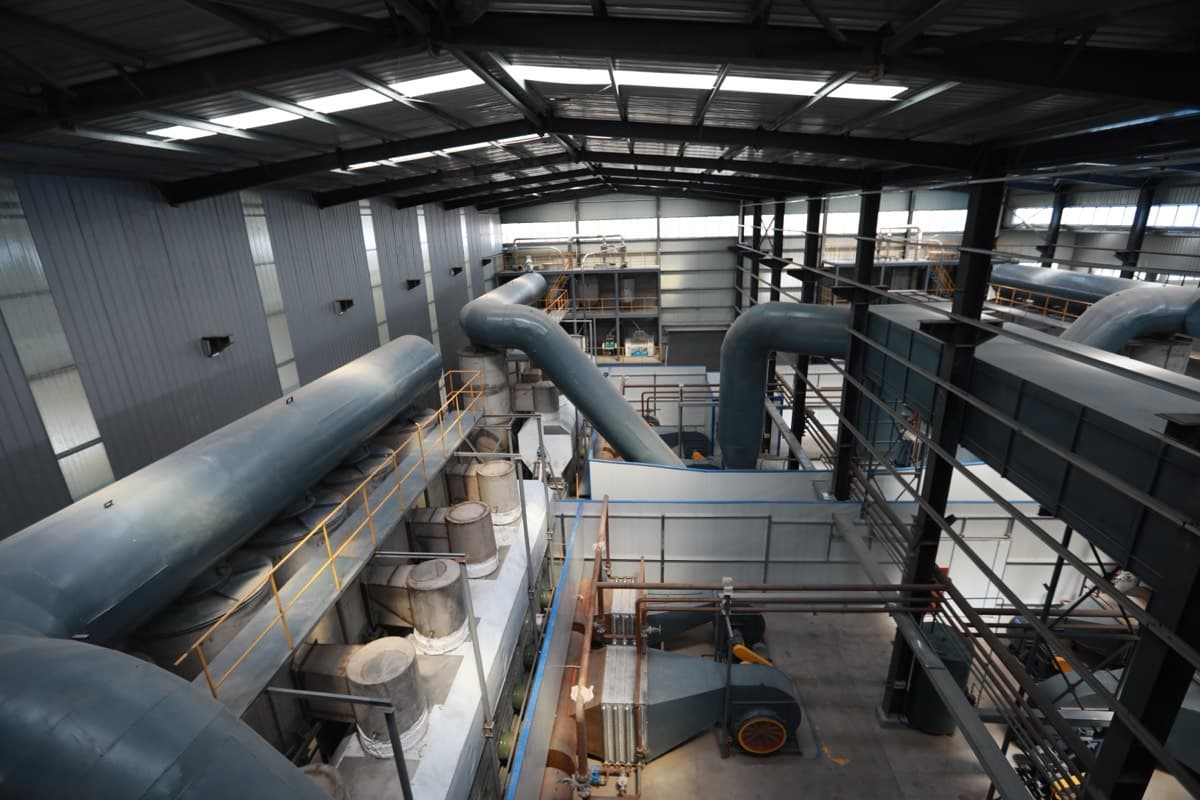
Our factory runs 3-tier quality control on every batch: in-process monitoring, full batch testing with retained samples, and pre-shipment inspection. We provide COA with every shipment showing all key parameters.
For drinking water applications, ensure the supplier holds NSF/ANSI 60 certification. Our NSF-certified APAM grades meet the ≤0.05% residual monomer limit required for potable water treatment.
Get Free Samples for Testing
The best way to confirm PAM performance is to test it in your own water. We provide free samples (500g-1kg) for qualified projects. Send us your wastewater analysis or describe your application, and we will ship the most suitable grade within 3-5 days. See also our jar test procedure for testing methodology.
Contact us on WhatsApp at +86 150-0381-8598 or request a quote online. Our technical team responds within 24 hours.
For more details, see our our dosage calculation guide.
Get a Quote
Our factory in Zhengzhou produces 100,000 tons/year of PAM across 18+ grades. MOQ 500kg, delivery 7-10 days standard. Contact us for pricing and free sample:
- WhatsApp: +86 150-0381-8598
- Email: info@chinapolyacrylamide.com