In September 2026, the G20 ministers assembled in Houston published a voluntary water-reuse initiative. Its central idea is fit for purpose: the quality of treated water should match its intended use, the applicable local requirements, and the plant’s operating needs. The document does not create a global water-quality standard or require any plant to buy polyacrylamide (PAM). It does, however, put a useful question in front of industrial buyers: what must each treatment step actually accomplish before water can be reused? [1]
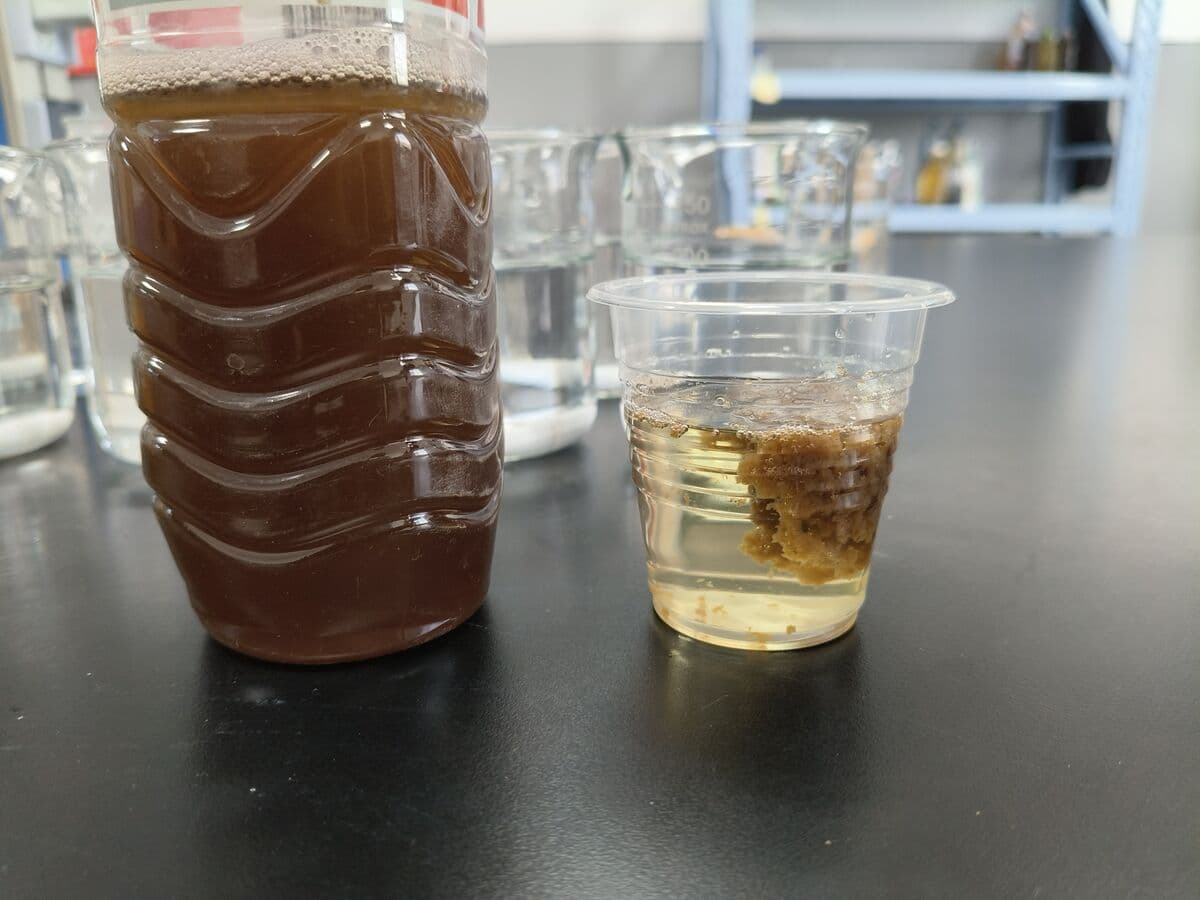
That question changes how a flocculant should be purchased. A plant may need clearer water upstream of filtration, more stable sludge dewatering, or both. Those are different jobs. One polymer grade, one “typical dose,” and one photograph of clear water do not prove that either job has been done. ChinaPAM can put named anionic and cationic powder grades into a controlled trial; the buyer’s actual water and equipment decide which grade earns a purchase order.
This guide is for industrial non-potable reuse projects considering PAM for clarification or sludge conditioning. It is not a design standard for drinking water, food-contact water, or direct human exposure. Those uses require separate project-specific regulatory and product-document review.
Start with the water’s destination, not a polymer catalogue
“Reuse water” is not one specification. Water sent back to a mineral wash circuit, a factory’s utility system, or a membrane feed has different acceptance criteria. Before asking a supplier for “PAM for water recycling,” write down four things:
- The next use or treatment unit. Is the clarified stream going to a settling basin, sand filter, ultrafiltration unit, cooling system, or another process?
- The acceptance criteria. Which limits come from your permit, customer specification, equipment supplier, or internal process? State the units and test methods. Do not borrow an arbitrary turbidity target from a supplier’s blog.
- The current feed and its variability. Record flow, suspended solids or turbidity, pH, temperature, salinity/conductivity, existing coagulant, and the change between normal and upset operation. Add oil, color, dissolved organics, or other parameters if your process makes them relevant.
- The solids route. Where do captured solids go, and which equipment dewaters them? Clearer water can transfer a harder problem to the sludge line if the polymer and coagulant combination is poorly chosen.
Only then can a buyer specify where PAM belongs. In many trains, a coagulant destabilizes particles and PAM helps form separable flocs. In another plant, a cationic polymer conditions sludge for a centrifuge or press. PAM is a process aid for separating suitable suspended solids. It does not, by itself, remove dissolved salts, all dissolved organics, pathogens, or other contaminants that the intended reuse may require the plant to control. A clear jar is therefore evidence for a clarification trial, not proof of safe reuse. EPA’s industrial-reuse resource hub likewise treats industrial reuse as an end-use-specific project with different source waters and treatment needs. [3]
A useful treatment-stage map
| Stage being purchased | What the polymer must demonstrate | Plausible ChinaPAM screening family | What the test cannot establish alone |
|---|---|---|---|
| Suspended-solids clarification before a filter or reuse loop | Stable settling or flotation, acceptable clarified-water quality, and manageable solids | Anionic powder candidates where the actual solids/coagulant response supports APAM | Compliance of the finished reuse water; removal of dissolved contaminants |
| Coagulation–flocculation after an existing coagulant | Better floc capture without unacceptable carryover or excess chemical use | Screen anionic and, where the feed calls for it, cationic candidates under the same coagulant conditions | Performance at a different coagulant dose, pH, or plant mixing regime |
| Sludge thickening or mechanical dewatering | Capture, filtrate/centrate quality, cake handling, and stable operation at a defensible dose | Cationic powder candidates for an actual sludge-conditioning trial | Finished-water suitability or a guaranteed cake-solids percentage |
| Dissolved-salt or dissolved-contaminant control | Specify a separate treatment barrier and its own acceptance test | No PAM grade should be presented as the complete answer | Conductivity, dissolved-solids, or regulated-contaminant compliance |
This is a shortlist of tests, not a claim that any grade has already passed your plant’s duty.
Which ChinaPAM grades should enter the first screen?
The current ChinaPAM 26-grade parameter table identifies named powder grades by ionic type and broad molecular-weight and charge bands. Those bands help make the first trial manageable. They do not establish a precise molecular-weight number, a batch result, a universal application claim, or equivalence to a competitor’s model. [2]
For a suspended-solids clarification trial in which anionic PAM is appropriate, a practical contrast set can begin with the anionic PAM family:
| Candidate | Verified catalogue identity | Why include it in a screen | What remains unproven |
|---|---|---|---|
| CNfloc 1062 | Anionic powder; medium MW band and medium charge band | Establishes a middle-band reference rather than assuming the highest-MW option will win | Dose, settling, clarity, and compatibility with the buyer’s coagulant |
| CNfloc 1054V | Anionic powder; very-high MW band and high charge band | Tests whether a higher-MW, higher-charge position improves bridging on the actual solids | Whether larger floc survives plant shear or improves downstream filtration |
| CNfloc 1082 | Anionic powder; very-high MW band and low charge band | Separates the effect of MW from the effect of a high-charge position | Whether this lower-charge route actually fits the feed and the unit process |
These are deliberately different positions in the catalogue. A mineral-rich slurry, an oil-bearing wastewater, and biologically treated effluent cannot be assigned the same winner by product name alone. If your stream has little suspended matter and the reuse limit is driven mainly by dissolved constituents, the right first decision may be not to run a PAM trial at that stage.
For a sludge-conditioning screen, compare positions in the cationic PAM family instead:
| Candidate | Verified catalogue identity | Reason to test | What remains unproven |
|---|---|---|---|
| CNfloc C8008 | Cationic powder; medium MW band, low charge band | A lower-charge comparator | Sludge capture and dewatering performance on this plant’s solids |
| CNfloc C8025 | Cationic powder; medium MW band, high public charge band | A higher-charge comparator without automatically changing to a high MW band | Whether more charge improves capture or increases cost and carryover |
| CNfloc C8004 | Cationic powder; high MW and high charge bands | A higher-MW comparison when floc strength or capture is the limiting question | Suitability for the particular press or centrifuge and feed conditions |
The table supports grade identity and broad screening position only. It does not say these three grades are interchangeable, in stock today, certified for a regulated end use, or guaranteed to beat an incumbent. For a project that already uses a named competitor polymer, share its full grade and suffix with us; a same-type screening route is not a drop-in equivalence claim.
Run two trials if the project has two jobs
An industrial reuse train often has a water-side problem and a sludge-side problem. Treating them as one test can produce a false winner. The useful trial record has two separate scorecards.
Two trial lanes, two scorecards
Water line
Feed
Sampled at the actual dosing point
PAM trial
Screen candidates selected for the feed, one variable at a time
Separation
Settling or flotation under plant conditions
Next barrier / reuse
Filter, membrane or cooling loop acceptance
Solids captured in separation leave the water line and open a second trial
Solids line
Solids
Representative sludge, recorded dry solids
Separate CPAM trial
Cationic candidates on the intended machine
Dewatered cake
Capture, centrate clarity, cake handling
1. Clarification or flotation scorecard
Take representative feed samples from the actual point of polymer addition. If feed quality changes with a production shift, wash cycle, rainfall event, or coagulant adjustment, collect samples that capture those conditions. Record the collection time and storage method; a sample that has already settled in its bottle is not the same feed the plant will treat.
Set a no-polymer control and, if one is in use, an incumbent-polymer control. Hold the coagulant, pH adjustment, mixing sequence, observation time, and sample volume constant while comparing candidate polymers. Change one variable at a time: first grade, then dose range, then any planned coagulant adjustment. Use the selected grade’s current product instructions for stock preparation; incompletely hydrated powder can make a good grade look weak.
Record more than “floc looks large.” Measure or document:
- Clarified-water turbidity or suspended solids at the process-relevant observation point.
- Settling rate or flotation behavior, as appropriate to the unit.
- Floc resistance to the mixing and pumping that exist between dosing and separation.
- Sludge volume, bed compaction, or float handling as appropriate.
- Any visible carryover, stringing, foaming, or poor filter behavior.
- Polymer dose on a consistent basis, with the calculation and units recorded.
The candidate that makes the biggest floc is not automatically the winner. A grade can settle fast yet leave the next filter with unacceptable fines, or produce attractive bench flocs that break in a transfer pump. The winning grade is the one that repeatedly meets your acceptance criteria at an operationally stable and commercially sensible dose.
2. Sludge-dewatering scorecard
Use representative sludge and the same machine type the plant intends to run. A jar of sludge cannot predict a press or centrifuge on its own. Compare the candidate cationic grades with the incumbent, holding sludge dry-solids concentration and preparation method as constant as possible. Record:
- Capture of solids into the cake or thickened phase.
- Filtrate or centrate clarity.
- Cake handling and, where measured, cake dry solids.
- Throughput, screen blinding, and stability after start-up.
- Polymer consumption on a dry-solids basis, with the conversion shown.
A “dry cake” claim without the sludge feed concentration, equipment, throughput, and test method is not a buying specification. If a supplier quotes a single performance number without those conditions, ask for the missing context before using it in a tender.
Check the downstream barrier before calling the water reusable
The reuse objective belongs to the whole treatment train. If the next unit is a membrane, ask its supplier which feed parameters and fouling indicators matter; a low turbidity reading alone may miss colloids or dissolved constituents relevant to that membrane. If the destination is a cooling system, check the plant’s water-chemistry and corrosion/scaling limits. If the destination has a regulated or customer-controlled use, identify the applicable local requirements and verify the exact product grade and documents against them.
Keep a boundary around the claim: a successful PAM trial proves a defined separation result under defined conditions. It does not certify potable suitability, food-contact suitability, pathogen removal, or regulatory compliance of the final water. The September G20 document itself calls for end-use-appropriate quality and monitoring; it does not replace domestic rules. [1]
The same discipline protects purchasing decisions. Do not buy a whole container because one bench jar looked clear. Confirm the selected grade in a plant trial, compare it with the incumbent on the agreed metrics, and define what constitutes acceptance and rejection before the trial starts. Our sample-to-bulk qualification guide explains how to carry the test result into a repeatable purchasing decision.
Four trial failures that buyers can prevent
1. The sample does not represent plant feed. A composite taken after long settling, or a sample from one unusually clean shift, can make the wrong grade look excellent. Label samples by source, time, process state, and any coagulant already added. Repeat the comparison under the conditions that cause the plant trouble.
2. The polymer stock is not prepared consistently. Powder clumps or partial hydration change the active material reaching each jar. Follow the product’s current make-up instructions and use the same aging and mixing procedure for every candidate. Do not compare a freshly wetted powder with an incumbent solution that has been properly prepared.
3. The bench setup ignores plant shear and residence time. Floc formed gently in a beaker may be broken by a high-shear pump or may not have enough contact time before the clarifier. Put the leading candidates through a plant trial at the intended injection point, then record where performance changes.
4. Only the clean-water side is measured. Moving more solids into sludge can raise dewatering chemical demand or produce a troublesome cake. A reuse project should evaluate the water line and the solids line together, even if the polymer for each line is purchased separately.
These are diagnoses to test, not claims that every plant has the same failure mechanism.
What to send ChinaPAM for a useful shortlist and quotation
We can respond to a real process description with a named, testable grade shortlist. Send the following and tell us whether your immediate objective is clarification, sludge dewatering, or both:
- Industry, wastewater source, flow range, and the intended reuse or next treatment step.
- Recent feed data and its range: suspended solids/turbidity, pH, temperature, conductivity, and other relevant parameters.
- Treatment train drawing or a short description of coagulants, dosing point, mixing, separation and downstream filtration.
- Current polymer’s full brand, grade and suffix if a replacement is being evaluated.
- Current dose and how it is expressed: mg/L of water, g/t of solids, or kg/t dry solids. Include the calculation basis.
- Your acceptance limits for clarified water, solids capture, cake, throughput and cost; identify which are mandatory.
- Required product documentation, target country, packaging, delivery terms, expected annual volume and trial schedule.
ChinaPAM will separate the water-side and sludge-side jobs, name the candidate grade or grades from the relevant ionic family, and identify the trial evidence needed before claiming a fit. The quotation should identify the selected grade, not merely “APAM” or “CPAM.” Ask for the grade-specific TDS and SDS and the appropriate batch documentation for the actual shipment; use the COA, TDS and SDS review guide to check what each document actually proves. Current availability, lead time, price and any regulated-use suitability must be confirmed for that order rather than assumed from a catalogue.
If a trial disproves our first route, that is useful information. Send the dose curve and the failure mode; we can adjust the grade position within the verified catalogue and test again. The aim is a polymer supply route your operators can reproduce, not a promise based on a clear-water photograph.
Discuss your water-reuse pretreatment trial with ChinaPAM
Tell us the reuse endpoint and attach the feed analysis or current polymer specification. We will give you a concrete shortlist to test and a quotation for the grade that fits the agreed duty.
Quotation based on grade, quantity and destination · info@chinapolyacrylamide.com · WhatsApp +86 187-3759-0940
Sources
- G20 Water Reuse Initiative, September 15, 2026, hosted by the U.S. Environmental Protection Agency. The initiative is explicitly voluntary and non-prescriptive; it does not set international water-quality standards or mandate PAM use. See also the EPA announcement.
- ChinaPAM’s current 26-grade parameter catalogue. The grade names, ionic families and broad bands in this article are drawn from that catalogue; application fit is subject to a trial on the buyer’s water or sludge.
- U.S. EPA, Water Reuse for Industrial Applications Resources. This resource distinguishes industrial end uses and source waters and points to treatment and monitoring guidance.