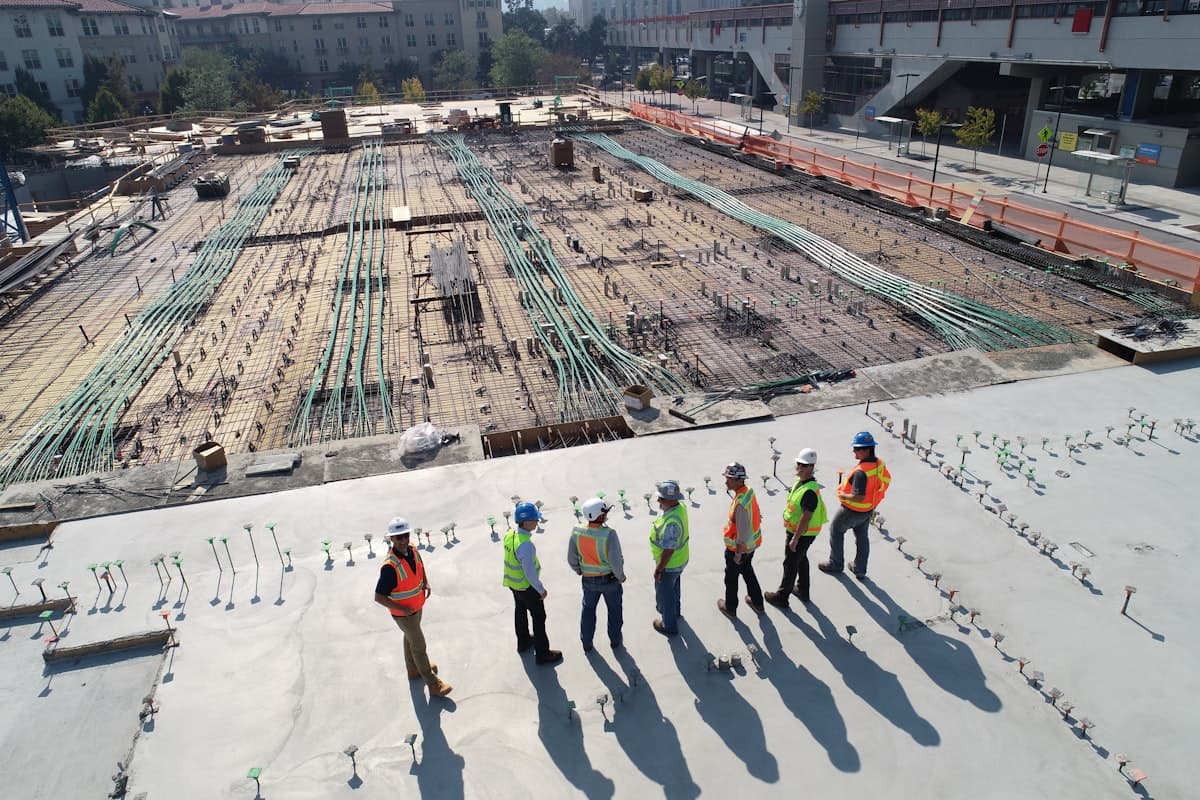
Phosphate mining is a water-intensive industry — every ton of phosphate rock processed consumes 1-3 m³ of water and generates 3-5 tons of tailings slurry. With global phosphate production exceeding 220 million tons annually (Morocco alone produces 40+ million tons), the demand for efficient tailings management is enormous. High-MW anionic PAM is the standard flocculant for phosphate thickeners, enabling 75-90% water recovery and reducing freshwater consumption by millions of cubic meters per year.
We supply mining-grade APAM to phosphate operations across Morocco (OCP Group), Tunisia, Egypt, Peru, and China. Our factory ships 2,000+ tons annually to the phosphate sector, with grades specifically formulated for the unique challenges of phosphate tailings — high clay content, variable pH, and acid mine drainage. For a broader overview of PAM in mining, see our mining tailings guide.
Global Phosphate Mining: Where PAM Is Needed
| Country | Annual Production | Ore Type | Key Challenge | PAM Demand |
|---|---|---|---|---|
| Morocco (OCP) | 40+ million tons | Sedimentary | Water scarcity, high clay | 5,000+ tons/year |
| China | 85+ million tons | Sedimentary | Environmental regulations | 8,000+ tons/year |
| Peru | 4+ million tons | Igneous | High altitude, cold water | 500+ tons/year |
| Tunisia | 4+ million tons | Sedimentary | Water scarcity, AMD | 400+ tons/year |
| Egypt | 5+ million tons | Sedimentary | Desert conditions, water scarcity | 600+ tons/year |
Phosphate Tailings: Why They Are Difficult
Phosphate tailings are among the most challenging in the mining industry due to three factors:
- High clay content (20-40%) — Clay minerals (montmorillonite, kaolinite) swell in water, creating colloidal suspensions that resist settling. Without PAM, settling time is 7-30 days
- Fine particle size — 70-90% of particles are below 100 microns, many below 10 microns. These colloidal particles have enormous surface area and strong negative charge
- Variable pH — Sedimentary phosphate tailings are neutral to alkaline (pH 7-8.5), but acid-leached tailings from H₂SO₄ processing are extremely acidic (pH 1.5-3.0)
Standard flocculants fail in phosphate tailings because clay minerals consume flocculant through charge neutralization before bridging can occur. Our high-MW APAM (18-25M) overcomes this by providing extremely long polymer chains that bridge particles even in high-clay environments.
For projects like this, our NPAM designed for mining delivers consistent results with factory-direct pricing.
Our anionic PAM (12-16 million MW) is engineered for exactly this use case, with batch-level quality control from our Zhengzhou facility.
Tailings Types & PAM Selection
| Tailings Type | Composition | Particle Size | pH | Recommended PAM |
|---|---|---|---|---|
| Sedimentary (Morocco, Tunisia) | Phosphate rock, silica, clay | 80% <100 microns | 7.0-8.5 | APAM 18-22M MW, 25-30% hydrolysis |
| Igneous (Peru, Brazil) | Apatite, feldspar, mica | 70% <75 microns | 6.5-7.5 | APAM 15-20M MW, 20-25% hydrolysis |
| Acid-leached (H₂SO₄ process) | Gypsum, silica, iron oxides | 90% <50 microns | 1.5-3.0 | APAM 20-25M MW, 30-35% hydrolysis (after lime to pH 6-7) |
| Phosphogypsum stack | CaSO₄·2H₂O, P₂O₅, fluorides | 50% <75 microns | 2.0-4.0 | NPAM or low-hydrolysis APAM (acid-stable) |
Thickener Operation with PAM
The thickener is the central unit in phosphate tailings management. PAM performance directly determines thickener throughput, overflow clarity, and underflow density:
Dosage Optimization
- Under-dosing (<15 g/ton): Flocs too small, poor settling, overflow turbidity 200-500 NTU (not recyclable)
- Optimal (20-40 g/ton): Large, dense flocs, settling rate 5-15 m/h, overflow <100 NTU (recyclable)
- Over-dosing (>50 g/ton): Excess PAM in overflow (foaming), increased chemical cost with no performance gain
Feed Well Design Impact
PAM performance depends heavily on feed well design. Our technical team provides guidance on:
- Optimal dilution point (PAM should be added at 0.05-0.1% concentration, not neat)
- Mixing energy (too much shear breaks flocs; too little gives poor distribution)
- Feed well residence time (30-60 seconds for optimal floc growth)
Need PAM for phosphate mining?
Free sample + jar test report. WhatsApp: +86 150-0381-8598
Acid Mine Drainage (AMD) Treatment
Phosphoric acid production via the wet process (H₂SO₄ + phosphate rock) generates highly acidic wastewater and phosphogypsum stacks that leach acidic drainage. Treatment requires a two-stage approach:
- Stage 1 — Neutralization: Add lime (Ca(OH)₂) to raise pH from 1.5-3.0 to 6.0-7.0. This precipitates iron, aluminum, and fluoride as hydroxides
- Stage 2 — Flocculation: Add APAM (20-25M MW, 30-35% hydrolysis) at 15-30 ppm to bridge precipitated hydroxides into large, settleable flocs
- Result: Iron removal 95-99%, fluoride removal 80-90%, TSS <50 mg/L (meets discharge limits)
Why high hydrolysis degree? At pH 6-7 (post-neutralization), higher hydrolysis (30-35%) provides more carboxylate groups that interact with metal hydroxide surfaces. Standard 20-25% hydrolysis APAM gives 20-30% lower performance in AMD applications.
Water Recovery Economics
Phosphate processing in water-scarce regions (Morocco, Tunisia, Egypt) makes water recovery critical. The economics are compelling:
| Metric | Without PAM | With PAM | Improvement |
|---|---|---|---|
| Thickener overflow clarity | 300-800 NTU | <100 NTU | Recyclable to process |
| Water recovery rate | 40-50% | 75-90% | +25-40 percentage points |
| Freshwater consumption (5 Mtpa) | 7.5-15 million m³/year | 1.5-3.75 million m³/year | Save 6-11 million m³/year |
| PAM cost (5 Mtpa, 25 g/ton) | N/A | $162,500/year | Investment |
| Water savings value | N/A | $3-16.5 million/year | 18-100× ROI on PAM |
Why Choose Our PAM for Phosphate Mining
- High-clay formulation: Our APAM-22HC grade is specifically designed for high-clay phosphate tailings — 30-35% hydrolysis provides extra carboxylate groups that overcome clay interference
- Batch consistency: ±0.5M MW tolerance ensures your thickener operates at the same efficiency batch after batch. No more "first batch good, second batch bad" — the industry complaint about inconsistent suppliers
- Three-tier QC: In-process monitoring → batch testing → pre-shipment inspection. Every batch gets COA with MW, hydrolysis degree, solid content (≥92%), residual monomer (≤0.05%)
- Free settling tests: Send us 10-20 liters of your tailings slurry. We test 5-8 PAM grades and recommend the optimal one with dosage curve
- Technical support: Remote video guidance for thickener optimization, feed well design consultation
Frequently Asked Questions
Can I use the same PAM for thickener and AMD treatment?
Not recommended. Thickener feed is neutral pH (7-8.5) and benefits from 25-30% hydrolysis. AMD treatment (post-neutralization, pH 6-7) benefits from 30-35% hydrolysis. Using the wrong grade reduces performance by 20-30%. We recommend stocking both grades.
How does temperature affect PAM performance in phosphate tailings?
Cold water (<10°C, common in Peruvian highland mines) reduces PAM dissolving speed and flocculation kinetics. Solution: use lower MW grade (15-18M instead of 20-22M) which dissolves faster, or pre-heat dissolving water to 20-30°C.
What about phosphogypsum stack management?
Phosphogypsum stacks are acidic (pH 2-4) and contain fluorides. Standard APAM degrades at pH <4. Use our NPAM (nonionic) grade which is stable at pH 2-12, or our low-hydrolysis APAM (10-15%) which maintains performance at pH 3-4. See our nonionic PAM guide for details.
For dosage calculation methodology, see our PAM dosage calculation guide. For grade selection based on molecular weight, see our molecular weight guide.
Get Phosphate Mining PAM Pricing
We supply mining-grade APAM to phosphate operations across Africa, South America, and the Middle East. Our 100,000 ton/year factory maintains stock of all mining grades for 3-5 day emergency dispatch. Contact us for bulk pricing and free settling tests with your tailings sample:
- WhatsApp: +86 150-0381-8598
- Email: info@chinapolyacrylamide.com